What Biscuit Means on a Samoyed
It can be quite confusing when you first delve into the world of Samoyeds, especially when you hear terms like "biscuit" thrown around regarding their stunning white coats. Many new owners or those considering bringing a Sammy home worry if their dog isn't "pure white" that something is wrong, or if it impacts their pedigree. This guide is here to demystify what "biscuit" truly means for a Samoyed, exploring its origins, appearance, and how it fits into the breed standard, so you can appreciate every shade of your fluffy companion.
Understanding the "Biscuit" Shade in Samoyeds
When we talk about a Samoyed having "biscuit" markings, we're not talking about a dark brown or a distinct patch of color like you'd see on some other breeds. Instead, it refers to a subtle, warm creamy or light tan shade that appears on certain areas of their otherwise brilliant white coat. It’s more of a soft blush than a bold statement, a gentle hint of warmth against the snowy backdrop. This subtle shading is often something you might not even notice at first glance, especially if you're used to seeing pictures of perfectly posed show dogs under ideal lighting.
Imagine the color of a freshly baked shortbread cookie—not dark, not overly golden, but that delicate, soft tan. That’s the essence of "biscuit" in a Samoyed coat. It's a natural variation that adds character without detracting from the overall impression of a beautiful white dog. Many Samoyed enthusiasts find this touch of warmth incredibly endearing, arguing it adds depth and a unique charm to their beloved pups. It’s far from a flaw; it’s simply part of the natural spectrum of colors within the breed, even if pure white is often idealized.
The Nuance of "Biscuit" Coloration
The term "biscuit" is wonderfully evocative, isn't it? It perfectly describes that soft, warm tone that isn't quite white, but definitely isn't cream or yellow either. It’s like the lightest touch of warm sunlight has brushed over their fur. This coloration isn't typically uniform across the entire dog but tends to appear in specific areas. It's not a stain, and it’s certainly not dirt; it's genuinely part of the pigment in their hair. It can sometimes be mistaken for a slightly dirty patch, especially after a romp in the yard, but once you learn to recognize it, you’ll see it’s distinctly different from actual grime.
The intensity of the biscuit shade can vary greatly from one Samoyed to another. Some might have just the faintest whisper of biscuit, visible only in certain lights, while others might have a more noticeable, yet still soft, patch. It's a spectrum, and each individual dog's expression of this color is unique. This natural variation is part of what makes each Samoyed special, showcasing the subtle genetic differences that make up their magnificent coats.
Distinguishing Biscuit from Other Samoyed Colors
It's important to understand that "biscuit" is a distinct shade from other accepted Samoyed colors, namely pure white and cream. While all these colors are light, they possess different undertones. Pure white Samoyeds are just that – brilliant, pristine white, with no hint of yellow or tan. Think of freshly fallen snow on a crisp winter morning. Cream Samoyeds, on the other hand, have a more uniform, often richer, yellowish-white or off-white hue throughout their coat, a more pronounced version of the biscuit tone across the entire body. You might want to learn more about The Colors a Samoyed Comes In to fully grasp these distinctions.
Biscuit falls neatly in between these two. It's white overall, but with those specific, localized areas of soft, light tan or warm cream. It’s not an all-over coloration like cream, but rather an accent. When you line up a pure white, a biscuit-marked, and a cream Samoyed, the differences become quite clear. Each is beautiful in its own right, but the biscuit-marked dog has that extra dimension of subtle warmth. Understanding these distinctions helps appreciate the full range of beauty within the Samoyed breed.
The Genetic Basis and Origin of Biscuit Markings
So, where does this biscuit color come from? It's all thanks to genetics! Samoyeds, despite their iconic white coats, carry genes that allow for these subtle variations in pigment. While breeders often strive for the purest white, the genetic blueprint of the breed includes the capacity for biscuit. This isn't a defect or a new mutation; it’s a deeply ingrained part of the breed's history, reflecting their ancient origins. The Nenets people, who developed the Samoyed breed, were more concerned with working ability and survival in harsh climates than with pristine white coats, meaning natural color variations were likely commonplace and not bred out.
The specific genes responsible for "biscuit" are often linked to those that control pigment distribution and intensity. It’s not as simple as a single gene, but rather a combination of factors that result in this particular shade. Think of it like a dimmer switch for color intensity; some areas of the coat get a slightly higher "wattage" of pigment, resulting in that warm biscuit tone. This is why you often see the color appear in specific, consistent areas rather than randomly.
Historical Context of Samoyed Coat Colors
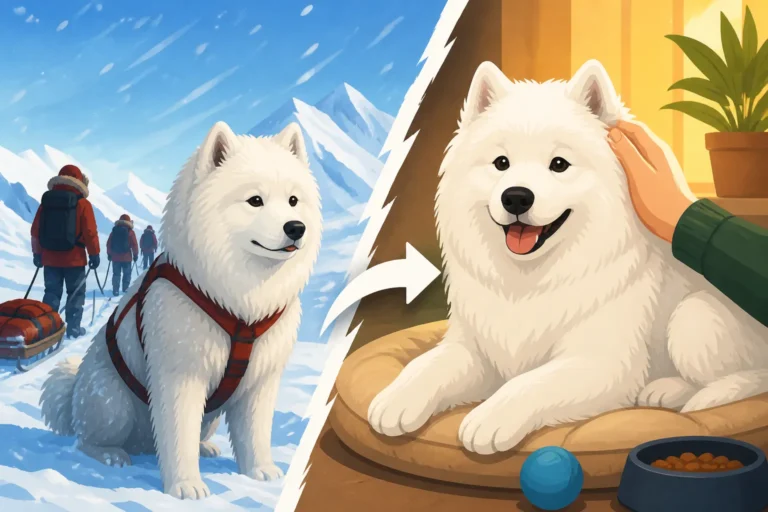
Historically, Samoyeds were not exclusively pure white. Records and old photographs show dogs with cream, and yes, even biscuit and light fawn markings. The indigenous Nenets people, from whom the Samoyed originated, primarily bred these dogs for their unparalleled working abilities—herding reindeer, pulling sleds, and providing warmth and companionship in their tents. The practicalities of survival in the Arctic tundra far outweighed any aesthetic preferences for coat color. A strong, healthy dog with a dense, insulating coat was what mattered most. You can delve into The Nenets of the Yamal Peninsula Bred the Samoyed to understand more about their foundational history.
It was only when Samoyeds were introduced to Western cultures, particularly in England and later America, that a stronger emphasis began to be placed on a purely white coat. Early Western breeders and fanciers, perhaps drawn to the striking contrast of a pristine white dog against snowy landscapes, started to selectively breed for this trait. However, the genetic memory of those ancestral colors, including biscuit, persists, reminding us of the breed's diverse heritage. The shift towards a preference for pure white in the show ring is relatively recent in the grand scheme of the breed's long history.
How Genes Influence Biscuit Patches
The exact genetic mechanism for biscuit markings is complex, involving multiple genes that control eumelanin (black pigment) and phaeomelanin (red/yellow pigment) production and distribution. While Samoyeds generally express very little eumelanin in their coats (hence the white appearance), the phaeomelanin genes can still produce these warmer tones. Think of it this way: the default for a Samoyed is "white," but there are underlying instructions that can allow for a faint "yellow" or "tan" expression in certain areas.
It's not usually a case of a dominant "biscuit" gene, but rather a combination of modifier genes that tweak the intensity and location of the phaeomelanin. This is why you might see varying degrees of biscuit, even within the same litter. These genes interact in subtle ways, leading to the unique expression of color on each individual dog. It’s a beautiful testament to the natural genetic diversity that remains within the breed, ensuring that no two Samoyeds are ever exactly alike, even if they share that iconic smile.
Common Areas for Biscuit Markings
If your Samoyed has biscuit markings, you'll typically find them in certain predictable areas. These aren't random splotches, but rather zones where the subtle warmth of the color tends to concentrate. Understanding these common locations can help you identify biscuit on your own dog or when observing others. It’s often in places where the coat might naturally be a bit coarser or thicker, or where there’s specific muscle definition.
The face is a prime spot, particularly around the ears, across the muzzle, and sometimes even a faint blush over the eyebrows. These facial accents can give a Samoyed an even more expressive look, highlighting their bright, intelligent eyes. Another very common area is the back, especially along the spine or over the tail. The tips of the ears might also show a touch of biscuit, adding a lovely, delicate detail.
Biscuit on the Ears and Face
The ears are perhaps one of the most common places to spot biscuit coloring on a Samoyed. It often appears as a light, warm tan or creamy hue on the tips or along the edges of the ears. This can create a lovely framing effect for their alert, triangular ears. Imagine a soft, sun-kissed look—that’s often what the biscuit on the ears conveys. It’s subtle enough not to be distracting but definite enough to add character.
Beyond the ears, the facial region, particularly the muzzle and sometimes around the eyes, can also exhibit biscuit tones. This might manifest as a slight yellowish or light tan tinge that blends seamlessly into the surrounding white fur. It can give the face a softer, warmer appearance than a purely white muzzle. These facial markings are a beautiful, natural part of many Samoyeds and contribute to their endearing expressions.
Biscuit on the Body and Tail
Moving down the body, biscuit markings can frequently be seen along the top line, or spine, of the Samoyed. This is often where the coat is densest, and the guard hairs might have a slightly stronger pigment. It’s not a stark line of color, but more of a gentle shading that flows along the dog's back. Similarly, the tail, especially where it curls up over the back, can also show hints of biscuit. The longer, coarser hairs of the tail plume can sometimes hold this warmer tone.
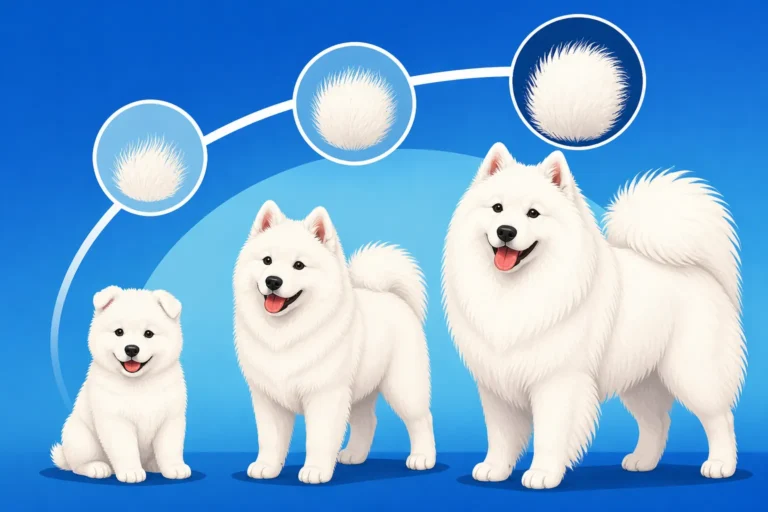
You might also observe faint biscuit coloring on the legs, particularly on the outer aspects or around the hocks. These aren't solid patches, but subtle areas where the white fur isn't quite pure. These body markings, like those on the face and ears, are simply part of the natural variation that makes each Samoyed unique. They are nothing to be concerned about and are perfectly normal for the breed. How a Samoyed's Coat Changes With Age can also influence how these colors might appear or deepen over time.
Biscuit Markings and the Samoyed Breed Standard
This is where it gets a little interesting for those involved in showing or breeding Samoyeds. Most breed standards, including the one recognized by the American Kennel Club (AKC), list "white, cream, or biscuit" as acceptable colors. This means that a Samoyed with biscuit markings is eligible to be shown and can indeed win in the conformation ring. However, there's often an unwritten preference among judges and handlers for the purest white coat.
While technically acceptable, a Samoyed with prominent biscuit markings might face a slightly tougher challenge against a dog of equal quality that is pure white, simply because pure white often presents a more dramatic and "clean" visual impression in the ring. This preference doesn't diminish the quality or beauty of a biscuit-marked Samoyed, but it's a reality within the competitive world of dog shows. Whether a Biscuit Samoyed Can Be Shown directly addresses this, confirming that they absolutely can.
The Role of Color in Conformation Judging
In conformation showing, judges are evaluating how closely a dog conforms to its breed standard, which is a detailed description of the ideal specimen. While the standard explicitly permits biscuit, the subjective nature of judging can sometimes lean towards what is perceived as the most "classic" or striking representation of the breed. For Samoyeds, that ideal is often a magnificent, cloud-like pure white. Therefore, while a judge won't disqualify a biscuit-marked Samoyed for its color, they might, consciously or subconsciously, favor a purely white dog if all other things are equal.
This is why some breeders specifically aim for pure white offspring, even though biscuit is perfectly acceptable. It’s a strategic choice within the show world. For the average pet owner, however, this aspect of the show ring is largely irrelevant. The presence of biscuit markings does not impact the dog's health, temperament, or its ability to be a loving family member. It's purely an aesthetic consideration within a very specific context.
Variations in International Breed Standards
It's also worth noting that breed standards can have slight variations between different countries and kennel clubs. While the allowance for biscuit is fairly consistent across major organizations like the AKC (American Kennel Club) and the FCI (Fédération Cynologique Internationale), the subtle emphasis or interpretation might differ. Some countries might have a slightly more lenient view on color, while others might be stricter in practice. This contributes to the diverse genetics and appearance of Samoyeds globally. If you're curious about these nuances, you might want to look into The Samoyed Standard Differs Between Countries.
Regardless of these slight differences in interpretation, the core message remains: biscuit is a recognized and acceptable color within the Samoyed breed. It's a testament to the natural beauty and genetic heritage of these incredible dogs, reminding us that perfection comes in many shades. A Samoyed with biscuit markings is just as much a Samoyed as one that is pure white, and equally deserving of love and admiration.
Caring for a Biscuit-Marked Samoyed
Caring for a Samoyed with biscuit markings is no different than caring for a pure white one, though you might find yourself a little less stressed about every tiny speck of dirt! The primary goal remains the same: to keep their glorious double coat healthy, clean, and free of mats. Biscuit markings are part of their natural pigment, so you won’t wash them out, nor will they suddenly appear if your dog is pure white.
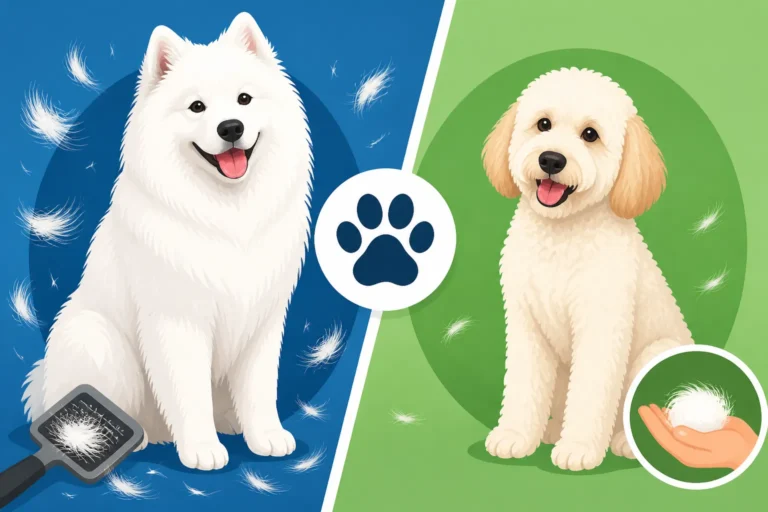
Regular grooming is absolutely essential for any Samoyed, regardless of their exact shade. Their thick double coat requires consistent brushing, especially during their biannual "coat blow" periods when they shed their undercoat in vast quantities. This intense shedding is a natural process that keeps their coat healthy and functional.
Grooming and Maintaining Coat Color
For a Samoyed with biscuit markings, regular brushing will help distribute natural oils, remove loose fur, and prevent matting. While the biscuit itself won't fade with washing, maintaining overall coat cleanliness will ensure the biscuit areas look their best and don't get obscured by actual dirt or stains. Investing in good grooming tools is key – a sturdy slicker brush, an undercoat rake, and a powerful force dryer are invaluable. You can find many excellent options on sites like Chewy that cater specifically to thick-coated breeds.
When it comes to bathing, the frequency depends on your individual dog's lifestyle. Samoyeds have a remarkable ability for their coats to shed dirt naturally when dry. However, if your biscuit-marked Sammy loves to roll in mud, a bath will be necessary. For general cleanliness, a whitening shampoo can help brighten the white areas without affecting the biscuit sections. Which Shampoo Keeps a Samoyed White can offer some great insights into products that work well for this breed.
Here's a quick comparison of Samoyed coat colors and common perceptions:
| Coat Color Description | Characteristics | Show Ring Perception (General) | Grooming Implications |
|---|---|---|---|
| Pure White | Pristine, brilliant white across the entire coat, no yellow or cream tones. | Highly favored, often considered the ideal. | Requires diligent upkeep to remain spotless; any dirt or stain is highly visible. Whitening shampoos are popular. |
| Biscuit | Predominantly white with soft, warm creamy or light tan shades, usually on ears, face, back, or tail. | Acceptable, but sometimes faces subtle preference for pure white. | Similar to pure white, but minor dirt may blend slightly better into biscuit areas. Whitening shampoos can still be used on white areas. |
| Cream | A more uniform yellowish-white or off-white hue throughout the entire coat, more pronounced than biscuit. | Acceptable, though less common and sometimes perceived as less "classic" than pure white. | Overall color means less stress about minor stains, but still requires regular brushing to prevent matting. |
Addressing Stains and Environmental Factors
Even with biscuit markings, Samoyeds can still get stains, especially around their mouths from food and water, or on their feet from licking. These are separate from the natural biscuit coloration. For stubborn stains, gentle tear stain removers or specialized whitening pastes can be used, again, being careful to avoid harsh chemicals. A good diet can also help reduce tear and beard staining. Regular dental care is also important, not just for health but to prevent food debris from staining the fur around their mouth.
Environmental factors can also play a role in how a Samoyed's coat appears. Spending a lot of time outdoors in bright sun can sometimes subtly change coat tones over time, though this is usually minor. Whether a Samoyed's Coat Yellows With Age is a common question, and indeed, some Samoyeds might develop a slightly yellower tinge as they get older, which is distinct from the biscuit color they may have had from puppyhood. Proper grooming, nutrition, and protecting them from excessive sun can help maintain the coat's vibrancy. Ultimately, embracing the natural beauty of your Samoyed, biscuit markings and all, is the most rewarding approach. Remember, a healthy, happy Samoyed is always a beautiful Samoyed!
Disclaimer
This article is for general informational purposes only and does not constitute professional advice. Laws, prices and regulations vary by location and change over time. Consult a qualified professional for guidance on your specific situation.