Whether a Samoyed Puppy Should Be Crated
Bringing a fluffy Samoyed puppy home is an absolute joy, but it quickly introduces a whirlwind of decisions, not least among them whether to use a crate. Many new Samoyed parents grapple with the question of confining their active, intelligent, and often vocal little floof, wondering if it's truly beneficial or just cruel. This guide will walk you through the nuances of crate training for your Samoyed puppy, helping you understand the benefits, potential challenges, and how to make the crate a safe, positive haven, ensuring a smoother transition into your home.
The Pros and Cons of Crate Training for a Samoyed Puppy
Deciding whether to crate train your Samoyed puppy often feels like a balancing act. On one hand, you want to give your puppy all the freedom in the world; on the other, you also want them to be safe, well-behaved, and eventually, house-trained. Let's dig into what crate training truly offers, and what challenges you might encounter with a Samoyed specifically.
Why a Crate Can Be a Lifesaver for Your Sammy
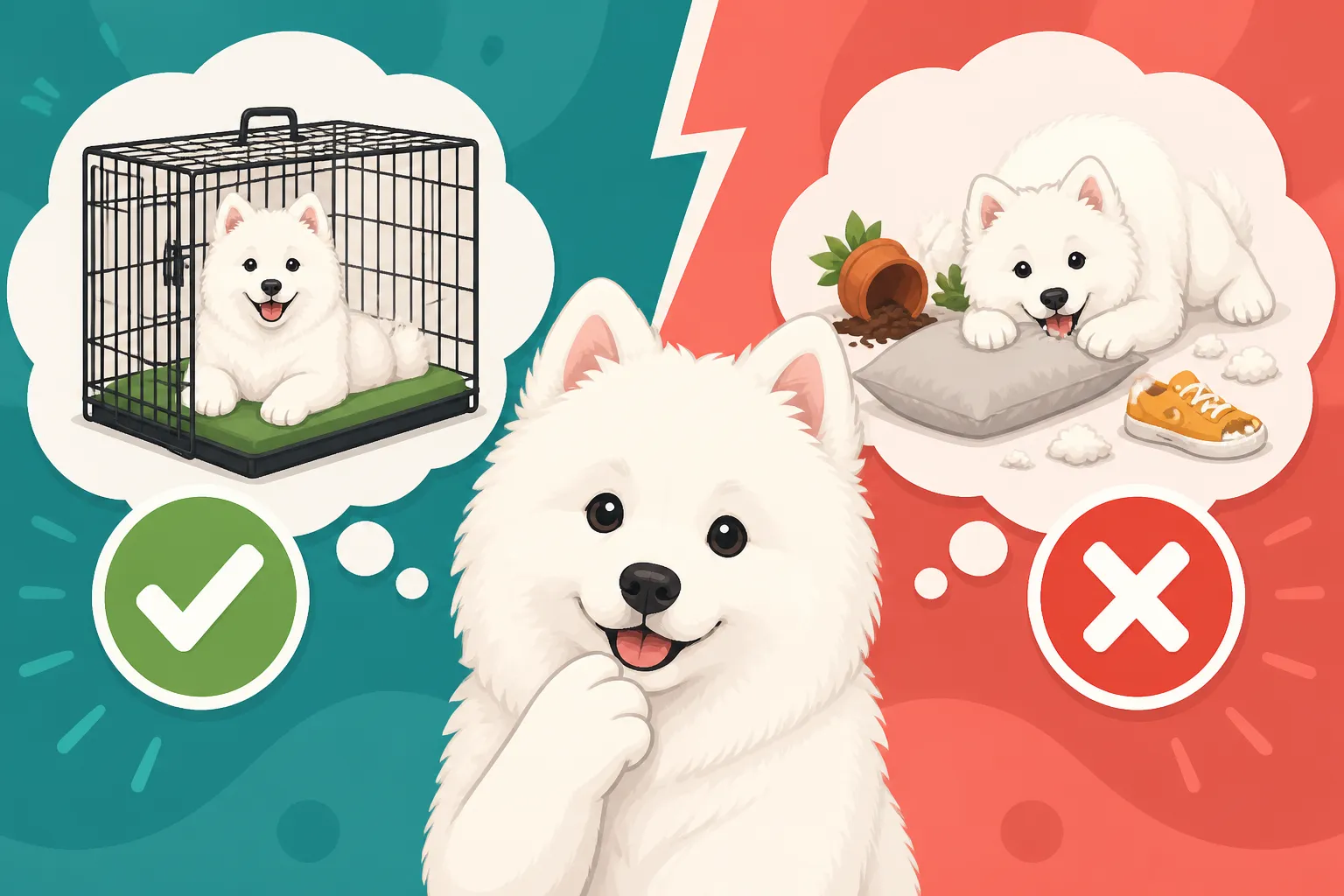
Crate training, when done correctly, isn't about punishment; it's about providing a safe, secure den that your Samoyed puppy learns to love. For a breed that was historically kept close to humans in tents, having a personal, enclosed space can actually tap into their natural denning instincts.
First and foremost, a crate is an unparalleled tool for house-training. Puppies instinctively avoid soiling their sleeping area. By managing their access and routines with a properly sized crate, you can teach your Samoyed puppy where and when to eliminate. This means fewer accidents on your carpet and a quicker path to a reliably house-trained companion. Imagine the frustration of constantly cleaning up messes, especially with a young, exuberant Samoyed who thinks every corner is fair game. The crate helps instill that vital concept of holding it.
Beyond house-training, a crate offers safety and security. Let's be real, Samoyed puppies are curious little explorers with a knack for getting into things they shouldn't. Cords, toxic plants, your favorite shoes – nothing is safe from those sharp puppy teeth. When you can't actively supervise your puppy, a crate ensures they aren't chewing on something dangerous or ingesting something that will land you at the emergency vet. It's like having a secure playpen, but specifically designed for their comfort and safety. This peace of mind, knowing your puppy is out of harm's way while you step out for a short errand or take a shower, is invaluable.
Lastly, a crate can become your Samoyed's personal sanctuary. In a busy household, sometimes a puppy just needs a quiet place to retreat, chew on a favorite toy, or nap undisturbed. It becomes their private bedroom, a place where they feel secure and can relax away from the hustle and bustle. This is especially true for Samoyeds who are naturally social but also appreciate their personal space. Think about bringing your Samoyed puppy home, full of energy and new experiences. Having a comfortable, familiar crate can reduce their stress and provide a consistent comfort zone as they adjust to their new environment.
Potential Challenges with Crate Training a Samoyed
While the benefits are clear, crate training a Samoyed isn't always a walk in the park. Samoyeds are known for their intelligence, independence, and, let's face it, their vocal nature. These traits can sometimes make crate training a bit more challenging than with other breeds.
One of the biggest hurdles you might face is the vocalization. Samoyeds are notorious "talkers" – they don't just bark; they howl, grumble, whine, and, yes, scream. If your Samoyed puppy feels neglected or is unsure about their crate, they might express their displeasure with a full-throated symphony. This can be tough on your ears and your patience. It's easy to feel guilty when your fluffy little buddy is making such a ruckus, but it's crucial not to give in to every complaint, or you'll quickly teach them that crying gets them out. This is where consistency and understanding the difference between genuine distress and a demand bark become vital. For more on their communication style, you might want to read The Samoyed Scream and Why It Is Not Barking.
Another challenge is their social nature. Samoyeds thrive on companionship and generally want to be where their people are. Being confined, even in a comfortable den, can feel isolating to them if not introduced properly. They might feel like they're missing out on the action, which can lead to protests. It's not usually outright aggression, but rather a persistent desire to be included. This strong bond, which makes them such wonderful family dogs, also means they need careful, positive introduction to alone time in their crate to prevent feelings of separation anxiety. For insights on their need for proximity, check out Why a Samoyed Wants to Be in the Room With You.
Finally, their intelligence and chew-drive can sometimes work against you. A clever Samoyed might figure out how to open certain crate latches or become determined to chew their way out if they're not properly managed or if the crate isn't sturdy. It's not uncommon for Samoyed puppies to test boundaries, and a crate is no exception. This means investing in a high-quality, secure crate and ensuring it's not a place they associate with boredom or frustration. You'll want something durable that can withstand some determined puppy antics, perhaps checking out options on Amazon known for their robust construction.
How to Introduce a Crate Positively to Your Samoyed Puppy
The key to successful crate training with a Samoyed puppy is making the crate a truly positive experience from day one. This isn't just about putting them in and closing the door; it's about building a trusting relationship with this new "den" in their life.
Making the Crate a Happy Place
Your Samoyed puppy should see their crate as a cozy, safe retreat, not a prison. The goal is for them to want to go into their crate.
Start by choosing the right crate. It should be just large enough for your puppy to stand up, turn around, and lie down comfortably. If it's too big, they might decide one end is for sleeping and the other for eliminating, defeating the house-training purpose. Many crates come with dividers that allow you to adjust the size as your puppy grows. For comfort, line the crate with a soft, washable bed or blanket. Keep in mind that puppies, especially Samoyeds, can be prone to chewing, so ensure any bedding is safe and not easily ingested.
The next step is to fill the crate with positive associations. This means yummy treats and engaging toys! Toss a few high-value treats into the crate and let your puppy go in to get them. Don't close the door yet. Repeat this several times a day. You can also feed your puppy their meals inside the crate with the door open. This helps them connect the crate with good things – food!
Introduce special, high-value chew toys that only come out when your puppy is in the crate. A Kong stuffed with peanut butter or a puzzle feeder can keep them occupied and happy while inside. This creates an exclusive reward system, making the crate the source of their favorite things. You can even use training platforms like BAXTER & Bella to learn more about enrichment toys and positive reinforcement techniques for crate training. Remember, patience is paramount. Don't rush this process.
Gradual Acclimation: Short and Sweet Sessions
Once your Samoyed puppy is happily going into the crate for treats and food, you can start closing the door for very short periods.
- Door Closed, You Nearby: Start by closing the door while they're eating or enjoying a special chew toy. Stay right there. As soon as they finish, or after just a minute or two, open the door. Praise them calmly. The idea is to make them realize the door closing isn't scary.
- Short Absences: Once they're comfortable with the door closed for a few minutes while you're right there, try stepping away for a few seconds. Go to another room, then immediately return and let them out. Gradually increase the time you're away. Maybe step out for a minute, then two, then five. Keep these sessions brief and positive.
- Extending Alone Time: As your Samoyed puppy becomes more comfortable, you can slowly extend the time they spend in the crate. Never leave them in there for so long that they soil it or become overly distressed. The goal is success, not frustration. For a puppy, this might mean starting with 10-15 minute increments, then building up to an hour, then two. For house-training purposes, remember that puppies can generally hold their bladder for about one hour per month of age. So, a 3-month-old Samoyed puppy shouldn't be crated for more than 3-4 hours at a stretch during the day.
Crucially, never use the crate for punishment. If your puppy associates the crate with being reprimanded, they will learn to fear it, and all your positive training efforts will be undone. The crate should always be a place of safety and comfort.
Essential Crate Training Tips for Samoyed Success
Successfully crate training a Samoyed requires consistency, foresight, and a deep understanding of their unique needs. It's not a one-size-fits-all approach, and a few key strategies can make all the difference.
Location, Comfort, and Routine
Where you place the crate and how comfortable it is are incredibly important, especially for a social breed like the Samoyed. Initially, placing the crate in a high-traffic area like the living room or kitchen can be beneficial. This allows your Samoyed puppy to feel like they're still part of the family, even when confined. Their innate desire to be near you, as explored in Why a Samoyed Follows You From Room to Room, means that isolation can be stressful. Seeing and hearing you from their crate will build a stronger positive association.
As they get older and more comfortable with the crate, you can gradually move it to a quieter spot for night-time sleeping, like your bedroom. Being in your bedroom at night can help reduce whining and howling because they can still sense your presence, which is reassuring for them. A soft, durable bed, a blanket, and always fresh water accessible (if safe from spills) will enhance their comfort. For a Samoyed's thick coat, ensuring good air circulation around the crate is also helpful, especially in warmer climates.
Establishing a consistent routine is absolutely non-negotiable. Dogs thrive on predictability, and Samoyeds are no exception. Take your puppy out for a potty break immediately before crating them. When you let them out of the crate, take them directly outside for another potty break. This reinforces the idea that the crate is not for elimination. Feed them at the same times, and schedule crate time around their natural nap times and when you know you'll be busy. For example, after an energetic play session and a potty break, your puppy will likely be tired and more amenable to settling down in their crate for a nap. This structured approach significantly aids in house-training and helps your puppy understand expectations. You can find more comprehensive strategies on How Long a Samoyed Puppy Takes to House Train.
Avoiding Common Pitfalls
Crate training can quickly go south if common mistakes are made. Being aware of these pitfalls will help you navigate the process smoothly with your Samoyed.
The most critical error is leaving your Samoyed puppy in the crate for too long. As mentioned, a puppy's bladder control is limited. Forcing them to soil their crate because they couldn't hold it will undo all your house-training efforts and create negative associations. A good rule of thumb is one hour per month of age, plus one hour (e.g., a 3-month-old puppy can tolerate about 4 hours). This also applies to mental and physical needs; a Samoyed is an active and intelligent breed. Long periods of confinement without adequate exercise and mental stimulation before and after will lead to frustration, excessive vocalization, and potential destructive behavior. Ensure that crate time is always balanced with plenty of playtime and walks. This is also why having enrichment toys, as discussed earlier, is crucial for keeping them occupied and happy.
Another major pitfall is using the crate as punishment. Never, ever send your Samoyed to their crate when they've been "bad." This will make them associate the crate with negative feelings and fear. The crate should always be a safe haven, a happy place. If your puppy is misbehaving, use other training methods like redirecting their attention or a time-out in a playpen.
Finally, ignoring genuine distress versus manipulative vocalization is a fine line. Your Samoyed might protest loudly when first crated. It's important to understand why they're vocalizing. Is it because they need to potty? (Take them out immediately, quietly, and back into the crate.) Are they bored or just testing boundaries? (Wait for a brief moment of quiet before letting them out, so you're not rewarding the noise.) If the vocalization is truly escalating into panic, it means you've pushed them too far too fast. Revert to shorter crate times and more positive reinforcement. Platforms like BAXTER & Bella offer excellent online resources that can guide you through distinguishing these different types of vocalization and how to respond appropriately.
When to Transition Away from the Crate
Crate training isn't necessarily forever, though many adult Samoyeds still enjoy their crate as a safe den. The goal is for your puppy to eventually have full run of the house without supervision, but this transition needs to be gradual and based on their maturity and reliability.
Look for signs of readiness:
- Reliable House-Training: Your Samoyed consistently signals to go outside and has no accidents in the house for several months.
- Non-Destructive Chewing: They chew on appropriate toys, not furniture or household items, even when unsupervised.
- Calmness When Alone: They can relax independently and don't suffer from separation anxiety. You can leave them alone for periods without them panicking or being destructive. Separation Anxiety in a Samoyed is a real concern and needs careful management.
When you start phasing out the crate, begin with short periods of supervised freedom in a dog-proofed room. Gradually increase the area and duration. You might start with leaving them uncrated for an hour while you're home but in another room, and then slowly extend that time. Some Samoyed owners find that using a dog gate to confine them to one or two rooms initially works well. Even when given full freedom, many Samoyeds will still seek out their crate for naps or quiet time, proving that it truly has become their preferred den.
Alternatives and Supplementary Strategies
Crate training isn't the only option, and even if you do crate train, it's essential to use it in conjunction with other strategies. For a Samoyed, a well-rounded approach ensures their physical and mental needs are met, whether they're in a crate or out.
Playpens and Dog-Proofed Rooms
For some owners, or as an interim step for growing puppies, playpens offer a good alternative or supplement to crates. A large playpen gives your Samoyed puppy more space to move around, play with toys, and even have a small potty area (like a pee pad, though this can sometimes confuse house-training). This can be particularly useful for those periods when you need to contain your puppy for a few hours but don't want them in a smaller crate. You can set up a comfortable bed, water, and plenty of toys within the playpen.
Similarly, dog-proofed rooms can be an excellent option. This involves choosing a room in your house, like a kitchen or utility room, and removing anything that could be dangerous or tempting to chew. Cover electrical outlets, secure cabinets, remove valuable items, and ensure no toxic plants are accessible. This gives your Samoyed puppy a safe, contained area while allowing more freedom than a crate. Just be mindful of their notorious Houdini-like abilities; Samoyeds are quite adept at finding ways to How a Samoyed Gets Out of Anything You Build! Make sure any gates or barriers are truly secure.
Exercise and Mental Stimulation: The Samoyed's True Needs
No matter your confinement strategy, exercise and mental stimulation are absolutely crucial for a Samoyed. A bored Samoyed is a destructive Samoyed, whether crated or not. Their intelligence and working dog heritage mean they need an outlet for their energy and minds.
- Physical Exercise: Daily walks, runs, or play sessions are essential. For a Samoyed, this isn't just a leisurely stroll; it needs to be substantial. Consider activities like fetch, tug-of-war, or even starting puppy-friendly pulling games if age-appropriate. How Much Exercise a Samoyed Needs will give you a better idea of the daily demands. An under-exercised Samoyed is far more likely to engage in undesirable behaviors like excessive vocalization, chewing, or digging.
- Mental Stimulation: Don't forget their brains! Samoyeds are smart and enjoy a challenge. Incorporate training sessions daily, even short ones, working on basic obedience cues. Puzzle toys, snuffle mats, and hiding treats for them to find are excellent ways to keep their minds active. Teach them new tricks. Consider enrolling in puppy classes or online training programs like those offered by BAXTER & Bella, which provide structured activities and guidance on mental enrichment. A mentally tired Samoyed is a happy, well-behaved Samoyed, and they will settle much more easily in their crate or designated safe space after a good brain workout.
By combining crate training with plenty of exercise, mental stimulation, and positive reinforcement, you'll set your Samoyed puppy up for success, ensuring they grow into a well-adjusted and beloved member of your family.
Here's a quick overview of crate training expectations:
| Puppy Age | Maximum Crate Time (Day) | Recommended Crate Time (Night) | Key Focus | Challenges to Watch For |
|---|---|---|---|---|
| 8-10 Weeks | 2-3 hours | 5-6 hours | Potty training, positive association | Whining, accidents, fear |
| 10-16 Weeks | 3-4 hours | 6-7 hours | Building duration, routine | Persistent vocalization |
| 4-6 Months | 4-5 hours | 7-8 hours | Independence, self-settling | Destructive chewing, protests |
| 6-12 Months | 5-6 hours | 8 hours | Reliability, readiness for more freedom | Testing boundaries, boredom |
| Adult Samoyed | 6-8 hours (max) | 8 hours | Den comfort, continued safety | None, if trained properly |
Note: These are general guidelines. Every Samoyed puppy is an individual and may progress at a different pace. Always prioritize your puppy's comfort and needs.
Disclaimer
This article is for general informational purposes only and does not constitute professional advice. Laws, prices and regulations vary by location and change over time. Consult a qualified professional for guidance on your specific situation.