Separation Anxiety in a Samoyed
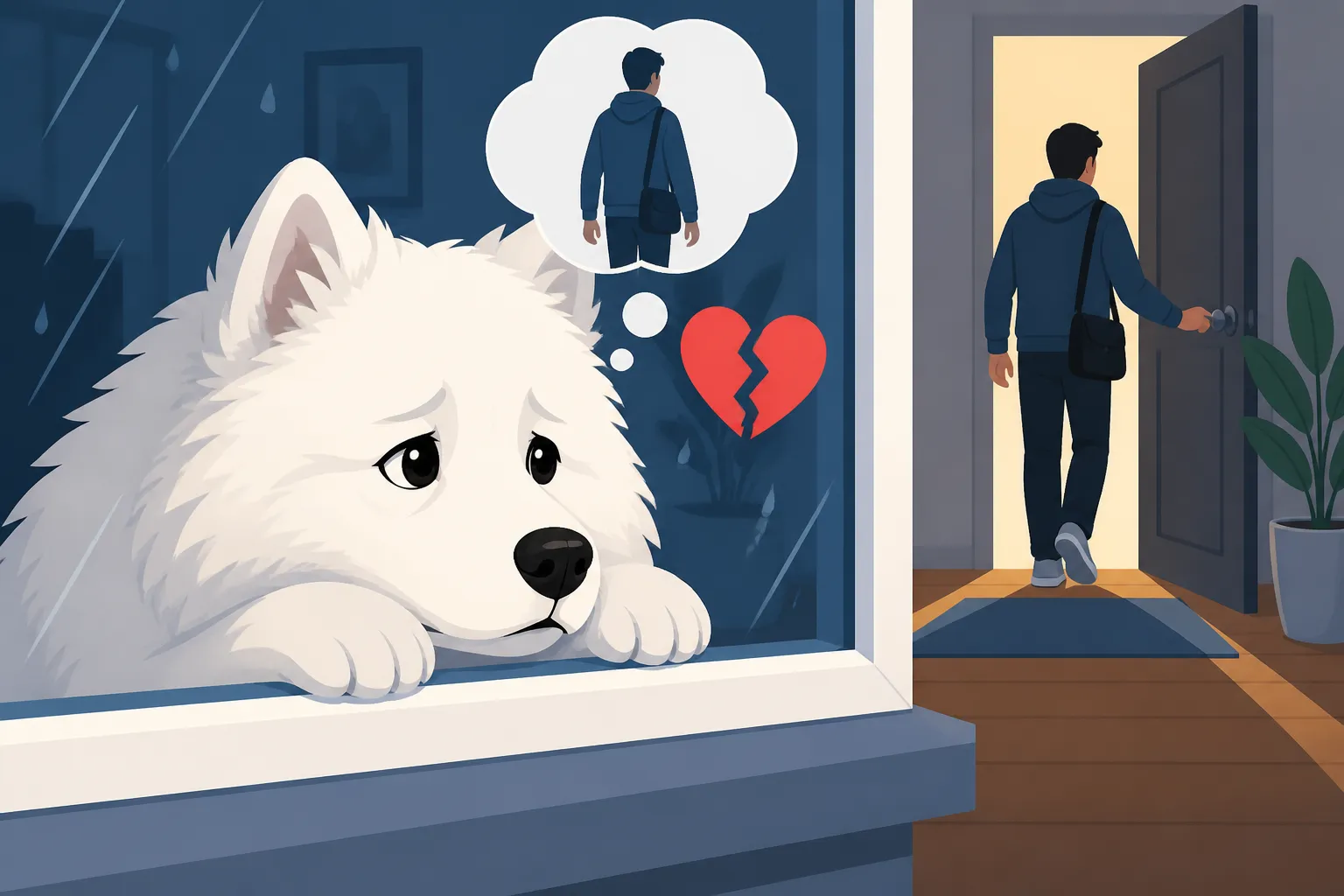
It's absolutely heartbreaking to see your fluffy Samoyed, a breed known for its sunny disposition, utterly melt down the moment you step out the door. You leave for work, imagining them curled up sweetly, only to return to scratched door frames, a chewed-up couch, or the dreaded call from a neighbor about incessant howling. Separation anxiety in a Samoyed isn't just a minor inconvenience; it's a profound distress for your beloved companion, and it can leave you feeling helpless and guilty. This guide is here to walk you through understanding what separation anxiety looks like, why it might be happening, and most importantly, actionable steps to help your Samoyed feel more secure when you're not around.
What Separation Anxiety Looks Like in a Samoyed
When we talk about separation anxiety, we're not just discussing a dog that misses you a little bit. We're talking about a genuine panic response that triggers a cascade of behaviors, often quite destructive and noisy. For a Samoyed, whose ancient breeding has ingrained a deep connection to their human family, this can manifest in particularly dramatic ways.
The Incessant Howling and Screaming
Samoyeds are vocal dogs by nature. They "talk" in a whole range of charming grunts, groans, and sometimes dramatic sighs. It's part of their unique personality, a way they communicate their feelings, desires, and even opinions. However, when a Samoyed is truly suffering from separation anxiety, their vocalizations escalate far beyond a polite "hello" or a playful grumble. You'll hear a mournful, relentless howling that sounds like pure anguish, or even a piercing "Samoyed scream" that can carry for blocks. This isn't just barking; it's an outcry of distress, a desperate attempt to summon you back.
Imagine leaving your house for just a few minutes to grab the mail, only to hear a siren-like wail erupt from inside before you've even reached the curb. Your neighbors, bless their hearts, might be understanding at first, but after repeated instances of a dog crying non-stop for hours, their patience can wear thin. This kind of persistent vocalization is a huge tell-tale sign of deep-seated anxiety, and it's physically and emotionally exhausting for your Samoyed. It’s important to understand the difference between a normal Samoyed vocalizing its displeasure and a dog truly in panic. You can learn more about their unique sounds in The Samoyed Scream and Why It Is Not Barking and How Loud a Samoyed Gets. If you’re getting complaints, it’s a clear signal something significant is going on.
Destructive Chewing and Escaping Attempts
Many puppies chew, that's a given. They explore the world with their mouths, and redirecting that energy to appropriate toys is part of basic training. But the destructive chewing associated with separation anxiety is different. This isn't about boredom or lack of training; it's about a frantic attempt to cope with overwhelming stress. You might come home to find door frames gnawed to splinters, window sills deeply scored, or even crates bent out of shape. Your Samoyed isn't trying to be "bad;" they're literally trying to chew their way out of a terrifying situation, trying to reach you.
Samoyeds are incredibly clever and persistent, especially when motivated. If they believe you're on the other side of a barrier, they will often use all their ingenuity to try and get to you. This might involve scaling fences, digging under them with surprising speed, or even figuring out complex latches. A dog consumed by separation anxiety will push their limits, and their desire to escape can lead to serious injury or getting lost. This drive to break free is why you need to understand How a Samoyed Gets Out of Anything You Build and take preventative measures. It’s not just your furniture at risk, but your Samoyed’s safety too. Coming home to a destroyed living room isn't just upsetting, it's a stark indicator of the immense distress your Samoyed experienced in your absence.
Urination and Defecation Indoors
Discovering puddles or piles inside, especially from a dog that is otherwise perfectly house-trained, is another classic sign of separation anxiety. This isn't a deliberate act of spite or a forgotten lesson in potty training. When a dog experiences extreme stress, their bodily functions can simply go awry. It's an involuntary response, much like a human experiencing nervous stomach issues.
This particular symptom can be incredibly frustrating for owners. You've worked hard on house-training, your Samoyed knows to go outside, and yet, the moment you leave, the rules seem to disappear. It's easy to assume defiance or a regression in training, but in the context of other anxious behaviors, it's crucial to recognize this as a physiological manifestation of panic. Punishing your Samoyed for these accidents will only increase their anxiety, making the problem worse, because they cannot control these stress-induced eliminations.
Why Your Samoyed Might Develop Separation Anxiety
Understanding why your Samoyed might be experiencing this deep distress is the first step toward finding solutions. It’s rarely just one thing, but often a combination of factors related to their inherent nature and specific life experiences.
The Breed's Deep Connection to Their People
One of the most endearing qualities of a Samoyed is their profound bond with their human family. This isn't just a preference for company; it's ingrained in their DNA. For thousands of years, the Samoyed's ancestors, the Bjelkier dogs of the Nenets people in Siberia, weren't just working animals; they were integral members of the family, sleeping inside the tents with their humans for warmth and companionship. This close proximity meant they were never truly alone, and their survival, along with that of their people, depended on this mutual reliance.
This ancient history means that your Samoyed isn't just being "needy" when they follow you from room to room or insist on being near you. They are fulfilling a deep-seated instinct for connection. When that connection is suddenly severed by you leaving the house, even for a short period, it can trigger an almost primal fear of abandonment. They truly believe they need to be with you to be safe, echoing generations of dogs who shared every aspect of life with their human counterparts. The thought of being separated can be terrifying for them, making it crucial to understand Why a Samoyed Wants to Be in the Room With You and How a Samoyed Bonds to One Person.
Changes in Routine or Environment
Dogs, and Samoyeds in particular, thrive on routine and predictability. They feel safe and secure when they know what to expect from their day. Any sudden or significant disruption to this established pattern can be a huge source of stress and can trigger separation anxiety. Think about it: they don't understand our human explanations for why things change.
Perhaps you recently returned to an office job after working from home for months, suddenly going from constant companionship to long periods of solitude. Or maybe your family moved to a new house, and the unfamiliar sights, sounds, and smells have left your Samoyed feeling unsettled. The loss of a significant household member, whether a person or another pet, can also create a profound void that manifests as anxiety. Even a seemingly minor change, like a new school schedule for children or a different dog walker, can throw a sensitive Samoyed off balance. They interpret these changes not as temporary shifts, but as potential threats to their security and your presence.
Early Life Experiences and Lack of Alone Training
A puppy's early experiences lay the groundwork for their emotional resilience. If a Samoyed puppy was never gradually introduced to alone time, or if they had a traumatic experience early in life involving isolation, they can be much more prone to developing separation anxiety. This is especially common with rescue dogs, whose histories might include abandonment, multiple rehomings, or extended periods of neglect or kenneling. For these dogs, being left alone can trigger deeply ingrained fears.
Even well-meaning owners can inadvertently contribute to the problem by constantly being with their puppy, especially during the crucial first year. While it's lovely to shower a new Samoyed puppy with attention, it’s equally important to teach them that being alone is not scary and that you will always return. Without this crucial training, they can grow up believing that your presence is the only thing that guarantees their safety and well-being. Understanding The First Year With a Samoyed Puppy involves deliberately teaching them to cope with being by themselves for short, comfortable periods.
Strategies for Managing and Reducing Separation Anxiety
Dealing with separation anxiety requires patience, consistency, and a multi-faceted approach. There's no magic bullet, but by systematically addressing the underlying fear, you can help your Samoyed build confidence and feel safer when you're away.
Gradual Desensitization and Counter-Conditioning
This is the cornerstone of treating separation anxiety. The goal is to gradually accustom your Samoyed to your absence in a way that doesn't trigger panic, and to create positive associations with your departure. It's about teaching them that your leaving isn't a scary event, but actually the signal for something good.
Here’s how you might approach it:
- Practice Short Departures: Start incredibly small. Pick up your keys, walk to the door, open it, and immediately close it and come back in. Don't make a big fuss. If your Samoyed remains calm, reward them with a small, high-value treat. Repeat this many times a day, slowly increasing the duration you're "gone" – literally seconds at first.
- The "Fake Out": Go through your entire departure routine – grab your coat, keys, phone, put on your shoes – but then just sit down on the couch. This helps desensitize your Samoyed to your pre-departure cues, so they don't immediately associate them with panic.
- Pair with High-Value Rewards: When you do leave, give your Samoyed a special, long-lasting treat or a puzzle toy that they only get when you're gone. This is called counter-conditioning. A Kong stuffed with frozen peanut butter or a durable chew toy can keep them occupied and associate your departure with something enjoyable. You can find a wide variety of engaging puzzle toys on Amazon that can help with this. The trick is to give it as you leave, not before, so they associate your absence with the treat.
- Gradual Increase in Time: Once they are comfortable with you leaving for a few seconds, slowly increase the duration – five seconds, then ten, then thirty, then a minute. Never push them to the point of anxiety. If they start showing signs of stress, you've gone too far, and you need to dial back the time. This process can take weeks or even months, but it's vital for their long-term well-being. It is important to remember that for severe cases, even these small steps might require professional guidance, because you're trying to fundamentally change a deep emotional response.
Creating a Safe and Soothing Environment
The space your Samoyed is left in plays a huge role in their comfort level. It needs to be a place where they feel secure, not trapped or exposed.
- Crate Training, Done Right: If introduced positively, a crate can become a den-like safe haven for your Samoyed. It should be a place where they choose to go, filled with comfy bedding and toys, not a place of punishment. Never use the crate as a solution for separation anxiety if your dog is already showing distress within it; that will only exacerbate their fear. For many Samoyeds, a cozy, familiar crate can actually reduce anxiety by providing a secure, enclosed space that feels like a natural den. Understanding Whether a Samoyed Puppy Should Be Crated is key to starting this positively from a young age.
- Designated "Safe Room": If a crate isn't an option or isn't well-received, consider a small, dog-proofed room (like a laundry room or a spare bedroom). Remove anything valuable or potentially dangerous, and provide their bed, water, and appropriate toys.
- Calming Aids: Consider using dog-appeasing pheromone diffusers or sprays, available at pet stores and online. Some owners find calming music or white noise machines helpful to mask external sounds that might trigger anxiety. There are even specific dog-calming playlists available through streaming services that can provide a soothing auditory environment. Always use these in conjunction with behavior modification, not as a standalone solution.
- Security Cameras: A pet camera allows you to monitor your Samoyed when you're gone. This isn't just for peace of mind; it's crucial for understanding when the anxiety starts and how long it takes for them to settle, which helps you tailor your training.
Exercise and Mental Stimulation
A tired Samoyed is a happy Samoyed, and often, a calmer Samoyed. Mental and physical exertion before you leave can make a world of difference in preventing separation anxiety.
- Morning Exercise Blitz: Before you head out, engage your Samoyed in a vigorous exercise session. This could be a long walk, a session of fetch, or a run at a secure dog park (if appropriate for your dog's temperament). The goal is to tire them out physically, so they're more inclined to rest when you're gone. Remember, a Samoyed needs significant exercise to thrive; see How Much Exercise a Samoyed Needs.
- Brain Games: Mental stimulation is just as important as physical exercise for smart breeds like Samoyeds. Engage them in training sessions, puzzle toys, or scent work games before you leave. Making them use their brains can be incredibly fatiguing in a good way. Hiding treats around the house for them to sniff out, or working on basic obedience cues, can burn a lot of mental energy. Many online training platforms, such as BAXTER & Bella, offer virtual classes and resources that focus on enriching mental games and obedience training, which can be invaluable for stimulating your Samoyed's mind and building their confidence.
- Consistent Training: A well-trained Samoyed, even one that knows What a Samoyed Will Work For and is naturally a bit stubborn, is generally a more confident dog. Regular training sessions help build their self-esteem and strengthen your bond, making them feel more secure overall. While you can't train away anxiety, a dog with a solid foundation of obedience and a sense of purpose is better equipped to handle stress.
Here’s a quick overview of how you might differentiate between common alone-time behaviors and separation anxiety:
| Behavior | Normal Alone Time (Low Stress) | Separation Anxiety (High Stress) |
|---|---|---|
| Vocalization | Occasional barks at external sounds, greeting barks upon return | Persistent, mournful howling, incessant barking, high-pitched cries |
| Chewing/Destruction | Chewing on designated toys, minor destruction (puppies) | Destructive chewing directed at escape routes (doors, windows), self-harm |
| Elimination | None (if house-trained) | Urination/defecation indoors, even if recently let out, not puppy |
| Activity Level | Resting, napping, playing with toys, looking out window | Pacing, panting, trembling, drooling, hypervigilance, attempts to escape |
| Greeting Upon Return | Happy, excited greeting | Over-the-top, frantic greeting, difficulty settling |
| Response to Departure Cues | Calm, curious, might watch you leave | Panicked, attempts to block door, starts vocalizing before you leave |
When to Seek Professional Help and What to Expect
While the strategies above are incredibly helpful, some Samoyeds experience separation anxiety so severely that professional intervention becomes necessary. Recognizing when you need to call in the experts is crucial for your Samoyed's well-being and your own sanity.
Recognizing Severe Cases
You know you have a severe case of separation anxiety when your Samoyed's behaviors are not just disruptive, but potentially dangerous to themselves. This includes:
- Self-Harm: Your Samoyed injures themselves trying to escape, like breaking teeth on a crate or door frame, or scratching themselves raw around windows.
- Extreme Destructiveness: Damage is not just annoying but extensive, requiring costly repairs, or making parts of your home unusable.
- Constant Vocalization: Despite all your efforts, the howling and screaming are relentless, impacting your relationships with neighbors and causing you significant stress every time you leave. You might have seen evidence on a pet cam that they literally do not stop from the moment you leave until you return.
- Refusal to Eat/Drink When Alone: A dog so stressed that they won't even touch a high-value treat or drink water while you're gone.
If you are facing these kinds of challenges, it's a sign that your Samoyed is experiencing a level of panic that requires more than just at-home training. The emotional toll on both you and your dog can be immense, leading to a cycle of guilt, frustration, and escalating anxiety.
Consulting a Vet and Certified Behaviorist
The first step when facing severe separation anxiety is always a visit to your veterinarian. They can rule out any underlying medical conditions that might be contributing to your Samoyed's anxiety or mimicking its symptoms. For example, urinary accidents could be a bladder infection, not anxiety. Once medical issues are excluded, your vet may discuss options like anti-anxiety medication. It’s important to understand that medication isn't a cure-all; it's a tool to help reduce the intensity of your Samoyed's anxiety enough for the behavioral modification techniques to be effective. It helps them think more clearly so they can actually learn new coping mechanisms.
The next crucial step is to seek out a certified professional dog trainer or a veterinary behaviorist who specializes in separation anxiety. These experts have the knowledge and experience to create a tailored, step-by-step behavior modification plan specific to your Samoyed's needs. They can:
- Assess the Situation: A professional will thoroughly evaluate your Samoyed's behavior, your home environment, and your routines to pinpoint triggers and severity. They might use video footage you've taken to get an objective view of what happens when you leave.
- Develop a Personalized Plan: This plan will likely involve the desensitization and counter-conditioning techniques mentioned above, but with expert guidance on timing, progression, and troubleshooting. They can help you identify realistic expectations and adjust the plan as needed.
- Provide Support and Accountability: Working with a professional gives you the support you need, especially when progress feels slow or frustrating. They can offer new insights, keep you on track, and help celebrate small victories.
- Address Management Strategies: They might suggest specific tools or management techniques to keep your Samoyed safe and prevent further damage while you're working through the anxiety.
Finding the right professional is key. Look for trainers certified by reputable organizations, or a veterinary behaviorist (a DVM with specialized training in behavior). Don't hesitate to ask about their experience specifically with separation anxiety. This journey takes time, effort, and commitment, but with the right guidance, your Samoyed can learn to feel safe and content in your absence, transforming their distress into peaceful naps.
Disclaimer
This article is for general informational purposes only and does not constitute professional advice. Laws, prices and regulations vary by location and change over time. Consult a qualified professional for guidance on your specific situation.