The Age a Samoyed Puppy Stops Mouthing
Few things are as adorable as a Samoyed puppy, but those needle-sharp teeth making contact with your skin during playtime? That’s where the charm can quickly wear off. If you’re a new Samoyed owner wondering when those playful nips will finally stop, you're not alone. This guide will walk you through the typical developmental stages of puppy mouthing, how to manage it, and what to do if it becomes a persistent challenge, helping you navigate these sometimes nippy waters with patience and effective strategies.
Understanding Normal Samoyed Puppy Mouthing Behavior
It’s easy to feel like your Samoyed puppy is personally targeting you with their teeth, especially when they’re in full zoomie mode. But rest assured, mouthing is a completely normal, instinctual behavior for puppies, particularly for breeds like Samoyeds that have a history of working closely with humans and livestock. It’s part of how they explore the world, communicate, and learn.
The Instinct Behind the Nips
From the moment they’re born, puppies use their mouths for everything. They mouth their mother for milk, their littermates during play, and every new object they encounter. This isn't aggression; it's how they gather information about their environment. Imagine a human baby putting everything in its mouth—it's very similar. For Samoyeds, with their heritage as herding and pulling dogs, there's often a natural inclination to use their mouths to interact, whether it's gently guiding reindeer or, in your living room, "herding" your ankles. Their ancestors used their mouths in a functional way, and while your puppy might not be rounding up livestock, that instinct for oral engagement is still very much present.
Those tiny, razor-sharp puppy teeth are designed for tearing at food and are incredibly effective at getting a reaction from you. While it might feel frustrating, especially when you're trying to bond and play, understanding that it stems from natural canine development can help you approach it with more patience. Think of it as your puppy’s way of saying, "Hello, let's play!" or "What is this thing?" and your job is to teach them that human skin isn't a chew toy. This period is crucial for teaching bite inhibition, a skill that's vital for a well-mannered adult dog.
The Developmental Timeline of Mouthing
Mouthing typically begins as soon as a puppy starts interacting with its littermates and peaks around 8 to 16 weeks of age. During this time, puppies learn from each other. If one puppy bites too hard, the other will yelp and stop playing, teaching the offender about bite pressure. When you bring your Samoyed puppy home, usually around 8 weeks, they're right in the thick of this learning phase. Without their littermates, you become the primary teacher of bite inhibition.
As your puppy grows, usually between 3 to 6 months, they also go through an intense teething period. This is when their 28 deciduous (puppy) teeth fall out and are replaced by 42 permanent adult teeth. This process can be quite uncomfortable, and chewing on anything and everything, including your hands, helps alleviate the discomfort. You might notice your puppy being even mouthier than usual during this time, and it's a critical point to provide appropriate chewing outlets. After the adult teeth come in, typically by 6-7 months, the intense need to chew for relief starts to subside, though the habit of mouthing can persist if not properly managed. Most Samoyed puppies, with consistent training, will significantly reduce or stop mouthing by the time they are 5 to 7 months old, though some may take a little longer to completely get past it. Patience during The First Year With a Samoyed Puppy is truly key.
Effective Strategies to Manage and Redirect Mouthing
Navigating the mouthing phase requires consistency, patience, and a clear understanding of what you want your Samoyed puppy to do instead of nipping your hands. It's about teaching them appropriate ways to use their mouths and redirecting that natural instinct towards acceptable outlets.
Teaching Bite Inhibition
One of the most effective ways to reduce mouthing is to teach your Samoyed puppy bite inhibition, which is essentially teaching them how much pressure they can exert with their mouths without causing harm. When playing with your puppy and they nip too hard, let out a high-pitched "ouch!" or "yelp!" immediately. Make it sound genuine, like you're truly hurt. Then, let your hand go completely limp and immediately withdraw your attention. Turn your back, walk away, or even leave the room for 10-20 seconds. This is often referred to as a "reverse time-out."
The key here is that puppies thrive on interaction, and by ending the fun the moment their teeth touch your skin, they quickly learn that hard bites mean the game stops. When you return, resume play. If they nip hard again, repeat the "ouch!" and time-out. Consistency is paramount. Every member of the family, from adults to older children, needs to follow this exact protocol every single time. If one person allows hard mouthing, it sends mixed signals and will significantly slow down your puppy's learning. Over time, your Samoyed puppy will learn to use a softer mouth, and you can then refine this further by applying the "ouch!" and time-out for any teeth on skin, aiming for a completely soft mouth where skin is concerned. Remember, Samoyeds are intelligent but can be "negotiable" when it comes to obedience, so consistency is your best friend when Training a Samoyed That Finds Obedience Negotiable.
Providing Appropriate Chewing Outlets
A mouthing Samoyed puppy often has a strong urge to chew, especially during teething. Providing plenty of appropriate, appealing chew toys is not just a suggestion; it's a necessity. These shouldn't be just any old toys; they need to be durable, safe, and interesting enough to capture your puppy's attention. Think about:
- Rubber Chew Toys: Brands like KONG offer various rubber toys that can be stuffed with treats or peanut butter, providing a long-lasting and satisfying chewing experience.
- Teething Toys: Look for toys specifically designed for teething puppies, which might have textured surfaces to soothe gums.
- Edible Chews: High-quality, digestible chews (always supervised) can be a great way to satisfy chewing needs. Be sure to choose age-appropriate sizes and types.
- Puzzle Toys: These require your puppy to work to get treats, engaging their minds as well as their mouths.
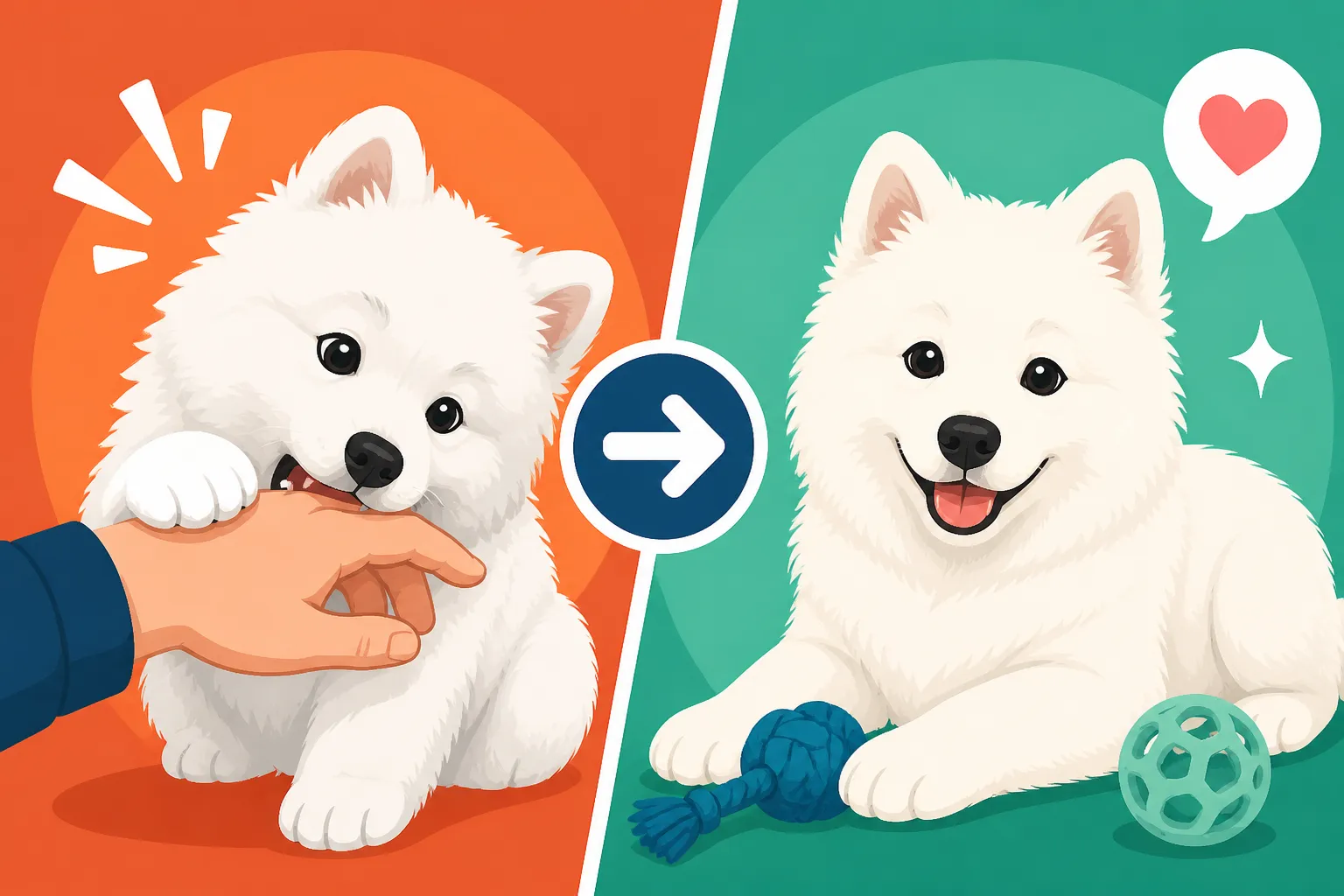
Having a variety of these readily available means you can always redirect your puppy to an appropriate item when they start to mouth your hands. If your puppy starts to chew on something they shouldn't, firmly say "no" or "leave it," and then immediately offer an approved chew toy, praising them enthusiastically when they take it. Many of these items are easily found on platforms like Amazon, allowing you to stock up on essentials for your growing pup. A Samoyed with nothing appropriate to chew on will find something, and often that something is your furniture or your hands! This also helps prevent your puppy from becoming bored, which can lead to other undesirable behaviors, as covered in What a Bored Samoyed Does to a House.
Redirection and Positive Reinforcement
Beyond just teaching bite inhibition and providing chew toys, active redirection and positive reinforcement play a huge role. The moment your puppy looks like they're about to mouth your hand, or even if they're just getting a bit too excited, immediately offer them a toy instead. Wave it enticingly, make it move, and encourage them to grab that instead of your fingers. When they successfully grab the toy and chew on it, reward them with praise ("Good boy!") and perhaps a small, high-value treat. This teaches them that engaging with toys brings positive outcomes.
Incorporate short, fun training sessions into your daily routine. Teaching basic commands like "sit," "stay," and "touch" can help redirect your puppy's focus and energy. When a puppy is engaged in structured learning, they are less likely to be engaging in unwanted mouthing. Online puppy training courses, such as those offered by BAXTER & Bella, can provide structured lessons and support, helping you learn how to effectively communicate with your Samoyed and positively reinforce desired behaviors. These platforms often break down training into manageable steps, which is perfect for teaching a Samoyed that sometimes finds obedience optional. Understanding What a Samoyed Will Work For will make these training sessions far more successful. Consistency in these positive interactions will not only reduce mouthing but also strengthen the bond between you and your fluffy companion.
When Mouthing Becomes More Than Just Puppy Behavior
While most puppy mouthing is a normal, albeit annoying, part of development, there are instances where it can escalate or become indicative of deeper behavioral issues. Recognizing the difference is crucial for your Samoyed's well-being and the safety of your household.
Identifying Problematic Mouthing
Normal puppy mouthing, even when sharp, is usually accompanied by playful body language: a wagging tail, a bouncy posture, and a lack of tension in their body. They might "play bow" or try to initiate chase games. The nips are generally inhibited, meaning they don't apply full pressure, even if they sometimes miss the mark and hurt.
Problematic mouthing, however, often looks and feels different. If your Samoyed puppy is biting with full force, drawing blood frequently, growling, snarling, or showing stiff body language, whale eyes (where the whites of their eyes are visible), or a tucked tail while biting, these are red flags. Such behaviors can suggest issues like:
- Fear or Anxiety: A puppy that feels threatened or overwhelmed might bite as a defensive mechanism.
- Over-arousal: Some puppies, especially highly energetic breeds like Samoyeds, can become over-stimulated during play and lose control, leading to harder bites.
- Resource Guarding: If mouthing occurs when you try to take away a toy, food, or even a favored spot, it could be a sign of resource guarding.
- Lack of Socialization: Puppies who haven't had enough positive interactions with other dogs or people might not have learned appropriate bite inhibition. This is why early socialization, even before full vaccination, is so important, as discussed in Where to Socialize a Samoyed Puppy Before Full Vaccination.
It's vital to observe your puppy's body language in conjunction with the mouthing. Is the biting truly playful, or does it have an edge of aggression or fear? A table can help differentiate:
| Behavior Trait | Normal Puppy Mouthing | Problematic Mouthing |
|---|---|---|
| Body Language | Loose, wiggly, play bows, happy tail | Stiff, rigid, tucked tail, wide eyes, snarling |
| Bite Pressure | Generally inhibited, quick release, sometimes hard accidentally | Full pressure, often breaks skin, sustained hold |
| Vocalizations | Playful growls, yelps from other puppies | Hard growls, snarls, distress cries |
| Context | During play, exploration, teething | When handled, approached, or protecting resources |
| Response to "Ouch" | Pauses, may look startled, or softens bite | Ignores, escalates, or becomes more agitated |
If you're noticing these more concerning signs, it's time to take action beyond typical puppy management techniques.
Seeking Professional Guidance
If you suspect your Samoyed puppy's mouthing is crossing the line from normal puppy behavior into something more problematic, or if you simply feel overwhelmed and aren't seeing progress with consistent training, don't hesitate to seek professional help. Early intervention is key to addressing behavioral issues before they become deeply ingrained.
A certified professional dog trainer or a veterinary behaviorist can assess your puppy's specific situation, identify underlying causes for the problematic mouthing, and develop a tailored training plan. They can teach you advanced techniques for managing arousal, building impulse control, and addressing any fear or resource guarding issues. They can also help you understand your Samoyed's unique communication signals. For instance, online platforms like BAXTER & Bella often connect you with trainers who can offer personalized advice, or your veterinarian can provide referrals to local specialists. Engaging with a professional can make a world of difference, not just in resolving the mouthing but in setting your Samoyed up for a lifetime of good behavior and a strong, positive relationship with you. Sometimes, Whether Puppy Class Is Enough for a Samoyed depends on the individual puppy and the owner's commitment to continued learning and application of techniques.
Getting through the puppy mouthing phase requires consistency, understanding, and a whole lot of patience, but it’s a crucial step in raising a well-adjusted Samoyed. Remember that your puppy isn't trying to be naughty; they're communicating and exploring the world as best they know how. By providing clear boundaries, appropriate outlets for their natural instincts, and consistent positive reinforcement, you can guide your Samoyed to outgrow those nippy tendencies and become the gentle, fluffy companion you dreamed of. Keep up the good work, and soon enough, those sharp puppy teeth will be a distant, albeit memorable, memory.
Disclaimer
This article is for general informational purposes only and does not constitute professional advice. Laws, prices and regulations vary by location and change over time. Consult a qualified professional for guidance on your specific situation.