How Long a Samoyed Puppy Takes to House Train
Bringing home a fluffy, smiling Samoyed puppy is an absolute joy, but that joy can quickly turn to frustration when you're constantly cleaning up accidents inside the house. Many new Samoyed owners wonder just how long this potty training phase is really going to last. This guide is here to give you realistic expectations, effective strategies, and the patience you'll need to successfully house train your Samoyed puppy, understanding that while every puppy is unique, our smart, sometimes-stubborn Sams have their own particular learning curve.
Setting Realistic Expectations for Potty Training Your Samoyed Puppy
Let's be honest, the internet is full of "potty train your puppy in a week!" claims, and while a rare few might hit that lottery, for most Samoyed owners, it's a marathon, not a sprint. Your beautiful, intelligent Samoyed puppy is still just a baby, learning the ropes of a whole new world, and that includes understanding where it's appropriate to relieve themselves. Rushing the process or expecting perfection too soon will only lead to more stress for both you and your furry friend.
Why Samoyed Puppies Have Their Own Timeline
Samoyeds are known for their intelligence, but also their independent spirit. This isn't a breed that lives to please in the same way some other breeds might; they're thinkers, and sometimes, those thoughts involve questioning why your rules are better than their instincts. This means that while they're smart enough to grasp the concept of house training quickly, their willingness to apply it perfectly, especially under distraction or if they feel it's inconvenient, can vary. Their thick coats also mean it can be harder to spot those subtle cues that other breeds might show before an accident, adding another layer to the challenge. Plus, let's not forget the sheer joy they find in playing and exploring; sometimes, a full bladder just isn't top of mind when there's an exciting leaf to sniff.
It's helpful to remember that a Samoyed puppy's bladder capacity is directly related to their age. A two-month-old puppy simply cannot hold it for as long as a four-month-old, let alone an adult. Expecting a tiny pup to sleep through the night without a potty break is setting both of you up for failure. We're talking about developing physiological control, which takes time, just like it does in human babies. Patience and understanding of these biological limitations are absolutely crucial.
Factors Influencing the Potty Training Period
The length of time it takes to fully house train a Samoyed puppy can range widely, typically anywhere from a few weeks of intense effort to several months before you can truly relax. Some dedicated owners report getting their Samoyed puppy mostly reliable within 8-12 weeks of consistent training, starting from when they brought the puppy home at 8-10 weeks old. However, it's far more common for puppies to still have occasional accidents, especially when excited or left too long, until they are 4-6 months old, and sometimes even up to a year for complete, unshakeable reliability.
Several factors play a huge role in this timeline:
- Consistency from You: This is perhaps the biggest factor. Are you taking your puppy out frequently, on a strict schedule, and rewarding every successful potty break? Inconsistency here is the number one reason for prolonged training.
- Puppy's Age: Younger puppies have less bladder control and need more frequent breaks. As they grow, their bodies mature, and they can hold it longer.
- Breed Traits: As mentioned, Samoyeds are smart but can be independent. This means they can learn quickly, but they might test boundaries or get distracted more easily than a breed known for its intense desire to please.
- Previous Experience: If your puppy came from a breeder who started early potty training (e.g., teaching them to use pee pads or a designated outdoor area), you might have a head start. Conversely, a puppy from a less structured environment might take longer.
- Your Home Environment: A home with easy access to the outdoors, or a securely fenced yard, makes the process smoother. Living in an apartment, especially one that requires elevator rides, adds layers of complexity and urgency.
- Health: Any underlying health issues, such as a urinary tract infection, can cause accidents and prolong training. Always rule out medical causes if your puppy is struggling.
Here's a quick comparison of what you might expect at different stages:
| Age of Samoyed Puppy | Bladder Control Expectation | Realistic Potty Training Time | Notes for Owners |
|---|---|---|---|
| 8-12 Weeks | Very limited | 2-4 months to be "mostly" reliable indoors | Needs potty breaks every 1-2 hours while awake, immediately after waking/eating/playing. May not sleep through the night. Crate training is vital. |
| 3-6 Months | Improving rapidly | 1-3 months of consistent effort from here | Can hold it for 3-4 hours during the day, longer at night if taken out before bed. Occasional accidents still common due to excitement or distraction. |
| 6-12 Months | Good, nearing full | Ongoing reinforcement | Should be mostly reliable. Accidents usually indicate owner error (left too long, ignored cues) or a health issue. Continue praising successes. Adolescent phase might bring some testing of boundaries. The Age a Samoyed Finally Matures is often past this. |
| 12+ Months | Fully developed | Established habit | Should be fully house trained. |
As you can see, there's no magic "finish line" at a specific week. It's a gradual process, built on trust and consistent communication.
Laying the Foundation for Potty Training Success
The key to successfully house training your Samoyed puppy lies in being proactive, not reactive. This means you need to be constantly observing, anticipating, and preventing accidents rather than simply cleaning them up. Every accident inside is a missed opportunity for your puppy to learn where they should go, and can actually set back the process.
The Power of a Strict Schedule
This is probably the most boring but undeniably effective tip: stick to a schedule. Puppies thrive on routine, and a predictable schedule helps them understand when and where they are expected to relieve themselves.
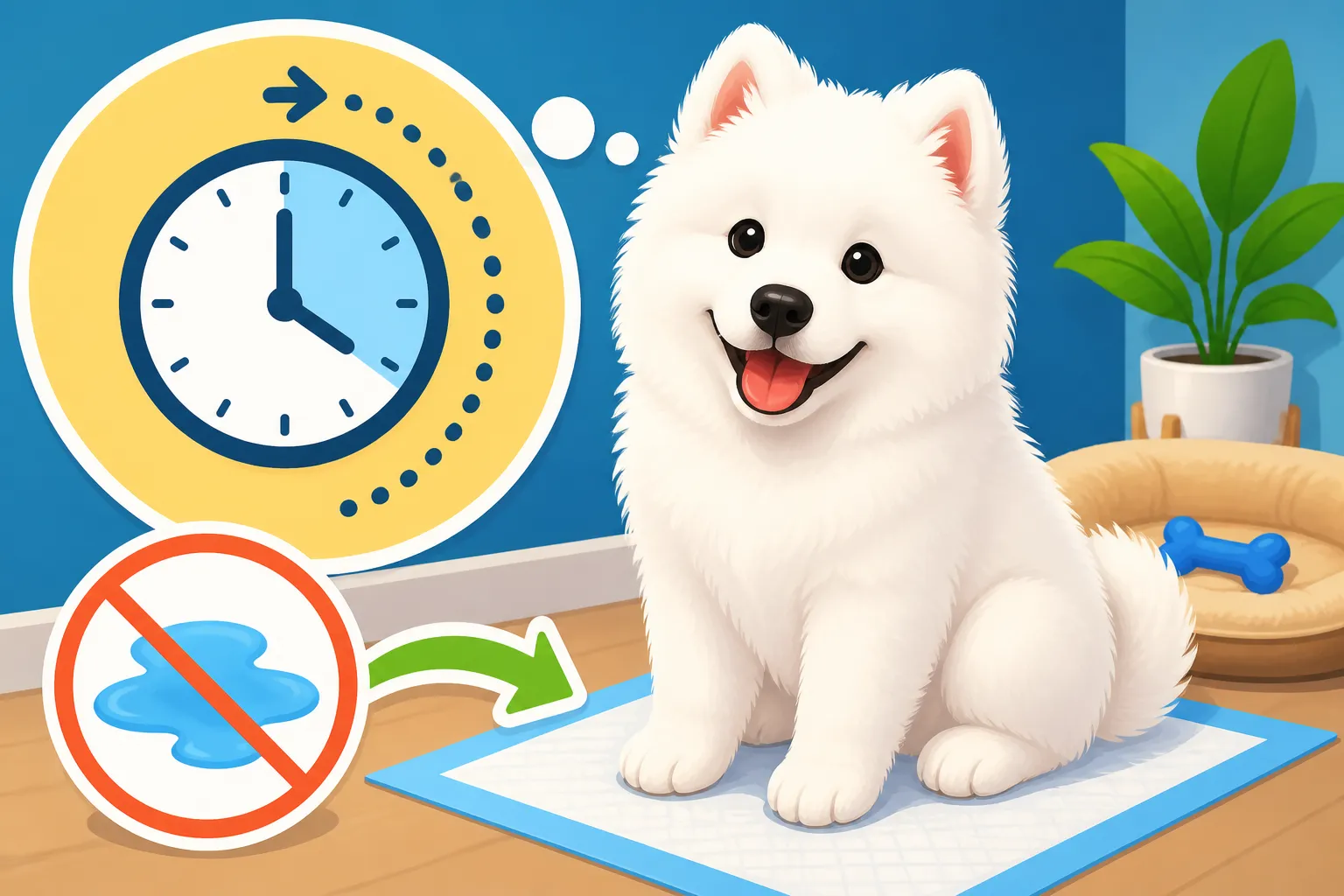
Start with taking your Samoyed puppy out every 30-60 minutes when they are awake and active. This might sound like a lot, but it drastically reduces the chances of accidents inside. Always take them out:
- Immediately upon waking up (from naps and in the morning)
- After every meal
- After every play session
- Before bedtime
- Anytime they start sniffing around intently, circling, or heading towards a door.
When you take them out, always go to the same designated "potty spot" if possible. This helps them associate that area with elimination. Be boring! Don't make it a play session. Just stand there, give them a quiet cue like "potty" or "go pee," and wait. The moment they go, praise them enthusiastically (but not so much that you interrupt them!) and give them a high-value treat. This positive reinforcement is crucial. If they don't go within a few minutes, bring them back inside and put them directly into their crate for 10-15 minutes, then try again. This prevents them from having an accident inside right after you've given them the chance to go outside.
Water intake is also important to monitor. While you should always provide fresh water, limiting it an hour or two before bedtime can help them make it through the night. Just remember, a young Samoyed puppy still needs to go out during the night, sometimes once or twice initially. How Many Hours a Samoyed Can Be Left is a common question, and for a young puppy, the answer is "not many!"
Crate Training: Your Best Ally
Crate training is not just about keeping your Samoyed puppy contained; it's a powerful house training tool. Dogs are naturally clean animals and generally won't want to soil their sleeping area. This instinct works wonders for house training.
Introduce the crate as a positive, comfortable den. Never use it for punishment. Make it appealing with soft bedding, a safe chew toy, and occasional treats. You can feed your puppy meals in the crate to build positive associations. When your Samoyed puppy is not actively playing, eating, or pottying, they should either be in their crate or under your direct, hawk-eyed supervision. This prevents them from having unsupervised accidents around the house. For more on this, check out Whether a Samoyed Puppy Should Be Crated.
The general rule of thumb for how long a puppy can be crated during the day is one hour for every month of age, plus one. So, a two-month-old puppy might be able to hold it for about three hours. At night, they can often hold it a bit longer, but still, expect at least one nighttime break for young pups. If your puppy whines in the crate at night, it's often a signal they need to go out. Take them out directly, quietly, and back into the crate afterward without much fuss. Avoid making it a game, or they'll learn to whine for attention.
You can find excellent, sturdy crates on platforms like Amazon that are appropriately sized for a growing Samoyed, allowing them to stand, turn around, and lie down comfortably, but not so large that they can designate a "bathroom" corner. Remember that What a Crate Sized for a Samoyed Costs can vary, but it's an invaluable investment.
Constant Supervision and Interrupting Accidents
When your Samoyed puppy is out of their crate, they need your undivided attention. This isn't the time to do laundry or browse your phone. You need to be watching for those subtle signs that an accident is imminent: sniffing the ground intently, circling, or moving away from you towards a quieter spot.
If you see your puppy starting to squat or go inside, immediately interrupt them with a sharp clap or a firm "No!" Don't scare them, but startle them enough to stop. Then, quickly pick them up (or gently herd them if they're too big) and rush them outside to their designated potty spot. If they finish going outside, praise and reward generously. This teaches them that going outside is the rewarded behavior, while going inside is not.
It's tempting to yell or get angry after an accident, but this is counterproductive. Your Samoyed puppy won't associate your anger with the act of going potty inside; they'll just learn to be afraid of you or to hide their accidents. The key is to prevent the accident in the first place through supervision and routine.
Dealing with Setbacks and Persistent Challenges
Even with the most diligent efforts, you're bound to encounter bumps in the road. Potty training isn't linear; there will be days when your Samoyed puppy seems to "get it" perfectly, followed by days with multiple accidents. Don't despair, this is completely normal!
Cleaning Up Accidents Effectively
When an accident happens, proper cleanup is essential. Dogs are drawn to repeat elimination in areas where they can smell previous accidents. Regular household cleaners won't cut it because they don't eliminate the enzymatic scent that only a dog's nose can detect.
You need an enzymatic cleaner designed specifically for pet stains. Products available on Amazon are excellent for breaking down the odor-causing bacteria. Blot the area thoroughly first to remove as much liquid as possible, then douse the spot with the enzymatic cleaner and let it air dry according to the product's instructions. Avoid scrubbing, as this can push the mess deeper into carpets. If you have carpet, a portable spot cleaner can be a lifesaver. This diligent cleaning is crucial to preventing your Samoyed from consistently returning to the same "hot spots" inside the house.
When Your Samoyed Seems to Regress
It's incredibly frustrating when your seemingly house-trained Samoyed puppy suddenly starts having accidents again. This "regression" can happen for several reasons:
- Medical Issues: The first thing to rule out is a urinary tract infection (UTI) or other medical condition. A sudden increase in accidents, increased frequency, or straining to urinate warrants a vet visit. Whether a Samoyed Needs Yearly Kidney Bloodwork is a separate, important consideration, but acute issues like UTIs need immediate attention.
- Too Much Freedom, Too Soon: Often, owners relax their vigilance too quickly. They stop crating, extend outdoor breaks too long, or assume the puppy is "done" with training. Your Samoyed puppy still needs consistent reminders and supervision, especially during their adolescent phase (roughly 6-18 months). Just like human teenagers, they might test boundaries or get distracted.
- Environmental Changes: A new schedule, a move to a new home, new people or pets in the house, or even just changes in weather can disrupt a puppy's routine and lead to accidents.
- Stress or Anxiety: If your Samoyed puppy is experiencing stress, anxiety (such as Separation Anxiety in a Samoyed), or fear, they might have accidents. This is not defiance but an emotional response. For example, if your puppy is left alone too long, they might be unable to hold it due to anxiety, even if they would normally be able to. In this case, addressing the root cause of the anxiety is paramount.
- You're Missing the Cues: As your puppy gets older, their cues might become more subtle. You might need to relearn their communication style.
If regression occurs, go back to basics. Reimplement strict crating, frequent trips outside, and constant supervision. It’s like starting over, but usually, the progress is much faster the second time around.
Seeking Professional Guidance
If you've been consistent, ruled out medical issues, and your Samoyed puppy is still struggling significantly with house training after several months, it might be time to enlist professional help. A certified professional dog trainer or a veterinary behaviorist can observe your puppy's behavior, assess your training methods, and offer personalized strategies. They can help identify specific challenges unique to your Samoyed and guide you through solutions.
Some online resources, like BAXTER & Bella, offer comprehensive puppy training programs that include guidance on house training. These programs often provide structured plans and support that can be invaluable for owners who feel overwhelmed. Sometimes, an objective third party can spot things you might be missing in your day-to-day interactions with your puppy.
Building a Lifelong Habit
House training isn't just about preventing accidents; it's about teaching your Samoyed puppy appropriate habits and building a foundation of good communication and trust. The goal is a dog that reliably signals when they need to go out, and understands that the house is a safe, clean space.
Consistency is Your Superpower
I know I've said it before, but it bears repeating: consistency is the most powerful tool in your house training arsenal. This means everyone in the household needs to be on the same page with the schedule, the potty cues, the praise, and the cleanup. A single lapse by one family member can confuse your Samoyed puppy and set back progress significantly.
As your Samoyed puppy grows, you can gradually increase the time between potty breaks. Observe your puppy closely. If they are reliably holding it for three hours, try extending it to three and a half, then four. Always err on the side of caution. Even once they are seemingly perfectly house trained, still take them out before long car rides, before you leave the house, and before bed. It's about maintaining good habits.
Remember to continue praising and rewarding successful outdoor eliminations, even when your Samoyed is older. What a Samoyed Will Work For often includes delicious treats and enthusiastic verbal praise, so don't stop offering that positive reinforcement just because they've "gotten it." A happy Samoyed is one who knows they're doing a good job!
Understanding the Adolescent Phase
The adolescent phase for Samoyeds typically kicks in around 6 months and can last well into their second year. During this time, your puppy's hormones are surging, they're becoming more independent, and they might start "testing" boundaries. This can sometimes manifest as a temporary regression in house training, even if they were doing great before. They might try to sneak off to have an accident, or simply "forget" their training in a moment of excitement.
This is not a sign that your training failed, but rather a normal developmental stage. Recommit to your consistency, supervision, and positive reinforcement. Don't get discouraged. This phase will pass, and your diligent efforts will pay off with a reliably house-trained adult Samoyed. You'll soon look back on these early days and marvel at how far you both have come. Knowing The First Year With a Samoyed Puppy is full of these kinds of challenges helps prepare you.
Disclaimer
This article is for general informational purposes only and does not constitute professional advice. Laws, prices and regulations vary by location and change over time. Consult a qualified professional for guidance on your specific situation.