What a Samoyed Will Work For
It’s a familiar scenario for Samoyed owners: you know your fluffy cloud of joy is smart, capable, and full of potential, but when it comes to training, sometimes it feels like you're speaking two different languages. They look at you with that famous Sammy smile, but inside, you just know they're weighing their options – and often, your idea isn't at the top of their list. This guide will dive deep into the unique motivations that drive Samoyeds, helping you unlock their willingness to engage and cooperate, turning frustrating moments into rewarding connections.
Understanding the Samoyed Drive: More Than Just a Pretty Face
Let's be real, owning a Samoyed is often about falling in love with that gorgeous smile and luxurious coat. But beneath all that fluff is a dog with a rich history and deeply ingrained instincts that dictate much of their behavior and, critically, what they consider worth doing. They aren't wired to be blindly obedient; they're thinkers, problem-solvers, and collaborators, forged in a harsh environment.
Their Independent Spirit and Ancient Roots
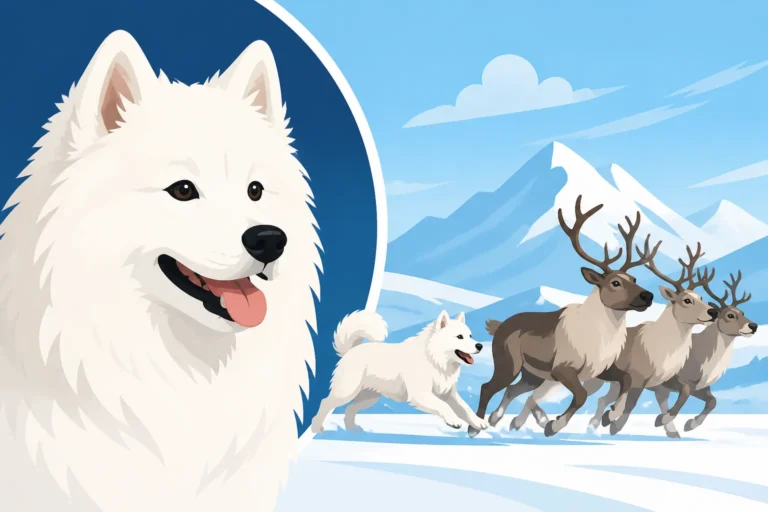
The Samoyed breed hails from Siberia, where they lived alongside the Nenets people, herding reindeer, pulling sleds, and even sleeping in tents with families for warmth. This wasn't a master-and-servant relationship; it was a partnership. Their survival depended on their intelligence and ability to make decisions independently, often without direct human instruction. This is why you'll often find your Samoyed pausing, assessing a situation, and deciding if your request aligns with their priorities. It’s not defiance, it’s heritage. They’re not waiting for you to tell them what to do; they're figuring out what makes sense for them. Understanding this fundamental independence is the first step in figuring out What Actually Motivates a Samoyed.
This inherent independence means that methods that rely solely on strict command-and-control often fall flat with a Samoyed. They're not golden retrievers eager to please, nor border collies desperate for a job you define. They need to be convinced that your idea is a good one, or at least, that the reward for doing it outweighs the satisfaction of doing their own thing. Their ancient role as partners, not just pets, means they have opinions, and they're not shy about expressing them through their actions – or inaction, as the case may be.
The Lure of the Chase: Prey Drive
Despite their gentle nature, Samoyeds possess a notable prey drive, a remnant of their working past where they might have needed to chase down a stray reindeer or ward off predators. This instinct manifests as a strong urge to pursue anything that moves quickly – squirrels, rabbits, cats, or even a child running in the park. For many Samoyeds, the thrill of the chase itself can be a powerful, albeit sometimes problematic, motivator.
This drive means that certain activities naturally appeal to them. Flirt poles, fetch with a fast-moving toy, or even controlled games of chase can be incredibly engaging. However, it also means that off-leash reliability is a lifelong challenge, as the call of a fleeing critter often trumps any recall cue. It's not that they don't love you; it's that instinct is a powerful master. You might find that for some Samoyeds, working to engage this drive in a safe, controlled manner, such as through lure coursing or even just intense games of tug, can be a highly effective way to motivate them during training sessions. This instinct is also why their recall cannot be trusted in an unfenced area.
The Joy of the Job: Working Instincts
While the reindeer herding days are largely behind them, the Samoyed still thrives on having a purpose. They were bred to pull, to herd, and to be active companions in challenging environments. This "working instinct" doesn't necessarily mean they need to be sledding champions, but it does mean they need mental and physical engagement that taps into their innate drives. A bored Samoyed is often a destructive or vocal Samoyed.
Activities that allow them to use their bodies and brains in conjunction are often incredibly motivating. Think about structured walks where they "pull" a lightweight cart or harness, even if it's just for fun in the park. Scent work, where they use their powerful noses to find hidden treats or toys, can also be deeply satisfying. Agility, while sometimes a negotiation, allows them to jump, weave, and think on their feet. This isn't just about burning off energy; it's about fulfilling their breed's historical role and giving them a sense of accomplishment. They might resist endless repetitions of "sit" in the living room, but put them in a harness and let them trot down a trail, and suddenly, they're all business. Pulling: What a Samoyed Was Actually Bred to Do can give you more insight into this intrinsic drive.
Primary Motivators: Food, Play, and Connection
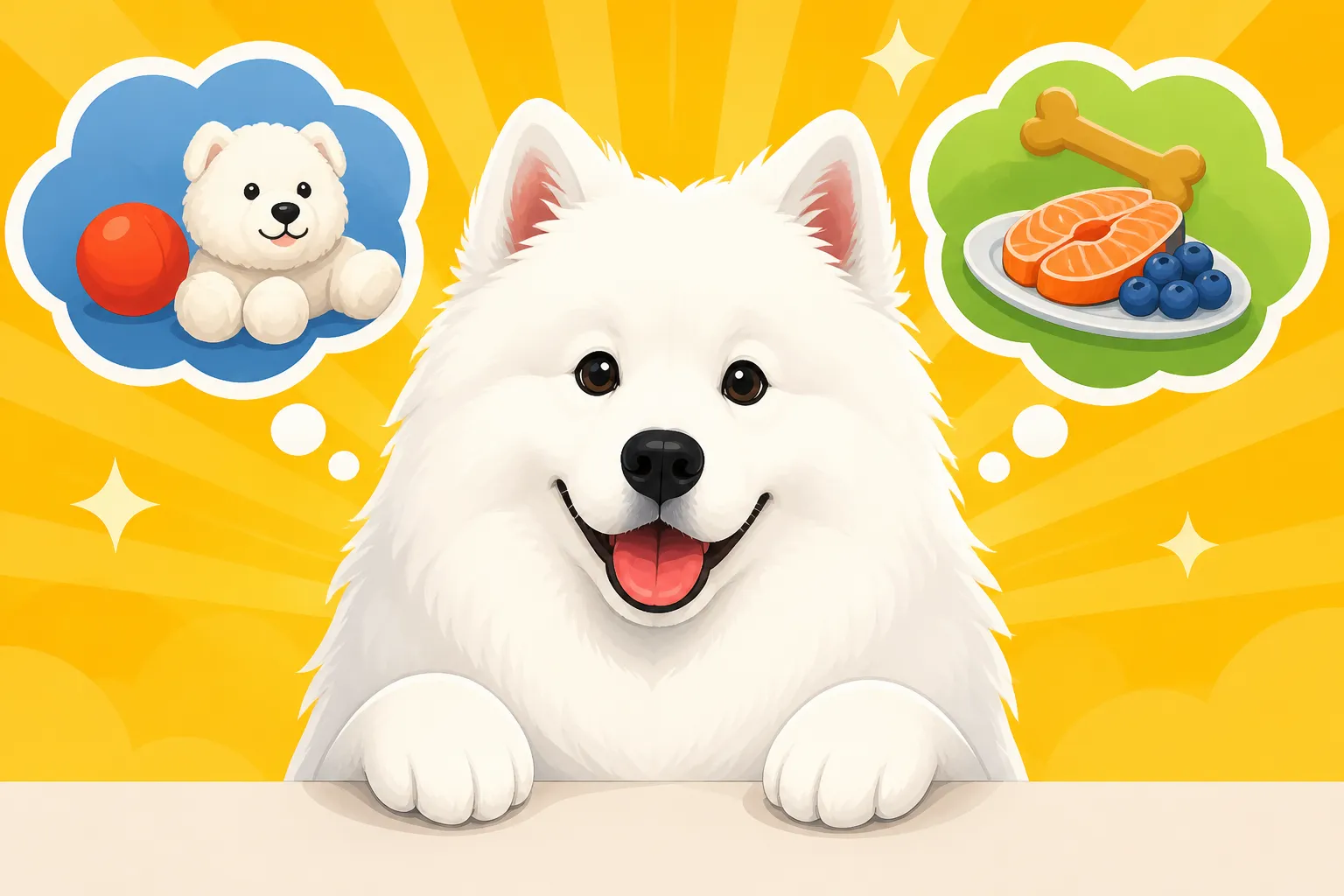
When you’re trying to teach a Samoyed something new, or simply reinforce good behavior, you need to speak their language of reward. For most Samoyeds, this boils down to three powerful categories: food, play, and genuine social connection. Overlooking any of these, or relying too heavily on just one, can lead to a quickly disengaged dog.
The Allure of High-Value Treats
Let’s be honest, many dogs are food motivated, but for Samoyeds, it’s less about mere sustenance and more about the quality of the snack. A dry kibble pellet might get you a polite glance, but a piece of grilled chicken? That’s gold. High-value treats are your secret weapon in almost any training scenario, especially when tackling something new or challenging.
Think of it like this: your Samoyed has a mental "cost-benefit analysis" running constantly. If the "cost" of performing a behavior (like ignoring a tempting scent or staying in a prolonged sit) is high, the "benefit" (the treat) needs to be equally high. What constitutes "high-value" can vary from dog to dog, but generally, it means something soft, smelly, and easily digestible. Small pieces of cheese, cooked meat, bits of hot dog, or specialized training treats from brands like BAXTER & Bella are often big hits. Keep these special rewards only for training, not for everyday snacking, to maintain their allure. You'll be amazed at the focus a truly delicious treat can command, especially when your Samoyed is usually "too busy" to listen. For intense training or distracting environments, you might even consider a "jackpot" reward—a whole handful of treats for an especially stellar performance.
Engaging with Interactive Toys
Beyond food, play is a vital currency for many Samoyeds. But here’s the kicker: it’s often not about a simple toss-and-retrieve. Samoyeds often prefer interactive play with their human. This could be a vigorous game of tug-of-war, a chase game around the yard, or an exciting session with a squeaky toy. The key is that you are an active participant, making the game more engaging and unpredictable.
Consider toys that tap into their natural instincts. Tug toys are fantastic for building drive and can be used as a powerful reward for completing a sequence of commands. Puzzle toys from brands found on Amazon, where they have to figure out how to get a treat, offer mental stimulation that can be just as tiring as physical exercise. Some Samoyeds love chasing a laser pointer or a flirt pole, which mimics prey movement and engages their chase drive in a controlled way. The goal is to make play a collaborative, high-energy activity that strengthens your bond and rewards their effort. If your Samoyed gets bored quickly with standard fetch, try adding some twists – hiding the ball, making them "wait" before you throw, or even playing hide-and-seek with the toy. The variety keeps them guessing and engaged.
When Food and Play Fall Flat
What happens when your Samoyed just isn’t interested in the chicken or the squeaky toy? This can be a frustrating moment for any owner, making you wonder Why a Samoyed Ignores a Cue It Knows. Often, it comes down to context, distraction, or burnout. If your Samoyed is in a highly stimulating environment – say, a dog park with other dogs, or a new hiking trail full of interesting smells – a piece of cheese might not be enough to compete. Their environment is offering higher value rewards (sniffing, exploring, greeting).
In these situations, you need to either reduce the environmental distractions or increase your reward value significantly. Sometimes, it’s not about the type of treat but the freshness of the motivation. If you’ve been drilling "sit" for ten minutes straight, even the best treats lose their luster. Keep sessions short, varied, and end on a high note. Also, consider if your Samoyed is genuinely comfortable or stressed. A stressed dog will not learn or respond to motivators as effectively. Look for subtle cues of disinterest or anxiety – averted gaze, sniffing the ground excessively, or a rigid body. Sometimes, the best motivator is simply a break.
The Power of Positive Reinforcement and Clear Communication
Samoyeds respond best to training that makes them feel good about their choices, rather than fearing punishment. This means leaning heavily into positive reinforcement and ensuring your communication is crystal clear and consistent. A confused or intimidated Samoyed is an unmotivated Samoyed.
Beyond "Good Dog": Specific Praise
While a hearty "Good dog!" is always welcome, Samoyeds, like many intelligent breeds, thrive on more specific praise. When they perform a desired action, don't just offer a generic compliment. Be enthusiastic and descriptive. "Yes! Good sit!" or "Excellent stay, buddy!" helps them connect their action directly with your approval. This isn't just fluffy talk; it helps them understand exactly what they did right, reinforcing that specific behavior.
Pairing specific verbal praise with high-value treats and perhaps a quick pet or scratch behind the ears amplifies the reward. The more clearly they understand why they're being rewarded, the faster they'll repeat the behavior. It's about building a positive association, teaching them that cooperating with you leads to good things. This also helps in building a stronger bond, as they associate your voice and presence with positive experiences. For an independent thinker like a Samoyed, feeling understood and appreciated goes a long way.
The Clicker and Marker Training
For truly precise communication, a clicker or other marker word can be incredibly powerful. A clicker marks the exact moment your Samoyed performs the desired behavior. Because it's a consistent, neutral sound, it's unambiguous. The click itself isn't the reward; it's a signal that a reward is coming. This allows you to communicate with split-second timing, which is crucial for capturing fleeting behaviors.
Imagine your Samoyed is learning to 'settle' on a mat. As soon as their rear touches the mat, click, then treat. They quickly learn: "Mat equals click, click equals treat." This precision helps them understand the nuances of what you're asking. A marker word, like "Yes!" or "Good!", can serve the same purpose if delivered consistently and with clear intonation. Whether Positive Training Alone Works on a Samoyed is a question many owners ponder, and marker training is a cornerstone of effective positive reinforcement, showing how powerful these methods can be. The neutrality and consistency of a clicker are particularly useful for Samoyeds who might find an overly excited voice distracting or less precise.
Building a Reinforcement Hierarchy
Not all rewards are created equal, and not all behaviors require the same level of motivation. Establishing a "reinforcement hierarchy" in your mind can be extremely helpful. For easy, known behaviors in a low-distraction environment, a simple "Good!" and a piece of kibble might suffice. For a challenging new behavior, or an old behavior in a highly distracting area, you’ll need the top-tier rewards – the chicken, the special toy, or a burst of enthusiastic play.
This means being strategic with your rewards. Don't always use the best treats for the easiest tasks. Save your highest-value motivators for when you really need your Samoyed to focus and perform against significant odds. By varying your rewards and matching them to the difficulty of the task and the level of distraction, you keep your Samoyed engaged and prevent them from becoming bored or expecting the best for minimal effort. Understanding this hierarchy helps you conserve your most potent motivators for when they matter most, maximizing their impact.
Social Connection and Affection: The Heart of the Sammy Bond
While food and play are excellent tools, for a Samoyed, true motivation is often deeply intertwined with their desire for social connection and affection from their chosen people. They are, after all, a breed bred to be close companions, living inside the family tent.
The Samoyed's Desire for Closeness
Samoyeds are famously social dogs. They thrive on being part of the family and often follow their humans from room to room, just wanting to be near. This innate desire for closeness can be a powerful motivator. For many Samoyeds, simply earning your enthusiastic praise, a loving pat, or a moment of shared quiet affection can be a significant reward in itself, especially after a training session or a moment of good behavior.
This isn't to say a pat on the head replaces a treat for a challenging recall, but it complements it beautifully. Integrating genuine connection into your training and daily interactions strengthens your bond, which in turn makes your Samoyed more inclined to engage with you. They want to be involved, to be part of what you're doing. A quick snuggle, a belly rub, or just a few moments of undivided attention can be more valuable than you think. This deep desire for companionship is a key aspect of Why a Samoyed Wants to Be in the Room With You.
Leveraging Playtime with Their Favorite Human
Interactive playtime, where you are fully engaged, is not just about burning energy; it's a bonding ritual. For a Samoyed, a game of tug, fetch, or even hide-and-seek in the yard becomes a highly valued interaction when it's with their favorite human. It’s a chance for them to collaborate, to exercise, and to receive your full attention. This shared activity can be a potent reward, reinforcing the idea that working with you leads to fun.
Make these play sessions a priority. Don's just absentmindedly toss a ball while checking your phone. Be present. Use excited voices, run with them, praise their efforts. This makes playtime a truly high-value experience that can serve as a reward for more mundane training tasks. For example, if your Samoyed struggles with a particular obedience exercise, concluding the session with a few minutes of vigorous, engaged play can leave them feeling positive about the entire interaction, making them more eager for the next one.
Why They Don't Live to Please You
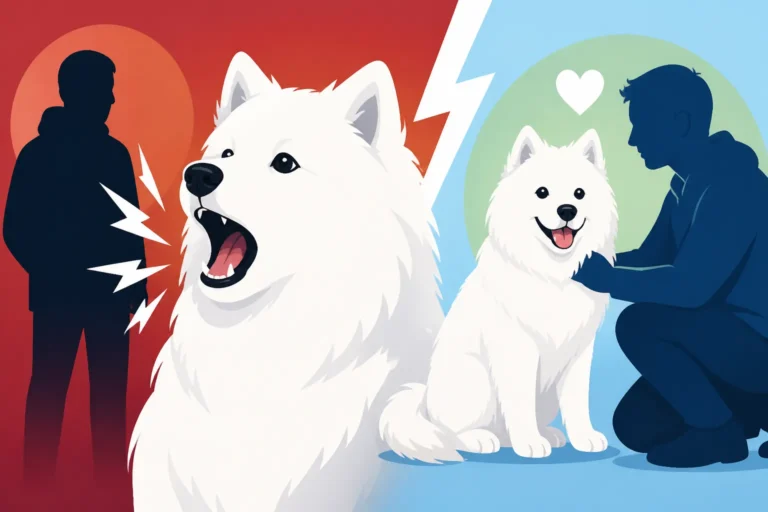
It’s crucial to distinguish between a desire for closeness and a natural inclination to "live to please" – the latter is not typically a Samoyed trait. Unlike some breeds that seem to thrive on making their owners happy, Samoyeds are often driven by what benefits them or what makes sense to them. They are partners, remember, not subordinates.
This distinction is vital for understanding motivation. If your Samoyed isn't responding, it's rarely out of malice or a desire to displease you. More likely, they haven't found sufficient motivation, or they're genuinely confused, or something else in the environment is more compelling. Frustration on your part will only shut them down. Instead, re-evaluate the reward. Is it truly high-value enough for the task and environment? Is your communication clear? Are you asking too much too soon? Patience and a willingness to adjust your approach, rather than expecting blind obedience, will yield far better results. This makes Training a Samoyed That Finds Obedience Negotiable a core reality for Samoyed owners.
Addressing Aversion and Disinterest: When Motivation Fails
Sometimes, it feels like no amount of gourmet treats or exciting toys can convince your Samoyed to do what you're asking. This isn't necessarily a sign of a "bad" dog; it means you need to re-evaluate your strategy and understand what might be causing their lack of motivation or outright aversion.
Identifying What Doesn't Work
Just as important as knowing what motivates your Samoyed is understanding what doesn't work. This isn't just about ignoring treats; it includes methods that might shut them down or create negative associations. Harsh corrections, yelling, or physical punishment are not only ineffective with Samoyeds but can actively damage your relationship. They don't respond well to intimidation; they're more likely to become withdrawn, distrustful, or simply "tune you out" rather than comply. This explains Why Raising Your Voice Fails on a Samoyed.
Furthermore, endlessly repeating a cue without a break or varying the reward can lead to boredom and disinterest. If they know "sit" perfectly, but you're asking for it 20 times in a row with the same low-value treat, they might decide it's simply not worth their effort anymore. Pay attention to their body language: yawning, lip licking, excessive sniffing, or turning away can all be signs of stress, boredom, or a lack of engagement. When you see these, it's a signal to change your approach.
Overcoming Stubbornness with Patience and Persuasion
Many describe Samoyeds as stubborn, and there's some truth to that, but it's more accurately an expression of their independent thinking. They're not being difficult to spite you; they're simply not convinced. Overcoming this requires immense patience and the art of persuasion, rather than force.
Instead of getting frustrated, try to break the desired behavior down into smaller, easier steps. If they won't "come" when called, perhaps start by rewarding them for just looking at you when you say their name. Build success step by step. Use luring with high-value treats to guide them into position, then fade the lure as they understand. Sometimes, simply changing the location of training can help, as a new environment can make them more curious and less resistant. Remember, every successful repetition, even a small one, builds confidence and reinforces the idea that working with you is a good experience. A long-term perspective is key here.
Making Training Fun and Novel
Samoyeds are intelligent and can quickly get bored with repetitive drills. To keep them motivated, inject fun and novelty into your training sessions. Vary your rewards, change your training locations, and introduce new challenges. Instead of always practicing "stay" in the living room, try it in the backyard, then at a quiet park.
Transform exercises into games. For instance, rather than a rigid "down-stay," turn it into a game of "statues," rewarding for increasing duration and adding playful praise. Hide-and-seek, using their excellent sense of smell, can be a fantastic way to practice recall in a fun, engaging manner. Enroll in different types of classes, like scent work, rally, or even recreational agility. This continuous learning and varied engagement not only keeps their minds stimulated but reinforces their bond with you, as you become the source of exciting new experiences. This is important to prevent them from becoming one of the Samoyeds that Gets Bored of Drilling.
Tailoring Training to the Samoyed Mindset: Strategies for Success
Effective training for a Samoyed isn't a one-size-fits-all approach. It requires understanding their unique blend of intelligence, independence, and sociability, and then adapting your methods accordingly.
Short, Engaging Sessions are Key
One of the biggest mistakes an owner can make with a Samoyed is to attempt long, drawn-out training sessions. Their attention spans, especially for repetitive tasks, are surprisingly short. What they lack in sustained focus, they make up for in bursts of enthusiastic engagement – if you can capture it.
Aim for training sessions that are 5-10 minutes long, maximum. Even shorter is fine, especially for puppies. These brief, focused bursts prevent boredom and keep the experience positive. You can do several short sessions throughout the day, rather than one long one. For example, a quick session before breakfast, another after a walk, and a third before bed. Each session should end on a high note, with success and a big reward, leaving your Samoyed wanting more. This also means understanding their threshold for How Many Repetitions a Samoyed Needs before they mentally check out.
The Importance of Consistency
While variety in training tasks is good, consistency in your cues, expectations, and rewards is paramount. If one family member uses "sit," another uses "butt," and a third occasionally lets the dog get away with not sitting, your Samoyed will quickly learn that the command is negotiable. They’re smart enough to pick up on inconsistencies and exploit them.
Everyone in the household needs to be on the same page regarding commands, hand signals, and what constitutes a reward for a given behavior. Regular practice, even just for a few minutes each day, reinforces learning. If you use a clicker, ensure it's always followed by a treat. If you want them to stay off the couch, it means always off the couch, not just when guests are over. This unwavering consistency builds trust and clear communication, making your Samoyed more likely to respond because they understand what's expected.
Finding Their "Why" for Different Tasks
Ultimately, motivating a Samoyed comes down to figuring out their individual "why" for each specific task. This "why" might not always be immediately obvious. For some Samoyeds, the "why" for coming when called is a delicious hot dog and a game of tug. For staying calmly while you eat dinner, it might be a long-lasting chew toy or a stuffed Kong. For walking politely on a leash, it could be the opportunity to explore new smells without constant corrections.
It's a continuous process of observation and experimentation. What makes their eyes light up? What makes them truly focused? Is it a particular toy, a specific treat, your excited voice, or a chance to participate in a fun activity like Whether a Samoyed Can Do Agility? Every Samoyed is an individual, even within the breed’s general characteristics. The most successful Samoyed owners are those who are lifelong students of their own dog, constantly seeking to understand their unique motivations and adapting their training methods to align with what their fluffy companion truly values. Building this partnership is what makes life with a Samoyed so incredibly rewarding.
| Motivator Type | Best For | Examples | Pros | Cons |
|---|---|---|---|---|
| High-Value Food | New behaviors, distracting environments, capturing specific moments | Cooked chicken, cheese, hot dogs, freeze-dried liver, BAXTER & Bella treats | Highly effective for focus, easy to deliver quickly | Can lead to weight gain if overused, less effective if dog is full |
| Interactive Play | Building enthusiasm, releasing energy, reinforcing completed sequences | Tug-of-war, fetch with human participation, flirt pole, hide-and-seek | Strengthens bond, engages natural instincts, good mental/physical outlet | Requires active human participation, not suitable for all dogs/situations |
| Verbal Praise | Reinforcing easy behaviors, maintaining positive atmosphere, building bond | Enthusiastic "Good dog!", "Yes!", specific praise like "Good sit!" | Always available, strengthens human-dog relationship | Less effective as primary motivator for difficult tasks, can be vague |
| Physical Affection | Bonding, comfort, calm rewards for settled behavior | Belly rubs, ear scratches, gentle petting, quiet cuddles | Deepens emotional connection, calming | Not always preferred during high-arousal training, some dogs prefer space |
| Environmental Rewards | Everyday good choices, self-rewarding behaviors, enrichment | Opening the door for a walk, getting to chase a thrown toy, sniffing a new bush | Mimics real-world consequences, natural and free | Less controlled, hard to time precisely for specific training |
Disclaimer
This article is for general informational purposes only and does not constitute professional advice. Laws, prices and regulations vary by location and change over time. Consult a qualified professional for guidance on your specific situation.