Whether a Samoyed Should Walk in Summer
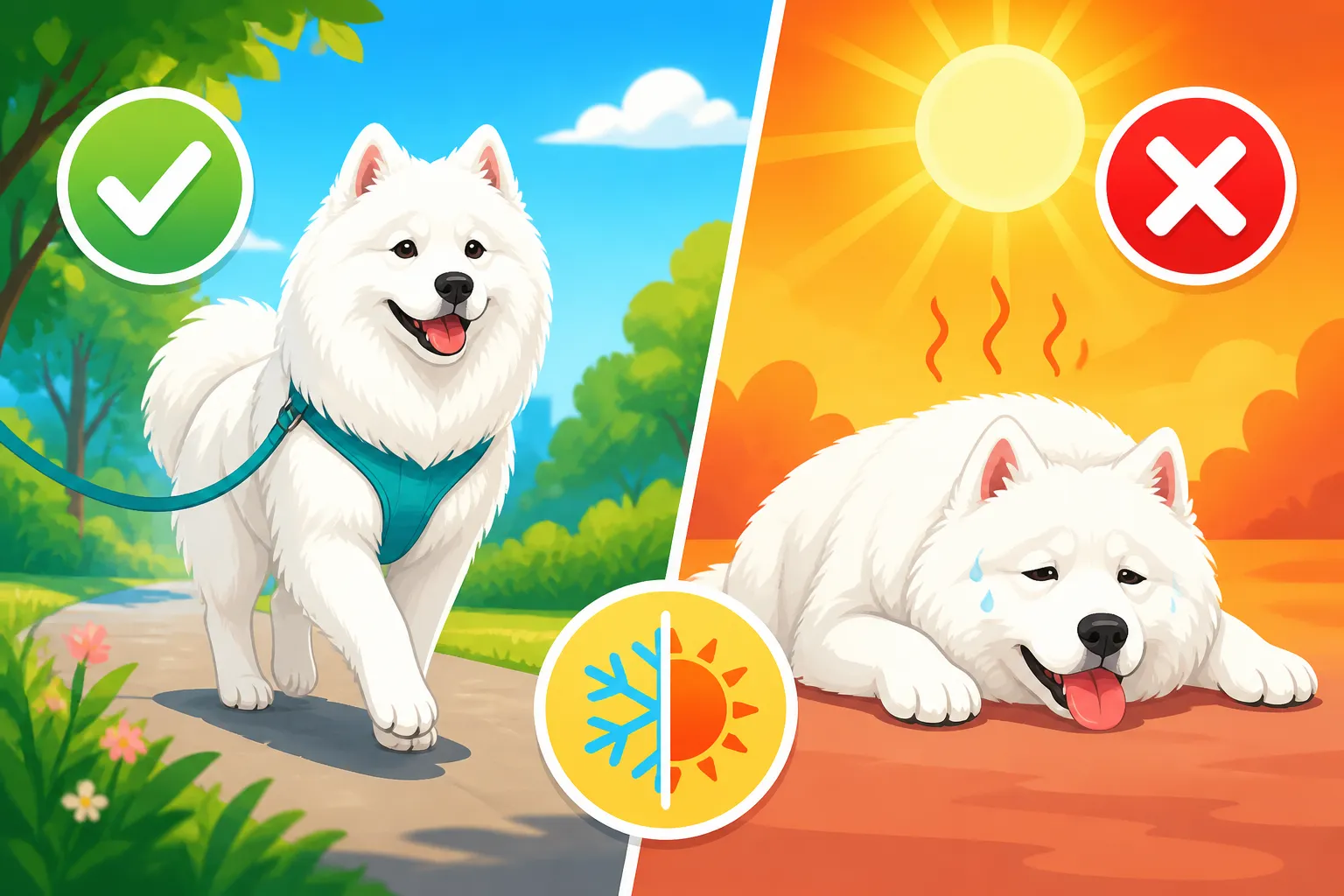
The summer months, with their long, sunny days, often present a real dilemma for Samoyed owners. You want your fluffy companion to enjoy the great outdoors, stretch their legs, and burn off some of that boundless energy, but the sweltering heat and blazing sun can turn a simple walk into a dangerous undertaking. It's a genuine frustration, feeling like you're caught between your dog's need for activity and their very real risk of overheating. This guide is here to help you navigate those tricky summer days, understand the unique challenges your Samoyed faces, and figure out when and how to safely get them the exercise they need without putting their health on the line.
Understanding Your Samoyed's Natural Thermoregulation Challenges
It’s easy to look at that magnificent white coat and assume your Samoyed is just naturally equipped for anything, but when it comes to summer heat, their biology presents some serious hurdles. They're built for an entirely different climate, and understanding this is the first step in keeping them safe during warmer months.
The Double Coat: A Blessing and a Burden in Heat
That glorious, thick double coat that makes your Samoyed look like a cloud on legs is truly a marvel of natural engineering. In their native Siberia, it’s a lifesaver, providing unparalleled insulation against brutal cold. The outer guard hairs are coarse and shed snow and ice, while the dense, woolly undercoat traps warm air close to the body. This is why you'll often hear that a Samoyed's coat insulates against both cold and heat – a concept that often puzzles new owners. In theory, that trapped air acts as a buffer against external heat as well.
However, theory often meets reality differently, especially in places far removed from the Arctic tundra. While the coat does offer some protection from direct sun and can help keep their core temperature stable in moderate warmth, it also makes it incredibly difficult for them to dissipate excess heat when ambient temperatures climb. Unlike us, dogs primarily cool themselves by panting, and to a lesser extent, through their paw pads. A dense coat can hinder the evaporative cooling process from their skin, even if it's not directly exposed to the sun. It's like wearing a heavy winter coat on a mild spring day – initially comfortable, but quickly suffocating once you start moving around. When the air trapped in their coat heats up from their body temperature and the external environment, there's nowhere for that heat to go easily. Many people wrongly assume shaving a Samoyed will help, but in fact, Why Shaving a Samoyed Makes the Heat Worse is a common misconception that can actually lead to more problems.
Ancestral Roots and Heat Tolerance
Let’s not forget where Samoyeds come from. These dogs were bred by the Nenets people of Siberia, a region where temperatures can plunge to -60°F (-51°C) in winter. Their entire physiology, from their coat to their compact body structure and metabolism, is geared towards thriving in extreme cold. They curled up with their human families in tents, herded reindeer across icy plains, and pulled sleds through snowdrifts. Their heritage is deeply ingrained in every cell, and that heritage does not include coping with humid 90-degree Fahrenheit (32°C) summer days in the American South or sweltering city pavements.
This ancestral background means their bodies are simply not designed for efficient heat dispersal. They don’t sweat through their skin like humans do. Their panting mechanism works best when there’s a significant temperature difference between their internal body temperature and the ambient air, allowing for effective evaporative cooling. When the air itself is hot and humid, this mechanism becomes much less efficient, putting them at a severe disadvantage. Trying to force a Samoyed to exercise vigorously in conditions that are naturally hostile to their physiology is not only uncomfortable for them but genuinely dangerous. Their history dictates their biology, and while they are incredibly adaptable, there are limits to what their bodies can safely endure. A Samoyed Built for Sixty Below in an American Summer offers more insight into their incredible origins.
The Very Real Dangers of Summer Walks for Samoyeds
Understanding your Samoyed's inherent challenges is crucial because ignoring them can lead to serious, even life-threatening, consequences during summer walks. The risks are not merely discomfort; they are physiological emergencies.
Overheating and Heatstroke: A Silent Threat
This is arguably the most critical danger. Overheating can quickly escalate to heatstroke, a medical emergency that can lead to organ damage, brain injury, and even death if not addressed immediately. A Samoyed, due to its dense coat and less efficient cooling system compared to many other breeds, is highly susceptible. When your Samoyed exercises in warm weather, their body temperature rises. If they can't shed that heat fast enough through panting or limited conduction from their paws, their core temperature climbs dangerously high.
The signs of overheating can sometimes be subtle at first, making them a silent threat. Initially, you might notice excessive panting, maybe even more than usual for their activity level. Their gums might appear brighter red than normal, and they might seem a bit restless. As it progresses, you could see drooling, weakness, stumbling, or a glassy-eyed look. In severe cases, they might collapse, have seizures, or their gums could turn pale or even bluish. By the time these severe symptoms appear, you're in a full-blown emergency. Always watch for Signs a Samoyed Is Overheating as early intervention is key. Remember, a Samoyed's typical happy demeanor can sometimes mask discomfort, making it harder to tell when they're truly struggling.
Paw Pad Burns: An Often Overlooked Hazard
While everyone focuses on heatstroke, paw pad burns are an incredibly common, painful, and often overlooked danger of summer walks. Imagine walking barefoot on asphalt that’s been baking in the sun for hours – it’s unbearable for us, and it’s no different for your Samoyed. Pavement, asphalt, concrete, and even dark-colored artificial turf absorb and retain heat from the sun, reaching temperatures far hotter than the ambient air. On a 77°F (25°C) day, asphalt can hit 125°F (51°C). At 87°F (31°C) ambient temperature, pavement can soar to 143°F (61°C) – hot enough to cause second-degree burns in just 60 seconds.
Your Samoyed’s paw pads are tough, but they are not invulnerable to these extreme temperatures. Burns can range from redness and blistering to full-thickness damage, leading to infection, lameness, and a long, painful recovery. Imagine how much pain they would be in, every step they take aggravating the injury. It’s not something you want your beloved companion to experience. This risk applies even if the air itself feels tolerable to you, especially in direct sunlight or after hours of sun exposure. Whether Pavement Burns a Samoyed's Pads is a critical piece of information every owner should be aware of.
Dehydration and Exhaustion
Beyond the immediate threat of heatstroke and burns, summer walks also carry a higher risk of dehydration and general exhaustion. Samoyeds, with their high energy levels, might push themselves harder than is safe, especially if they are excited by the prospect of a walk. Their constant panting to cool down means they lose a significant amount of moisture, making them prone to dehydration if water isn’t readily available and offered frequently.
Dehydration further impairs their body’s ability to regulate temperature, creating a dangerous feedback loop that can accelerate the onset of heatstroke. Signs of dehydration include dry, sticky gums, sunken eyes, and reduced skin elasticity (though this can be hard to check with their thick coat). Even without full-blown heatstroke, a Samoyed can become severely exhausted from trying to cope with the heat, leading to lethargy, disorientation, and a general feeling of malaise. This level of exhaustion isn't just "tiredness"; it means their body systems are struggling and have been pushed too far, requiring significant rest and recovery. Ensuring they have ample water, perhaps even from a portable water bottle you can find on Amazon or Chewy, is vital.
How to Safely Assess Summer Walking Conditions
It's clear that summer walks come with risks, but that doesn't mean your Samoyed has to be cooped up indoors all season. The key is careful and consistent assessment of the conditions before you even think about stepping outside.
The Five-Second Rule for Pavement Temperature
This rule is a non-negotiable for any dog owner, especially those with breeds like Samoyeds who are more sensitive to heat. Before you head out, place the back of your hand or your bare foot flat on the pavement (asphalt, concrete, sidewalks, even dark-colored patios) for at least five seconds. If it's too hot for your hand or foot to comfortably stay there, it's definitely too hot for your Samoyed's paw pads.
This simple test bypasses the deceptive nature of air temperature. The air might feel pleasant to you, especially if there's a breeze, but the ground can still be scorching hot from hours of sun exposure. This rule empowers you to make an informed decision directly related to your dog's safety, protecting them from painful burns. If the ground is too hot, postpone your walk, seek out grassy paths, or find alternatives like a stroll through an air-conditioned pet store or a dedicated indoor dog park if available in your area. This test should become second nature before every summer outing.
Humidity and Air Quality: Beyond Just Temperature
Many people solely focus on the numerical temperature, but that's only part of the equation when assessing heat risk for a Samoyed. Humidity plays an equally critical, if not more critical, role in how well your dog can cool itself. Dogs primarily pant to release heat; this process relies on evaporation of moisture from their respiratory tract. When the air is saturated with moisture (high humidity), that evaporation is significantly hindered. It’s like trying to dry clothes on a rainy day – the water has nowhere to go.
So, a 80°F (27°C) day with high humidity can be far more dangerous for your Samoyed than a 90°F (32°C) day with very low humidity. The "feels like" temperature for dogs is heavily influenced by humidity. Pay attention to local weather reports that include humidity levels and heat indices. Furthermore, air quality can also be a factor. On days with high ozone levels or other pollutants, respiratory stress can be increased, making panting even less efficient and potentially exacerbating any existing respiratory issues, even if subtle. Always check the full weather picture, not just the single temperature reading.
Reading Your Samoyed's Cues
Even with all the external checks, the most important thermometer is your dog themselves. Your Samoyed will communicate their discomfort, but you need to be tuned in to their signals. They can't tell you in words that they're too hot or that their paws hurt, so learning their body language is crucial.
Look for subtle changes:
- Excessive Panting: More rapid, shallow, or labored breathing than usual for the activity level. Why a Samoyed Pants Constantly in Summer can indicate struggle.
- Drooling: More slobber than normal, or thick, ropey drool.
- Slowing Down/Lagging: If they usually pull you along and are now lagging behind or frequently stopping. Whether a Samoyed Refuses to Walk in Heat is a clear sign.
- Seeking Shade: Actively trying to move into shady areas, even during a walk.
- Bright Red Gums: A sign of increased blood flow trying to dissipate heat.
- Stumbling or Disorientation: A serious sign that they are in distress.
If you notice any of these signs, even if the conditions initially seemed okay to you, it’s time to stop the activity immediately. Find shade, offer water, and consider if they need How a Samoyed Should Be Cooled Down. Never push a Samoyed who is showing signs of discomfort; their survival depends on your vigilance and quick response.
Rethinking "Walks": Safe Alternatives for Summer Exercise
Since traditional mid-day summer walks can be so risky, it's time to get creative with your Samoyed's exercise routine. It's not about denying them activity, but about adapting to the conditions and finding safer ways to keep them happy and fit.
Early Morning or Late Evening Excursions
This is the golden rule for summer dog walking: shift your schedule. The coolest parts of the day are typically before sunrise and after sunset. We're talking 5 AM or 9 PM, not 9 AM or 7 PM. Even then, you still need to perform the five-second pavement test, as asphalt can retain heat for hours after the sun goes down.
- Sunrise Strolls: Getting up early means enjoying the coolest temperatures of the day, before the sun has a chance to bake the pavement and raise the ambient air temperature. The ground will also have had all night to cool down. It’s often a peaceful time to walk, with fewer people and distractions.
- Sunset Saunters: Once the sun has fully set and the air starts to cool, an evening walk can be a wonderful way to end the day. Again, prioritize soft surfaces like grass or dirt trails, and always double-check the pavement temperature. Be mindful of visibility and ensure both you and your Samoyed are wearing reflective gear, like collars and vests you can find on Chewy or Amazon, for safety. Even during these times, keep walks shorter and less intense than you might in cooler weather. Remember, a Samoyed still generates body heat, and even "cool" summer evenings can be too much for prolonged vigorous activity.
Water Activities: A Samoyed's Refreshing Escape
For many Samoyeds, water is their absolute favorite way to beat the heat, and it's one of the safest exercise alternatives. The cooling power of water is unparalleled, helping to dissipate heat from their bodies much more efficiently than air alone.
- Kiddie Pools: A simple plastic kiddie pool in your backyard can be a game-changer. Fill it with a few inches of cool water and let your Samoyed splash, dig, and roll to their heart's content. They often love to lie down in the cool water, letting it penetrate their thick undercoat and bring down their core temperature. Adding some floating toys can make it even more fun. What a Kiddie Pool for a Samoyed Costs is typically a minimal investment for maximum enjoyment and safety.
- Sprinklers/Hoses: A gentle spray from a garden hose or a running through a sprinkler can also be a fantastic way to cool down. Some Samoyeds will "attack" the water, biting and playing with the stream, while others prefer to simply stand under it. Always ensure the water is cool, not hot from sitting in the sun in the hose.
- Safe Swimming: If you have access to a clean, calm lake or a dog-friendly beach, swimming can be an excellent full-body workout without the risk of overheating. Always prioritize safety: ensure the water is clean and free of strong currents, blue-green algae, or other hazards. Supervise closely, and consider a dog life vest, especially for first-time swimmers or in open water. Even a Samoyed who loves water needs to be carefully monitored. After any swim, ensure you thoroughly dry their coat down to the skin to prevent skin irritation or hot spots. Whether a Samoyed Should Be Wet Down in Heat and Whether a Samoyed Should Swim to Cool Off are good reads if you're considering this.
Indoor Play and Mental Stimulation
Sometimes, staying indoors is the only truly safe option. But "indoors" doesn't have to mean "bored." There are countless ways to provide exercise and mental stimulation that will tire out your Samoyed just as effectively as a physical walk.
- Interactive Toys and Puzzles: Toys that dispense treats, snuffle mats, and puzzle toys challenge your Samoyed's brain and can be surprisingly tiring. Hide and seek with treats or toys is another great way to engage their scent drive and energy.
- Training Sessions: Use the cool indoor environment to practice obedience cues, teach new tricks, or refine existing skills. Even short, frequent training bursts can be mentally exhausting for a Samoyed. They love to learn, especially when high-value treats (like those from Ollie, which often have tempting real meat options) are involved.
- Treadmill Training: For some Samoyeds, a dog treadmill can be an excellent controlled exercise option. Introduce it slowly and positively, making sure they are comfortable and safe. This allows you to control the pace, duration, and crucially, the temperature of their environment.
- Air-Conditioned Outings: If you absolutely need to leave the house, consider destinations like pet-friendly stores (like some hardware chains or dedicated pet supply stores like PetSmart) or a friend's air-conditioned home where your Samoyed can socialize and explore in comfort. Always call ahead to confirm their pet policy.
By diversifying your Samoyed's activity routine, you can ensure they remain physically and mentally healthy throughout the summer, even when traditional walks are out of the question.
Essential Precautions for Any Summer Outdoor Activity
Even when you've taken all the necessary steps to assess the conditions and choose safe alternatives, a few crucial precautions can make all the difference in keeping your Samoyed safe during summer. These aren't optional; they are vital.
Hydration is Non-Negotiable
This point cannot be stressed enough: access to fresh, cool water is absolutely critical for your Samoyed in warm weather. Their primary cooling mechanism (panting) rapidly depletes their body’s water stores. Dehydration is not just uncomfortable; it severely compromises their ability to thermoregulate, making them much more vulnerable to heatstroke.
- Constant Availability: Always have fresh water available in multiple locations in your home and yard. Ensure their bowls are full and clean.
- Portable Water: When you do venture out, even for a short, early morning stroll or a visit to a shaded park, always carry water for your dog. Portable dog water bottles with attached drinking cups are inexpensive and invaluable. Brands like Lixit or H2O4K9 offer good options often found on Amazon or Chewy. Don't rely on finding public water sources, as they may not be available or clean.
- Encourage Drinking: Offer water frequently, even if your Samoyed doesn't seem to ask for it. Take breaks during any activity to encourage them to drink. Some dogs are more inclined to drink if there's a little ice in the water, which can also help cool them down internally. Understanding How Much Water a Samoyed Needs in Summer is key to proactive hydration.
Cooling Gear and Accessories
While a Samoyed's coat should never be shaved, there are specific products designed to assist their natural cooling processes when needed. These can provide an extra layer of protection during unavoidable outdoor time or help them recover more quickly indoors.
- Cooling Vests/Bandanas: These products are soaked in cold water and worn by your dog. As the water evaporates, it creates a cooling effect. Look for vests that cover a good portion of their torso but allow for air circulation. Bandanas are good for cooling the neck area. Ensure they are not too tight and don't trap heat.
- Cooling Mats: For use indoors or in shaded outdoor areas, cooling mats contain gel that activates when pressure is applied, or are simply made of materials that stay cool to the touch. These provide a cool surface for your Samoyed to lie on, helping to draw heat away from their body. Whether a Cooling Mat Helps a Samoyed is a common question, and the answer is generally yes, especially when they are resting.
- Boots for Paws: If you absolutely must walk on warm pavement for a very short distance, protective dog boots can shield their paw pads from burns. However, they can also trap heat, so they are not a solution for long walks in hot weather and should be used cautiously and for specific purposes, like crossing a hot parking lot to get to a grassy area. Always ensure a proper fit to prevent chafing.
Knowing When to Call It Quits
Despite all the planning and precautions, there will be days when the answer to "Should a Samoyed walk in summer?" is a resounding "No." You must be prepared to make that call, even if it's inconvenient or disappoints your dog momentarily.
- Extreme Heat Warnings: If your local weather service issues an excessive heat warning or advisory, it means conditions are dangerous for vulnerable populations, including your Samoyed. On these days, outdoor activity should be limited to bathroom breaks only, ideally in a shaded, grassy area. How Long a Samoyed Can Be Outside at Ninety Degrees is very limited, often just minutes.
- Humidity Spike: As discussed, high humidity can be just as dangerous as high temperature. If the air feels thick and heavy, even if the thermometer isn't soaring, it's best to stay indoors.
- Your Dog's Demeanor: Always, always defer to your Samoyed's comfort and health. If they are showing any signs of discomfort, no matter how mild, it's time to stop the activity, seek shade, offer water, and consider moving indoors. Never push them "just a little further." Their health is not worth the risk. Prioritize their well-being above any schedule or routine. If you suspect overheating, knowing How a Samoyed Should Be Cooled Down quickly can be life-saving.
Disclaimer
This article is for general informational purposes only and does not constitute professional advice. Laws, prices and regulations vary by location and change over time. Consult a qualified professional for guidance on your specific situation.