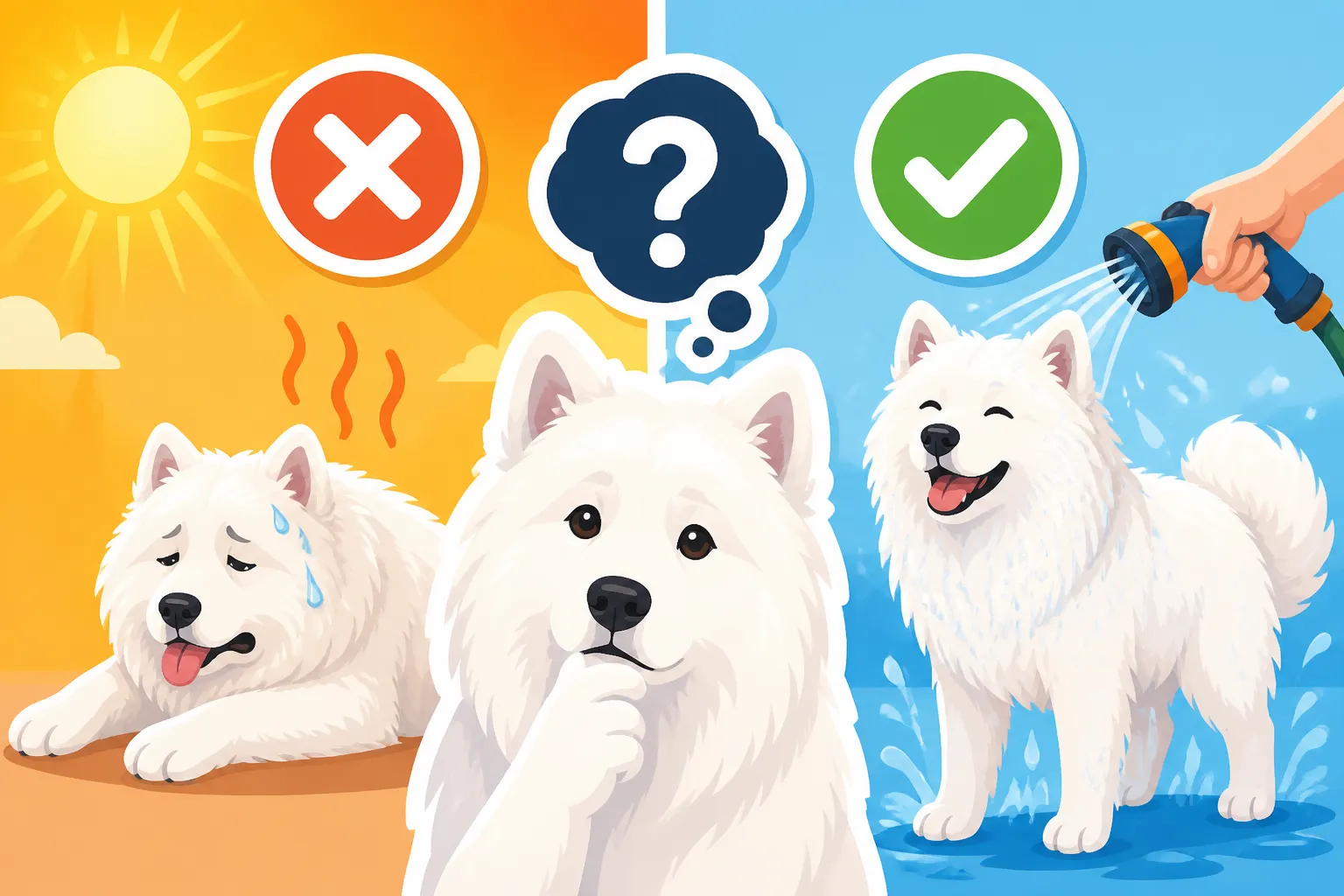
Whether a Samoyed Should Be Wet Down in Heat
The summer heat can be a real worry for those of us who share our lives with a magnificent Samoyed. We look at their thick, glorious double coats, and our hearts just ache for them when the temperatures climb. It’s only natural to wonder if wetting them down might offer some relief, but often, our best intentions can actually make things worse. This guide will dive deep into the unique challenges Samoyeds face in warm weather and explore the most effective and safest ways to help your fluffy companion stay cool and comfortable.
The Instinct to Cool Down: Understanding Your Samoyed's Natural Behavior
When the mercury rises, our first thought is often to reach for the hose or the nearest bucket of water. It feels intuitive, doesn't it? After all, humans cool down with a quick dip or a splash. But what works for us, with our single layer of skin and ability to sweat efficiently, isn't always the best approach for our Samoyed friends, whose bodies are designed quite differently.
Why Wetting Down Seems Like a Good Idea
It’s completely understandable why wetting down your Samoyed in the heat feels like the right thing to do. You see them panting, seeking shade, maybe even digging The Digging a Samoyed Does Because It Is Hot a shallow pit in the yard, and you just want to offer immediate relief. A cool splash of water instantly feels good to us, and we project that onto our dogs. The momentary relief you see them exhibit as the cool water hits their fur seems like confirmation that you’re doing something helpful.
The truth is, any cool liquid applied to the skin will provide a temporary cooling sensation. It's that immediate evaporative effect. Think of how a cool towel on your forehead feels when you have a fever. For a moment, it brings comfort. The problem for Samoyeds isn't the initial feeling, but what happens after the water has been applied, especially when it penetrates their incredibly dense undercoat.
The Science Behind the Samoyed's Double Coat
Your Samoyed's coat isn't just for looks; it's a marvel of natural engineering, meticulously designed over centuries to protect them in extreme Arctic conditions. They come from a lineage The Nenets of the Yamal Peninsula Bred the Samoyed where temperatures could plummet to sixty below, and their coat was essential for survival. This isn't just a thick coat; it's a double coat, meaning it has two distinct layers working in harmony.
The outer layer consists of long, coarse guard hairs. These are somewhat water-repellent and provide the primary shield against snow, ice, and even harsh sunlight. Beneath this lies the incredibly dense, soft, woolly undercoat. This undercoat is what provides the bulk of their insulation, trapping a layer of air close to their body. In winter, this trapped air warms up, keeping them cozy. But what many people don't realize is that this same principle works in reverse during warmer weather. The air trapped within the undercoat acts as a barrier, preventing external heat from easily reaching their skin, and also allowing their body heat to dissipate naturally, much like insulation in a house. It keeps them both warm in winter and surprisingly cool in summer, acting as a buffer against the external environment. This is why you'll often hear that A Samoyed's Coat Is Insulation, Not Decoration.
The Risks of Improper Wetting: When Good Intentions Go Wrong
While that initial splash of water might seem like a kindness, if not done correctly, wetting down a Samoyed can quickly turn into a detrimental practice. Their unique double coat, a blessing in cold climates, can become a hazard when mishandled in the heat.
Trapping Moisture and Heat: The Undercoat Dilemma
Here’s where the well-meaning act can go awry. When you douse your Samoyed with water, especially soaking them thoroughly, that moisture isn't just sitting on the surface. It’s working its way deep into that incredibly dense undercoat. Unlike humans, whose skin can readily air dry, a Samoyed's undercoat can take an incredibly long time to dry completely, sometimes hours or even days if they don't have proper air circulation.
What happens then? Instead of the water evaporating and cooling them, that trapped moisture, particularly if the ambient temperature is warm, becomes a warm, damp compress against their skin. It creates a humid microclimate right where they need airflow the most, effectively blocking the natural evaporative cooling process their body relies on. Imagine wearing a wet wool sweater on a hot day – it feels heavy, sticky, and makes you feel even hotter. For a Samoyed, this damp undercoat can trap body heat, preventing it from escaping, and can actually raise their core temperature. This warm, moist environment is also a breeding ground for bacteria and fungi, leading to skin irritations, hot spots, and unpleasant odors, which are particularly painful for your dog.
Surface Cooling vs. Core Cooling
Another crucial point is the difference between superficial cooling and genuinely lowering a dog's core body temperature. When you wet down a Samoyed's outer guard hairs, you might feel a temporary coolness on the surface, but this doesn't necessarily translate to effective internal cooling. A Samoyed’s primary method of cooling is panting, which involves exchanging warm air from their lungs with cooler external air, and to a lesser extent, sweating through their paw pads.
Simply getting the fur wet doesn't facilitate these core cooling mechanisms. In fact, by creating a barrier of damp, warm fur, you might be hindering their natural ability to regulate their temperature. For true cooling, you need to target areas where blood vessels are close to the surface, allowing heat to dissipate from the circulating blood. Just getting the glorious fluff wet doesn't cut it. It’s a common misconception that their entire body needs to be cold, when strategic cooling of specific high-blood-flow areas is far more efficient and safer.
Safer, More Effective Ways to Keep Your Samoyed Cool
Understanding the pitfalls of improper wetting doesn't mean you can't use water at all! It just means we need to be smart and strategic about it. There are several ways to help your Samoyed beat the heat effectively, focusing on genuine cooling and managing their environment.
Strategic Wetting: Where and How to Apply Water
Instead of soaking your Samoyed completely, focus on specific areas where blood vessels are closer to the surface, allowing for more efficient heat exchange. These "pulse points" are your secret weapons for cooling. Use a damp cloth or a sponge, rather than a hose, to apply water to these spots.
- Paws: Their paw pads are one of the few places Samoyeds can "sweat," so cooling them down can make a difference. Gently wipe their paws with cool water.
- Belly and Groin: These areas have less fur and major blood vessels close to the skin. Wiping them down with a cool, damp cloth can help cool the blood circulating throughout their body.
- Armpits and Inner Thighs: Similar to the belly and groin, these are less insulated areas where heat can escape.
- Outer Ear Flaps: Avoid getting water inside the ear canal, but a gentle wipe on the outer flaps can provide some relief.
The key is to use cool water, not ice-cold, and to wipe, not saturate. You want to promote quick evaporation without soaking the undercoat. This method gives you the benefit of water-based cooling without the risks of trapped moisture.
Environmental Management: Beyond Just Water
While strategic wetting is helpful, the most powerful tools in your arsenal are environmental controls. You can create a much cooler world for your Samoyed without drenching them.
- Shade, Always Shade: This is non-negotiable. Ensure your Samoyed always has access to deep, natural shade, whether from trees or a well-placed tarp. Direct sun exposure, even on a mild day, can be dangerous.
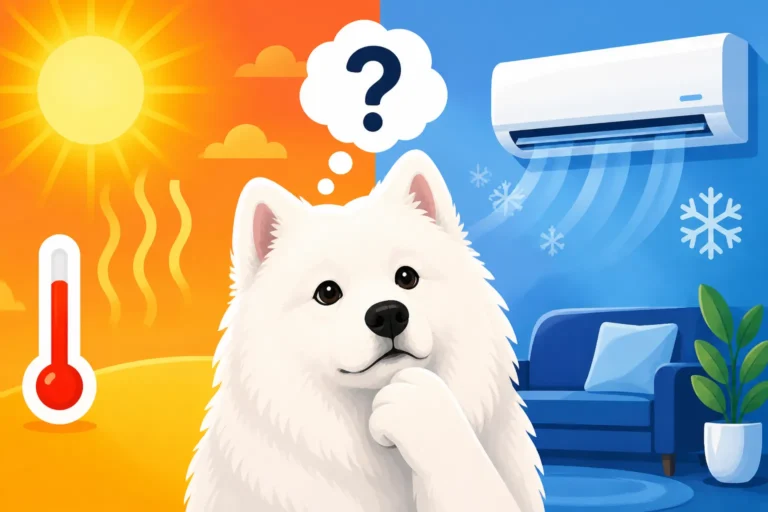
- Air Conditioning: For many Samoyed owners in warmer climates, air conditioning is a necessity. Keep your home cool, especially during peak heat hours. Remember, A Samoyed Built for Sixty Below in an American Summer means their natural thermostat is set for a different world.
- Cooling Mats: These are fantastic! Many varieties use gel or water to absorb and dissipate heat when your dog lies on them. Brands found on Chewy or Amazon offer a wide range of options. My Samoyed, Blizzard, absolutely loves his cooling mat, especially after a morning stroll. You can find excellent reviews for various options to see Whether a Cooling Mat Helps a Samoyed.
- Kiddie Pools: A shallow kiddie pool with just a few inches of cool water can be an absolute lifesaver. This allows your Samoyed to wade in, cool their paws and belly, and splash around without fully soaking their dense coat. Just be sure to supervise them and ensure they can easily get in and out. Many Samoyeds enjoy a good splash, and Whether a Kiddie Pool Cools a Samoyed is often a resounding yes!
- Timing Walks and Exercise: Avoid walks during the hottest parts of the day. Early morning and late evening are usually best. Feel the pavement with the back of your hand – if it's too hot for your hand, it's too hot for their paws. This proactive approach is part of Water, Shade and the Summer Plan for a Samoyed. Remember that Whether a Samoyed Refuses to Walk in Heat is often a clear sign that they are simply too hot.
Hydration and Diet: Supporting Internal Cooling
Keeping your Samoyed hydrated from the inside out is just as vital as external cooling strategies.
- Constant Fresh Water Access: This seems obvious, but it's critical. Always have multiple bowls of fresh, cool water available. Consider adding ice cubes to their water bowl on hot days to keep it appealingly chilly. They will need How Much Water a Samoyed Needs in Summer.
- Wet Food or Hydrated Kibble: Adding water to their kibble or incorporating wet food can increase their overall fluid intake. Some owners even freeze broth in ice cube trays for a hydrating treat. Services like Ollie that deliver fresh, moist food can be an excellent option for increasing hydration through diet, as their meals often have a higher moisture content than traditional kibble. Just remember to introduce any new food slowly to avoid stomach upset.
When to Seek Professional Advice: Recognizing Overheating Signs
Even with the best preventative measures, sometimes a Samoyed can still succumb to the heat. Recognizing the signs of overheating or heatstroke quickly is paramount, as it can be a life-threatening emergency. Knowing when to act and when to call the vet is crucial for any Samoyed owner.
Key Indicators of Heat Distress
Your Samoyed is a stoic breed, often hiding discomfort behind their famous smile How a Samoyed Hides Illness Behind a Smile. This makes it even more important to be vigilant and know the subtle, and not-so-subtle, signs of heat distress. Don't wait until it's too late.
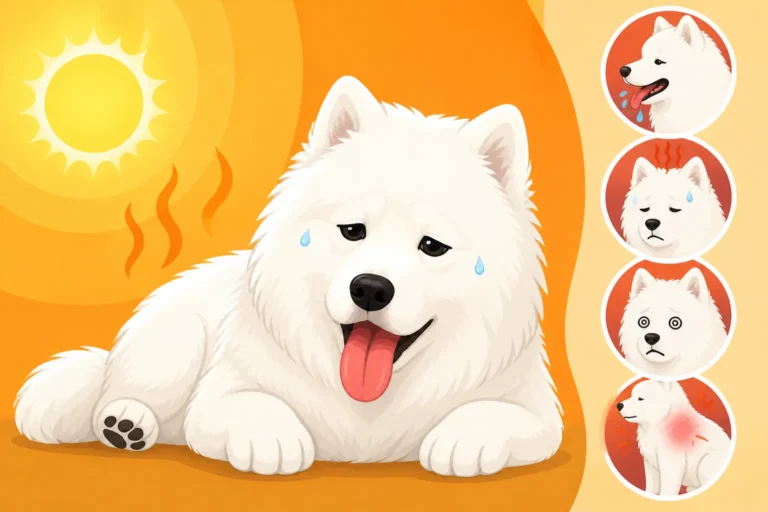
- Excessive Panting: While some panting is normal in warm weather, extreme, rapid, or labored panting is a red flag. Pay attention to Why a Samoyed Pants Constantly in Summer and discern when it shifts from normal regulation to distress. Their gums might look very red.
- Lethargy and Weakness: Your normally energetic Samoyed may seem unusually tired, listless, or reluctant to move. They might stumble or appear disoriented.
- Drooling: Excessive, thick drooling can indicate that their body is struggling to cool itself.
- Vomiting or Diarrhea: Gastrointestinal upset is a serious sign of heatstroke.
- Bright Red Gums and Tongue: While normal panting might make gums slightly pinker, a bright, almost cherry-red color indicates severe overheating.
- Disorientation or Collapse: In advanced stages, a Samoyed might appear confused, stagger, or even collapse.
- Glazed Eyes: Their eyes might look distant or unfocused.
- Seizures: This is an emergency and requires immediate veterinary attention.
If you observe any of these Signs a Samoyed Is Overheating, especially a combination of them, assume your dog is in distress and act quickly.
Emergency Measures and Vet Care
If you suspect your Samoyed is overheating, every second counts. Your immediate actions can be life-saving before you even get to the vet.
- Move to a Cooler Environment Immediately: Get your Samoyed into air conditioning, a shaded area, or even an ice bath if available.
- Apply Cool Water Strategically: As discussed earlier, focus on the paw pads, belly, groin, and outer ear flaps. Use cool (not ice-cold) water to gently wet these areas. You can also use cool, wet towels. Do not douse their entire body or use ice water, as this can cause blood vessels to constrict, trapping heat inside, and can lead to shock. For guidance on appropriate cooling, refer to How a Samoyed Should Be Cooled Down.
- Offer Small Amounts of Water: If your dog is conscious and able to drink, offer small amounts of cool water. Do not force them to drink.
- Call Your Veterinarian: Even if your Samoyed seems to be recovering, it is vital to contact your vet immediately. Heatstroke can cause internal organ damage that isn't immediately apparent. They may need intravenous fluids, medication, or further monitoring. Be honest about how long the dog was exposed to heat and the symptoms observed. Your vet can provide precise instructions and prepare for your arrival, ensuring critical care is ready.
Knowing these signs and actions can make all the difference in protecting your beloved Samoyed when the temperatures soar. Being prepared is the best way to ensure their health and happiness through the warmer months.
Disclaimer
This article is for general informational purposes only and does not constitute professional advice. Laws, prices and regulations vary by location and change over time. Consult a qualified professional for guidance on your specific situation.