Drying a Samoyed to the Skin
If you've ever tried to bathe your beautiful Samoyed at home, you know the struggle is real. What starts as a fluffy, white cloud quickly transforms into a soggy, heavy mass, and the thought of getting it dry to the skin can feel like an impossible feat. Many owners unknowingly risk skin irritation and unpleasant odors by not drying thoroughly enough. This guide will walk you through how to achieve that perfectly dry, fluffy coat, ensuring your Samoyed stays healthy and happy.
The Unique Challenge of the Samoyed Double Coat
Let's be honest, those magnificent Samoyed coats are both their crowning glory and, sometimes, our biggest headache, especially after a bath. It’s not just a lot of fur; it’s a specially designed piece of canine engineering, built for extreme conditions. Understanding why it's so hard to dry is the first step in conquering the post-bath battle and ensuring your furry friend’s comfort and health.
Understanding the Samoyed's Insulating Design
Your Samoyed's coat isn't merely decorative; it's a marvel of natural insulation, perfectly adapted for the frigid Siberian landscapes their ancestors called home. This incredible coat is actually comprised of two distinct layers working in harmony: the harsh, straight outer guard hairs and the soft, dense, woolly undercoat. The guard hairs are coarse, water-resistant, and designed to shed snow and moisture, acting like a protective barrier. The undercoat, on the other hand, is a thick, fluffy layer that acts like a thermal blanket, trapping air close to the body to keep them warm in winter and, somewhat counterintuitively, cool in summer. This dual-layer system is why A Samoyed's Coat Is Insulation, Not Decoration.
When this sophisticated double coat gets thoroughly wet, particularly the incredibly dense undercoat, it becomes utterly saturated. Each strand of that fluffy undercoat holds onto water with tenacity, creating a thick, moisture-trapping layer right against the skin. Imagine trying to dry a thick wool blanket that’s been soaked through – it's a similar principle, but on a living, breathing, and often squirming creature. This incredible density is the primary reason why attempting to air dry a Samoyed simply isn't an effective or safe option.
Why Air Drying is a No-Go
Many well-meaning owners, perhaps accustomed to shorter-coated breeds, might mistakenly believe that a good towel rub and some outdoor time will sufficiently dry their Samoyed. Unfortunately, this approach is a direct pathway to potential problems. The moment you leave any moisture trapped within that dense undercoat, you inadvertently create a perfect, warm, and dark breeding ground for bacteria and yeast directly on your dog's skin.
This damp, enclosed environment can rapidly lead to a host of uncomfortable, irritating, and often painful issues for your Samoyed. Hot spots, secondary bacterial or fungal skin infections, and severe matting are not just possibilities; they are almost inevitable outcomes of incomplete drying. A damp undercoat also becomes incredibly difficult to brush, leading to tight, painful tangles that pull at the skin, causing distress. Beyond the immediate discomfort and potential pain for your dog, a partially dried Samoyed often develops a persistent, unpleasant "wet dog" smell that simply won't dissipate, no matter how meticulously clean they were initially. This constant dampness against the skin can even contribute to conditions like Whether a Samoyed Gets Hot Spots Under Its Coat, making proper and complete drying an absolutely critical component of their overall health and your peace of mind.
Essential Tools for a Skin-Dry Finish
Successfully drying a Samoyed to the skin isn't about some secret technique or mystical approach; it's fundamentally about having the right tools for the job. Just as a craftsman relies on specialized equipment, you, as a Samoyed owner, need specific gear to effectively tackle their voluminous coat. Investing in the correct tools will save you countless hours of frustration, dramatically improve the efficiency of bath time, and most importantly, safeguard your dog's skin and coat health in the long run.
The Power of a High-Velocity Dryer
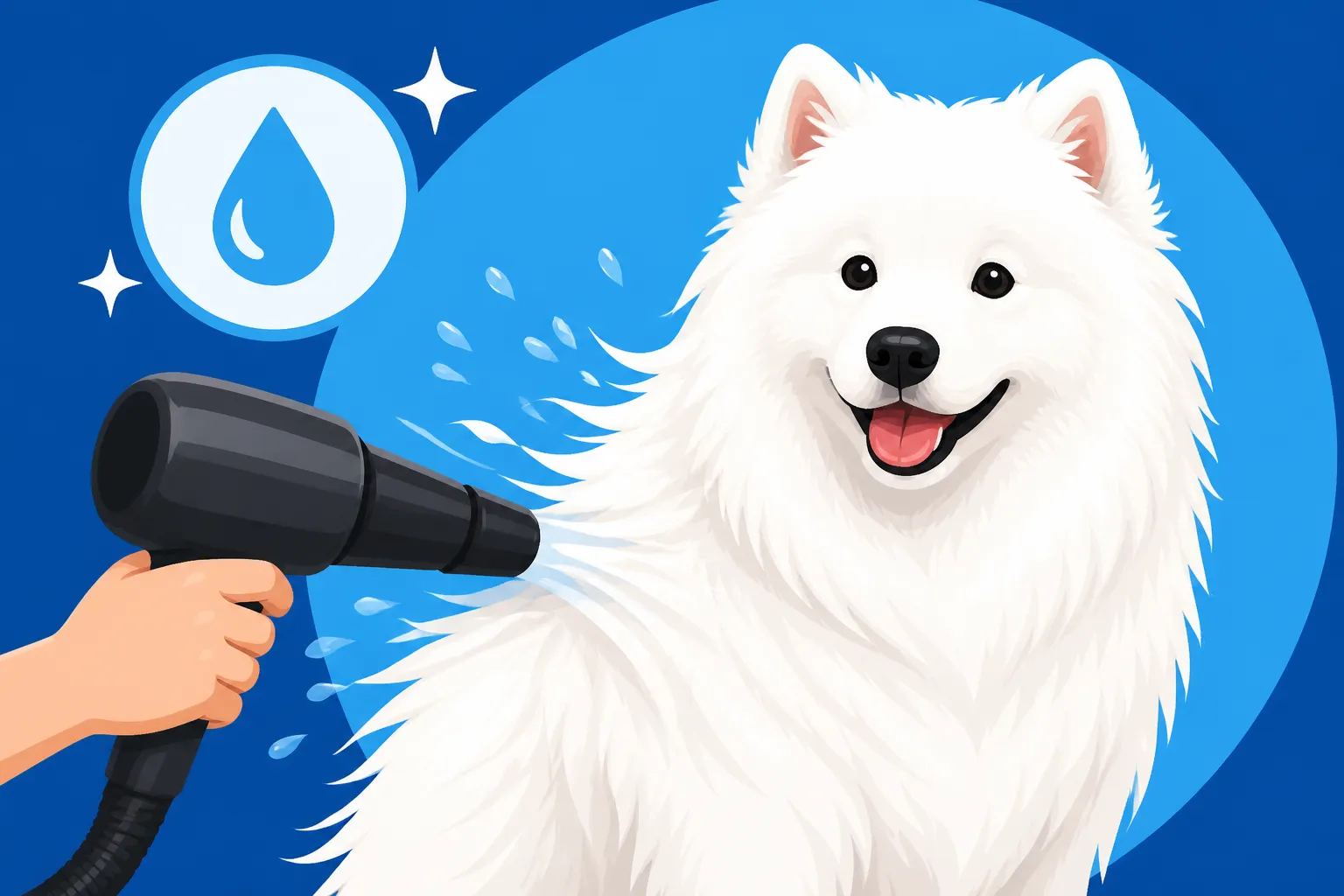
If there is one tool that stands above all others as absolutely non-negotiable for a Samoyed owner, it is a high-velocity dryer, often referred to as a force dryer. This is far more than a simple human hairdryer; it's a professional-grade machine specifically engineered to blast air at incredibly high speeds, physically separating the hair strands and literally pushing water out of the coat. Unlike standard human hairdryers, which predominantly rely on heat (and can easily overheat and burn a dog's sensitive skin), force dryers primarily utilize powerful, directed airflow.
The sheer, focused power of a high-velocity dryer is what enables you to effectively penetrate that thick, insulating undercoat, reaching all the way down to the skin where moisture stubbornly loves to hide. It is, unequivocally, the only truly effective and safe way to thoroughly dry a Samoyed's double coat without causing thermal damage or leaving behind insidious damp patches. While they may represent a notable initial investment, consider the peace of mind and the potential savings on vet bills for skin issues. Comparing What a Force Dryer Costs a Samoyed Owner against repeated vet visits for skin infections often makes the dryer a wise expenditure. You can find excellent, highly-rated models on platforms like Amazon or through specialized pet supply retailers such as Chewy. When selecting one, prioritize models with variable speed and heat settings, though for Samoyeds, you'll often find yourself using the lowest heat or even cool air for maximum safety and your dog's comfort.
Brushes and Combs for Pre- and Post-Drying
While the mighty force dryer performs the bulk of the heavy lifting during the drying process, a carefully selected array of brushes and combs are your indispensable allies in this battle against lingering moisture and impending mats. Before you even contemplate starting the bath, a thorough brushing with a good quality slicker brush or a sturdy wide-toothed comb is absolutely essential. This crucial pre-bath step helps to remove as much loose undercoat as possible and effectively works out any existing tangles, preventing small mats from transforming into impenetrable, painful felt once saturated with water.
Throughout and after the drying process, a robust metal comb and a high-quality pin brush will prove to be indispensable tools. As you systematically work with the force dryer, using a comb or pin brush to gently work through individual sections of the coat helps to lift the hair and allows the powerful air stream to penetrate more deeply and efficiently. This specific technique is commonly known as "line drying," where you meticulously dry a small, distinct line of hair all the way down to the skin, and then use your comb or brush to move the next section of damp hair into that already dry line, working progressively across the dog. Once the coat is completely dry from root to tip, a final comprehensive brush-through with a slicker brush, followed by a meticulous run-through with a metal comb, ensures that no lingering tangles remain. This also helps to properly redistribute the dog's natural skin oils, leaving the coat beautifully fluffy, healthy, and lustrous. Having an undercoat rake readily available is also a good idea, as What an Undercoat Rake Costs a Samoyed Owner is minimal compared to its utility in managing the prodigious amounts of shedding undercoat.
Absorbent Towels and Microfiber Wonders
While towels, even the most absorbent ones, are definitely not the main event in the grand drying spectacle for a Samoyed, they undeniably play a vital and important supporting role. Before you even think about bringing out the powerful force dryer, a good initial toweling can remove a surprising and significant amount of surface water. This crucial pre-drying step will meaningfully cut down on your overall drying time and make the subsequent force drying process much more manageable. Microfiber towels are particularly effective for this stage due to their superior absorbency and soft texture.
The technique for using towels is important: gently blot and squeeze the water out of the coat rather than rubbing vigorously, which can inadvertently create frustrating tangles and even promote matting. Think of this initial toweling as a preliminary pass, designed to effectively remove the heaviest saturation of water from the outer layers of the coat. However, and this cannot be stressed enough, it is absolutely critical to remember that even the very best and most absorbent towels will only ever get the outermost surface layers of the coat dry. They are simply incapable of penetrating the dense, underlying undercoat adequately enough to prevent the numerous problems associated with leaving a Samoyed damp right down to the skin. Therefore, use towels to prep and assist, but never, ever as the sole method for completely drying your Samoyed.
The Step-by-Step Process for Thorough Drying
Now that you've got your essential arsenal of grooming tools at the ready, it's time to delve into the practical, step-by-step process of actually drying that magnificent Samoyed coat. This isn't a task to be rushed; rather, it's a methodical procedure that demands both patience and consistency. Attempting to rush through it will invariably result in a partially damp dog, persistent frustrations, and potentially compromising your Samoyed's skin health. Embracing a systematic approach is key to achieving that coveted, thoroughly dry, and impeccably fluffy finish.
Pre-Drying Prep: Towel Off and Initial Brush
The very moment your Samoyed makes their grand exit from the tub, the critical drying process immediately begins. Your first order of business should be to allow them to vigorously shake off as much excess water as humanly possible, ideally in an outdoor space or a bathroom area that is easy to clean. Following this initial shake-off, quickly grab your super-absorbent microfiber towels. Gently but firmly blot and squeeze the significant amount of water from their coat. It is important to pay meticulous attention to areas that tend to retain a great deal of moisture, such as the legs, the underside of the belly, and the tail. At this stage, your primary aim is to remove the bulk of the surface water, not necessarily to get them fully dry, but rather to make the subsequent force dryer's job considerably easier and faster.
Once you have successfully removed this initial excess surface water, give your Samoyed a quick, gentle brush-through using a pin brush or a wide-toothed comb. This isn't intended to be a deep, detailed grooming session; its purpose is simply to help separate the damp hair slightly and to ensure that there are no major tangles that will tighten up and become problematic once the powerful force dryer begins its work. Having a coat that is thoroughly damp, but no longer actively dripping, provides the ideal starting point for the high-velocity dryer. This preliminary brushing step also serves as an excellent opportunity to quickly check for any minor mats or tangles that might have formed during the bathing process, allowing you to address them gently while the hair is still pliable and easier to work with.
Mastering the High-Velocity Dryer Technique
This is arguably where the most crucial part of the drying process unfolds, and it absolutely requires careful technique and a degree of finesse. Firstly, it's paramount to ensure that your Samoyed is as comfortable and relaxed as possible. The sheer noise level and the powerful force of the dryer can be quite startling for some dogs, especially those unaccustomed to it, so a gradual desensitization process is often key if they aren't already used to it. Always begin on a low-speed setting, consistently reward calm behavior with treats and praise, and strongly consider using ear protection for both yourself and your dog to mitigate the noise. Begin by systematically directing the concentrated air stream at a manageable section of the coat, holding the nozzle a comfortable few inches away. Your ultimate goal here is to visually lift the coat and actually see the skin underneath, a clear indication that the air is penetrating effectively. You will literally observe the water being propelled and flying off your dog's coat.
Methodically work in small, controlled sections, moving either from the rump forward or from the chest back – choose the direction that feels most natural and comfortable for both you and your dog. Utilize your free hand to gently pull the coat up and away from the body, which significantly helps the powerful air stream to get right down to the skin. This "line drying" technique is absolutely crucial for Samoyeds: once a small, specific section of hair is completely dry and fluffy, move your comb or brush to create a new, distinct "line" of damp hair and meticulously repeat the entire drying process. Avoid simply blasting the air aimlessly; instead, target precise areas, continuously feeling the coat with your fingers to ensure it is thoroughly dry all the way through to the skin. Pay extra, meticulous attention to the inherently thicker areas of the coat, such as the magnificent ruff around their neck, the dense breeches on their hind legs, and their plush tail, as these are notoriously common hiding spots for lingering dampness. Always remember, your objective is not merely to dry the outer, fluffy layers; you are actively driving every last bit of moisture out from the very root of each hair shaft.
Post-Drying Inspection and Final Groom
You might think your Samoyed is dry after all that effort, but hold on – the final inspection is not just important, it's absolutely critical. Once you've meticulously gone over the entire dog with the force dryer and feel confident that they are dry, it's time for a thorough, hands-on check. Run your fingers deep into their coat and use a fine-toothed metal comb to part the hair in multiple places, examining all the way down to the skin. Pay particular attention to sensitive and dense areas such as behind the ears, under the armpits, along the belly, throughout the entire tail, and especially within those incredibly thick areas of the ruff and the breeches. Any cool spots that you feel, or any resistance encountered when combing, are unequivocal indicators of lingering dampness. If you discover any such spots, immediately grab that force dryer again and return to work on that specific area until it is bone dry.
Once you are absolutely, unequivocally certain that your Samoyed is dry to the skin from head to tail, give them a final, comprehensive brush with your slicker brush and metal comb. This last brushing pass helps to lift and fluff the coat beautifully, remove any last bits of loose undercoat that might have been hiding, and leaves them looking truly pristine and magnificent. This stage is also vitally important for overall coat health, as thorough brushing at this point helps to evenly distribute natural skin oils and further prevents any new tangles or mats from forming. It’s also a good time to revisit and double-check areas Where a Samoyed Mats First to ensure no new problems have arisen that might cause discomfort later.
Common Pitfalls and Troubleshooting
Even armed with the most effective tools and a solid technique, the process of drying a Samoyed can still present its own unique set of challenges. It's incredibly easy to make mistakes, particularly when you're feeling tired, pressed for time, or if your Samoyed is being especially uncooperative. However, proactively recognizing these common pitfalls and knowing precisely how to troubleshoot them can save you immense headaches, prevent significant discomfort for your dog, and ultimately safeguard your Samoyed's precious health.
The Dangers of Incomplete Drying
The single biggest and most consequential mistake a Samoyed owner can make after a bath is failing to dry their dog completely, all the way down to the skin. This point has been emphasized repeatedly, but its critical importance warrants further reiteration: a damp undercoat is a veritable magnet for trouble. This isn't merely about the temporary inconvenience of a "funky wet dog smell"; it carries significant health implications for your beloved companion. Trapped moisture within the dense undercoat swiftly transforms into an ideal breeding ground for opportunistic yeast and bacterial infections, which can rapidly escalate into painful hot spots, acute skin irritation, and even severe, widespread dermatitis. These conditions are not only incredibly itchy and uncomfortable for your Samoyed, causing them significant distress, but they very often necessitate costly vet visits, prescription medications, and prolonged treatment to fully resolve.
Beyond these immediate and serious health concerns, incomplete drying almost invariably leads to severe matting. Wet hair clumps together much more easily, and as it begins to dry in this clumped state, it forms tight, dense, and incredibly painful mats that pull excruciatingly on the skin. These mats can severely restrict your dog's natural movement, create uncomfortable pressure points, and further exacerbate any existing skin issues by effectively preventing proper airflow to the affected areas. It creates a detrimental vicious cycle that is profoundly easier to prevent through diligent, thorough drying than it is to address once it has firmly taken hold. Think of it this way: your Samoyed's skin needs to be just as dry and comfortable as your own after a shower, especially when considering the immense insulating blanket of fur they wear. Furthermore, The Grooming Bill on Twenty Pounds of Samoyed Undercoat can skyrocket significantly if a professional groomer is faced with the arduous and time-consuming task of dematting a severely neglected, damp coat.
Handling Mats During the Drying Process
Mats are an unfortunately common and particularly vexing bane of a Samoyed owner's existence, and their severity becomes exponentially worse once wet. Therefore, the absolute golden rule when it comes to bathing a Samoyed is this: never, under any circumstances, bathe a matted Samoyed. Mats act precisely like highly efficient sponges, soaking up and holding onto water, and once thoroughly wet, they tighten and condense, becoming almost impossible to remove without resorting to the drastic measure of shaving. It is absolutely imperative that you thoroughly brush out your Samoyed before the bath, meticulously working through any tangles or mats while the coat is completely dry.
If, despite your most diligent pre-bath efforts, you happen to encounter a small, stubborn tangle or mat during the actual drying process, proceed with extreme caution and gentle care. Never, ever attempt to force the powerful air stream of the dryer directly through a mat. The intense force of the air will only serve to tighten the mat further, causing excruciating pain and pulling severely on your dog's delicate skin. In such an instance, immediately stop the dryer, and gently, patiently try to work out the mat using only your fingers and a fine-toothed comb, slowly separating the hairs. If the mat proves to be particularly stubborn and resists gentle efforts, you might need to carefully use a specialized mat splitter or, as a last resort, very carefully snip it out with blunt-nosed scissors, always ensuring the points are directed safely away from the skin. However, the most effective approach by far remains prevention, as attempting to dry around existing mats is not only profoundly ineffective but also causes significant discomfort and potential skin damage to your beloved Samoyed.
When Professional Help is Needed
Let's be completely realistic about this: not every Samoyed owner possesses the ample time, the boundless energy, the necessary physical dexterity, or even the sheer patience to give their Samoyed a full, professional-quality bath and an absolutely thorough dry at home every single time it's needed. There is absolutely no shame in acknowledging that some complex and demanding tasks are genuinely best left to the seasoned professionals. A skilled and reputable professional groomer comes equipped not only with industrial-grade tools and powerful, specialized drying equipment but also with a wealth of experience honed over years of working with challenging double-coated breeds such as Samoyeds.
If your particular Samoyed proves to be especially challenging to dry thoroughly, perhaps exhibiting high anxiety or fear concerning the powerful dryer, or if they have unfortunately developed severe, extensive matting that you cannot safely manage yourself, then a well-planned trip to a professional groomer is undoubtedly a wise and often necessary decision. Professional groomers can often accomplish in a mere hour or two what might take an inexperienced owner half a day or even longer, and critically, they will ensure your dog is truly dry, comfortable, and free of skin issues. Establishing a routine of regular professional grooming can be an exceptionally effective way to consistently maintain your Samoyed's coat health and proactively prevent minor problems from escalating into major issues, especially if you consistently struggle with the intricate and time-consuming at-home drying process. Ultimately, do not let misplaced pride or a desire to save money stand in the way of your Samoyed's comfort, well-being, and overall health.
Maintaining a Dry and Healthy Coat Between Baths
The diligent work of caring for your Samoyed's coat doesn't simply cease after a thorough bathing and drying session. On the contrary, maintaining that beautiful, healthy coat in optimal condition between baths is an absolutely crucial ongoing effort. This consistent maintenance is vital for minimizing future drying challenges, proactively preventing common coat problems, and generally keeping your Samoyed looking and feeling their absolute best. A well-maintained coat is not only aesthetically pleasing but is also inherently easier to clean, dries considerably faster when bathed, and is significantly less prone to developing the matting and skin issues we've discussed.
Regular Brushing to Prevent Moisture Traps
Consistent, diligent brushing stands as your absolute first line of defense in comprehensive coat maintenance. A Samoyed's incredibly dense undercoat sheds perpetually, and if that dead, loose hair is not regularly and effectively removed, it will very quickly accumulate, forming dense tangles and uncomfortable mats. These mats are problematic for several reasons: they not only act as highly efficient traps for environmental moisture and debris but also critically prevent proper air circulation to the skin underneath, thereby creating localized micro-environments that are ripe for the proliferation of bacteria, yeast, and subsequent skin issues. Depending on the unique characteristics of your Samoyed's coat type and the prevailing season (especially during the dramatic "coat blow" periods), you might find it necessary to brush your dog daily or at the very least, every other day.
Regular, thorough brushing, utilizing essential tools like a high-quality undercoat rake and a slicker brush, is paramount in removing the vast quantities of dead undercoat before it has the opportunity to cause significant problems. This routine practice also serves to stimulate the skin, promoting healthy circulation, and effectively distributes the natural oils throughout the coat, keeping the guard hairs free of accumulated dirt and debris. This consistent grooming regimen ensures that when bath time inevitably rolls around, you are starting with a cleaner, more manageable coat, which, in turn, makes both the shampooing and, crucially, the intensive drying process far more efficient, effective, and less stressful for everyone involved. As an added bonus, most Samoyeds absolutely adore the attention and physical contact that comes with a good brushing session! For more in-depth tips and strategies, be sure to check out How Often a Samoyed Needs Brushing and When a Samoyed Blows Its Coat.
Spot Cleaning vs. Full Baths for Longevity
It's a common misconception that a Samoyed needs a full, complete bath every single time they manage to roll in something unsavory or get a bit dirty. This simply isn't the case, and in fact, too-frequent full baths, especially if they are not consistently followed by impeccable and thorough drying, can actually be detrimental. Over-bathing can strip essential natural oils from the skin and coat, leading to dryness, irritation, and potential damage to the hair shafts. Instead, embrace and master the highly effective art of spot cleaning. Samoyeds possess a truly remarkable and somewhat magical ability to shed dirt from their coats once they are completely dry – the phenomenon of How a Samoyed's Coat Sheds Dirt on Its Own is genuinely incredible to witness!
For common occurrences like muddy paws, a quick rinse under the tap followed by a thorough towel dry is usually perfectly sufficient. For minor stains on the coat, or small greasy spots that appear, a high-quality waterless shampoo or even a simple paste made from cornstarch can work wonders to absorb the grime without the need for a full immersion. This strategic approach significantly minimizes the overall necessity for full baths, which, in turn, substantially reduces the intensive drying time required for each cleaning episode. By judiciously reserving full baths for only those occasions when your Samoyed is genuinely and thoroughly dirty, you effectively maintain the vital integrity and natural protective qualities of their coat, reduce the considerable workload on yourself, while simultaneously ensuring they remain clean, fresh, and comfortable. This also helps to naturally support the coat's inherent ability to repel dirt and maintain its pristine cleanliness for longer.
Diet and Coat Health
Believe it or not, what you consistently feed your Samoyed directly impacts the quality, health, and manageability of their magnificent coat, which in turn can significantly influence how easily and effectively it dries. A well-balanced diet that is rich in high-quality, digestible protein, contains an optimal balance of essential fatty acids (such as Omega-3s and Omega-6s), and is fortified with crucial vitamins and minerals can profoundly contribute to a strong, lustrous coat and robust, healthy skin. A healthy coat, characterized by strong hair shafts and supple skin, is inherently less prone to dryness, breakage, and excessive, unhealthy shedding, making it considerably easier to manage, brush, and thoroughly dry after a bath.
Conversely, a diet that is lacking in vital nutrients, or composed of lower-quality ingredients, can often manifest itself outwardly in a dull, brittle, or coarse coat, excessive and unhealthy shedding, and flaky or irritated skin. All these adverse coat conditions can significantly complicate the drying process and regrettably make your Samoyed far more susceptible to a myriad of skin problems and discomfort. It is always wise to consider consulting with your veterinarian about ensuring your Samoyed is on a balanced, nutritionally complete diet or whether specific supplements that specifically support skin and coat health might be beneficial for their individual needs. High-quality dog food options, ranging from premium kibble to fresh food delivery services like Ollie, can often make a noticeable and positive difference in coat quality. You can also explore various specialized skin and coat supplements, often rich in fish oil or other beneficial compounds, available through reputable pet retailers like Chewy or general online marketplaces like Amazon, to complement their regular meals. Remember, a truly healthy coat isn't just beautiful to behold; it's a coat that functions optimally, shedding dirt more effectively and drying more efficiently after bathing.
Drying Equipment Comparison
Choosing the right equipment is paramount for successful Samoyed grooming and, crucially, for ensuring their skin and coat health. Here's a concise comparison of common drying options and a clear explanation of why a high-velocity dryer is an indispensable tool for Samoyed owners.
| Feature | Air Drying (Natural) | Human Hair Dryer | High-Velocity Dryer |
|---|---|---|---|
| Drying Power | Minimal (surface moisture only) | Low-Moderate (surface, limited penetration) | High (blasts water out, penetrates dense undercoat) |
| Drying Time | Very Long (can take days for undercoat) | Long (inefficient, risks damage) | Fastest (minutes to a few hours depending on coat) |
| Heat Output | None | High (significant risk of skin burns and hair damage) | Low/Variable (focus on powerful airflow, minimal heat) |
| Effectiveness | Incomplete; high risk of mats/skin issues | Incomplete; unsafe heat, ineffective on undercoat | Complete; ensures skin is dry, prevents issues |
| Coat Health Impact | Poor (trapped moisture, bacterial/yeast growth) | Poor (heat damage, frizz, dryness) | Excellent (fluffs coat, prevents skin problems, distributes oils) |
| Initial Cost | Free | Low-Moderate ($20-$100+) | Moderate-High ($100-$400+) |
| Recommended for Samoyeds? | Absolutely NOT recommended | Absolutely NOT recommended | YES, essential for proper care and health |
Disclaimer
This article is for general informational purposes only and does not constitute professional advice. Laws, prices and regulations vary by location and change over time. Consult a qualified professional for guidance on your specific situation.