Why Shaving a Samoyed Makes the Heat Worse
It's a common, heartbreaking sight in summer: a beautiful Samoyed, usually known for its glorious cloud-like fur, shaved down to a short stubble, often with the best intentions from an owner trying to help their beloved companion beat the heat. Many people genuinely believe that removing that thick coat will provide relief from scorching temperatures, making their Sammy more comfortable. However, this seemingly logical solution actually does more harm than good, compromising the very system designed to keep them cool. This guide will thoroughly explain why shaving a Samoyed makes the heat worse and offer proven, safe strategies to keep your fluffy friend comfortable and healthy when the mercury rises.
Understanding the Samoyed's Magnificent Double Coat
To truly grasp why shaving is a disservice to your Samoyed, we first need to appreciate the incredible engineering of their double coat. This isn't just fluffy fur; it's a highly evolved, multi-functional system that has protected them for centuries in extreme climates. Their ancestors, living with the Nenets people on the frozen Yamal Peninsula, relied on this coat for survival, enduring temperatures far below freezing. But what many don't realize is that this same coat is also an ingenious defense against heat.
The Marvel of the Undercoat: Insulation and Airflow
Beneath the long, coarse outer guard hairs lies the dense, woolly undercoat. This isn't a solid block of fur; it's a finely structured layer that traps air. Think of it like the insulation in your house – it keeps the cold out in winter, but it also helps keep the heat out in summer. This trapped air creates a thermal barrier. When it's cold, it holds warmth close to the body. When it's hot, it insulates against the external heat, preventing it from penetrating directly to the skin.
Furthermore, a well-maintained undercoat allows for crucial air circulation. As your Samoyed moves, air flows through the lighter, fluffier undercoat, helping to wick away moisture and dissipate heat from the skin. It acts almost like a natural air conditioning system, relying on subtle currents and the insulating properties of the trapped air. When this system is working correctly, your Samoyed has a built-in defense against both extremes.
The Role of Guard Hairs: Protection from Elements
The outer layer of a Samoyed's coat consists of longer, coarser, and stiffer hairs known as guard hairs. These are straight, lie flat, and have a somewhat slick texture. Their primary role is protection. They are water-repellent, shedding rain and snow, and preventing moisture from soaking down to the undercoat and skin. This is vital in their native snowy environment, preventing them from getting soaked and freezing.
But their protective role extends to sun and heat as well. These guard hairs act as a natural sun shield, much like a wide-brimmed hat or an umbrella. They create a physical barrier that blocks harmful UV rays from reaching the delicate skin beneath. Without them, your Samoyed's skin is directly exposed to the sun, leading to a host of problems we'll discuss shortly. They also help prevent burs, twigs, and other environmental irritants from getting tangled in the softer undercoat.
How the Coat Regulates Body Temperature Naturally
The Samoyed's double coat is truly a marvel of natural thermoregulation. It works in conjunction with other cooling mechanisms, primarily panting, to keep their body temperature stable. In cold weather, the dense undercoat and guard hairs trap body heat, preventing hypothermia. In hot weather, the undercoat insulates against the external heat, while the guard hairs reflect sunlight. The loose structure of the undercoat, when properly brushed, still allows for air movement against the skin, facilitating evaporative cooling through panting.
When a Samoyed pants, moisture evaporates from their tongue and respiratory tract, drawing heat away from their body. The coat helps regulate how quickly that heat is lost from the skin itself, preventing the body from absorbing more heat from the environment. It's a delicate balance. A Samoyed's Coat Is Insulation, Not Decoration is not just a saying; it's a fundamental truth about their physiology. Interfering with this natural system by shaving disrupts this finely tuned mechanism, making it harder, not easier, for them to cope with heat.
The Myth of Shaving for Coolness
Despite all the scientific evidence and anecdotal experience from seasoned Samoyed owners, the urge to shave remains strong for many, especially during those sweltering summer months. It feels counterintuitive to leave so much fur on a dog designed for snow. However, this common assumption is deeply flawed.
Why the Instinct to Shave Feels Right (But Is Wrong)
Let's be honest, looking at a Samoyed in 90-degree weather, panting away, it's natural to think, "Oh, they must be so hot under all that fur! If I just shave it off, they'll feel instant relief." We relate it to our own experience, where shedding layers helps us cool down. We see other dog breeds with single coats, like Labs or Greyhounds, that seem to manage heat better, and they have short hair. This thought process is completely understandable, driven by a desire to alleviate what appears to be discomfort.
Many owners also mistakenly believe that a shaved coat will allow air to reach the skin more directly, thinking this will cool the dog down like a fan. There's an image of a heavy wool blanket being removed, and it certainly looks like the dog is shedding a heavy burden. Compounding this, some well-meaning but misinformed groomers might even suggest shaving, perpetuating the myth. It's a testament to how deeply ingrained this misconception is that it continues to be so prevalent, despite all the evidence to the contrary.
The Damaging Effects of Shaving on the Coat's Structure
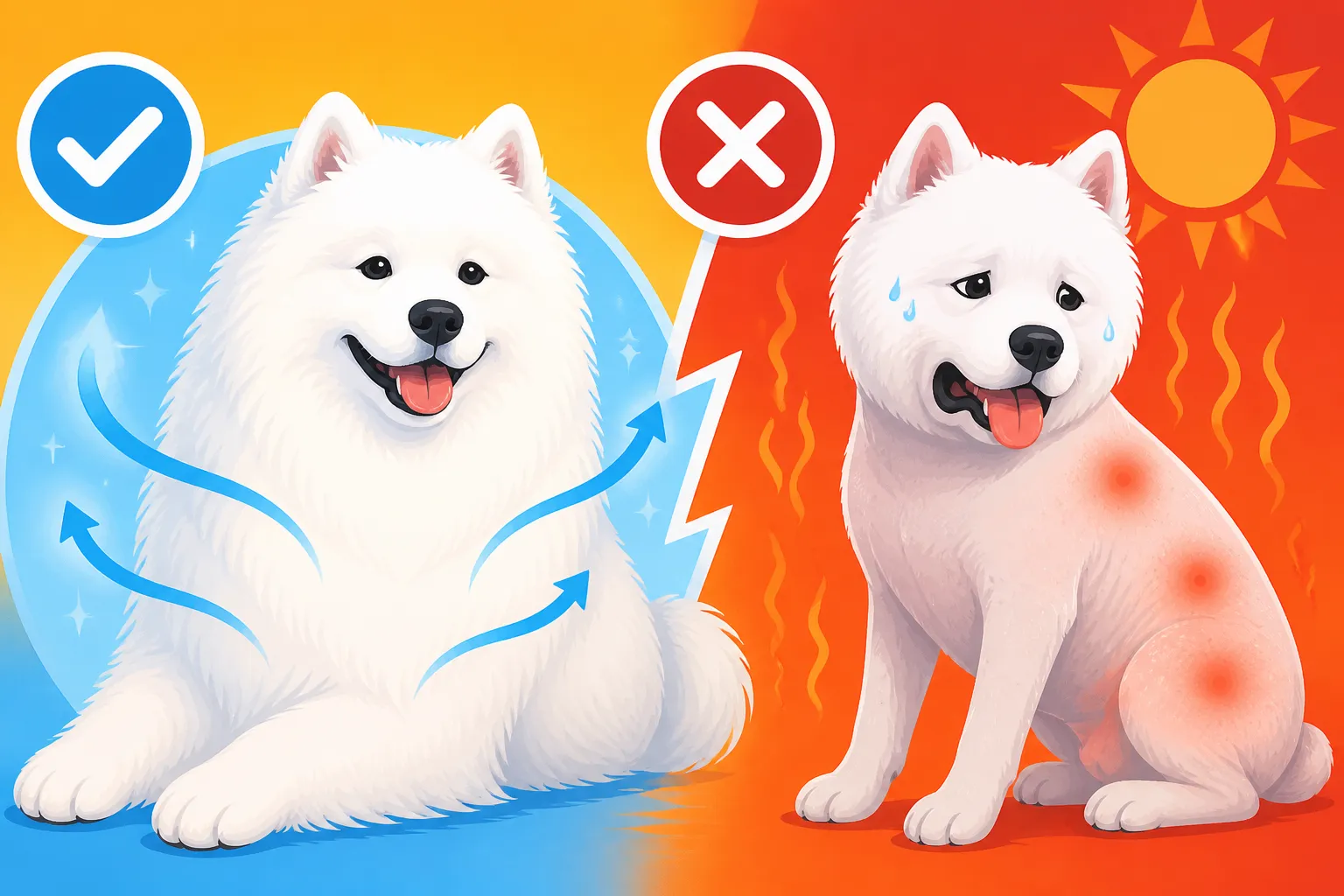
When you shave a Samoyed, you don't just remove hair; you fundamentally alter the intricate structure of their double coat. You're cutting both the long, protective guard hairs and the dense undercoat down to the same very short length. This immediately disrupts the natural airflow and insulation that the varied lengths provide. The guard hairs, which are meant to protect, are gone. The undercoat, which is meant to insulate and allow air circulation, is now just a short, exposed stubble.
What often happens next is that the softer, faster-growing undercoat starts to grow back more quickly and thickly than the guard hairs. This leads to a phenomenon often called "coat funk" or "clipper alopecia," where the coat regrows unevenly, sometimes patchy, and often with a different texture. The guard hairs, which are much slower to regrow (if they ever fully do), can get trapped underneath this quickly multiplying undercoat. This results in a coat that is dense, prone to matting, and has lost its protective outer layer, ultimately making it less efficient at thermoregulation than before.
Debunking the "They'll Be Cooler" Fallacy
The idea that a shaved Samoyed will be cooler is a dangerous fallacy. Without the insulating undercoat, your dog's skin is now directly exposed to the ambient air temperature, which, if it's hotter than their body temperature, will transfer heat into them more quickly. Think of it like being in a well-insulated house versus a shack with no walls. The insulation protects you from external temperature extremes. Without their coat, your Samoyed loses that natural barrier against the heat.
Furthermore, the guard hairs are crucial for reflecting UV rays. When these are removed, the skin is completely unprotected, making your Samoyed highly susceptible to sunburn. Sunburn on a dog isn't just uncomfortable; it can lead to skin damage, pain, and even increase the risk of skin cancer over time. The natural function of the coat is to help maintain a stable microclimate next to the dog's skin. Removing it destroys this microclimate, making the dog hotter and more vulnerable. Why Shaving a Samoyed Makes the Heat Worse is a lesson many learn the hard way.
How a Shaved Samoyed Becomes More Vulnerable
Shaving a Samoyed doesn't just make them less efficient at cooling; it actively creates new vulnerabilities that put their health and comfort at risk. This isn't just about aesthetics; it's about fundamental protection that their body relies on.
Increased Risk of Sunburn and Skin Damage
Imagine stepping outside on a sunny day without any sunscreen or protective clothing. That's essentially what you're doing to your Samoyed when you shave their coat. Their skin, normally protected by a thick layer of fur, is suddenly exposed to direct sunlight. Samoyeds, with their often pinkish, lightly pigmented skin, are particularly susceptible to sunburn. Just like humans, dogs can get painful, red, blistering sunburns.
Repeated sun exposure and sunburns can lead to more severe long-term issues, including various forms of skin cancer. The guard hairs are a natural shield, filtering out harmful UV radiation. Once they're gone, that critical defense mechanism is removed, leaving your dog's skin vulnerable to the harsh effects of the sun. This increased risk isn't theoretical; it's a very real concern for any shaved double-coated breed, especially those with light-colored skin.
Impaired Heat Dissipation and Overheating
As we discussed, the double coat, when healthy and properly maintained, provides insulation against external heat. It creates a pocket of air that is typically cooler than the surrounding scorching air. When this coat is shaved, that insulating layer is gone. The ambient heat can now directly radiate onto the dog's skin. This means that instead of being protected from the heat, the dog's body is absorbing it more rapidly.
While panting is their primary method of cooling, the coat plays a secondary, but crucial, role in heat dissipation by regulating the rate of heat exchange with the environment. Without the natural insulation and airflow, the body has to work harder to cool itself, putting additional stress on their system. This increased effort can lead to faster onset of heat exhaustion or even life-threatening heatstroke. You might think they're cooler, but internally, their body is struggling far more than if their coat were intact. Signs a Samoyed Is Overheating often include excessive panting, lethargy, and seeking shade, all of which can be exacerbated by a shaved coat.
Exposure to Pests and Environmental Irritants
A Samoyed's dense coat isn't just for temperature regulation; it's also a physical barrier against the outside world. Think of it as armor. It helps deter fleas, ticks, and other biting insects from easily reaching their skin. While no coat is 100% impenetrable, a thick, healthy coat certainly makes it harder for pests to burrow down and get a meal or lay eggs.
When the coat is shaved, their skin becomes much more accessible to these irritants. Fleas and ticks can latch on more easily, and mosquito or fly bites become more common. Beyond insects, the coat also offers protection from scratches, scrapes, and irritations from plants, rough surfaces, or even just dust and debris in the environment. A shaved Samoyed might develop skin rashes, irritation, or secondary infections from increased exposure and scratching, turning what was meant to be a helpful act into a series of painful complications.
| Feature | Intact Double Coat | Shaved Coat |
|---|---|---|
| Insulation | Excellent (against both heat & cold) | Poor; direct heat transfer |
| Sun Protection | High (guard hairs block UV) | Very Low (skin exposed, high sunburn risk) |
| Air Circulation | Good (when well-maintained, wicks moisture) | Impaired (undercoat grows back unevenly, traps heat) |
| Pest Protection | Moderate (physical barrier) | Low (easy access for pests) |
| Regrowth | Continuous, healthy cycle | Unpredictable; "coat funk," uneven texture |
| Skin Health | Protected from elements, less irritation | Vulnerable to sunburn, irritants, infections |
| Aesthetics | Fluffy, cloud-like, breed-standard | Patchy, dull, often permanently altered |
The Long-Term Consequences for the Coat
The immediate effects of shaving a Samoyed are problematic enough, but the decision can also have lasting, detrimental impacts on the coat itself. Many owners are shocked to find that their Samoyed's beautiful fur doesn't just "grow back the same."
"Coat Funk": Uneven and Damaged Regrowth
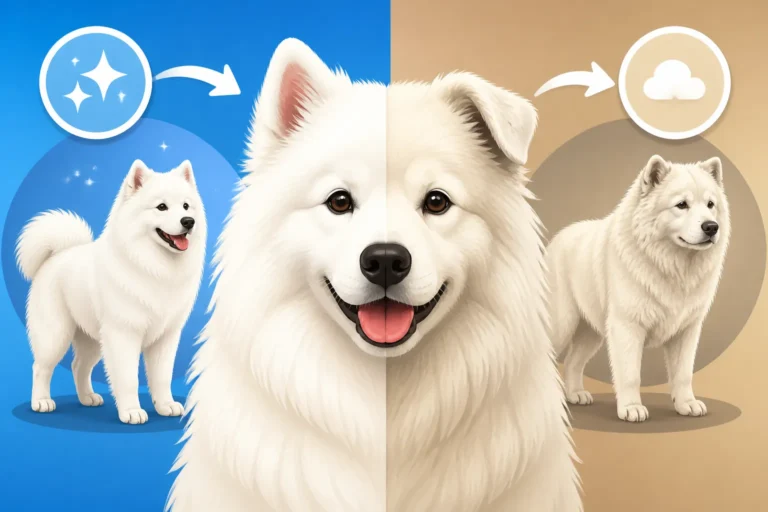
One of the most disheartening consequences of shaving a Samoyed is what's commonly referred to as "coat funk" or "clipper alopecia." This isn't just a catchy phrase; it describes a very real and often frustrating phenomenon of abnormal hair regrowth. When a double coat is shaved, the undercoat, which grows faster and is softer, tends to grow back first and often much thicker than before. The slower-growing guard hairs, if they even grow back at all, can become stunted, sparse, or even trapped beneath the burgeoning undercoat.
The result is a coat that is uneven, patchy, and can have a completely different texture than the original. It might feel cottony, dull, or matted more easily. This altered texture means the coat can no longer perform its natural functions effectively. It loses its ability to shed water, provide proper insulation, or allow adequate airflow. For some Samoyeds, especially older ones or those with underlying health issues, the coat may never fully recover its original beauty and functionality. Whether a Samoyed's Coat Grows Back After a Shave is a question many owners ponder, and the answer is often "not the same."
Permanent Alterations to Texture and Function
The damage from shaving can go beyond just uneven growth; it can lead to permanent changes in the coat's texture and overall function. The delicate balance between the guard hairs and the undercoat is vital. The guard hairs give the coat its structure, sheen, and protective qualities, while the undercoat provides density and insulation. When this balance is disrupted by shaving, the guard hairs can be permanently damaged or fail to grow back properly.
This permanent alteration means the coat loses its natural stiff texture and can become soft, woolly, and prone to tangling. A coat with this texture holds dirt more readily, becomes matted faster, and no longer sheds water effectively. It can also lose its natural "self-cleaning" properties. Why Mud Falls Off a Dry Samoyed is due to the smooth, protective nature of the guard hairs. Without them, mud and grime can embed themselves more deeply, making grooming a much more arduous and frequent task than it ever was before. The dog essentially loses the natural advantages of its breed-specific coat.
Increased Matting and Grooming Challenges Post-Shave
It might seem counterintuitive, but a shaved Samoyed can actually become more prone to matting than one with an intact coat. When the undercoat grows back without the structure and guidance of the guard hairs, it often comes in very dense and fluffy. This fluffy, soft hair is notoriously difficult to manage. It tangles and mats much more easily, especially in friction areas like behind the ears, under the legs, and around the collar.
What was once a relatively manageable grooming routine (with regular, thorough brushing) can become a nightmare of constant tangles and knots. Owners who shaved to reduce grooming effort often find themselves in a worse predicament, needing to brush their regrowing Samoyed even more frequently to prevent painful matting. This can lead to discomfort for the dog, more expensive professional grooming bills, and a cycle of frustration for the owner. It reinforces the importance of understanding the coat before attempting drastic measures.
Effective, Safe Cooling Strategies for Your Samoyed
Now that we've debunked the shaving myth, let's talk about what does work to keep your Samoyed cool and comfortable in warm weather. There are plenty of safe, effective strategies that respect their natural coat and help them thrive.
The Power of Proper Brushing and Deshedding
This is perhaps the single most important thing you can do for your Samoyed's comfort in any weather, but especially in the heat. A matted, impacted coat is a coat that cannot do its job. It traps heat, prevents air circulation, and becomes incredibly uncomfortable. Regular, thorough brushing, particularly during their seasonal coat blows, is absolutely essential. How Often a Samoyed Needs Brushing is often daily during shedding season and several times a week otherwise.
The goal of brushing is to remove loose undercoat and prevent matting, allowing air to circulate close to the skin. Use a good quality slicker brush and an undercoat rake to gently work through the dense fur. Pay close attention to areas where mats commonly form. A force dryer (like those used by professional groomers) can also be an invaluable tool to blast out loose undercoat and ensure the coat is completely dry after bathing, preventing skin issues and promoting airflow. Keeping the coat free of dead, compacted fur is like giving your Samoyed a fresh, breathable layer of insulation.
Hydration and Environmental Management
Keeping your Samoyed well-hydrated is critical in warm weather. Always ensure they have access to fresh, cool water. You might even add ice cubes to their bowl to keep it extra appealing. Monitor their water intake, and if you notice excessive thirst, consult your vet, as it can be a sign of underlying issues like Signs a Samoyed Has Become Diabetic.
Environmental management is equally vital. During the hottest parts of the day, your Samoyed needs to be indoors, ideally in an air-conditioned space. Whether a Samoyed Needs Air Conditioning is a resounding yes in warm climates. If you don't have central AC, fans, cooling mats (like those found on Chewy or Amazon), and even a kiddie pool with a few inches of water in a shaded spot can offer some relief. Never leave your Samoyed unsupervised in a car, even for a few minutes, as temperatures can skyrocket quickly. Provide plenty of shade if they are outside, and make sure their bedding is cool and clean. The Temperature at Which a Samoyed Should Stay Indoors is generally anything above 75-80 degrees Fahrenheit (24-27 degrees Celsius) with high humidity.
Safe Exercise Routines in Warm Weather
Exercise is important for a Samoyed, but it must be adjusted significantly during hot weather. Avoid exercising during the midday heat. Instead, opt for early morning walks or late evening playtime when temperatures are much cooler. Remember that pavement can get extremely hot and burn their paw pads, so always check the ground temperature with your hand before walking. If it's too hot for your hand, it's too hot for their paws.
Keep walks shorter and less intense. Instead of a strenuous hike, a gentle stroll around the block might be sufficient. Consider activities like swimming if your Samoyed enjoys water, as this can be a great way to cool down. Always carry water for both of you. Watch for any Signs a Samoyed Is Overheating, such as excessive panting, lethargy, stumbling, or dark red gums. If you see these signs, stop activity immediately, get them into the shade, and How a Samoyed Should Be Cooled Down often involves cool water, not ice, and seeking veterinary attention if symptoms don't quickly improve.
Essential Grooming Practices for Hot Climates
Beyond basic brushing, there are specific grooming practices that can make a huge difference in your Samoyed's comfort and coat health, especially when temperatures soar. These methods work with their coat, not against it.
Regular, Thorough Brushing to Maintain Air Circulation
As mentioned, regular brushing is paramount. During the warmer months, you might even find yourself brushing more frequently than usual. The goal is to ensure the undercoat is not compacted or matted, allowing for that vital air circulation against the skin. Invest in high-quality tools: a good pin brush, a slicker brush, and an undercoat rake are your best friends. Many brands, easily found on Amazon or Chewy, offer excellent options.
Focus on line brushing, where you part the coat and brush one layer at a time, making sure to reach the skin. This prevents "surface brushing" where only the top layer looks good, but the undercoat underneath is a tangled mess. Pay special attention to the "feathering" on their legs and tail, and the ruff around their neck, as these areas tend to collect more shed undercoat. When a Samoyed Blows Its Coat, usually twice a year, brushing may need to become a daily, intensive task to prevent matting and help them shed that insulating layer.
Strategic Bathing and Drying Techniques
Bathing your Samoyed can certainly help them feel cleaner and potentially cooler, but it must be done correctly. A clean coat is a healthy coat, and it sheds more efficiently. Use a good quality dog shampoo and conditioner, ensuring you rinse thoroughly to avoid skin irritation. However, the critical step after bathing is drying.
It is absolutely imperative to Drying a Samoyed to the Skin. This means using a high-velocity force dryer to blow out all excess water from their double coat. If a Samoyed's undercoat remains damp, it creates a breeding ground for bacteria and yeast, leading to hot spots, skin infections, and a foul smell. It also compromises the insulating properties of the coat. Air drying is simply not an option for a Samoyed; their dense coat can take days to dry naturally, leading to the problems mentioned. A professional groomer will always use a force dryer for this reason.
Professional Grooming for Optimal Coat Health
While regular home grooming is essential, periodic professional grooming sessions can be incredibly beneficial, especially for Samoyeds living in hotter climates. A skilled groomer who understands double coats can perform a thorough deshedding treatment that goes beyond what most owners can achieve at home. They have powerful force dryers, specialized tools, and the expertise to effectively remove dead undercoat, allowing for maximum air circulation and skin breathability.
A good groomer will also know how to trim the coat minimally for hygiene purposes (e.g., around paw pads, sanitary areas) without compromising the overall integrity of the coat. They can address any matting issues safely and recommend the best products and techniques for your individual dog. When looking for a groomer, explicitly ask about their experience with double-coated breeds and their philosophy on shaving. A responsible groomer will always advocate for working with the natural coat.
When a Trim Might Be Considered (and the Risks Involved)
While a full shave is almost always detrimental, there are very specific, rare circumstances where some form of trimming might be considered, and it’s crucial to understand the distinction and the associated risks.
Medical Necessities: When a Vet Recommends Trimming
There are extremely rare instances where a veterinarian might recommend trimming or even shaving a localized area of a Samoyed's coat. This is always for a medical reason, not for cooling. Examples include preparing for surgery, treating severe skin infections or wounds that are entirely covered by the coat, or if the dog has developed such severe, painful matting that shaving is the only humane option to relieve discomfort and allow the skin to heal.
In these cases, the decision is made by a medical professional, often with a clear treatment plan in mind for the underlying issue. It's a therapeutic measure, not a general grooming practice. Even then, efforts are usually made to only shave the necessary area, leaving as much of the healthy coat intact as possible. This is a very different scenario from an owner deciding to shave their dog for perceived comfort.
Understanding "Sanitary Trims" vs. Full Shaves
A "sanitary trim" is a very specific type of trim that can be beneficial for Samoyeds, particularly those with long, dense coats. This involves carefully trimming the hair around the anus and vulva (for females) to prevent feces or urine from accumulating and causing hygiene issues or skin irritation. Similarly, the hair between paw pads might be trimmed to prevent matting, improve traction, and keep dirt out.
These are small, localized trims that do not affect the main body coat or its thermoregulatory functions. They are about hygiene and comfort in specific, sensitive areas. This is a world away from shaving down the entire body. A reputable groomer will understand the difference and offer these services without ever suggesting a full body shave unless medically advised. These small trims can actually help maintain overall cleanliness and prevent discomfort, especially as the coat becomes very thick in hot, humid weather.
The Critical Importance of a Skilled, Knowledgeable Groomer
If any trimming is ever considered for your Samoyed, whether it's for sanitary reasons or under rare veterinary guidance, selecting a skilled and knowledgeable groomer is paramount. An inexperienced groomer can easily cause "clipper burns" or cut the skin, especially on a dog with a thick, dense coat and delicate skin. Moreover, a groomer who doesn't understand double coats might use inappropriate tools or techniques that damage the coat structure, even if they're not fully shaving the dog.
Always seek out a professional groomer with specific experience handling northern breeds or double-coated dogs. Ask them about their approach to coat maintenance in hot weather and their stance on shaving Samoyeds. A good groomer will educate you on the benefits of keeping the coat intact and offer solutions like thorough deshedding treatments. They will also use high-quality, sharp clippers for any necessary trims to ensure a clean cut and minimize discomfort for your dog. For instance, reputable groomers listed on professional association websites, or those with strong local reviews for handling breeds like Samoyeds, are good places to start your search.
What Samoyed Owners Wish They Had Known Before Shaving
Many Samoyed owners, after shaving their dog for the first time, often express regret. The "instant relief" they hoped for rarely materializes, and they are left with a host of new problems and a coat that may never look or function the same.
The Disappointment of "Coat Funk" and Unhealthy Regrowth
The most common lament is the sheer disappointment when the coat regrows. Instead of a fluffy cloud, many owners find a patchy, coarse, or cottony mess. "It just isn't the same," is a phrase heard again and again. The soft, luminous quality of the Samoyed's fur is replaced by a dull, often uneven texture. This is the reality of "coat funk" – where the undercoat proliferates wildly without the guiding structure of the guard hairs. This can be particularly distressing for owners who loved the unique aesthetics of their Samoyed's natural coat.
Beyond aesthetics, the unhealthy regrowth also translates to functional problems. The coat might matt more easily, become harder to keep clean, and even feel hotter to the touch because of its compacted, air-trapping texture. The very problem the owners sought to solve – heat discomfort – can sometimes be exacerbated by this poor regrowth, creating a cycle of frustration.
The Hidden Costs: Vet Bills and Grooming Challenges
Owners often don't anticipate the additional costs and challenges that can arise from shaving. Increased vulnerability to sunburn means potential vet visits for treating painful skin. Skin infections or hot spots resulting from compromised protection or improper drying can also lead to medical expenses. Then there's the ongoing grooming battle. The poorly regrown coat may require even more frequent professional grooming sessions to prevent severe matting, adding to the financial burden.
What was intended as a quick fix can become a long-term problem requiring more time, effort, and money than simply maintaining the natural coat would have. This is a critical lesson that many owners wish they had understood beforehand, reinforcing that some shortcuts in pet care can lead to longer, more difficult roads.
Learning to Work With the Coat, Not Against It
The journey for many Samoyed owners involves a paradigm shift: learning to work with their dog's incredible coat rather than trying to fight or remove it. This means embracing proactive grooming, diligent health monitoring, and smart environmental management. It means understanding that A Samoyed Built for Sixty Below in an American Summer means their body has a powerful natural thermostat that you don't want to break.
By learning proper brushing techniques, understanding the importance of shade and hydration, and adjusting exercise routines, owners can ensure their Samoyed stays comfortable and healthy, even in warm climates. It's about respecting the breed's natural attributes and providing the care that truly supports their well-being, rather than falling for common misconceptions. Seeking advice from experienced Samoyed breeders, reputable groomers, and veterinarians who understand northern breeds can be invaluable in this learning process.
Disclaimer
This article is for general informational purposes only and does not constitute professional advice. Laws, prices and regulations vary by location and change over time. Consult a qualified professional for guidance on your specific situation.