How Much Samoyed Fur Makes a Sweater
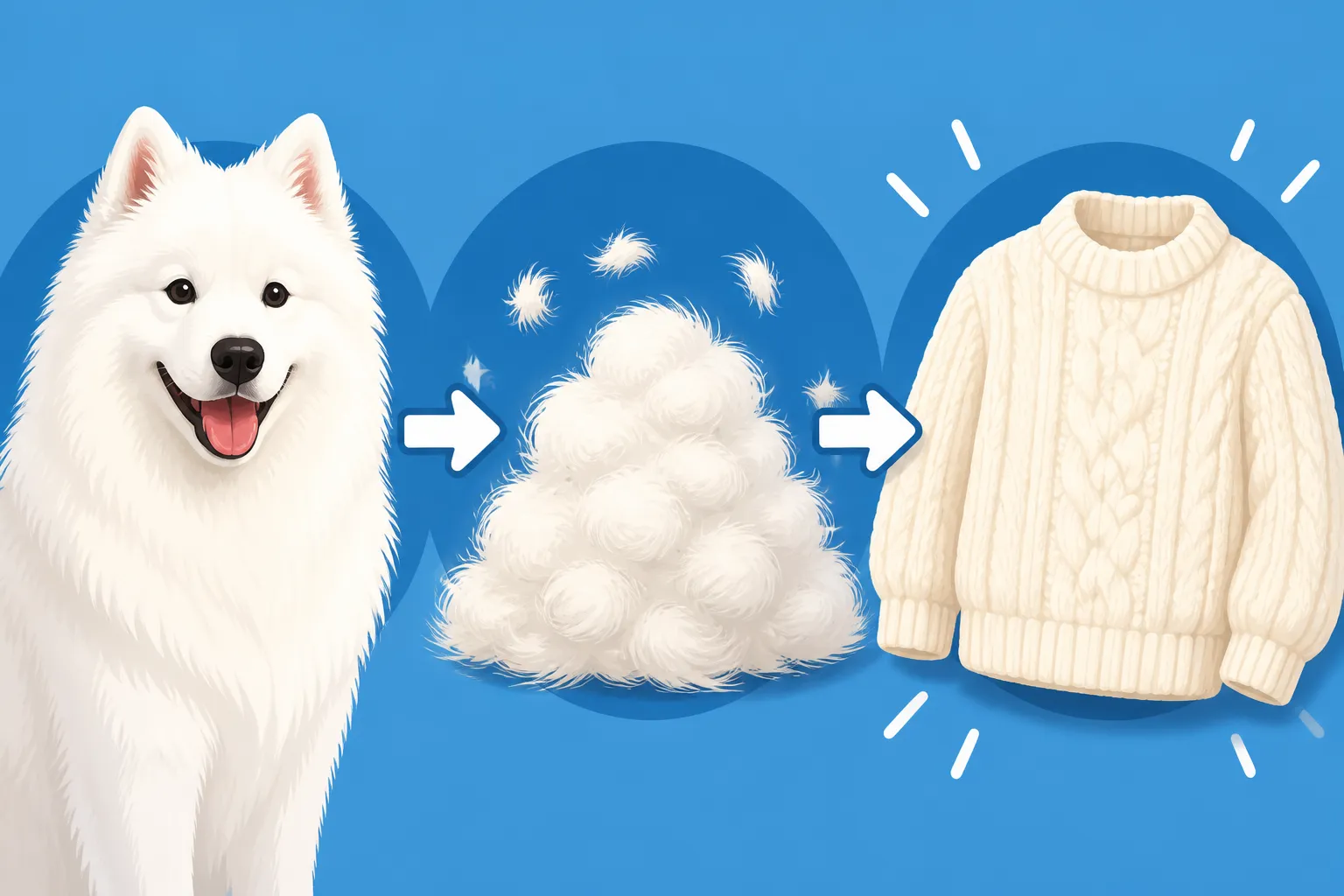
The glorious cloud of fluff that is a Samoyed's coat often leaves owners in awe – and sometimes, in a mountain of shed fur. If you've ever found yourself knee-deep in undercoat during a seasonal blow and wondered if all that beautiful, soft fiber could be transformed into something enduring, like a cozy sweater, you're not alone. It's a common thought to want to make use of that incredible warmth rather than simply discarding it, and this guide is here to shed some light on the surprising amount of Samoyed fur it actually takes to craft a handmade sweater.
Understanding the Samoyed Coat and Its Spinning Potential
Before we dive into the nitty-gritty of quantity, it’s essential to appreciate the unique characteristics of your Samoyed's double coat. This isn’t just any dog fur; it’s a highly specialized textile, purpose-built by nature to insulate against extreme cold while also surprisingly capable of helping them manage in more temperate climates. This inherent design is precisely why you should never, under any circumstances, shave a Samoyed, as their coat truly is A Samoyed's Coat Is Insulation, Not Decoration.
The Magical Undercoat: Why It's Spin-Worthy
When we talk about spinning Samoyed fur into yarn, we're almost exclusively referring to the undercoat. Your Samoyed's coat boasts two distinct layers: the longer, coarser, often slightly stiffer guard hairs that form the outer protective shell and give the coat its dirt-shedding, water-resistant qualities, and the incredibly dense, fluffy, wool-like undercoat. It is this undercoat, with its remarkable softness, crimp, and slight natural "grip," that makes it ideal for transforming into yarn. Many people describe spun Samoyed fur as feeling like cashmere or angora – luxurious and incredibly warm.
The quality of the undercoat is paramount. Fibers need to be of a sufficient length and strength to be drafted (pulled and twisted) into a continuous strand without breaking easily. While some guard hairs inevitably get mixed in, the goal is to maximize the amount of soft undercoat. This magical transformation of raw fluff into durable yarn is why the question of Whether Samoyed Fur Can Be Spun Into Yarn is met with such enthusiasm by those in the know.
The Great Shed: Collecting Your Raw Material
Any Samoyed owner will tell you that shedding is not a continuous, minor event; it's a dramatic seasonal "coat blow" that occurs typically twice a year, usually in spring and fall. During these periods, your Samoyed will shed their entire undercoat in prodigious quantities. This is prime time for collecting usable fiber. Trying to gather enough fur from daily brushing outside of these peak shedding cycles will likely be an exercise in frustration, as the volume simply won't be there. It's during a full coat blow that you truly understand the phrase What Twenty Pounds of Samoyed Undercoat Does to a House, even if that figure refers more to visual volume than actual weight.
Consistent and thorough brushing during a coat blow is your best friend. Tools like an undercoat rake, slicker brush, and especially a high-velocity force dryer (easily found on Amazon or Chewy) are invaluable. A force dryer helps "blow out" the loose undercoat from your dog's coat, making collection much more efficient than just brushing alone. It's not uncommon to fill large grocery bags with fluff from a single Samoyed during a serious coat blow. Keeping an eye on When a Samoyed Blows Its Coat is crucial for maximizing your collection efforts.
Preparing Samoyed Fur for Spinning
Collecting the fur is merely the first step; proper preparation is critical to ensure it can be successfully spun into high-quality yarn. This involves more than just stuffing it into a bag; it requires cleaning, sorting, and aligning the fibers.
Cleaning and Sorting the Fluff
Your Samoyed, being an active and curious companion, will inevitably gather dirt, leaves, small twigs, and other outdoor debris in their magnificent coat. Before your fur goes to a spinner – or if you plan to spin it yourself – it must be meticulously cleaned. This process typically involves picking through small handfuls of fur, carefully removing any foreign matter and, as much as possible, separating out the coarser guard hairs. You're aiming for a pure, soft undercoat.
While some professional spinners offer washing services, this usually incurs an additional cost. If you're tackling it yourself, hand-wash small batches in lukewarm water with a very mild, wool-safe detergent, rinsing thoroughly. The key is to avoid agitation, which can cause the delicate fibers to felt together and become unspinnable. Proper cleaning ensures your finished yarn is soft, free of irritants, and will smell pleasant (many wonder Whether Spun Samoyed Fur Smells When Wet – if prepared correctly, it should not have an unpleasant odor). This careful sorting highlights why focusing on Which Part of a Samoyed's Coat Spins Best is essential for a good outcome.
Carding and Combing: Aligning the Fibers
Once clean and dry, the fur needs to be "carded" or "combed." These processes serve to further clean the fiber, remove any remaining short or coarse bits, and most importantly, align the individual fibers into a uniform, fluffy mass called a "batt" or "roving." This prepared fiber is what the spinner uses to create yarn. Carding is typically done with hand cards or a drum carder, tools that gently brush the fibers into parallel alignment.
For those not spinning their own fiber, a professional spinner will usually handle this stage. The quality of the carding directly impacts the quality of the finished yarn; well-prepared fiber leads to smoother, more consistent yarn with less waste. This labor-intensive step underscores the effort involved in transforming raw fluff into a usable textile, and it's a significant part of the spinner's skill. This also factors into the decision of Whether a Spinner Will Take Samoyed Undercoat as they may have requirements for how much prep work you do.
From Fluff to Yarn: The Spinning Process and Yield
The transition from a voluminous bag of fluff to a compact skein of yarn is quite remarkable, but it inherently involves a significant reduction in both volume and weight.
The Magic of the Spinning Wheel
A skilled spinner uses a spinning wheel or a drop spindle to draw out the prepared fibers and twist them together, creating a single strand, or "ply." This single ply is often then combined with one or more other plies and twisted again in the opposite direction to create a stronger, more balanced, and more durable yarn. The spinner controls the thickness of the yarn, the tightness of the twist, and the number of plies, all of which influence the final yarn's characteristics, such as its weight, drape, and resilience. Samoyed fur, being a relatively fine fiber, requires a deft hand to spin effectively without breakage, especially if aiming for a consistent, fine yarn.
The resulting yarn is not only incredibly soft but also surprisingly warm. This warmth is due in part to the fiber's natural loft and its ability to trap air, similar to how a Samoyed's undercoat traps air (Whether a Samoyed's Undercoat Traps Air) to insulate your dog.
Expected Yield: How Much Fur Becomes How Much Yarn?
This is where expectations often need adjustment. While a Samoyed's coat blow can seem like an endless supply of fur, the processing steps significantly reduce the final quantity of yarn.
Here's a general breakdown of the yield:
- Raw Fur to Cleaned Fiber: After meticulous sorting, removing debris, and detaching guard hairs, you can expect to lose anywhere from 20% to 50% of the initial volume of your collected fur. The weight loss is less dramatic but still present.
- Cleaned Fiber to Spun Yarn: From the cleaned and carded fiber, a professional spinner might achieve a yield of 50% to 70% by weight into finished yarn. However, the volume reduction from fluffy fiber to dense yarn is much more pronounced.
So, if you start with, say, 1 pound (approximately 450 grams) of well-brushed, raw Samoyed fur, you might realistically end up with anywhere from 0.5 to 0.75 pounds (225 to 340 grams) of finished, spun yarn. This reduction is why it often takes multiple coat blows and diligent collection over a significant period for a single Samoyed owner to gather enough fur for a substantial project. It underscores the importance of the question, Whether Brushed Samoyed Fur Should Be Saved, to which the answer is a resounding yes if you dream of a spun garment.
Crunching the Numbers: How Much Yarn for a Sweater?
With the realities of yield in mind, let’s consider the actual amount of yarn needed for a sweater. This can vary widely depending on several crucial factors.
Factors Influencing Sweater Yarn Needs
- Sweater Size: This is the most obvious factor. A child's sweater will require significantly less yarn than a large adult's garment.
- Yarn Weight/Thickness: Yarn comes in different "weights" (thicknesses), from super fine laceweight to bulky. A chunky, thick yarn will consume your fiber much faster than a fine yarn. Most Samoyed spinners aim for a medium-weight (like worsted or aran weight) yarn, which offers a good balance of softness, warmth, and durability.
- Knitting Gauge and Pattern: The "gauge" refers to how many stitches and rows fit into a specific area, and it's determined by the needle size and stitch pattern. A dense pattern, such as a cabled design, will use more yarn than a looser, open-stitch pattern.
- Number of Plies: A yarn spun with more plies (e.g., a two-ply versus a single-ply) will be stronger and more durable, which is generally desired for a garment like a sweater, but it will affect the overall weight.
- Blends: To stretch your precious Samoyed fur, or to add specific qualities like increased strength or drape, many people choose to blend their Samoyed fur with other fibers such as merino wool, alpaca, or even silk. Of course, this means the final garment won't be 100% Samoyed fur.
General Yarn Requirements for Sweaters
Based on common knitting standards for worsted-weight yarn, here's a table providing approximate raw Samoyed fur estimates needed for various garments. Remember, these are rough guidelines, and consulting with your chosen spinner and a knitting pattern's yarn requirements is always best.
| Garment Type | Approx. Finished Yarn Needed (Worsted Weight) | Estimated Raw Samoyed Fur (Pre-processed) |
|---|---|---|
| Small Hat | 100-150 grams (approx. 3.5-5.3 oz) | 0.25 – 0.5 pounds |
| Small Scarf | 200-300 grams (approx. 7-10.5 oz) | 0.5 – 1 pound |
| Child's Sweater (Small) | 400-600 grams (approx. 14-21 oz) | 1 – 2 pounds |
| Adult Small Sweater | 800-1000 grams (approx. 28-35 oz) | 2 – 3 pounds |
| Adult Medium Sweater | 1000-1200 grams (approx. 35-42 oz) | 2.5 – 3.5 pounds |
| Adult Large Sweater | 1200-1500 grams (approx. 42-53 oz) | 3 – 4.5 pounds |
Please Note: These estimates for raw fur assume a typical professional spinner's yield after all cleaning, carding, and spinning processes. Individual results may vary.
As you can see, gathering enough fur for a full adult sweater from a single Samoyed is a serious undertaking! It’s highly unlikely to be achieved from just one coat blow. Most single Samoyed owners will need to collect fur diligently over several seasonal sheds – potentially one to two years, or even more – to accumulate the necessary pounds of raw material. This level of dedication makes the resulting sweater not just a garment, but a true labor of love and a testament to your bond with your fluffy companion. Even if you don't collect for a sweater, understanding How Often a Samoyed Needs Brushing is key to their coat health.
Beyond Sweaters: Other Uses for Spun Samoyed Fur
Even if the dream of a full sweater feels a bit overwhelming in terms of fur collection, don't let that deter you! Your Samoyed's luxurious undercoat can still be transformed into many other cherished items that require less fiber.
Smaller Projects and Blends
Many Samoyed owners find great satisfaction in smaller projects that are much more achievable from a year or two of collected fur. Consider these delightful possibilities:
- Hats and Mittens: These are wonderfully warm and often only require the fur from one or two good coat blows. A hand-knitted hat from your own Sammy's fur is a true treasure.
- Scarves: A soft, elegant scarf is a fantastic way to enjoy the incredible warmth and softness of chiengora (dog hair yarn) close to your skin.
- Accent Yarn or Trim: You could have a smaller amount of Samoyed yarn spun and use it as a special accent on a commercially produced wool sweater, or as the cozy trim for a collar or cuffs on a jacket. This allows you to incorporate your dog's unique fiber without needing massive quantities.
- Keepsakes and Memorial Items: For smaller amounts of yarn, consider knitting or crocheting a small teddy bear, a miniature blanket, or another keepsake that serves as a tangible reminder of your beloved pet.
- Blending with Other Fibers: This is a very popular and practical option. Blending your Samoyed fur with other natural fibers like merino wool, alpaca, or even a touch of silk can extend your supply, add strength, improve drape, or create unique textures. This is an excellent strategy if you have enough for a small project but not a full sweater, allowing you to create a larger garment with a significant portion of your Samoyed's fur.
The beauty of these smaller projects lies in their attainability and the deep sentimental value they carry. They allow you to cherish that unique warmth and connection from your Samoyed without the monumental task of collecting pounds upon pounds of fiber.
Finding a Professional Spinner
Unless you are an experienced handspinner yourself, you'll need to seek out a professional to process your Samoyed fur. This is a specialized craft, and not all fiber mills or handspinners work with dog hair, which is often referred to as "chiengora" (from chien, French for dog, and angora).
When searching for a spinner, keep these points in mind:
- Experience with Chiengora: This is paramount. Ask about their specific experience with dog hair, and ideally, Samoyed fur, as different dog breeds have different fiber qualities.
- Minimum Quantity Requirements: Most professional spinners will have a minimum weight for raw, cleaned fur, often starting around half a pound to a full pound, due to the setup time involved.
- Pricing Structure: Costs for custom spinning can vary significantly. Factors include the spinner's experience, the amount of fur, the complexity of the spin (e.g., single ply vs. multi-ply), and whether they include additional services like washing or carding. Be prepared for a significant investment, as this is a highly skilled and labor-intensive process.
- Turnaround Time: Custom spinning is not a quick process. Depending on the spinner's workload, it can take several weeks or even many months to get your finished yarn back.
- References and Samples: If possible, ask for photos of their past chiengora projects or, even better, a small sample of their spun dog yarn so you can feel the quality.
You can often find professional spinners through online craft communities like Ravelry, by searching Etsy, or by asking at local fiber arts guilds. Some quick searching on platforms like Amazon for spinning supplies might also lead you to artisans who specialize in pet fiber. Entrusting your Samoyed's fur to a skilled artisan is a wonderful way to create a lasting, heartfelt connection to your beloved companion, providing you with a unique and incredibly personal item that embodies their warmth and presence.
Disclaimer
This article is for general informational purposes only and does not constitute professional advice. Laws, prices and regulations vary by location and change over time. Consult a qualified professional for guidance on your specific situation.