How Often a Samoyed Needs Brushing
Oh, the majestic Samoyed coat! It's one of the first things that draws us in, isn't it? That glorious cloud of white fur promises cuddles and an undeniable sense of wonder. But let's be real: that beautiful coat also comes with a significant commitment, and figuring out just how often you need to brush it can feel like a never-ending riddle, especially when you're suddenly drowning in fluff. This guide is going to walk you through the ins and outs of Samoyed brushing, helping you establish a routine that keeps your furry friend looking their best and your home from becoming a snowstorm of hair.
Understanding the Samoyed's Unique Double Coat
Before we dive into how often to brush, it’s absolutely essential to understand what you're brushing. A Samoyed's coat isn't just fur; it's a marvel of natural engineering, perfectly adapted to their original role in the harsh Arctic. This double coat is the key to their survival and why our grooming approach is so different from many other breeds.
The Insulating Power of Fluff: Guard Hairs and Undercoat
Imagine a tiny, personal climate control system – that's what your Samoyed's coat is. It consists of two distinct layers, each with its own crucial job. First, you have the coarse, straight, and longer outer layer, known as guard hairs. These are tough, water-repellent, and designed to protect your Samoyed from snow, ice, and even harsh sunlight. They're like the shingles on a roof, shedding dirt and moisture with remarkable efficiency. Beneath this protective layer lies the secret weapon: a dense, soft, woolly undercoat. This undercoat is incredibly insulating, trapping a layer of air close to the body, which keeps them warm in freezing temperatures and, perhaps surprisingly, cool in warmer weather by preventing external heat from reaching the skin. It's truly a wonder to behold. You can learn more about its construction in What a Samoyed's Double Coat Is Made Of.
This combination means their coat needs very specific care. If you only brush the guard hairs, you’re missing the thick, soft undercoat where mats form and shed hair gets trapped. It’s like dusting the surface of a cluttered room without ever cleaning out the closets. The system works perfectly when both layers are healthy and free from tangles, but ignore the undercoat, and you’re in for a world of trouble.
Seasonal Shedding Cycles: Coat Blows and How Often They Occur
Most dogs shed year-round, but Samoyeds take it to a whole new level with what we affectionately (or not so affectionately, depending on the day) call a "coat blow." These aren't just regular shedding periods; they're an intense, almost cataclysmic event where your Samoyed basically decides to redecorate your entire house with their old fur. Typically, Samoyeds experience two major coat blows a year – usually in the spring as they shed their heavy winter coat in preparation for warmer weather, and again in the fall as they make way for a new, thicker winter coat. However, individual dogs can vary, and factors like hormones (intact females will often have a larger coat blow after a heat cycle), climate, and even diet can influence the timing and intensity.
During a coat blow, the sheer volume of hair that comes out can be shocking to new owners. You’ll find tumbleweeds of fur drifting across your floors, clinging to your furniture, and even appearing in places you didn't know existed. It truly feels like your dog is disintegrating. Understanding When a Samoyed Blows Its Coat is crucial, because this is when your brushing routine needs to shift into high gear. While a Samoyed’s coat How a Samoyed's Coat Sheds Dirt on Its Own, it certainly doesn’t shed itself off your dog without a lot of help from you.
Daily Brushing: Is It Really Necessary for a Samoyed?
The idea of daily brushing might sound daunting, especially with a busy schedule, but for many Samoyed owners, it's a small investment that pays huge dividends in coat health and household sanity. It's not about an hour-long session every day, but rather consistent, targeted maintenance.
Targeted Daily Maintenance: Focusing on High-Friction Areas
You don't necessarily need to give your Samoyed a full, top-to-bottom brush-out every single day. Instead, think of daily brushing as a quick "spot check" and maintenance mission, focusing on the areas that are most prone to tangles and mats. These are typically places where friction occurs: behind the ears, under the "armpits" (front legs), around the ruff where their collar sits, under the tail, and in the "feathering" on their hind legs. These are the hotspots where fur can quickly get compressed, rubbed, and tangled, creating a nightmare knot overnight.
A quick five to ten-minute session with a good pin brush or comb in these specific areas can prevent small snarls from becoming massive mats. It's like tackling a few dirty dishes as they appear rather than letting them pile up into an insurmountable mountain in the sink. This proactive approach saves you significant time and your dog a lot of discomfort later on. Plus, it's a wonderful bonding opportunity!
Quick Checks for Tangles and Debris: Preventing Bigger Problems
Beyond preventing mats, daily checks are invaluable for spotting other issues. Samoyeds love to roll in things—mud, leaves, unknown treasures in the park. Their dense coat can easily pick up burrs, twigs, grass seeds, or even small bits of litter. If these aren't removed promptly, they can become embedded, leading to skin irritation, hot spots, or further matting. Imagine a tiny seed working its way into their skin, causing an abscess!
A quick once-over during your daily brushing helps you catch these foreign invaders before they become problematic. It’s also a good opportunity to check for any skin issues you might not otherwise notice, like bumps, rashes, or parasites. Early detection of any problem, whether it's a small tangle or a skin irritation, means an easier and less stressful solution for both you and your beloved Samoyed. Taking care of small things quickly prevents them from turning into larger, more painful issues for your dog.
Weekly Deep Dives: The Cornerstone of Samoyed Grooming
While daily maintenance tackles the quick fixes, a thorough weekly deep dive is non-negotiable for a Samoyed. This is where you truly get into the dense undercoat and ensure that all shed hair is removed, preventing mats from forming deep within.
Full Body Brush-Out Techniques: Line Brushing and Pin Brushing
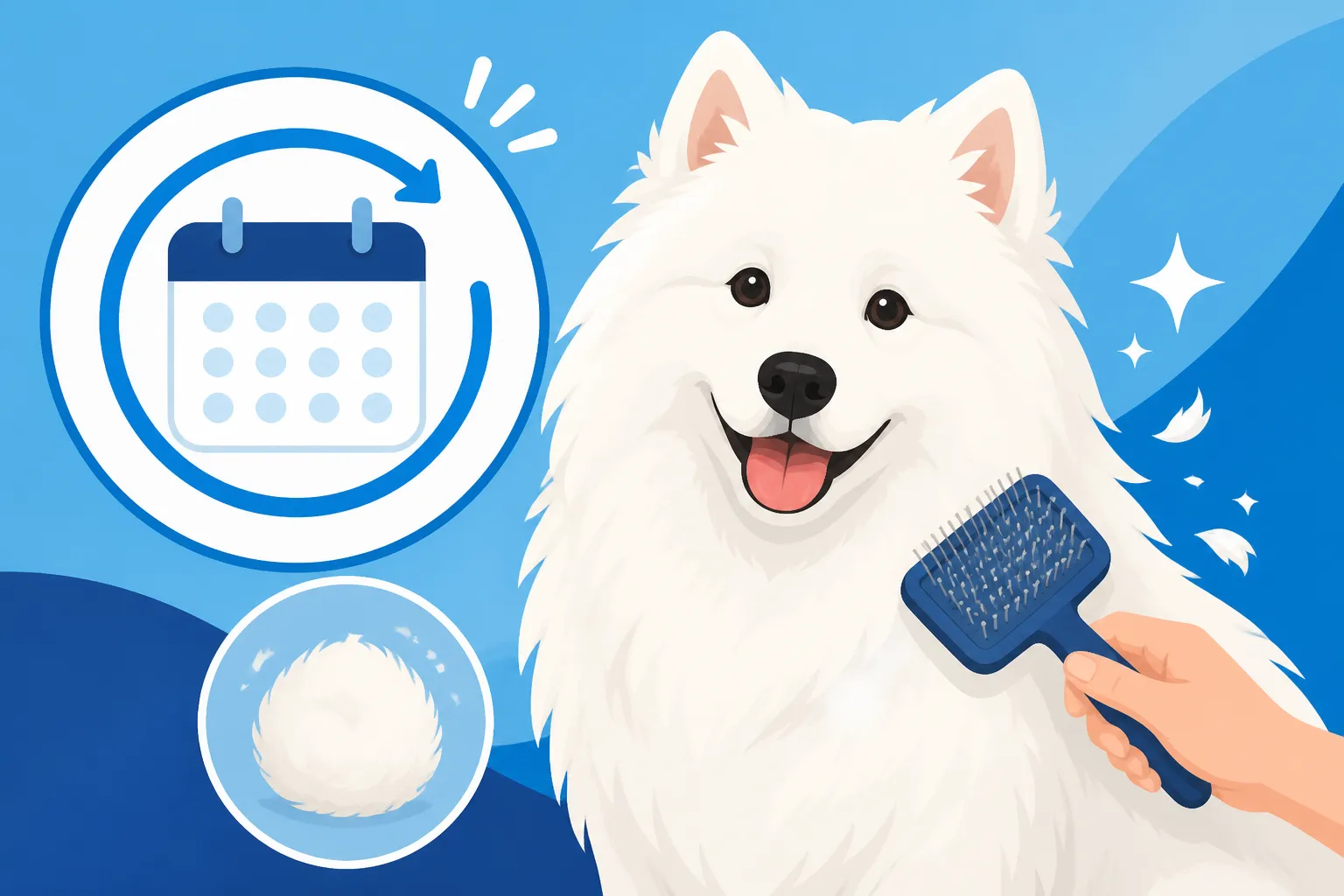
When it comes to a weekly full-body brush-out, you need to use techniques that effectively reach through both layers of that magnificent coat. The most critical technique is line brushing. This isn't just running a brush over the top of the coat; it's a systematic approach. You'll start at the bottom of a section (say, a leg or the flank), part the fur with one hand, and then brush that small section down and out, from the skin to the tips. Once that section is tangle-free, you move up an inch or two, part the fur again, and repeat. You work your way up the entire body, section by section, ensuring the brush reaches all the way to the skin. This can take a good hour or more for an adult Samoyed, but it's the only way to truly clear out that undercoat.
Alongside line brushing, a good quality pin brush is your friend for general detangling and fluffing the guard hairs. For the undercoat, an undercoat rake with rotating teeth is invaluable. These tools are designed to gently pull out loose undercoat without damaging the healthy guard hairs. Remember, consistency is key, and getting into a routine will make it much easier for both of you. You might find great tool options on Chewy or Amazon.
Addressing Mats and Tangles: Tools and Methods for Stubborn Spots
Despite your best efforts, sometimes mats happen. A mat is essentially a clump of fur that has become so tightly knotted and felted that it pulls on the skin, causing discomfort and, if left untreated, potentially skin infections. The key to addressing them is patience and the right tools. Never, ever try to cut a mat out with scissors unless you are absolutely sure of what you are doing, as it's incredibly easy to cut skin underneath. Samoyeds have thin, delicate skin that can be pulled right up into a mat.
Instead, use a mat splitter or a dematting comb with sharp, hooked blades that can carefully slice through the mat. Work slowly, holding the skin at the base of the mat to minimize pulling. You can also try working a detangling spray or conditioning oil into the mat to help loosen the strands. For very stubborn mats, you might have to break them apart piece by piece with your fingers before using a tool. If a mat is too close to the skin or too large, it’s always best to consult a professional groomer. They have the expertise and specialized tools to safely remove even the nastiest tangles without causing pain or injury. Learning Where a Samoyed Mats First can help you focus your prevention efforts.
Beyond the Basics: When to Brush More (or Less)
While weekly deep dives are the standard, there are times when you'll need to adjust your brushing schedule. A Samoyed's grooming needs aren't static; they ebb and flow with the seasons and life stages.
The Dreaded "Coat Blow" Phenomenon: Intense Shedding Periods
As mentioned earlier, the coat blow is a game-changer. During these intense shedding periods, which can last anywhere from a few weeks to over a month, your weekly routine simply won't cut it. You'll need to increase your brushing frequency dramatically. We're talking daily, and sometimes even twice a day, thorough brush-outs. It's the only way to keep up with the sheer volume of dead undercoat that's trying to escape. If you don't remove it, it will create impenetrable mats that can be incredibly uncomfortable for your dog and lead to costly professional dematting, or even shaving.
This is also where a high-velocity dryer becomes your best friend. After a bath, or even on a dry coat, a powerful forced air dryer can blast out an incredible amount of loose undercoat, saving you hours of brushing time. It’s an investment, but many Samoyed owners consider it essential for managing these periods effectively. Understanding How Long a Samoyed's Coat Blow Lasts can help you prepare mentally and practically for these intense grooming seasons.
Factors Affecting Brushing Frequency: Lifestyle, Diet, and Health
Beyond the coat blow, several other factors can influence how often your Samoyed needs to be brushed:
- Lifestyle: A Samoyed that spends a lot of time outdoors, rolling in leaves, swimming, or playing in rough terrain will inevitably pick up more debris and develop tangles faster than a more sedentary house dog. If your Samoyed is an avid explorer, expect to brush them more frequently.
- Diet: Believe it or not, a good diet plays a huge role in coat health. High-quality food rich in essential fatty acids (like Omega-3s and 6s) contributes to a healthy skin barrier and a strong, shiny coat that is less prone to excessive shedding and matting. A poor diet can lead to dull, brittle fur that sheds more and mats easily. Brands like Ollie often focus on high-quality ingredients that can support overall canine health, including skin and coat.
- Health: Underlying health issues can manifest in the coat. Thyroid problems, allergies, parasites, or other skin conditions can cause excessive shedding, dry or greasy fur, and skin irritation that contributes to matting. If you notice a sudden change in your Samoyed's coat quality or shedding patterns outside of a typical coat blow, it's always wise to consult your veterinarian to rule out any health concerns. A healthy dog generally has a healthier, easier-to-maintain coat. You can also explore Why a Samoyed Owner Must Watch Its Weight Closely for related health insights.
Essential Brushing Tools for Every Samoyed Owner
Having the right tools makes all the difference. Trying to brush a Samoyed with a flimsy, cheap brush is like trying to shovel snow with a teacup – utterly ineffective and incredibly frustrating. Investing in quality grooming tools will save you time, effort, and prevent discomfort for your dog.
Must-Have Brushes and Combs: Pin Brush, Slicker, Undercoat Rake
Building a solid toolkit is step one for any Samoyed owner. Here’s what you absolutely need:
- Pin Brush: This is your everyday workhorse for general brushing and fluffing. Look for one with smooth, rounded pins that won't scratch your dog's skin. It’s great for getting through the guard hairs and gently teasing out minor tangles. You can find excellent options on Amazon.
- Slicker Brush: While not for the main body of a Samoyed's coat (as it can damage the delicate undercoat if used improperly), a small slicker brush can be useful for feathering on the legs and tail, or for gently working out small surface mats. Use it with a very light hand.
- Undercoat Rake: This is arguably the most crucial tool. It has long teeth designed to reach down into the dense undercoat and pull out loose, dead hair without damaging the topcoat. Look for one with rotating teeth, as these glide more easily through the fur and are less likely to pull. This tool is a true game-changer during coat blows. What an Undercoat Rake Costs a Samoyed Owner can give you an idea of the investment.
- Steel Comb: A sturdy, wide-toothed steel comb is essential for checking your work after brushing. It should be able to glide through the coat all the way to the skin without snagging. If it snags, you've missed a tangle! A finer-toothed end can be used for delicate areas like behind the ears or around the face.
- Mat Splitter/Dematting Comb: As discussed, these are specialized tools for carefully breaking apart mats. They are not for general brushing.
| Tool Type | Primary Use | Frequency | Notes |
|---|---|---|---|
| Pin Brush | General detangling, fluffing, daily spot checks | Daily | Gentle, good for topcoat and light tangles |
| Undercoat Rake | Removing dead undercoat, preventing mats | 1-3 times weekly | Essential, especially during coat blows; look for rotating teeth |
| Steel Comb | Checking for missed tangles, delicate areas | After every brush-out | Ensures thoroughness, finds hidden knots |
| Mat Splitter | Breaking apart stubborn mats (use with care) | As needed | For difficult mats; requires skill to avoid injury |
| High-Velocity Dryer | Blasting out loose hair, thorough drying | After baths, during coat blow | Speeds up drying, incredibly effective for shedding |
The Power of a High-Velocity Dryer: Crucial for Drying and Shedding
Many new Samoyed owners underestimate the value of a high-velocity dryer, but it’s a non-negotiable tool for serious Samoyed grooming. Not only does it dry your dog much faster and more thoroughly than a regular hairdryer (preventing skin issues like "hot spots" from damp undercoats), but its powerful, cool air stream also works wonders for shedding.
During a coat blow, you can literally "blow" out huge quantities of loose fur using a high-velocity dryer. It's mesmerizing and incredibly effective. It detangles, fluffs, and removes so much dead hair that it dramatically reduces your brushing time and the amount of fur shed around your home. Trying to dry a Samoyed with towels or a human hairdryer will take forever and will likely result in a damp undercoat, which can lead to skin problems. Learning What a Force Dryer Costs a Samoyed Owner might seem like a lot, but the time and hassle it saves are well worth it. You can find various models on sites like Chewy or Amazon.
Establishing a Grooming Routine: Tips for Success
Grooming a Samoyed isn't just a chore; it's an ongoing process that builds trust and strengthens your bond. Establishing a consistent, positive routine from day one is key to making it a pleasant experience for everyone.
Making Grooming a Positive Experience: Starting Young
The best time to start introducing grooming is when your Samoyed is a puppy. Even if they don't have much coat yet, gentle handling, short brushing sessions, and positive reinforcement (lots of praise, small treats, and happy talk) can build a foundation of acceptance and even enjoyment. Make it a calm, low-stress activity. Don't force them or make it a battle. If they get squirmy, take a break and try again later. The goal is for them to associate grooming with good things.
As they grow, gradually increase the duration and intensity of your sessions. Teach them to lay or stand calmly for brushing. If you start early and make it fun, your adult Samoyed will be much more cooperative during those lengthy brush-outs, especially during coat blows. Remember, the earlier they learn to tolerate and even enjoy it, the less stressful it will be for everyone in the long run. Consider how vital early positive experiences are for their entire life, just like The First Year With a Samoyed Puppy shapes so much of their future behavior.
Professional vs. At-Home Grooming: Striking a Balance
Many Samoyed owners opt for a hybrid approach: regular at-home grooming supplemented by professional grooming appointments. While you can certainly learn to do all the grooming yourself, professional groomers have specialized equipment (like powerful dryers and tubs designed for large dogs) and expertise that can be incredibly helpful, especially during difficult coat blows or if you encounter stubborn matting. They can also provide services like nail trims and ear cleaning that some owners prefer to leave to the pros.
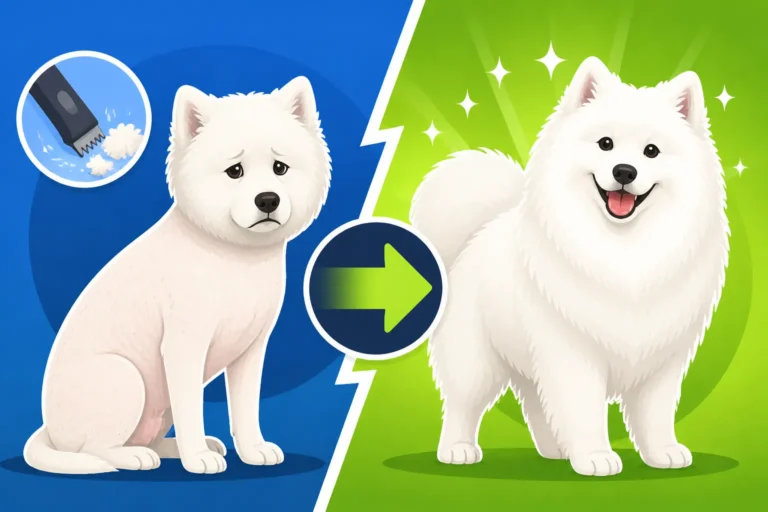
Professional grooming can be a significant expense, so it’s something to budget for. How Often a Samoyed Needs a Professional Groom depends on your comfort level and how well you keep up with at-home maintenance. Some owners opt for a professional bath and blow-out every few months, while others might go once or twice a year to get a full "shed-less" treatment during peak shedding season. Finding a groomer experienced with double-coated breeds like Samoyeds is crucial, as improper grooming (like shaving, which should almost never be done to a Samoyed) can severely damage their coat and skin. Always choose a groomer who understands Why a Samoyed Must Never Be Shaved.
Disclaimer
This article is for general informational purposes only and does not constitute professional advice. Laws, prices and regulations vary by location and change over time. Consult a qualified professional for guidance on your specific situation.