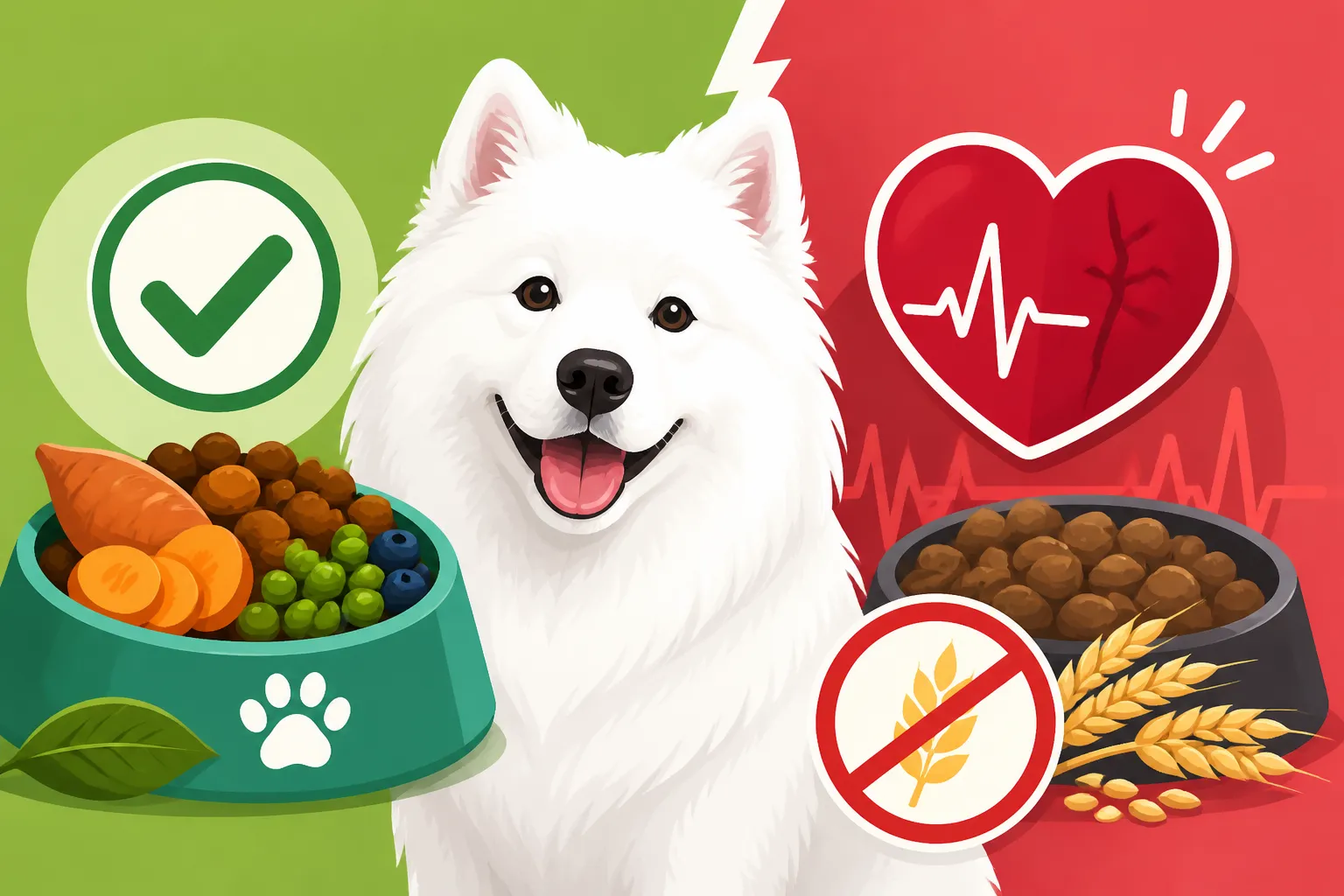
Whether Grain Free Food Risks a Samoyed’s Heart
It's completely understandable to feel overwhelmed and a little bit scared when you start hearing conflicting information about what you're feeding your beloved Samoyed. You thought you were doing something good by choosing a "grain-free" option, maybe hoping to avoid allergies or just follow a trend, only to find whispers and warnings about potential heart problems. This guide is here to cut through the noise, explain the real science behind the grain-free diet and heart health concerns, and help you make the best, most informed food choices for your cherished fluffy companion.
The Grain-Free Dog Food Conundrum and Your Samoyed's Heart
For years, "grain-free" dog food became a buzzword, marketed as a superior, more natural alternative for our canine friends. Many of us, myself included, saw the marketing, believed it was healthier, and switched our dogs over. We wanted the best for our Samoyeds, these beautiful, sensitive souls, and if grains were bad, then surely removing them was good, right? It turns out, the situation is far more nuanced, and for some dogs, including our Samoyeds, it might carry unexpected risks for their cardiovascular health.
What "Grain-Free" Actually Means
When you see a dog food proudly emblazoned with "grain-free," it doesn't necessarily mean it's low-carb, or even that it's inherently healthier. What it does mean is that traditional grains like corn, wheat, rice, barley, and oats have been swapped out for other carbohydrate sources. These often include ingredients such as peas, lentils, potatoes, sweet potatoes, and tapioca. These ingredients, while not grains, are still starches and serve a similar purpose in the food: providing carbohydrates and acting as binders to form the kibble.
The crucial point here is that "grain-free" is not synonymous with "ancestral" or "paleo" in the way some marketing might imply. Dogs, unlike wolves, have evolved alongside humans for thousands of years, developing the ability to digest starches and utilize grains quite effectively. Their digestive systems are robust and adaptable, capable of thriving on a variety of well-balanced ingredients, including quality grains. Thinking of a grain-free diet as inherently more natural for a dog is often a misunderstanding of canine evolution and nutritional needs.
So, while a bag of grain-free kibble might boast exotic protein sources like bison or salmon, take a closer look at the other ingredients. You'll almost always find a significant proportion of these alternative carbohydrate sources. This isn't inherently bad, but the sheer quantity and type of these ingredients, particularly legumes and potatoes, have become a focal point in the discussions around heart health. It's not about the absence of grain, but what replaced it and in what proportion.
The Initial Appeal of Grain-Free Diets
The initial surge in popularity for grain-free dog foods came from a few key beliefs and marketing narratives. One major driver was the widespread, though largely unsubstantiated, belief that grains were a common allergen for dogs. Owners would see their Samoyeds scratching or having digestive upset and quickly jump to the conclusion that a grain allergy was the culprit. While food allergies do exist in dogs, actual grain allergies are remarkably rare, far less common than allergies to more typical protein sources like chicken or beef. Yet, the perception persisted, leading many to seek grain-free options as a preventative measure.
Another powerful draw was the idea that grain-free diets were more "natural" or "biologically appropriate" for dogs, harkening back to their wild ancestors. This tapped into a desire among pet owners to provide what they perceived as the purest, least processed food for their companions. The image of a wolf thriving on meat with no grains fueled this trend, even though domestic dogs are genetically distinct from wolves and have adapted to a more omnivorous diet over millennia. The marketing often played on these sentiments, making owners feel like they were making a more enlightened choice for their dog's health.
Furthermore, some pet parents simply saw "grain-free" as a sign of higher quality, assuming that foods without grains were somehow made with better ingredients or more meat. This wasn't always the case, of course, but the perception was strong. Many well-meaning Samoyed owners, striving to give their furry family members the best possible start and a long, healthy life, switched their dogs to these diets based on these appealing, yet often misleading, premises. It was a well-intentioned decision, made with love, which is why the recent revelations have been so unsettling for so many.
Understanding DCM: The Heart Issue in Question
When we talk about grain-free diets and heart health, the specific condition that has veterinarians and researchers concerned is Dilated Cardiomyopathy, or DCM. Hearing that your Samoyed might be at risk for a serious heart condition due to their food is terrifying, especially when you've done your best to choose a "healthy" option. It's vital to understand what DCM is and why this dietary link has become such a prominent topic.
What is Dilated Cardiomyopathy DCM?
Dilated Cardiomyopathy (DCM) is a serious heart condition that primarily affects the heart muscle. In dogs with DCM, the heart's ventricles – the main pumping chambers – become stretched and thinned, leading to an enlarged heart. Imagine a balloon that's been overinflated multiple times; its walls become thinner and less elastic. When the heart muscle is weakened and stretched, it can't pump blood as effectively as it should. This means less oxygenated blood gets circulated throughout the body, leading to a host of problems.
The symptoms of DCM can develop gradually, which often makes them hard to spot in the early stages, especially in a breed like a Samoyed who excels at hiding discomfort. As the condition progresses, you might notice your Samoyed becoming less active, tiring easily on walks, or even struggling to keep up with their usual playful antics. Other signs can include coughing, especially when resting or at night, difficulty breathing, a distended belly due to fluid buildup, or even fainting spells. It's a progressive disease, meaning it tends to worsen over time, and if left untreated, it can unfortunately lead to heart failure and be fatal. How a Samoyed Hides Illness Behind a Smile is a good read on how subtle these signs can be.
Traditionally, DCM has been understood to have a strong genetic component, particularly in certain large and giant breeds like Doberman Pinschers, Great Danes, and Irish Wolfhounds. For these breeds, it's often an inherited condition, regardless of diet. However, what has sounded the alarm in recent years is the emergence of DCM in breeds not typically predisposed to it, or in dogs of all sizes and mixes, who are eating certain "boutique" or grain-free diets. This "atypical" presentation of DCM, sometimes referred to as diet-associated DCM, is what has led to the current concerns and investigations.
The Link Between Diet and DCM in Samoyeds and Other Breeds
The connection between certain diets and DCM began to surface when veterinary cardiologists started noticing an uptick in DCM cases in breeds not genetically prone to the disease. These weren't your typical Dobermans; they were Golden Retrievers, mixed breeds, and yes, even Samoyeds – a breed not generally known for a high incidence of inherited DCM. The common thread among many of these affected dogs was that they were consuming grain-free diets, or diets from smaller, "boutique" companies using certain "unconventional" ingredients.
While the exact mechanisms are still being researched, the prevailing theory points to a potential taurine deficiency, or an interference with taurine metabolism, caused by the high inclusion of certain ingredients in these diets. Taurine is an amino acid that plays a critical role in heart function, among other bodily processes. Some dogs might not be producing enough taurine themselves, or the ingredients in their food could be blocking its absorption or synthesis. When taurine levels drop too low, the heart muscle can't function properly, leading to the cellular changes characteristic of DCM. This can be particularly devastating for an active, spirited Samoyed.
It’s crucial to understand that this isn’t a blanket condemnation of all grain-free foods, nor does it mean every dog on such a diet will develop DCM. The concern lies with specific formulations, particularly those heavily reliant on peas, lentils, other legumes, and potatoes as primary ingredients, often listed high up on the ingredient panel. For a Samoyed, whose health and longevity are paramount, this emerging research means we need to approach dietary choices with a critical eye and a healthy dose of caution, always prioritizing evidence-based nutrition over marketing trends.
The Role of Taurine and Legumes
The scientific community, particularly veterinary nutritionists and cardiologists, has zeroed in on two main suspects in the diet-associated DCM puzzle: taurine deficiency and the heavy inclusion of legumes and potatoes in certain dog foods. Understanding how these factors might contribute to a serious heart condition is key to protecting your Samoyed. It can feel like a complex biochemical mystery, but breaking it down helps make sense of the advice veterinarians are now giving.
Taurine Deficiency: A Key Suspect
Taurine is an amino acid, often called a "conditionally essential" nutrient for dogs. This means that while dogs can typically synthesize taurine from other amino acids (methionine and cysteine), there are situations where they either don't produce enough or their ability to utilize it is impaired. When a dog becomes deficient in taurine, it can have profound effects on the body, with the heart being particularly vulnerable. Taurine is vital for the normal contraction of heart muscle cells and for maintaining the heart's overall structure and function.
In cases of diet-associated DCM, a primary theory is that the particular composition of certain grain-free or "boutique" diets leads to a functional taurine deficiency. It's not always that the diet lacks taurine outright; some foods may contain adequate amounts, but something about the other ingredients prevents the dog from properly absorbing or utilizing it. For a Samoyed, a breed that thrives on robust health, any disruption to such a crucial nutrient can be concerning. This is why some veterinarians now recommend Whether a Samoyed Needs Yearly Kidney Bloodwork and other screenings that include looking at overall organ function if there's any concern.
The good news is that if caught early, diet-associated DCM can sometimes be reversible or manageable with taurine supplementation and a change in diet. This highlights the importance of open communication with your veterinarian and being proactive if you have any concerns about your Samoyed's current food or health. Regular veterinary check-ups are always vital, but perhaps even more so when dietary choices are under such scrutiny.
Why Legumes and "Exotic" Ingredients Might Be Problematic
The finger of suspicion has largely pointed at the high inclusion of ingredients like peas, lentils, chickpeas, and potatoes as main carbohydrate sources in many grain-free diets. These ingredients are legumes and starchy vegetables. While they're not inherently "bad" and are found in many dog foods, their prominence in the ingredient list – often appearing in the top five – seems to be a common factor in diet-associated DCM cases.
One hypothesis suggests that these ingredients might interfere with taurine synthesis or absorption in a dog's gut. For example, some legumes contain compounds called lectins or enzyme inhibitors that could potentially bind with taurine precursors or inhibit the enzymes needed for taurine production. Another theory proposes that the high fiber content in some of these ingredients might alter gut microbiome activity in a way that affects bile acid metabolism, and taurine is a key component of bile acids. If bile acid excretion is increased, the body might lose more taurine than it can replenish.
It's also worth noting that many of these "boutique" or "exotic" diets from smaller manufacturers might not undergo the same rigorous testing and nutritional oversight as diets from larger, more established companies with veterinary nutritionists on staff. This isn't to say all small brands are problematic, but the lack of extensive feeding trials or specific nutritional expertise could be a contributing factor. For concerned Samoyed owners, seeing a specific food brand’s commitment to scientific research and feeding trials can offer some peace of mind, especially when looking at a brand like Ollie that emphasizes fresh, balanced ingredients or when navigating the vast selection on Chewy or Amazon.
Making Informed Food Choices for Your Samoyed
Navigating the world of dog food can feel like a minefield, especially with all the conflicting information out there. After hearing about the potential risks of grain-free diets on your Samoyed's heart, you might be feeling anxious and unsure of what to do next. The goal isn't to panic, but to empower yourself with knowledge and make choices that genuinely support your beloved companion's long-term health. Choosing the right diet for your Samoyed is one of the most important decisions you'll make for their wellbeing.
What to Look For in a Samoyed's Diet
When choosing a diet for your Samoyed, the focus should always be on scientifically formulated, complete, and balanced nutrition. Don't fall for marketing hype; instead, look for evidence of nutritional adequacy. A good starting point is to seek out brands that employ veterinary nutritionists (ideally board-certified by the American College of Veterinary Nutrition, ACVN) and conduct extensive feeding trials. These companies invest in research to ensure their foods meet or exceed nutritional guidelines, rather than relying solely on ingredient sourcing.
Look for diets that list traditional ingredients, with a named meat source (e.g., "chicken meal," "beef") as one of the first few ingredients, followed by a balance of carbohydrates (which can include healthy grains like rice, oats, or barley), fats, vitamins, and minerals. Avoid diets where legumes (peas, lentils, chickpeas) or potatoes are among the first three ingredients, particularly if they are present in very high quantities. Diversity in carbohydrate sources is generally good, but extreme reliance on specific non-grain ingredients has been linked to the DCM concerns.
Consider a diet that has undergone AAFCO feeding trials, not just formulated to meet AAFCO nutrient profiles. This means the food has actually been fed to dogs, and their health outcomes monitored, demonstrating its nutritional adequacy in a real-world setting. Brands widely available on platforms like Chewy and Amazon will often detail their AAFCO statements prominently. If your Samoyed is still a puppy, ensuring a diet that supports How Much a Samoyed Puppy Eats at Four Months and slow, steady growth is also crucial for overall skeletal health, which often comes from these reputable brands.
Consulting Your Veterinarian and Reputable Brands
The absolute best resource you have for making dietary decisions for your Samoyed is your veterinarian. They know your dog's individual health history, activity level, and any pre-existing conditions. They can help you sift through the vast array of options and recommend a diet that is appropriate and safe. Don't hesitate to bring in the ingredient list of your current food or any food you're considering; your vet can review it and offer expert guidance based on the latest scientific understanding.
Beyond your vet, look for food brands that adhere to what are sometimes called "WSAVA guidelines." The World Small Animal Veterinary Association (WSAVA) provides recommendations for choosing pet food, emphasizing aspects like employing a qualified nutritionist, owning manufacturing facilities, performing quality control, and conducting nutrient analysis and feeding trials. Brands that follow these guidelines typically offer more transparency and scientific backing for their formulations.
If you're currently feeding a grain-free diet, or a diet heavy in legumes/potatoes, especially from a smaller brand, schedule a chat with your vet. They might suggest a gradual transition to a diet with more traditional ingredients, or even recommend a taurine supplement as a precautionary measure, particularly if your Samoyed is a breed that might have a higher genetic predisposition to cardiac issues (though Samoyeds are not typically in that group for inherited DCM, the diet link makes it relevant). Brands like Ollie, known for their fresh, whole-food approach, often highlight their formulation process and nutrient balance, which can be an excellent alternative to highly processed kibble, but always discuss with your vet first to ensure it's the right fit for your Samoyed's specific needs.
| Diet Type | Key Characteristics | Potential Concerns (DCM Link) | Vet Recommendation Generally |
|---|---|---|---|
| Grain-Inclusive | Contains traditional grains (corn, rice, oats) | Low concern if from reputable brand | Often preferred |
| Grain-Free | Replaces grains with legumes/potatoes | Higher concern if high in legumes | Consult vet, consider change |
| Boutique/Exotic | Novel proteins, limited ingredients, grain-free | Higher concern, lack of research | Caution, vet consultation |
| Raw/Homemade | Uncooked or home-prepared ingredients | Risk of imbalance, need expert advice | Vet supervision essential |
Remember, your Samoyed's happy, smiling face and wagging tail depend on good health, and a healthy heart is central to that. Making informed, science-backed decisions about their diet is one of the best ways to ensure they live a long, joyful life by your side. The Twelve to Fourteen Years a Samoyed Lives can be greatly influenced by proper care and nutrition, so taking the time to understand these issues is truly worth it.
Disclaimer
This article is for general informational purposes only and does not constitute professional advice. Laws, prices and regulations vary by location and change over time. Consult a qualified professional for guidance on your specific situation.