How Old the Samoyed Breed Really Is
It's a common thought to wonder just how long our beloved Samoyeds have graced the earth with their fluffy presence and characteristic smile. Many people feel a deep connection to their dog's breed history, and it can be frustrating to find only vague, often repetitive information. This guide will dive deep into the fascinating, ancient origins of the Samoyed breed, exploring archaeological, genetic, and cultural evidence to reveal just how truly old their lineage is.
Tracing the Ancient Roots of the Samoyed
When we talk about how "old" a dog breed is, we're not just talking about when it was officially recognized by a kennel club. We're delving much further back in time, often thousands of years, to the very origins of their genetic makeup and the symbiotic relationship they formed with humans. For the Samoyed, this journey takes us to some of the most remote and challenging environments on the planet, where their survival was intrinsically linked with the survival of their human companions.
It's easy to look at a modern Samoyed, lounging on a sofa or prancing in a dog park, and forget that every inch of their being—from their thick double coat to their incredible stamina—was forged in a crucible of ice and ancient human need. They aren't just an old breed; they are a truly ancient one, a living connection to a time when dogs were indispensable partners in daily life, far beyond simple companionship. This deep history explains so much about their unique traits, their independence, and that stubborn streak we sometimes encounter.
The Samoyed's Deep Lineage Among Ancient Breeds
The Samoyed is often classified as one of the "ancient breeds" or "basal breeds." What does that mean, exactly? In genetics, basal breeds are those whose DNA shows very little genetic divergence from wolves, indicating they were among the first dogs to separate from the wolf lineage. This places them in a very elite group, suggesting an extremely long history of domestication, predating many of the more familiar breeds we see today.
This isn't just a fancy label; it speaks to a profound historical truth. When geneticists study dog DNA, they look for markers that indicate how closely related a breed is to the ancestral wolf population and how much cross-breeding has occurred with other dog types over millennia. The Samoyed's genetic signature consistently places it firmly among these ancient breeds, alongside others like the Siberian Husky, Alaskan Malamute, Chow Chow, and Akita. It's a testament to how long their type has remained relatively unchanged, a true living fossil in the canine world. This deep history is part of what makes them so captivating and, at times, so wonderfully enigmatic.
The Hypothesized Origin Point: Central Asia
While the Samoyed is famously associated with the Arctic regions of Siberia, particularly the Yamal Peninsula, genetic studies often point to a broader Central Asian origin for many of the ancient northern breeds. The theory suggests that the earliest domesticated dogs, or at least the ancestors of these northern types, emerged somewhere in the vast steppes and mountains of Central Asia before migrating with human populations.
These migrations would have occurred over thousands of years, with various nomadic groups spreading across continents, taking their indispensable canine partners with them. As these human groups moved north into the harsh Arctic, the dogs that were best adapted to the extreme cold, sparse resources, and specific working needs (like herding reindeer or pulling sleds) were naturally selected and perpetuated. The Samoyed, as we know it, would have then specialized and developed its distinct characteristics in these northern climes, under the careful guardianship of the indigenous peoples. What the Samoyed's DNA Says About Its Ancestry provides a deeper dive into the genetic evidence supporting these origins.
Archaeological Clues and Early Civilizations
While DNA provides compelling evidence, archaeological finds offer tangible glimpses into the past, helping us piece together the timeline of canine domestication. Although direct archaeological evidence of "Samoyed-type" dogs from millennia ago can be scarce and difficult to definitively identify, the broader picture of dog domestication in Eurasia offers strong support for the Samoyed's ancient standing.
Imagine vast, icy landscapes with nomadic people relying entirely on their wits, their skills, and their animals for survival. Dogs weren't pets in the modern sense; they were tools, protectors, and vital companions. The dogs that lived and worked with these early humans would have been hardy, adaptable, and incredibly resilient, much like our Samoyeds today. Their history is woven into the fabric of human survival in some of the most unforgiving environments on Earth.
Evidence of Early Dog Domestication
Archaeological sites across Eurasia have yielded evidence of dog remains dating back tens of thousands of years, pushing the timeline of dog domestication much further than once thought. While identifying a specific "Samoyed" from these early remains is impossible, these discoveries confirm that dogs were integrated into human societies long before the rise of agriculture. This deep integration meant that as human groups migrated, their dogs migrated with them, adapting and evolving in parallel.
For example, ancient dog remains found in various parts of Siberia, dating back over 8,000 to 10,000 years, show characteristics consistent with early sled dog types—dogs built for endurance and cold. These findings, combined with genetic data, suggest a long and continuous presence of northern-type dogs in these regions. The Samoyed, therefore, isn't a recently developed breed but rather a direct descendant of these very ancient, cold-adapted canine companions.
The Role of Indigenous Peoples: The Nenets
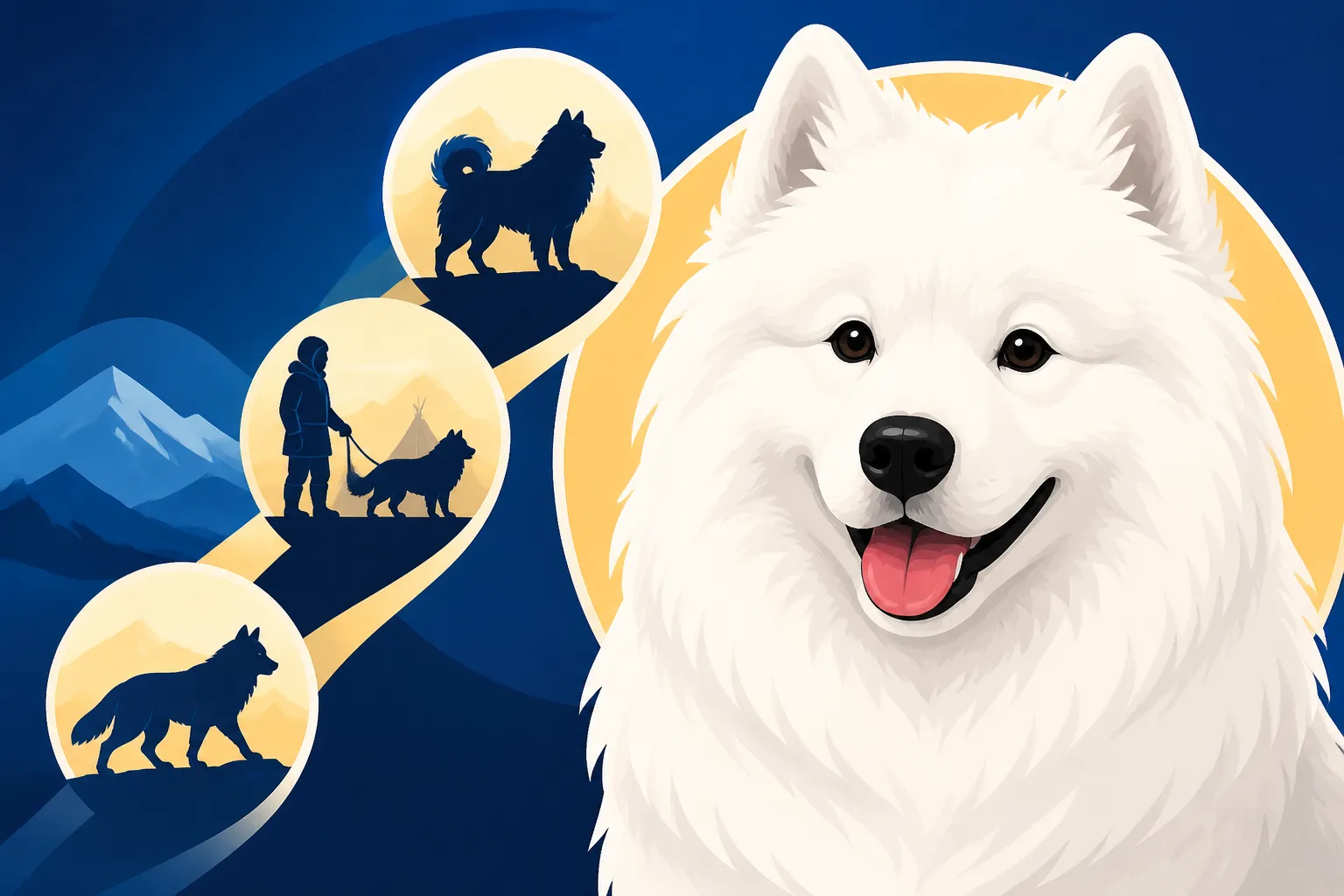
The direct ancestors of the modern Samoyed are most strongly linked to the indigenous Nenets people of Siberia, who inhabited the vast tundra stretching across Northern Russia. For thousands of years, the Nenets were nomadic reindeer herders, and their way of life was inextricably tied to their dogs. These dogs performed multiple crucial roles, from herding reindeer to pulling sleds, guarding against predators, and even sharing their warmth inside the chum (tent) during brutally cold nights. The Nenets of the Yamal Peninsula Bred the Samoyed explores this relationship further.
This close, functional relationship meant that the dogs were selected for very specific traits: intelligence, resilience, a strong work ethic, a gentle disposition with humans, and, of course, that incredible insulating coat. This isn't a few centuries of breeding; this is a continuous, generations-long partnership spanning thousands of years. The breed's development wasn't driven by aesthetics or show rings, but by sheer necessity for survival in a land where temperatures could plummet to sixty degrees below zero. It's truly humbling to think about.
Historical Records and Early Mentions
While formal breed records are a relatively modern invention, historical accounts and early expeditions offer glimpses of these northern dogs long before they became known as "Samoyeds" to the Western world. Travelers, explorers, and traders who ventured into Siberia often noted the presence of hardy, white, Spitz-type dogs working alongside the indigenous peoples.
One of the earliest Western accounts might be attributed to explorers like Fridtjof Nansen in the late 19th century, though dogs of this type had certainly been observed for centuries before. These accounts cemented the image of the resilient, thick-coated, good-natured dogs of the Arctic. It was these dogs, brought back by explorers, who would form the foundation of the modern Samoyed breed registered in Western kennels. This transition marks a distinct point where the ancient working dog began its journey into becoming a recognized "breed" with a written standard.
Genetic Insights into the Samoyed's Lineage
Modern genetic science has revolutionized our understanding of dog breeds, allowing us to peer back into their ancestry with unprecedented detail. DNA analysis consistently places the Samoyed squarely within the category of ancient breeds, confirming what historical and archaeological evidence has long suggested. It's like having a family tree that stretches back for millennia, showing direct lines to the earliest canine companions.
This genetic clarity helps us appreciate not just the Samoyed's long history, but also its unique place in the canine world. They are survivors, carrying the genetic heritage of dogs that thrived in extreme conditions, a heritage that still influences their health, temperament, and physical characteristics today.
The Samoyed's Position on the Canine Family Tree
Through extensive genetic studies comparing hundreds of dog breeds, scientists have constructed a "canine family tree." This tree clearly shows that the Samoyed branches off very early, close to the root of dog domestication, signifying its ancient status. This means their genetic makeup has been shaped by thousands of years of natural selection and selective breeding by indigenous peoples, rather than by more recent, intensive human intervention seen in many modern breeds.
This ancient genetic profile means they share less genetic variation with the vast majority of "modern" dog breeds and retain more of the genetic diversity found in their wolf ancestors. It's a key indicator of just How Old the Samoyed Breed Really Is. This inherent genetic strength, honed over millennia, is part of what makes them such robust and healthy dogs when bred responsibly.
How DNA Links Them to Arctic Nomadic Cultures
Genetic analysis also helps to trace the migratory patterns of dogs and their human companions. Studies have shown a strong genetic link between the Samoyed and other Spitz-type dogs found across the Arctic and northern Eurasian regions. This is consistent with the historical movements of nomadic groups, such as the Nenets and other "Samoyedic" peoples (a linguistic group, not just referring to the dogs), who spread across the vast expanse of the tundra.
The dogs traveled with these groups, adapting to the local conditions and needs, while maintaining a shared ancient genetic core. The isolation of these regions also meant that these dogs were relatively unmixed with breeds from other parts of the world until much more recently. This geographical isolation, combined with the continuous functional breeding by the Nenets, helped to preserve the Samoyed's ancient type and genetic purity for thousands of years.
The Modern Samoyed: A Legacy Preserved
The Samoyed we welcome into our homes today is a direct, living link to those ancient dogs of the Siberian tundra. While their roles have certainly evolved from herding reindeer and sleeping in tents, their fundamental characteristics — their intelligence, endurance, beautiful coat, and loving nature — are all echoes of their millennia-long history.
Understanding this ancient past isn't just a fun fact; it helps us appreciate the breed more deeply and care for them better. The needs of a Samoyed today, from their exercise requirements to their coat care, are rooted in their evolutionary history. Providing them with enrichment and purpose that taps into those ancient instincts is key to their happiness.
Transition to Western Kennels
The late 19th and early 20th centuries marked a pivotal period for the Samoyed. Explorers returning from Arctic expeditions, captivated by these beautiful and hardy dogs, brought them to Europe and North America. Ernest Kilburn Scott is widely credited with establishing the first Samoyed kennel in England and setting the foundation for the breed as we know it in the Western world. He, along with his wife Clara, brought back several dogs from the Russian Arctic, including a male named Sabarka and a female named Whitey.
These early imports formed the genetic bottleneck for many of today's Samoyeds outside of Siberia. The emphasis then shifted from purely functional breeding for survival to developing a breed standard that described the ideal appearance and temperament. This is when the breed truly began its life as a "show dog" and companion animal, while still retaining its profound historical identity. This era saw the formation of breed clubs and formal registration, a stark contrast to their millennia as unrecorded, essential working dogs.
The Samoyed Standard and Preservation
Today, kennel clubs around the world maintain a breed standard for the Samoyed, outlining the ideal physical traits and temperament. This standard serves as a blueprint, guiding responsible breeders in their efforts to preserve the unique characteristics of the breed. It ensures that the Samoyed of tomorrow remains true to its ancient heritage, maintaining its distinctive double coat, alert expression, and that famous "Samoyed smile" that evolved to prevent icicles from forming around their mouths.
Breed clubs and dedicated enthusiasts play a crucial role in safeguarding the breed's health and integrity. They advocate for ethical breeding practices, including health testing and careful selection, to ensure that the genetic legacy of these ancient dogs continues strong for generations to come. The Health Tests Both Samoyed Parents Should Have is an excellent resource for understanding these modern efforts to preserve the breed's health.
Modern Care Reflecting Ancient Needs
Even though our modern Samoyeds aren't herding reindeer, their ancient origins still dictate many of their needs. Their dense double coat, for instance, requires regular grooming to prevent matting and keep them comfortable, a task for which you might find a great selection of brushes and force dryers at retailers like Chewy. Their high intelligence and boundless energy, developed over millennia of challenging work, mean they thrive on mental and physical stimulation. A bored Samoyed, despite its ancient wisdom, can still decide that redecorating your yard with excavated holes is a perfectly reasonable pastime, tapping into that primal digging instinct for comfort and entertainment.
Understanding their heritage helps us provide a richer life for them. From considering their diet, ensuring it's appropriate for an active, cold-adapted breed, to providing outlets for their pulling instinct through activities like canicross or even just a good long walk with a sturdy harness, we honor their ancient past. You might even find specialized gear for these activities through online pet supplies.
| Era/Period | Approximate Timeframe | Key Developments Related to Samoyeds | Human-Dog Relationship |
|---|---|---|---|
| Paleolithic/Ice Age | 30,000 – 15,000 years ago | Initial dog domestication from wolves. Ancestors of Spitz breeds emerge. | Dogs as hunting partners, scavengers, and protectors. |
| Mesolithic/Neolithic | 15,000 – 5,000 years ago | Spread of dog populations across Eurasia. Diversification into types. | Dogs in nomadic societies, aiding in hunting and early herding. |
| Bronze/Iron Age | 5,000 – 1,000 years ago | Specialization of northern dogs for Arctic conditions and specific tasks. | Dogs integral to survival for reindeer herders and Arctic communities. |
| Medieval/Early Modern | 1,000 – 150 years ago | Continued functional breeding by indigenous peoples in Siberia. | Dogs as working partners: herding, pulling, guarding, warmth. |
| Late 19th – Early 20th C. | ~1880s – 1920s | Samoyeds brought to the West by explorers; breed standard established. | Transition to companion animals, show dogs, while retaining working traits. |
| Modern Era | 1920s – Present | Global recognition, focus on health, temperament, and ethical breeding. | Primarily companions, family members, still capable of working roles. |
So, how old is the Samoyed breed, really? It's not a simple answer of a few hundred years. Genetically, their lineage stretches back tens of thousands of years, making them one of the oldest and most "primitive" dog breeds in existence, a living echo of the Paleolithic era. As a distinct "breed type" honed by the Nenets people, they have a history spanning at least 3,000 years, if not more. And as a formally recognized breed in the Western world, their history dates back to the late 19th and early 20th centuries. It's a truly remarkable, multi-layered history that makes them all the more special.
Disclaimer
This article is for general informational purposes only and does not constitute professional advice. Laws, prices and regulations vary by location and change over time. Consult a qualified professional for guidance on your specific situation.