The Nenets of the Yamal Peninsula Bred the Samoyed
Many Samoyed owners today adore their fluffy, smiling companions without fully grasping the incredible, challenging history that shaped this magnificent breed. It's easy to see a Samoyed bounding through a park and forget that their ancestors faced unimaginable hardships, forging an unbreakable partnership with indigenous people for sheer survival. This guide dives deep into the true origins of the Samoyed, revealing the profound bond with the Nenets people of the Yamal Peninsula and how those ancient roles continue to influence the Samoyed we know and love today.
The Ancient Roots of the Samoyed: A Partnership with the Nenets
Long before they graced our homes and dog shows, Samoyeds were vital partners in one of the harshest environments on Earth. Their story isn't one of pampered pets, but of working dogs whose very existence was intertwined with the survival of a nomadic people. Understanding this origin is key to truly appreciating the Samoyed's unique blend of independence, loyalty, and resilience.
Who Are the Nenets People?
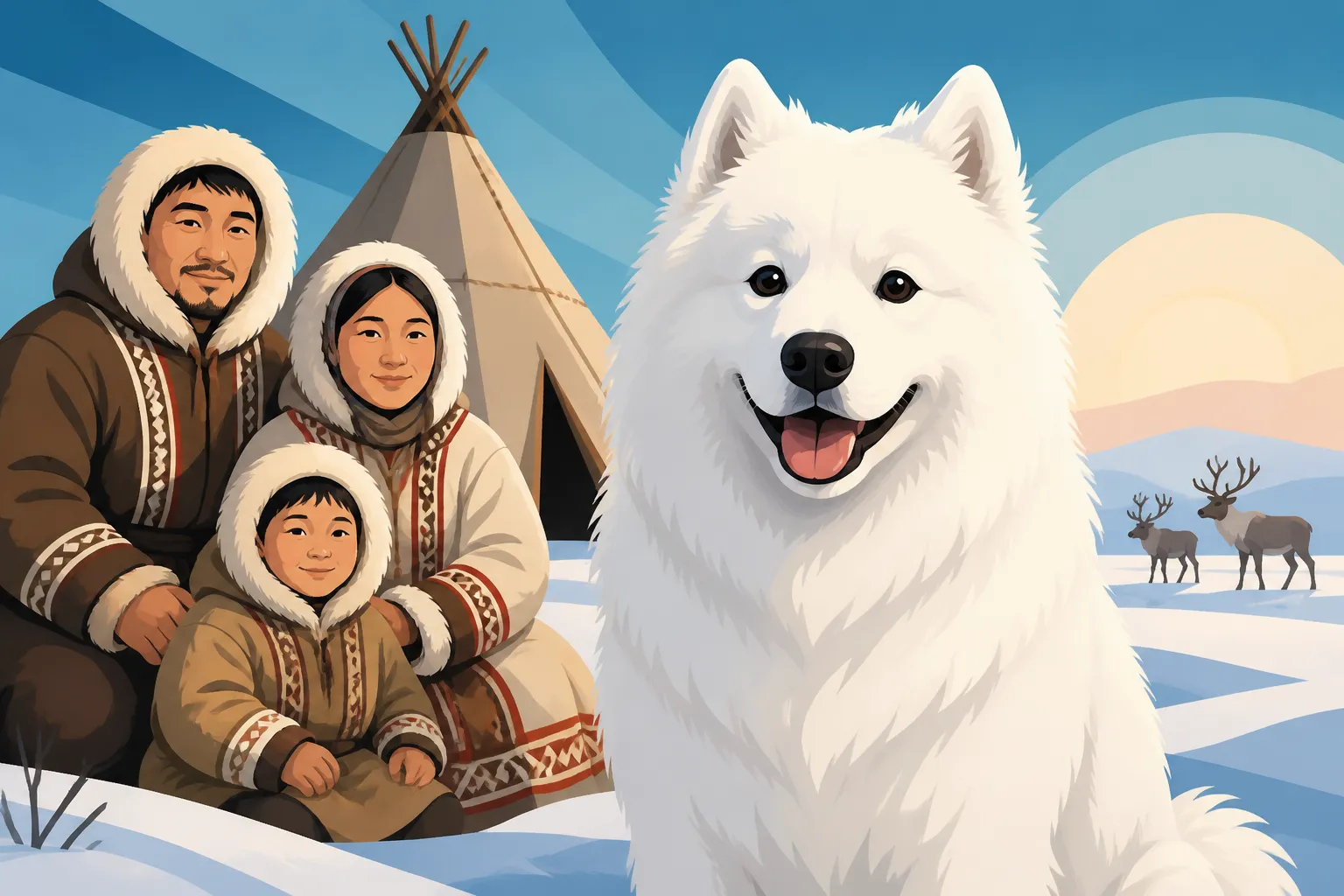
The Nenets are an indigenous nomadic people native to northern Arctic Russia, primarily inhabiting the Yamal Peninsula. For thousands of years, they have lived a life deeply connected to the reindeer, migrating vast distances across the tundra with their herds, following ancient routes dictated by the seasons and the availability of lichen, the reindeer's primary food source. Their culture is rich with traditions centered around survival in extreme cold, using every part of the reindeer for food, clothing, shelter, and tools.
Their lives were, and in many ways still are, a testament to human resilience. Imagine moving your entire home, your chum (a conical tent), hundreds of miles across frozen landscapes, with only your family, your herd, and your dogs. The Nenets developed an incredibly efficient and sustainable way of life, where every individual, human or animal, had a crucial role to play. The dogs, in particular, were not mere animals; they were indispensable members of the family unit, valued above almost all other possessions for their utility and companionship.
This deep integration into daily life meant that the dogs developed an extraordinary understanding of human cues and needs. They weren't just trained; they were raised within the family, learning through observation and participation. This forged a dog breed with keen intelligence, strong problem-solving skills, and an innate desire to be part of the "pack"—a trait that Samoyed owners still see today in their dogs' desire to be constantly near their humans.
The Yamal Peninsula: A Harsh But Beautiful Homeland
The Yamal Peninsula, jutting into the Arctic Ocean, is a land of extremes. Winters are long and brutally cold, with temperatures plummeting far below freezing, often accompanied by fierce blizzards. Summers are brief, marked by the midnight sun and a landscape that transforms into marshy tundra, teeming with mosquitos. This unforgiving environment shaped every aspect of the Samoyed, from their physical build to their temperament.
The geography is largely flat, covered by tundra, permafrost, and countless lakes and rivers. This vast, open space necessitates dogs capable of covering long distances with endurance and finding their way through whiteouts or across treacherous ice. The consistent cold meant only the most robust and well-insulated animals could survive and thrive. It also fostered a resourcefulness, as finding food and shelter was a constant challenge.
It's difficult for us, living in heated homes with grocery stores, to truly grasp the daily struggle for survival that characterized life on the Yamal Peninsula. Every single adaptation the Samoyed possesses, from its dense double coat to its watchful nature, is a direct result of thousands of years spent in this environment. When your dog pants heavily on a warm summer day, remember that its body is still designed for Sixty Below in an American Summer.
Why "Samoyed" Is a Name We Should Revisit
The name "Samoyed" itself carries a complex history. It's an exonym, a name given by outsiders, derived from a historical term used by Russians to refer to several indigenous groups of Siberia, including the Nenets. This term is considered by some to be outdated and even derogatory, as it was often associated with outsiders' perceptions rather than the peoples' self-designations.
In recent times, there's been a growing movement to use more respectful and accurate terminology. Many now advocate for referring to the indigenous people as Nenets, and some suggest "Nenets Herding Laika" as a more appropriate name for the dog breed, honoring its true originators. While "Samoyed" remains the widely recognized breed name in the West, particularly in kennel clubs like the AKC, understanding its etymology helps us appreciate the cultural sensitivity involved.
For us as Samoyed enthusiasts, being aware of this history allows us to show respect for the Nenets people and their profound contribution to the creation of this breed. It reminds us that our fluffy companions are living links to a rich, ancient culture, and their name, like their heritage, deserves thoughtful consideration.
More Than Just a Pet: The Samoyed's Role in Nenets Life
To the Nenets, their dogs were never "just pets." They were colleagues, protectors, and family members, essential for both the economic and social fabric of their nomadic existence. Their lives quite literally depended on the capabilities and loyalty of their canine partners.
Reindeer Herding: The Samoyed's Primary Job
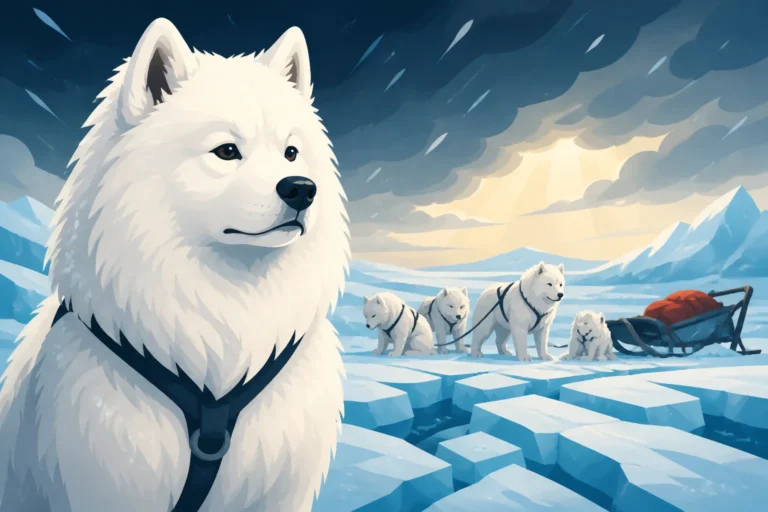
The primary role of the ancient Samoyed was reindeer herding. Unlike some herding breeds that nip at heels, Samoyeds used a distinct circling method to keep the semi-wild reindeer together. They would run wide around the herd, gently nudging stragglers back into the main group, often using their presence and vocalizations rather than direct physical force. This technique required immense stamina, agility, and keen intelligence, as they had to understand the movement of a large herd over vast, featureless terrain.
Imagine a single dog or a small team of dogs managing hundreds, sometimes thousands, of reindeer across the vast tundra. This wasn't a casual stroll; it was intense, demanding work, often performed in extreme weather conditions. The dogs needed to be able to make decisions independently, anticipating the herd's movements and reacting quickly to keep them from scattering or being lost in a blizzard. Their white coats also provided excellent camouflage in snowy conditions, allowing them to approach the herd without startling the animals.
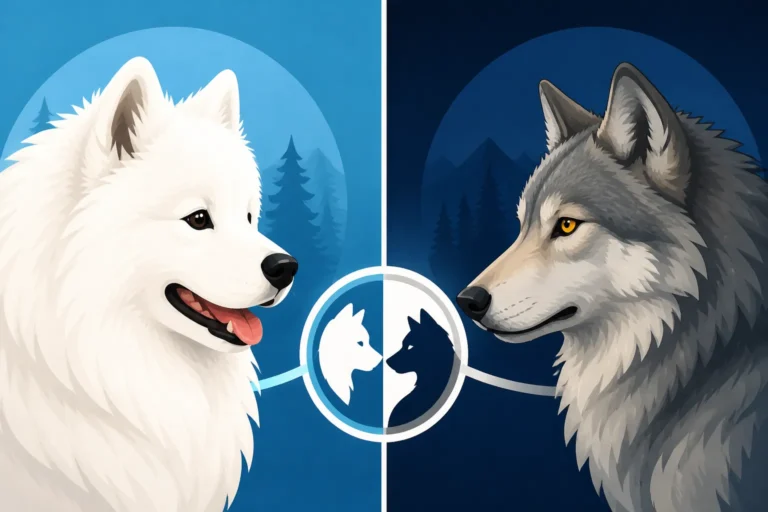
Beyond simply moving the herd, Samoyeds were also crucial in protecting them. Wolves and other predators were a constant threat in the Arctic. The Samoyed's inherent vocalizations – their unique "scream" and "talk" – served as an alarm system, alerting the Nenets to danger. They would stand bravely against predators, often buying enough time for the human herders to intervene. This protective instinct, though generally non-aggressive towards humans, still manifests in their watchful nature and tendency to be quite vocal about anything perceived as unusual. The Herding Instinct Nobody Expects From a Samoyed is a good read to understand this aspect of their behavior.
Sledding and Transportation: The Silent Drivers
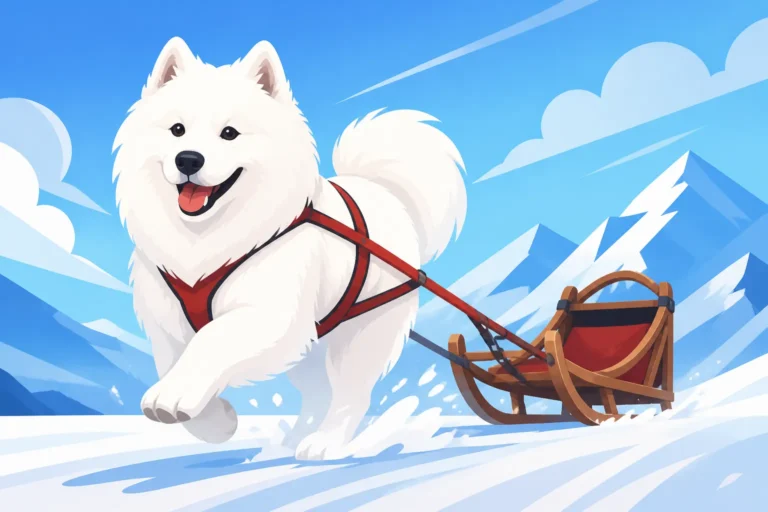
When the Nenets moved their camps, which they did regularly, the Samoyeds transitioned from herding to pulling. These dogs were not as massive as some other northern breeds like the Malamute, but they possessed incredible endurance and a strong desire to pull. They would haul sleds laden with belongings, children, and sometimes the elderly or infirm, across miles of snow and ice.
The Samoyed's pulling style is characterized by a steady, consistent pace rather than bursts of speed. This was crucial for long journeys across the tundra. Their broad paws provided excellent traction on snow, and their powerful, muscular bodies were built for sustained effort. They worked in teams, responding to subtle commands from their handlers, navigating challenging terrain. This is a far cry from a simple walk around the block; it was a full-time job requiring immense physical and mental fortitude.
Even today, many Samoyeds retain this innate desire to pull. Whether it's on a leash during a walk or harnessed for dog sports like Pulling: What a Samoyed Was Actually Bred to Do or skijoring, their enthusiasm for putting their shoulder into a harness is undeniable. This deep-seated instinct often explains why teaching a Samoyed to walk politely on a leash can be such a challenge – they were literally bred to pull!
The Ultimate Hot Water Bottle: Companionship and Survival
Perhaps one of the most heartwarming, yet critically important, roles of the ancient Samoyed was as a companion and source of warmth within the family chum. In the frigid Arctic nights, where temperatures inside the tent could still be perilously low, the Samoyeds would sleep curled up with the Nenets family, particularly the children. Their thick, warm coats and body heat helped keep everyone alive.
This constant, intimate proximity forged an incredibly strong bond between the dogs and their human families. The Samoyed developed a deeply affectionate and gentle nature, especially towards children, whom they were literally entrusted with keeping warm and safe. This historical role explains why Samoyeds are often described as "people dogs" who thrive on human interaction and can become quite distressed if left alone for extended periods. Why a Samoyed Wants to Be in the Room With You explores this intrinsic need for companionship.
Beyond physical warmth, they provided emotional support. Imagine the isolation of the vast tundra; a constant, loving canine presence would have been invaluable. This legacy manifests today in the Samoyed's desire to be close to their families, following you from room to room, and often preferring to sleep near your bed rather than in another part of the house. They are truly an integral part of the family, just as they were for the Nenets centuries ago.
The Physical and Temperamental Traits Forged by Their Origins
Every characteristic of the modern Samoyed, from the tip of its wagging tail to the depth of its friendly gaze, can be traced back to its utilitarian origins with the Nenets. These aren't arbitrary features; they are finely tuned adaptations for survival and partnership in the Arctic.
The Iconic Double Coat: Built for Extremes
The Samoyed's magnificent double coat is perhaps its most recognizable feature, and it's a masterpiece of natural engineering. It consists of two distinct layers: a harsh, long, white outer guard coat that is resistant to water and shedding dirt, and a thick, soft, woolly undercoat that provides extraordinary insulation. This combination allowed the Samoyed to thrive in temperatures that would be fatal to most other breeds.
Many people mistakenly believe this coat makes Samoyeds unsuitable for warmer climates, but they often misunderstand its function. The double coat actually works like insulation in a house: it keeps cold out in winter and heat out in summer. The loft of the undercoat traps air, creating a barrier against both extremes. This is why you should Why Shaving a Samoyed Makes the Heat Worse; shaving removes this natural thermal regulation, exposing their delicate skin to sunburn and hindering their ability to stay cool.
The outer coat also possesses a remarkable self-cleaning quality. Mud, dirt, and even snow often fall right off once dry, a vital trait for a dog living in a harsh, unsanitary environment with limited access to bathing. This is part of the reason why, despite their pristine white appearance, Samoyeds are surprisingly low-odor dogs compared to many other breeds. Caring for this coat, especially during its dramatic "blows," is a significant commitment for any owner. A Samoyed's Coat Is Insulation, Not Decoration is an essential read for any Samoyed owner.
The Samoyed Smile: A Functional Adaptation
The famous "Samoyed smile," the upturned corners of their mouth, isn't just an endearing facial expression; it's a brilliant functional adaptation to their Arctic environment. When working in sub-zero temperatures, many dogs (and even humans) can experience drooling or moisture around their mouths, which can quickly freeze, leading to painful ice formation and even frostbite.
The Samoyed's slightly upturned mouth helps prevent drool from dripping down and freezing. The natural curve allows any moisture to run off the sides of the mouth rather than accumulate and freeze on their fur or lips. This subtle anatomical feature kept them more comfortable and protected from the elements during long days of herding or pulling in freezing conditions.
So, while we cherish it as a sign of their perpetually happy disposition, it's actually a testament to their incredible resilience and the forces of natural selection at play in the Yamal Peninsula. It's a "smile" that literally helped them survive.
Intelligence and Independence: A Working Dog's Mind
The demanding roles of herding reindeer and pulling sleds required dogs with significant intelligence, problem-solving abilities, and a degree of independence. They couldn't always wait for a human command; sometimes they had to make quick decisions to protect the herd or navigate treacherous terrain. This intelligence is a double-edged sword for modern owners.
On one hand, Samoyeds are highly capable learners. They can pick up new commands and tricks with surprising speed. On the other hand, their independence means they will often weigh a command against their own perceived best interest or simply decide if they feel like complying. This often gets misinterpreted as stubbornness, but it's more accurately a reflection of their history as free-thinking working partners rather than subservient followers. Training a Samoyed That Finds Obedience Negotiable perfectly captures this dynamic.
This independence also contributes to their notorious wanderlust and often unreliable recall. A Samoyed on the trail of an interesting scent or a fleeting squirrel will likely prioritize its own instincts over your pleas to "come." This is why a secure yard and a reliable leash are non-negotiable for a Samoyed owner. Their working mind needs engagement, structure, and consistent, positive reinforcement training to channel their intellect productively. Without a job to do, a Samoyed can quickly become bored, leading to behaviors like excessive barking or destructive digging.
From Tundra to Town: The Samoyed's Journey to the West
The transition of the Samoyed from an indispensable working dog in Siberia to a cherished family companion around the world is a fascinating tale of exploration, admiration, and careful breeding.
Early European Explorers and the "Arctic Dogs"
The first encounters between Samoyeds and Europeans date back centuries, with traders and explorers venturing into the vast wilderness of Siberia. These early travelers were often struck by the beauty, resilience, and unique working abilities of these "Arctic dogs." They observed their role in hunting, herding, and transportation, and some even brought a few individuals back to Europe, though not yet as a recognized breed.
These initial interactions sparked curiosity and admiration for the capabilities of these northern canines. The stories of their unwavering loyalty and incredible endurance began to filter back to the Western world, laying the groundwork for a broader interest in the breed. It was clear these dogs were special, perfectly adapted to their environment and invaluable to their human partners.
However, it wasn't until the late 19th and early 20th centuries that Samoyeds began to be systematically brought out of Siberia and established as a distinct breed in the Western world, thanks largely to the allure of polar exploration.
The Role of Polar Expeditions
The late 19th and early 20th centuries were the golden age of polar exploration, with explorers racing to be the first to reach the North and South Poles. These expeditions required incredibly hardy dogs capable of pulling heavy sleds over immense distances in unimaginable cold. Samoyeds, with their unmatched endurance, strength, and cold-weather adaptations, were the natural choice for many of these daring ventures.
Explorers like Fridtjof Nansen, who attempted to reach the North Pole, and Ernest Shackleton, who led several Antarctic expeditions, relied heavily on teams of Samoyeds. Perhaps the most famous Samoyed in history is Etah, who accompanied Roald Amundsen on his successful expedition to be the first to reach the South Pole in 1911. Etah, the Samoyed That Reached the South Pole First is a legendary tale, and it demonstrates the breed's extraordinary courage and stamina.
These expeditions showcased the Samoyed's incredible capabilities to a global audience. The dogs proved themselves invaluable, often enduring conditions that pushed both humans and animals to their absolute limits. It was through these heroic feats that the Samoyed gained international recognition and admiration, prompting more individuals to bring them back to England and other Western countries, leading to the establishment of breed clubs and formal standards. How Polar Explorers Took Samoyeds Out of Siberia details this fascinating chapter in their history.
The Evolution of the Modern Samoyed
As Samoyeds made their way to Europe and America, their roles began to shift. While still occasionally used for sledding or working, their primary function transitioned to that of a companion and show dog. Breeders in England, such as Ernest Kilburn Scott, who is credited with establishing the breed in the West, and his wife Clara, began to refine the appearance and standardize the breed. They focused on maintaining the iconic white coat, the smiling expression, and the gentle temperament that had made them so endearing.
The emphasis moved from pure utility to aesthetics and companionship, but the core traits remained. The breed standard, developed by various kennel clubs, aimed to preserve the physical characteristics that made the Samoyed so well-suited to its Arctic origins. The dense coat, the sturdy build, the dark, almond-shaped eyes, and the ever-present smile were all codified.
Today's Samoyed is a testament to this evolution. While many are beloved family pets, their genetic programming still whispers of the tundra. They still love to run, pull, and "talk." Their independent spirit and desire for companionship are direct links to their ancient past, making them a unique and endlessly fascinating breed for those willing to understand and honor their heritage.
Preserving the Legacy: Honoring Their Past
Bringing a Samoyed into your life means more than just acquiring a beautiful dog; it means becoming a steward of an ancient legacy. Honoring their past involves understanding their inherent needs, supporting ethical breeding, and providing an environment where their natural instincts can flourish appropriately.
The Importance of Health Testing
Responsible breeding is crucial for preserving the health and integrity of any purebred dog, and the Samoyed is no exception. Because of their relatively small foundational population brought from Siberia, genetic bottlenecks can occur, leading to certain hereditary health conditions becoming more prevalent in the breed. This makes thorough health testing by breeders absolutely vital.
For Samoyeds, conditions such as hip dysplasia, eye diseases like progressive retinal atrophy, certain cardiac issues, and particularly The Kidney Disease That Kills Samoyed Males Before Fifteen Months are concerns. A good breeder will transparently test their breeding stock for these conditions and be open about the results. They understand that by making informed breeding choices, they are actively working to ensure the future health and longevity of the breed. The Health Tests Both Samoyed Parents Should Have is a critical checklist for prospective owners.
When you're looking for a Samoyed puppy, always ask to see health clearances for both parents. Don't be afraid to ask detailed questions about the health history of the lines. This is not only about ensuring you get a healthy puppy, but also about supporting the breeders who are dedicated to the long-term well-being of the Samoyed breed, continuing the tradition of care that began with the Nenets.
Understanding Their Instincts
Living with a Samoyed means accepting and understanding their deeply ingrained instincts. That digging habit? It’s not always about boredom; historically, Samoyeds would dig hollows in the snow or earth to create a cool spot in summer or a shelter in winter. The Digging a Samoyed Does Because It Is Hot directly relates to this. Their vocalizations, from the famous "Samoyed scream" to their endearing "woo-woos," are direct descendants of their alarm calls and communication with their human herders. The Samoyed Scream and Why It Is Not Barking is a fascinating read on this topic.
Their strong prey drive, another holdover from their herding days, means small animals are often viewed as something to chase. Their independence translates into a dog that often requires more creative and engaging training methods than breeds bred for strict obedience. Providing outlets for these instincts is key to a happy Samoyed and a harmonious household. This could mean engaging in dog sports like sledding, canicross, or agility, or simply providing plenty of mental enrichment with puzzle toys and scent games.
Ignoring these instincts often leads to frustration for both dog and owner. Instead, embrace them! Channel their energy into positive activities. A tired Samoyed is generally a well-behaved Samoyed, and understanding why they do what they do can turn a frustrating behavior into an endearing quirk, or better yet, a fun activity you can do together.
Supporting Responsible Breeders
The legacy of the Nenets lives on through responsible Samoyed breeders who dedicate themselves to preserving the breed's health, temperament, and working abilities. These breeders are not just producing puppies; they are carefully curating the future of a living historical artifact. They understand the breed standard, are knowledgeable about genetics, and prioritize the well-being of their dogs above all else.
A responsible breeder will:
- Perform comprehensive health testing on their breeding stock.
- Raise puppies in a clean, stimulating environment, focusing on early socialization.
- Be transparent about their breeding practices and answer all your questions.
- Provide a lifetime of support for their puppies and their new families.
- Take back any dog they have bred, at any point in its life, if circumstances change for the owner.
Choosing a puppy from such a breeder, rather than from a backyard breeder or a pet store (which often source from puppy mills), is one of the most significant ways you can honor the Samoyed's rich heritage. It ensures that the dog you bring home is not only healthy and well-adjusted but also a true representative of the noble "Arctic dogs" that once partnered with the Nenets people on the vast, icy plains of the Yamal Peninsula.
| Aspect | Traditional Nenets Role | Modern Pet Owner Implications |
|---|---|---|
| Primary Function | Herding reindeer, pulling sleds, guarding camp | Family companion, dog sports (pulling, agility), therapy work |
| Shelter | Lived inside the chum with family, dug snow dens | Needs to be an indoor dog, access to cool spaces, secure yard |
| Social Structure | Integral family member, relied upon for survival | Craves companionship, prone to separation anxiety, "velcro dog" |
| Physical Build | Endurance, strength, double coat for extreme cold | Needs significant exercise, tolerant of cold, requires extensive grooming |
| Temperament | Independent, intelligent, watchful, gentle with family | Needs consistent training, can be stubborn, vocal, good with kids |
| Food Source | Shared reindeer meat, hunted small game | High-quality commercial dog food (e.g., from Chewy), portion control |
Disclaimer
This article is for general informational purposes only and does not constitute professional advice. Laws, prices and regulations vary by location and change over time. Consult a qualified professional for guidance on your specific situation.