Whether a Samoyed Fills Out After Two
A Samoyed can look leggy and narrow as a puppy, then seem to gain substance well after reaching adult height. That change can make it hard to tell normal maturation from excess weight. This guide explains when Samoyeds typically fill out, what changes to expect after age two, and how to judge healthy condition beneath a thick coat.
When a Samoyed reaches adult size
Height and body development do not finish at the same time
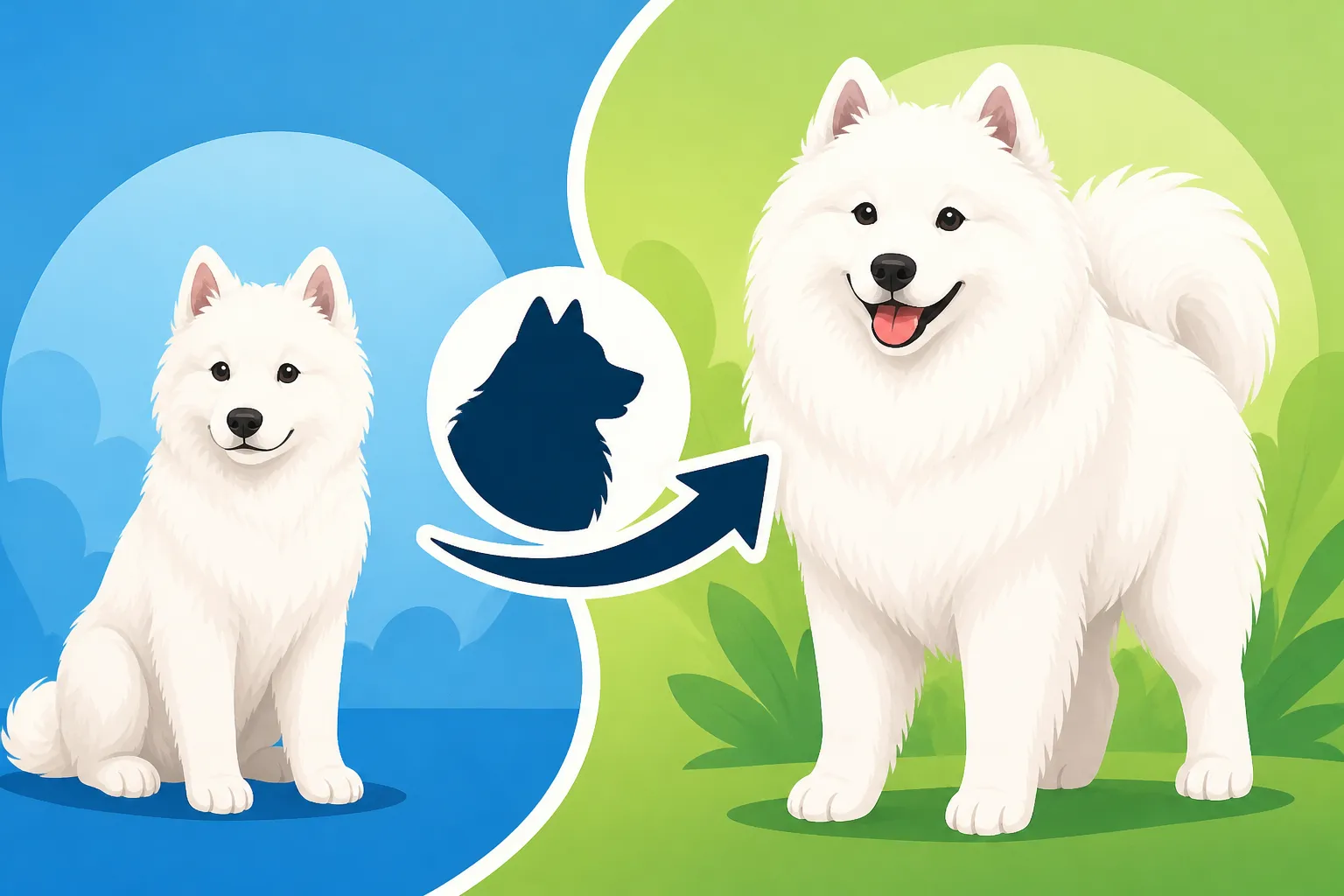
Many Samoyeds approach their adult height during their first year, but that does not mean they have finished developing. A young dog may have long-looking legs, a narrow chest, or a less substantial outline than the adult Samoyeds you see at a show or on a walk. Over the following months, the body can broaden and gain muscle as the dog matures.
The pace varies. Sex, inherited build, activity, diet, and general health all influence how an individual develops. A male may take longer to look fully mature than a female, but that is a tendency, not a rule. Even littermates can change at different rates.
It helps to separate growth in height from filling out. Height is mostly about the frame; filling out usually means gradual changes in muscle, chest depth, and overall proportions. For a closer look at the height part of development, see The Age a Samoyed Stops Growing.
What “filling out” can look like after two
Between roughly the second and third year, some Samoyeds gain a more adult outline. The chest may look fuller, the body less narrow, and the dog may carry more muscle through the shoulders and hindquarters. Those changes can be gradual enough that an owner sees them only when comparing photos taken months apart.
A Samoyed’s coat makes the change especially tricky to judge. Seasonal coat growth and shedding can alter the dog’s outline dramatically: a full coat may make the body seem broader, while a coat blow can make the same dog appear slimmer. That visual change is not necessarily a change in body weight.
Maturity is also not a promise that every dog will become heavier. A naturally lean Samoyed may stay athletic as an adult, while another may develop a broader build. Adult weight ranges can provide context, but they cannot tell you by themselves whether your dog is at a healthy weight. For typical size differences, compare How Much a Male Samoyed Weighs and How Much a Female Samoyed Weighs.
A simple guide to age and appearance
| Age or stage | Changes you may notice | What to keep in mind |
|---|---|---|
| Puppyhood to about one year | Rapid growth; changing proportions; a youthful, sometimes lanky outline | Growth rates differ. Monitor condition with your vet rather than trying to make a puppy look bigger. |
| Around one to two years | Height may be close to adult size; muscle and chest development continue | A young adult can still look narrow or unfinished. |
| Around two to three years | Some dogs gain a more mature, substantial outline | Filling out should be gradual, not a sudden increase in body fat. |
| Mature adulthood | Build and weight may become more consistent, though coat and activity still affect appearance | Track body condition and weight over time, not appearance in one season. |
How to tell healthy maturity from weight gain
Look and feel beneath the coat
The Samoyed’s dense double coat can hide both ribs and extra weight. Instead of relying on a quick glance, gently feel along your dog’s sides. You should generally be able to feel the ribs beneath a light covering, without pressing hard. From above, many dogs show a visible waist behind the rib cage; from the side, the abdomen usually rises somewhat toward the hindquarters.
These are practical clues, not a diagnosis. Body shape differs between dogs, and coat thickness can make visual checks unreliable. If you are unsure whether you are feeling muscle, coat, or body fat, ask your veterinary team to demonstrate a body-condition assessment during a routine visit. The guide Feeling for Ribs Under a Samoyed's Coat can help you understand what to check at home.
A useful routine is to weigh your dog consistently and keep a simple record. Use the same scale when possible, and note the date, weight, and any major changes in activity or feeding. A single number is less informative than a steady pattern. If your dog’s weight climbs while exercise and meals have not changed, ask your vet whether the increase reflects normal development or excess fat.
Consider muscle, activity, and the individual dog
A Samoyed that runs, hikes, trains, or pulls regularly may develop more muscle than a dog with a quieter routine. That can change the dog’s shape without indicating unhealthy weight gain. Working and show lines can also differ in build and presentation, so comparing your pet directly with a photograph of another Samoyed can be misleading. Whether a Working Samoyed Is Leaner Than a Show One explores why those comparisons do not always tell the whole story.
Look at the whole dog and its habits. Is your Samoyed moving comfortably, keeping up with its usual activities, and maintaining a consistent appetite? Has its waist become harder to feel, or has it begun tiring more easily? A change in energy or mobility deserves attention, especially if it happens alongside rapid weight gain or loss.
Coat changes can confuse the picture. A large coat may make a fit dog look round, and a shed-out coat may make a healthy dog look suddenly slim. That is why your hands, weight records, and veterinary checks are more useful than a silhouette alone.
When to ask the veterinarian
Bring up your dog’s growth and weight at regular veterinary appointments, and book a visit sooner if you notice a sudden change. Rapid weight gain, unexplained weight loss, a poor appetite, unusual thirst, vomiting, or a drop in energy should not be dismissed as “just growing.” A vet can assess body condition, review the growth pattern, and decide whether further evaluation is needed.
It is also worth asking for a target weight range tailored to your Samoyed. The answer may depend on the dog’s frame, muscle, age, and health—not just a breed chart. If your dog is still young, the veterinarian can help you decide whether its development appears appropriate without encouraging rapid growth.
Feeding and exercise while your Samoyed matures
Feed for steady development, not a fuller look
It can be tempting to increase portions when a young Samoyed seems too thin or lanky. But a puppy does not need extra calories to reach its adult frame on schedule, and deliberately encouraging fast weight gain can put unnecessary strain on a growing dog. Follow feeding guidance for your dog’s age and food, and adjust portions with your vet if its condition changes.
Measure meals rather than estimating them by eye. Scoops vary, and small overestimates can add up when treats and training rewards are included. If you change foods, transition gradually and watch how your dog responds. Some households use Chewy to reorder a familiar food, which can make it easier to keep feeding routines consistent; the important part is choosing food appropriate for the dog and following veterinary advice.
For a broader look at portions and daily feeding, read How Much a Samoyed Should Eat. If you are worried that a puppy looks unusually slim, Whether a Samoyed Puppy Should Grow Slowly offers helpful context on why steady development is preferable to trying to speed up growth.
Keep activity age-appropriate
Exercise supports fitness and muscle, but more is not automatically better, especially for a growing dog. Build activity gradually and pay attention to recovery. A young Samoyed may be eager to keep going even when it needs a break, so use sensible limits and check with your vet about strenuous activity, particularly if you are considering pulling sports or long-distance running.
As your dog matures, regular walks, play, training, and suitable conditioning can help it develop a healthy adult body. The goal is not to make the dog bulky. It is to maintain strength and mobility without adding unnecessary weight or pushing exercise beyond what the dog can comfortably handle.
If you are changing your routine, keep food and activity in view together. A dog that exercises less during a hot spell or a quieter season may need a different feeding plan than one training regularly. Chewy can be one place owners use to maintain a familiar food supply, but changes to diet or portions should be based on your dog’s needs, not on its appearance in a single coat season.
Avoid comparing your Samoyed with a timeline online
Online photos often show dogs at different ages, in different coat conditions, and with very different genetics. A two-year-old Samoyed may look refined and lean; another may already have a broader adult outline. Neither appearance alone tells you whether the dog is developing well.
Instead, compare your Samoyed with its own past condition. Take occasional photos from the side and above, record weight, and note changes in activity. If your vet recommends a feeding adjustment, write down what changed and when. Chewy may be convenient for maintaining a regular supply of a chosen food, but consistency in portions and observation matters more than any particular retailer.
What to expect after your Samoyed turns two
Some dogs continue to mature, while others are nearly finished
Yes, a Samoyed can fill out after two. Some continue to gain muscle and develop a more adult chest and body through their second or third year. Others look mature earlier and change little after their second birthday. There is no exact age at which every Samoyed reaches its final appearance.
A gradual change in shape can be normal, especially when it comes with increased muscle and stable body condition. A sudden jump in weight, a widening waist, or difficulty feeling the ribs is a different matter and is worth discussing with your veterinarian. The distinction is easier to make when you have kept regular weight and body-condition notes.
For owners new to the breed, it can be reassuring to remember that Samoyeds do not all mature on the same schedule. What Samoyed Owners Wish They Had Known covers other surprises that can come with living with this distinctive breed.
A practical check-in routine
Once a month, take a few minutes to check your dog’s weight, feel its ribs, and look for a visible waist. Use the same scale and roughly the same conditions when weighing, such as before a meal. Keep the record simple so you can spot a trend without becoming preoccupied with minor day-to-day fluctuations.
At veterinary visits, ask whether your dog’s body condition is appropriate and whether its current food and portion still fit its age and activity. If the answer is unclear, ask the vet to show you how they assess the ribs, waist, and abdominal tuck. That hands-on explanation is often more useful than trying to interpret a fluffy outline in a photo.
If you are still wondering whether your Samoyed is filling out normally, the most useful answer comes from combining age, frame, body condition, and the dog’s own growth history. A Samoyed may gain adult substance after two, but healthy development should be steady and comfortable—not something you try to force with extra food.
Disclaimer
This article is for general informational purposes only and does not constitute professional advice. Laws, prices and regulations vary by location and change over time. Consult a qualified professional for guidance on your specific situation.