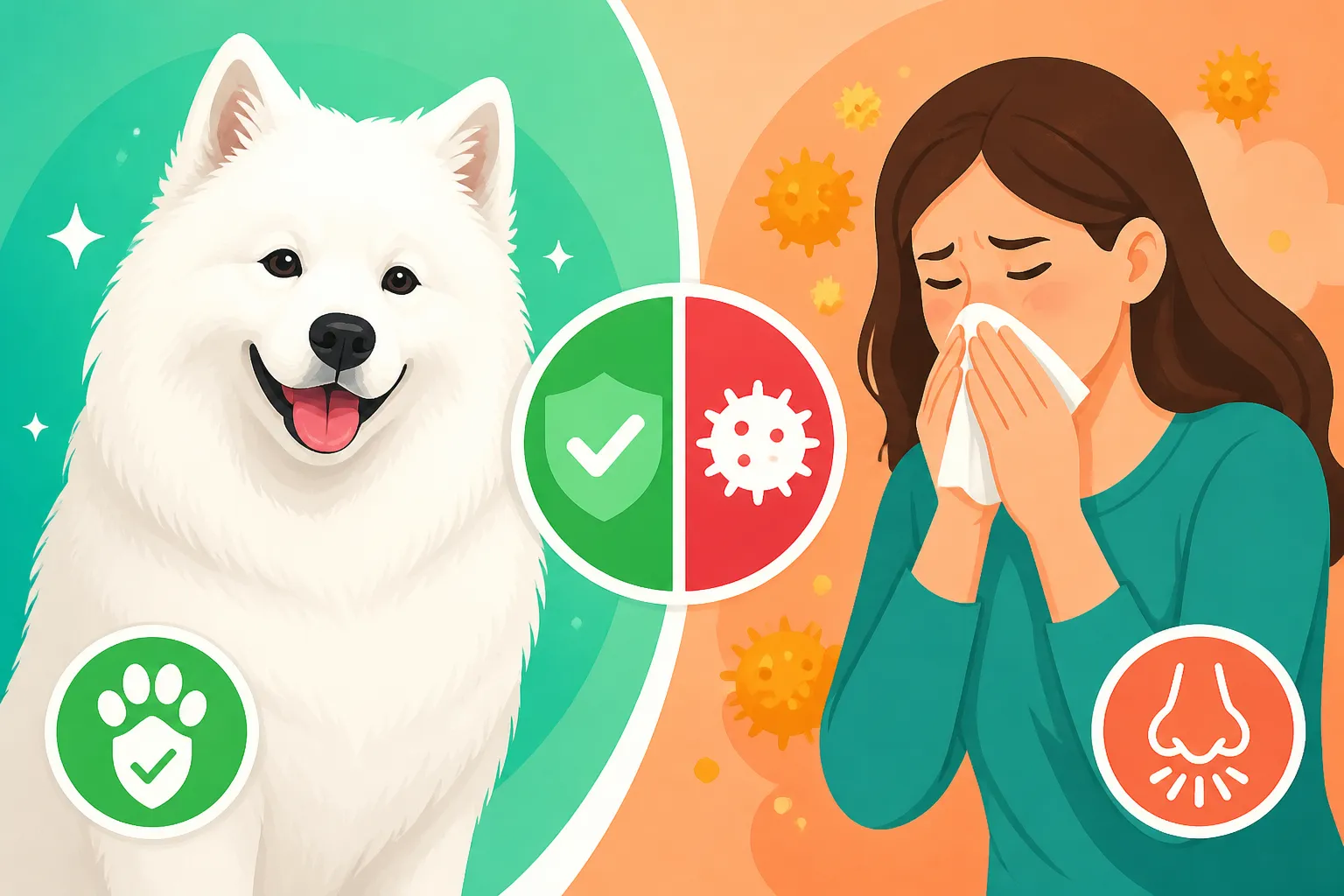
Whether a Samoyed Suits an Allergy Sufferer
A Samoyed’s bright white coat may look clean and plush, but it sheds heavily and does not make the breed hypoallergenic. If dog allergies already affect your household, the hard part is that symptoms vary from person to person—and meeting one Samoyed briefly may not predict what daily life will feel like. This guide explains the risks and how to assess them before bringing one home.
Are Samoyeds suitable for people with allergies
A Samoyed is not a hypoallergenic breed
No dog breed is reliably allergy-free, and a Samoyed is not a safe bet simply because its coat looks different from a short-haired dog’s. The proteins that trigger dog allergies are associated with substances such as skin flakes, saliva and urine. They can collect on a dog’s coat, then spread around the home through shedding, grooming, cuddling and ordinary movement.
That distinction matters because people often assume fur itself is the allergen. Fur can carry allergens, but a dog that sheds little may still trigger symptoms, while a heavy shedder can distribute allergens widely. A Samoyed’s abundant double coat makes the practical challenge more obvious: loose hair is part of everyday life, and it can carry allergens onto clothing, furniture, bedding and car seats. For a closer look at the coat’s structure, see What a Samoyed's Double Coat Is Made Of.
There is no dependable “hypoallergenic Samoyed” within the breed. Coat color, coat length, grooming routine and whether a dog is a puppy or adult do not guarantee that an allergy sufferer will tolerate that individual. Claims that one particular Samoyed is allergy-proof should be treated cautiously.
Symptoms and reactions vary from one person to another
One person may have itchy eyes and sneezing after a short visit; another may develop a stuffy nose or skin irritation only after spending several hours in a home with a dog. Some people notice symptoms quickly, while others find that repeated exposure makes the problem more apparent. An individual’s reaction may also change with the season, other allergens in the environment, or how much time they spend close to the dog.
This is why a single meeting can be misleading. A quick greeting outdoors is not the same as living with a Samoyed who sleeps near your bed, leans against the sofa and leaves coat hair on your clothes. A visit to a breeder’s home may provide useful information, but it cannot guarantee that you will remain comfortable over months of shared indoor living.
If you have a history of significant reactions, asthma, or symptoms that affect breathing, talk with an allergist before arranging close exposure or making an adoption decision. An allergist can help assess your situation and discuss appropriate testing. Do not rely on an informal “allergy test” involving a dog licking or rubbing against you; deliberate exposure can be unsafe for some people.
What living with Samoyed shedding involves
Expect loose coat throughout the year
Samoyeds have a dense double coat: longer outer guard hairs over a thick undercoat. Loose hair shows up on floors, clothing, upholstery and in the corners where it seems to collect overnight. Regular brushing helps remove loose coat before it spreads, but it does not stop shedding or make the dog allergen-free. A Samoyed's Coat Is Insulation, Not Decoration explains why this coat is functional rather than simply a cosmetic feature.
Many Samoyeds also have heavier seasonal shedding, often called blowing coat. During these periods, undercoat may come out in noticeable amounts, and brushing can become a more frequent household task. That surge can be frustrating even for people without allergies; for someone who reacts to dogs, more loose coat around the home may make it harder to keep exposure manageable. See When a Samoyed Blows Its Coat for more on what those shedding periods can look like.
Brushing is useful, but it is not a cure. It removes some loose hair and helps prevent tangles, yet the person doing the grooming may have close contact with the dog’s coat and the material released during the session. If an allergy sufferer is considering a Samoyed, it is worth deciding in advance who will handle brushing and where it will happen. How Often a Samoyed Needs Brushing offers more context on the routine involved.
Cleaning can reduce exposure, not eliminate it
A practical home plan can make a difference, but it should be viewed as exposure management rather than a promise of symptom relief. Some households set dog-free areas, especially the bedroom, and keep the dog off beds and upholstered furniture. Washable throws, frequent laundering, vacuuming and cleaning soft surfaces can help limit the amount of hair and allergen that accumulates. A vacuum with suitable filtration may be useful, though no cleaning routine removes every allergen.
| Household step | What it may help with | What it cannot promise |
|---|---|---|
| Keeping the bedroom dog-free | Reducing exposure in a room used for sleeping | A symptom-free home |
| Washing bedding and throws regularly | Removing some collected hair and allergens | Preventing allergens from entering the room |
| Vacuuming and cleaning soft surfaces | Managing loose coat and household buildup | Removing all allergen particles |
| Brushing on a schedule | Collecting some loose coat before it spreads | Stopping shedding or making the dog hypoallergenic |
| Having another household member groom the dog | Limiting the allergy sufferer’s direct contact during grooming | Preventing exposure elsewhere |
A retailer such as Chewy can be one place to compare practical items such as washable covers, grooming tools or vacuum accessories, but the right setup depends on your home and what actually helps your symptoms. Avoid buying a pile of equipment before you know whether you can tolerate living with the dog.
Grooming outdoors or in a well-ventilated area may reduce how much loose coat is left in a shared room. Still, the person brushing the dog can have direct exposure, and allergens can travel back indoors on clothing. If the allergy sufferer is the only person available to do all the grooming and cleaning, be realistic about whether that routine is sustainable.
How to assess your reaction before adopting
Plan a meaningful, cautious exposure
If an allergist considers exposure appropriate, try to spend time with the specific Samoyed you may live with, rather than relying only on a general impression of the breed. Meet the dog more than once if possible, and spend time in the kinds of settings that reflect ordinary life: indoors, around the dog’s resting area, and during calm interaction. Keep in mind that even several visits cannot perfectly reproduce living together.
Do not put your face into the dog’s coat, encourage licking, or deliberately increase contact to “test” your tolerance. If symptoms begin, step away and follow the guidance you have received from your healthcare professional. Anyone with a history of severe allergic reactions or breathing problems should not arrange a trial exposure without first getting professional advice.
A responsible breeder or rescue organization may be willing to discuss a thoughtful introduction, but arrangements and policies differ. Ask what happens if the placement does not work out, and get any return or rehoming expectations in writing before committing. A short trial is not a substitute for medical guidance, and it should never be treated as proof that symptoms will remain manageable.
Ask practical questions about day-to-day care
Before choosing a dog, talk through the unglamorous parts of ownership. Who will brush the Samoyed? Where will grooming take place? Is the dog expected to sleep in a bedroom or spend time on furniture? Can the household keep a dog-free room consistently, even when guests visit or routines change? Those answers can matter as much as the dog’s temperament.
Consider the home’s layout and the allergy sufferer’s daily habits. Someone who works from home in a small apartment may spend far more time near the dog than someone who has a separate office and a dog-free bedroom. A household with several people may be able to share grooming and cleaning; a single owner may have fewer options for reducing direct contact.
It can help to keep a simple record of symptoms during any planned visits: where you were, how long you stayed, what contact occurred, and what symptoms followed. This is not a diagnosis, but it gives you clearer information to discuss with an allergist than a vague memory of “I seemed fine.” If symptoms are persistent or disruptive, do not assume that more cleaning alone will solve the problem.
When a Samoyed may or may not be a workable choice
Think beyond the first meeting
A Samoyed may be a difficult match if even brief exposure causes substantial symptoms, if the allergy sufferer has poorly controlled asthma, or if the household cannot maintain reasonable boundaries and cleaning routines. A dog-free bedroom is less useful if the dog routinely sleeps there, and a brushing plan is unlikely to hold if nobody has the time or ability to do it consistently.
It may be more workable for someone whose symptoms are mild and whose allergist agrees that exposure can be managed, especially when other household members can take on grooming. Even then, “workable” does not mean symptom-free. It means the household has considered the likely exposure, has a realistic care plan, and is prepared to reassess if symptoms worsen.
Also account for the Samoyed’s broader needs. This is an active, social breed with a substantial coat-care routine. Allergy management adds another layer to an already hands-on commitment. If you are weighing the breed overall, Whether Samoyed Owners Would Choose One Again can help you explore the realities owners commonly consider.
If you already live with a Samoyed
If you already have a Samoyed and someone in the household develops symptoms, start with a conversation with a healthcare professional rather than making an abrupt decision based on online advice. In the meantime, consider practical changes such as keeping the dog out of the affected person’s bedroom, washing bedding and dog blankets regularly, and assigning grooming to someone who does not react. These steps may help, but they do not replace clinical advice.
Be alert to the difference between ordinary discomfort and symptoms that need prompt medical attention. Breathing difficulty, wheezing or a severe reaction should be treated seriously, and the household should follow its clinician’s guidance about what to do. Do not assume that persistent symptoms are simply something the person must “get used to.”
For a Samoyed, a coat-care routine remains important regardless of allergies. Brushing helps manage loose coat and tangles, but shaving is not an allergy solution and can interfere with the coat’s normal function. Why a Samoyed Must Never Be Shaved explains why removing the coat is not a sensible shortcut. If you are comparing shedding and other breed traits before deciding, How a Samoyed's Shedding Compares With a Husky's may also be useful.
A Samoyed can be a wonderful companion, but the breed is not a low-shedding or allergy-free choice. The most responsible decision comes from combining medical guidance, realistic exposure assessment and an honest look at the daily grooming and cleaning the household can sustain. If you cannot safely or comfortably manage that reality, choosing another kind of pet—or postponing adoption—can be the kinder choice for both the people in the home and the dog.
Disclaimer
This article is for general informational purposes only and does not constitute professional advice. Laws, prices and regulations vary by location and change over time. Consult a qualified professional for guidance on your specific situation.