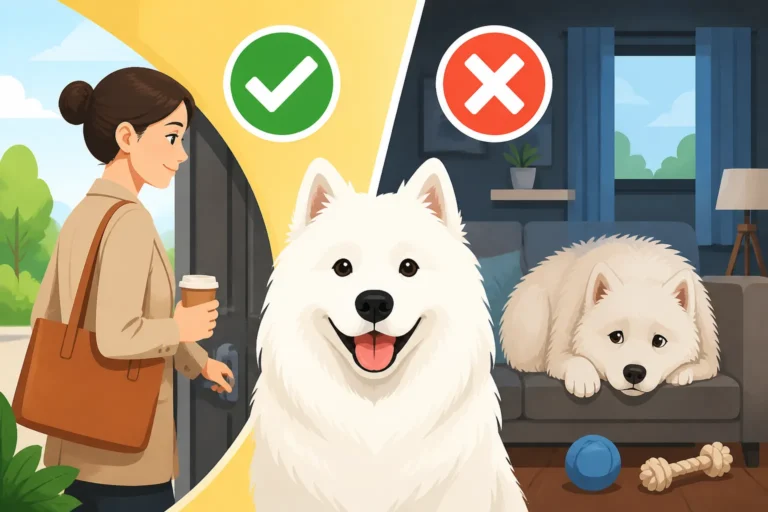
Whether a Working Samoyed Is Leaner Than a Show One
A working Samoyed can look leaner than a show Samoyed, but the difference is not automatic—and a thick white coat can make both dogs look heavier than they are. Line, age, activity, diet, grooming, and individual build all matter. This guide explains what “leaner” really means, how to judge a Samoyed’s condition beneath its coat, and when a body-shape change deserves attention.
Why a working Samoyed may look leaner
Purpose and daily activity shape the body
A Samoyed bred for pulling, hiking, or other regular work may develop a visibly athletic outline. Repeated activity builds muscle and can help the dog maintain a relatively low level of body fat. A working dog that spends much of the week moving may therefore look more streamlined than a dog with a quieter routine.
But “working Samoyed” covers a wide range of lives. One dog may train for sledding or skijoring, while another lives with an active family and joins long walks. A dog from working lines may not exercise much at all. Meanwhile, a show-line Samoyed may run, hike, or take part in pulling sports. A dog’s actual activity and conditioning often tell you more about its shape than the label attached to its breeding.
Regular exercise also does not mean a dog should be thin. A fit Samoyed needs enough food to support its activity and recover from exertion. If a dog is losing weight, struggling to keep up, or losing muscle, that is not evidence of desirable working condition. It is a reason to review its diet, workload, and health with a veterinarian.
A show coat can make build comparisons misleading
The Samoyed’s dense double coat changes its apparent size. Full furnishings around the neck, chest, and hindquarters can create a broad, rounded silhouette even when the dog underneath is fit. A recently groomed or shedding Samoyed may look narrower simply because there is less coat volume. The visual contrast between those dogs can be dramatic without reflecting a meaningful difference in fat or muscle.
Show presentation may also emphasize the coat’s outline. That does not mean show dogs are meant to be overweight. A well-conditioned show Samoyed should still have a sound, functional body beneath its coat. Likewise, a dog with a working pedigree is not automatically lean, especially if its routine is mostly lounging and its food portions exceed its needs.
If you are comparing two dogs at a show, online, or at a breeder’s home, look past the coat and ask about age, exercise, feeding, and health. What a Samoyed Actually Weighs offers useful context on breed size, but no single weight can determine whether an individual dog is in good condition. Frame and muscle vary, and the thick coat makes visual estimates especially unreliable.
Working lines and show lines are not simple body-type categories
Breeding goals can influence appearance, but not predict condition
Breeders may select dogs for traits that suit a particular purpose. In working-oriented breeding, priorities can include stamina, movement, and the ability to perform a job. In show-oriented breeding, selection also considers how closely a dog fits the breed’s expected appearance and structure. Those goals can contribute to differences in overall presentation from one line to another.
Still, there is no rule that every working Samoyed is narrow or that every show Samoyed is broad. Dogs within the same litter can differ in bone, height, coat, and body proportions. Lineage may offer clues about likely traits, but it cannot tell you whether a particular dog is carrying too much fat, is underweight, or has the conditioning its lifestyle requires.
Age matters, too. A young adult may have a lighter, less filled-out appearance than a mature dog. Some Samoyeds continue to develop muscle and substance as they mature, while older dogs may lose muscle if activity declines or an illness affects them. Whether a Samoyed Fills Out After Two explains why a dog’s outline can change as it matures without that change necessarily being a weight problem.
The best comparison is fitness, not show versus work
Instead of asking which category should look leaner, ask whether each dog is healthy and capable of its normal activities. A working dog should have the stamina and muscle to do its job without being pushed beyond its condition. A show dog should be able to move comfortably and maintain a healthy body, not just present an impressive coat.
A dog’s role is not the only influence on its shape. Neutering, age, appetite, treats, exercise, and underlying health can all affect body composition. A Samoyed who has retired from regular pulling may need a different food plan from the same dog during a demanding training season. A show dog who takes frequent hikes may need more energy than a less active dog from working lines.
If you are choosing a puppy, ask the breeder about the parents’ temperaments, health, activity, and typical adult build. Don’t rely on a single photo or a promise that a puppy will grow into a particular body type. What Samoyed Owners Wish They Had Known can also help prospective owners think through the practical demands of living with the breed, beyond coat and appearance.
| What you notice | What it may reflect | What to check next |
|---|---|---|
| Broad or rounded outline | Coat volume, frame, or extra body fat | Feel the ribs and look at the waist beneath the coat |
| Narrow appearance | Lean build, active conditioning, shedding, or possible weight loss | Check muscle, appetite, energy, and weight trend |
| Strong shoulders and thighs | Regular activity or natural build | Consider whether movement is comfortable and balanced |
| Sudden change in shape | Coat blow, routine change, weight change, or illness | Compare records and contact your veterinarian if the change is unexplained |
How to tell whether your Samoyed is lean, fit, or underweight
Use your hands as well as your eyes
A Samoyed’s coat can hide the signs people commonly use to judge body shape. Run your hands gently over the ribcage instead of trying to judge by sight alone. In a dog at a healthy condition, you should generally be able to feel the ribs without pressing hard, but they should not be sharply prominent. The waist should narrow behind the ribs when viewed from above, and the abdomen should tuck upward somewhat when viewed from the side.
These are broad observations, not a diagnosis. Your dog’s frame, age, and muscle can affect what feels normal. A thick coat may obscure the waist, while a freshly blown coat may make the same dog suddenly look smaller. If you are unsure, ask your veterinarian to assess body condition during a routine visit and show you how to check it at home.
Pay attention to muscle as well as fat. A dog can appear slim but have reduced muscle over the back or hindquarters, especially if it is aging, recovering from an injury, or moving less. Conversely, a strong, active dog may have substantial muscle and still be in healthy condition. Signs a Samoyed Is Getting Old can help owners understand age-related changes, but any significant or sudden loss of muscle should be discussed with a veterinarian rather than assumed to be a normal part of aging.
Track trends instead of reacting to one look
A single glance in the mirror is a poor way to assess a fluffy dog. Keep a record of your Samoyed’s weight and note changes in appetite, activity, and feeding routine. Weighing on a consistent schedule can reveal a gradual shift that is hard to spot beneath the coat. Whether a Samoyed's Weight Should Be Logged Monthly provides more context on using a simple record to notice trends.
Also write down meaningful changes: a new exercise routine, a transition to a different food, a change in treats, or the end of a demanding working season. If your Samoyed becomes less active but continues eating the same portions, it may gradually gain weight. If its workload rises without a corresponding adjustment to its feeding plan, it may lose weight or lack energy.
When portion sizes need adjusting, use your dog’s measured food amount and body condition as starting points, then make changes with veterinary guidance. A measuring cup can be convenient, but weighing food may provide a more consistent measure. Chewy can be one practical place to compare food labels or find a kitchen scale and feeding supplies, but the right diet depends on the individual dog—not a product listing or a breed-line label. How Much a Samoyed Should Eat covers the factors that help determine an appropriate feeding amount.
Supporting a healthy body throughout a Samoyed’s life
Match food and exercise to the dog in front of you
A Samoyed’s needs can shift with its age, activity, and health. A dog doing regular pulling or long-distance activity may need a different feeding plan from a companion dog whose exercise is mostly daily walks and play. Increase activity gradually, particularly if your dog has been inactive, and give it time to build fitness. Sudden intense exercise can cause discomfort or injury even in a breed associated with cold-weather work.
Keep treats in the overall picture. Small extras add up, especially in a large, social dog that may receive snacks from several family members. If your Samoyed is gaining weight, consider measuring meals, counting treats, and discussing a sensible plan with your veterinarian rather than making a sharp calorie cut on your own. If the dog is highly active, ask how to support its workload without feeding so much that it gains unwanted fat.
Chewy may be useful when you need to compare food formats or arrange regular delivery, but consistency matters more than the retailer. If you change foods, do so thoughtfully and monitor your dog’s digestion, appetite, and body condition. What a Samoyed Needs Every Day is a helpful companion topic for thinking about the broader routine that supports health, including activity and daily care.
Know when a body change needs veterinary attention
A Samoyed that has always been lean and energetic is different from one that has recently become thinner, weaker, or less interested in food. Contact your veterinarian if weight loss is unexplained, continues despite normal feeding, or occurs alongside increased thirst, vomiting, diarrhea, changes in urination, unusual tiredness, or reduced ability to exercise. A new rounded appearance can also deserve attention if it appears suddenly or comes with discomfort, breathing changes, or appetite changes.
Avoid trying to “correct” a suspected problem by simply increasing or reducing food. Changes in body shape may relate to illness, pain, parasites, digestive problems, or other conditions that need proper assessment. A veterinarian can evaluate weight, body condition, muscle, and the dog’s history together, then suggest whether diet adjustments or further checks are appropriate.
For an active Samoyed, the aim is not to achieve the slimmest possible outline. It is to support a comfortable, capable body that matches the dog’s age and routine. Whether your companion comes from show lines, working lines, or a mixture of both, judge the individual beneath the coat—and treat persistent changes as useful information rather than a cosmetic issue.
Disclaimer
This article is for general informational purposes only and does not constitute professional advice. Laws, prices and regulations vary by location and change over time. Consult a qualified professional for guidance on your specific situation.