What a Samoyed Actually Weighs
Oh, the Samoyed! Those cloud-like bundles of joy bring so much happiness, but when you first get one, especially as a puppy, you might find yourself constantly wondering: "Is my Samoyed growing right? Is this the normal size? What should a Samoyed actually weigh?" It's a completely valid concern, whether you're bringing home a tiny fluffball or adopting a majestic adult, because their health and lifespan are so tied to maintaining a proper weight. This guide is here to walk you through everything you need to know about a Samoyed's weight, from puppyhood to their golden years, covering the breed standards, what influences their size, and how to keep your furry friend in peak condition.
Understanding the Typical Samoyed Weight Range
When you gaze at a Samoyed, with their glorious white coat, it's easy to assume they're all fluff and no substance. But underneath that magnificent double coat is a strong, athletic dog built for pulling sleds and herding reindeer in challenging conditions. Their weight is a crucial indicator of their overall health and directly reflects their heritage as working dogs.
The Breed Standard for Males
For male Samoyeds, the breed standard generally calls for a weight range that matches their powerful build. You're typically looking at a range of about 45 to 65 pounds (20 to 29 kg). This isn't just an arbitrary number; it's a reflection of the dog's structure – sturdy bones, well-developed musculature, and enough heft to do the work they were historically bred for, without being cumbersome. A male Samoyed should convey an impression of strength and endurance, not an overly heavy or delicate frame. When you stand next to a well-built male, you can feel the solid presence of him, even if his coat makes him look even larger than he is.
Keep in mind that while the standard provides a guideline, individual genetics play a huge role. Some males will naturally lean towards the higher end of that range, especially if they are particularly muscular or have a slightly larger bone structure. Others might be on the lighter side but still perfectly healthy and within proportion. It's less about hitting an exact number and more about achieving a balanced, athletic physique.
The Breed Standard for Females
Female Samoyeds, while still robust, typically present a slightly more refined and feminine appearance compared to their male counterparts. Their breed standard usually places them in a weight range of about 35 to 50 pounds (16 to 23 kg). This difference in weight, alongside their often slightly shorter stature, helps differentiate the sexes. They are still powerful, capable dogs, but with a grace that reflects their role in the pack and their ability to move quickly and efficiently.
Just like with males, this range isn't a strict boundary. A female who is very athletic and well-muscled might be at the upper end, while a more slender girl could be at the lower end. What matters most is that her weight is proportionate to her frame and that she's in excellent physical condition. Owners often fret if their girl is "too small," but as long as she's healthy and active, she's likely just fine. It's easy to get caught up comparing your Samoyed to others you see online or at the dog park, but remember that genetics make every dog unique, even within the same breed.
Why There's Still Variation within the Standard
You might look at two perfectly healthy, adult Samoyeds and notice a significant difference in their size and weight, even if both are purebred and from reputable breeders. This variation is completely normal and can be attributed to several factors beyond just male versus female. Lineage, for example, plays a huge role. Some breeding lines might naturally produce larger, heavier-boned dogs, while others might focus on a more compact, agile build. It’s not uncommon to see "working lines" that are a bit leaner and more athletic, versus "show lines" that might have a slightly heavier coat and sometimes a more substantial build, though both should adhere to the breed's functional purpose.
Another factor is individual metabolism and even the region where they were bred or currently live. Dogs in colder climates might naturally carry a little more body mass, for instance. And, of course, the general health and physical conditioning of the dog are paramount. A highly active Samoyed who regularly participates in dog sports like Whether a Samoyed Can Do Agility or Whether a Samoyed Can Earn a Sledding Title will likely have a leaner, more muscular physique than one who leads a more sedentary life, even if their weights are technically within the same range. It’s all about proportion and overall wellness, not just the number on the scale.
| Samoyed Category | Typical Weight Range (Pounds) | Typical Weight Range (Kilograms) | General Build Description |
|---|---|---|---|
| Adult Male | 45 – 65 lbs | 20 – 29 kg | Sturdy, powerful, muscular |
| Adult Female | 35 – 50 lbs | 16 – 23 kg | Refined, athletic, agile |
| Puppy (8 weeks) | 10 – 20 lbs | 4.5 – 9 kg | Round, fluffy, rapidly growing |
| Senior (9+ years) | Can fluctuate | Can fluctuate | Might lose muscle, gain fat, or maintain |
The Journey from Fluffy Puppy to Full-Grown Samoyed
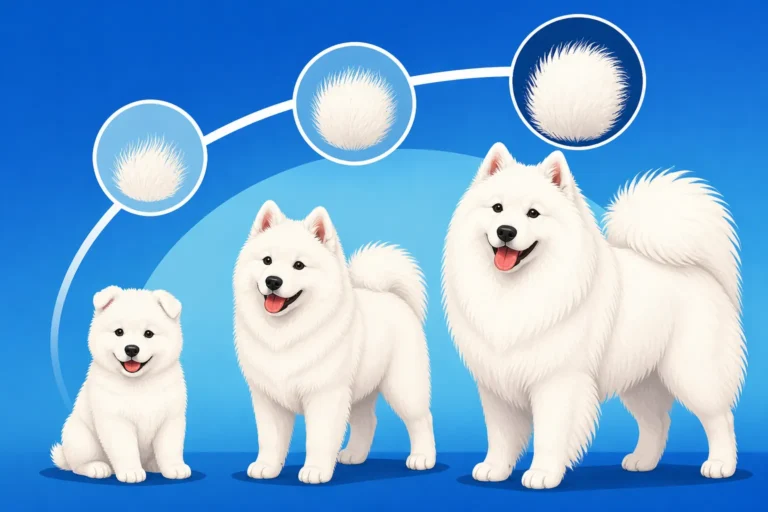
Watching a Samoyed puppy grow is a whirlwind of floof and fast changes. One day they're a tiny snowball, and the next they're a clumsy adolescent trying to figure out their giant feet. Understanding this growth trajectory is essential for ensuring they hit their adult weight targets healthily and happily.
Rapid Growth in the First Few Months
The first few months of a Samoyed puppy's life are characterized by incredibly rapid growth. From the moment they're born, weighing just a pound or two, they double, triple, and quadruple in size with astonishing speed. By the time they come home to you, typically around 8 to 12 weeks old, they could already be weighing anywhere from 10 to 20 pounds. It's a period where their little bodies are laying down the foundation for their adult size, and proper nutrition is absolutely critical. Think of it like building a house – a strong foundation means a sturdy home later on.
During this stage, puppies need nutrient-dense food specifically formulated for large breed puppies to support healthy bone and muscle development. Overfeeding, or feeding an adult formula too early, can sometimes lead to issues like too-rapid growth, which can put stress on developing joints. This is a common worry, especially with larger breeds, and it's why many breeders and vets recommend a controlled growth rate rather than pushing for maximum size. You might feel like your little cloud is perpetually hungry, but sticking to recommended feeding guidelines is key.
Filling Out: The Adolescent Phase
As your Samoyed moves past the six-month mark and into adolescence, their growth pattern starts to shift. While they'll continue to gain height and length, a significant portion of their development now involves "filling out." This means adding muscle mass, strengthening their bone structure, and developing that magnificent double coat that is one of their hallmarks. This period, usually between 6 and 18 months, can sometimes feel like an awkward phase. They might look gangly one week and then suddenly appear more substantial the next.
This is often when their boundless energy is at its peak, and they need appropriate exercise to build muscle and maintain a healthy weight without overstressing their still-developing joints. Long, forced runs might be too much, but plenty of supervised play, shorter walks, and mental stimulation are perfect. This is also when their coat really starts to come in, giving them that iconic Samoyed look. You'll notice their weight gains are less dramatic week-to-week compared to their first few months, but steady progress towards their adult weight is still happening. Keeping an eye on their body condition – feeling for ribs rather than just looking at their fluff – becomes increasingly important.
When Your Samoyed Reaches Full Maturity
Most Samoyeds reach their full height and length by around 12 to 18 months of age. However, they continue to fill out and mature physically until they are closer to two or even three years old. This means while the scale might not show huge jumps after their first birthday, their body composition is still changing, adding muscle and filling out their chest and overall frame. Their glorious double coat also reaches its peak density and length during this time, which can visually make them appear even larger. It's a subtle but important distinction; they may not be getting taller, but they are definitely becoming more robust.
This is the point where you truly see the adult Samoyed they were meant to be – a powerful, well-balanced dog. For example, a male might be at his adult height at 14 months, but still gain 5-10 pounds of muscle and coat over the next year. It's crucial during this period to maintain consistent exercise and a balanced diet suitable for an adult dog. Monitoring their weight and body condition regularly will help ensure they don't veer into being overweight, which can happen subtly when their growth plateaus. A mature Samoyed should look fit and athletic, with a noticeable waist and ribs that are easily felt but not seen. Remember, a Samoyed's The Age a Samoyed Finally Matures is about more than just physical size; it's also about mental development.
Factors That Influence Your Samoyed's Weight
Understanding the numbers is one thing, but knowing why your Samoyed might weigh what it does, or why its weight might fluctuate, is key to being a responsible owner. There are many interconnected factors that contribute to a Samoyed's overall weight and body condition.
Genetics and Lineage
Just like in people, genetics play a profound role in determining your Samoyed's potential size and build. A puppy from two parents who are on the smaller side of the breed standard will likely mature into a smaller adult, while a puppy from larger, heavier-boned parents will probably be bigger. This is why a reputable breeder will be transparent about the size and weight of the puppy's parents, grandparents, and other relatives. They can often give you a good estimate of your puppy's adult weight based on their lineage. It's not a guarantee, of course, but it's a strong indicator.
Furthermore, some genetic predispositions can affect metabolism or build. While the Samoyed breed doesn't have as wide a variety in body types as, say, the Poodle, there are still noticeable differences between individual dogs even within the same litter. These subtle genetic differences dictate everything from bone density to muscle mass potential, influencing their mature weight. This is why two dogs eating the same food and getting the same exercise might still have different ideal weights; their genetic blueprint is simply different.
Dietary Habits and Nutrition Choices
What and how much your Samoyed eats is undeniably one of the most significant factors influencing their weight. A high-quality diet that provides balanced nutrients appropriate for their age and activity level is crucial. Feeding too much, even of good quality food, will inevitably lead to weight gain. Conversely, not feeding enough, or feeding a diet lacking in essential nutrients, can result in an underweight dog struggling to thrive. It’s a delicate balance.
For example, a Samoyed puppy needs specific nutrients for growth, while an adult working dog needs more calories and protein to fuel their activity. An older, less active senior Samoyed will need fewer calories to prevent weight gain. Feeding an Old Samoyed requires a different approach. The type of food also matters: some kibbles are more calorie-dense than others. Using measuring cups (accurately!) and sticking to recommended serving sizes, perhaps adjusted with your vet's input, is far more reliable than just "eyeballing it." Even healthy treats from brands like Chewy add up, so they should be accounted for in their daily caloric intake.
Exercise and Activity Levels
Samoyeds are active dogs, bred for endurance and work. Their natural inclination is to move, run, and pull. Therefore, their exercise regimen (or lack thereof) directly impacts their weight. A Samoyed that receives adequate daily exercise – think long walks, play sessions, dog sports, or even sledding if you're inclined – will naturally be leaner and more muscular, burning off excess calories and maintaining a healthy body composition. They need regular opportunities to stretch their legs and engage their minds. How Much Exercise a Samoyed Needs is more than just a quick trot around the block.
On the other hand, a Samoyed with insufficient exercise can easily become overweight, even on a moderate diet. Just like humans, if they consume more calories than they burn, those extra calories turn into fat. This is particularly true for Samoyeds living in warmer climates where strenuous outdoor activity might be limited during parts of the year, or for those whose owners simply aren't able to provide the vigorous activity they truly crave. A sedentary lifestyle is a sure path to an unhealthy weight for this breed.
Spaying/Neutering and Hormonal Shifts
The decision to spay or neuter your Samoyed can also influence their weight, primarily due to hormonal changes. After sterilization, a dog's metabolism can slow down, and their hormonal balance shifts. This often means they require fewer calories to maintain the same weight, even if their activity level hasn't changed. Many owners report that their Samoyed started gaining weight within a few months of being spayed or neutered, and this is a very common observation across many breeds.
It's not that spaying or neutering causes obesity, but it can make a dog more prone to weight gain if their diet isn't adjusted accordingly. Their appetite might even increase, creating a tricky situation for owners. This isn't a reason to avoid sterilization if it's right for your dog, but it is a critical factor to be aware of. Working with your veterinarian to adjust your Samoyed's food intake after the procedure is highly recommended. Often, a slight reduction in portion size or a switch to a "light" formula can make all the difference in preventing unwanted weight gain. Whether Neutering Calms a Samoyed is a common question, and while it might influence temperament, its effect on metabolism is more direct.
Navigating Underweight and Overweight Concerns
No one wants to see their beloved Samoyed unhealthy, but both being underweight and overweight come with their own set of risks and concerns. Knowing how to identify these issues and when to seek veterinary help is paramount to your Samoyed's well-being.
Identifying an Underweight Samoyed
Sometimes, especially with their profuse double coat, it can be tricky to tell if your Samoyed is actually underweight. They can look perfectly fluffy and robust on the surface, while underneath, they might be lacking vital body mass. A truly underweight Samoyed will often have their ribs, spine, and hip bones easily visible or very pronounced when you feel them. There won't be much padding over these areas. You might also notice a very sharp tuck-up in their abdomen, and they might appear overall lean, even gaunt, once you get past the fur.
Beyond visual and tactile cues, an underweight Samoyed might display other symptoms. They might seem lethargic, have a dull coat, or even experience a loss of appetite. Persistent weight loss despite adequate feeding, or an inability to gain weight, can be a sign of an underlying health issue such as parasites, digestive problems, Diabetes in a Middle Aged Samoyed, or even something more serious like What Samoyed Hereditary Glomerulopathy Does to the Kidneys. If you suspect your Samoyed is underweight, or if they've had unexplained weight loss, a visit to the vet is absolutely necessary to rule out any medical conditions. They might recommend specific dietary changes or supplements like those found on Chewy.
The Risks of an Overweight Samoyed
An overweight Samoyed, while perhaps looking cuddlier, faces a whole host of serious health risks that can significantly shorten their lifespan and diminish their quality of life. The excess weight puts tremendous strain on their joints, accelerating conditions like Hip Dysplasia in a Samoyed or general arthritis, especially as they age. Imagine carrying a heavy backpack all day, every day – that's what extra weight feels like to their joints. Overweight dogs are also at a much higher risk for developing Diabetes Mellitus in a Samoyed, heart disease, breathing difficulties, and certain types of cancer.
Beyond these severe health problems, an overweight Samoyed will often have reduced stamina and energy, making them less willing or able to participate in activities they once enjoyed. Their quality of life suffers. They might struggle in warmer weather, pant more excessively, and generally be less comfortable. Signs a Samoyed Is Overweight can be subtle due to their coat, but typically you won't be able to easily feel their ribs without pressing, and they may have lost their distinct waistline. Their abdomen might sag, and they could have fatty deposits over their hips and tail base. Addressing weight issues early can make a huge difference in their long-term health.
Working with Your Vet to Manage Weight
If you have concerns about your Samoyed's weight – whether they're too thin or too heavy – the first and most crucial step is to consult your veterinarian. They can accurately assess your dog's body condition score, recommend appropriate diagnostic tests to rule out underlying medical issues, and help you develop a safe and effective weight management plan. This isn't just about cutting calories or adding more walks; it's about a holistic approach tailored to your individual dog.
Your vet might suggest a specific prescription diet, advise on portion control, or recommend a gradual increase in exercise. They can also provide guidance on healthy treats and how to incorporate them without derailing progress. For an overweight Samoyed, the goal is slow and steady weight loss – typically 1-2% of their body weight per month – to ensure it's healthy and sustainable. For an underweight Samoyed, the focus will be on identifying the cause and safely increasing their caloric intake with highly digestible, nutrient-rich foods. Never attempt a drastic diet change or exercise overhaul without professional guidance, as it can be detrimental to your Samoyed's health. Your vet is your best partner in this journey to ensure your Samoyed maintains a healthy weight for a long and happy life. What a Samoyed's Annual Deductible Should Be for pet insurance is a related financial consideration, as vet visits for weight management can add up.
How Samoyed Weight Compares to Other Breeds
When you're considering a Samoyed, or if you already own one, it's natural to compare their size to other similar breeds. Understanding where they fit in the canine spectrum can provide valuable context to their typical weight. They're often grouped with other "Northern breeds," but there are distinct differences in their builds and weights.
Samoyed vs. Siberian Husky
The Siberian Husky is perhaps the breed most commonly confused with the Samoyed, or at least compared to it. Both are beautiful, fluffy, Nordic breeds, but when it comes to weight, there's a noticeable difference. Siberian Huskies are generally lighter and more compact than Samoyeds. A male Husky typically weighs between 45-60 pounds, similar to a Samoyed male, but often on the lower end of that overlap, while a female Husky typically weighs 35-50 pounds, again often on the lighter side.
However, Samoyeds generally have a more substantial bone structure and a denser, more voluminous coat, which can make them appear larger and heavier even if their actual weight is comparable. Huskies are built for speed and endurance over long distances, often with a leaner, more agile frame. Samoyeds, while also enduring, are built for a bit more power and warmth, reflecting their historical roles. So, while a large Husky might weigh the same as a smaller Samoyed, the overall impression is that Samoyeds are generally a bit more "stocky" or "robust" under all that fur. How a Samoyed's Shedding Compares With a Husky's also offers insights into their coats.
Samoyed vs. Alaskan Malamute
If you're looking for a genuinely heavy-boned, larger Nordic breed, the Alaskan Malamute definitely outweighs the Samoyed. Malamutes are significantly larger and heavier, bred for pulling extremely heavy loads over vast distances in harsh conditions. A male Alaskan Malamute can easily weigh anywhere from 85 to 100 pounds (38 to 45 kg), sometimes even more, while females typically range from 75 to 85 pounds (34 to 38 kg).
This makes the Malamute a giant compared to the Samoyed. Their build is much more massive, with broader chests, larger heads, and thicker bones. While a Samoyed exudes elegance and power, a Malamute projects raw, unadulterated strength. So, if you've seen a Malamute and thought your Samoyed was huge, rest assured, your Samoyed is likely still within its standard, just not as massive as its distant Alaskan cousin. Samoyed or Malamute for a Cold Climate also highlights their different builds for different tasks.
Samoyed vs. American Eskimo Dog
On the other end of the spectrum, you might sometimes see an American Eskimo Dog and mistake it for a miniature Samoyed. While they share some visual similarities, particularly their white coats and Spitz-type features, the American Eskimo Dog comes in three sizes (Toy, Miniature, Standard), all of which are significantly smaller than a Samoyed. The Standard American Eskimo Dog, the largest variety, typically weighs between 25 to 35 pounds (11 to 16 kg), which is often at the lower end or even below the typical female Samoyed's weight.
The smaller varieties are, of course, much lighter. The Eskie is a companion dog, primarily, and while agile and athletic, they were never bred for the heavy work of pulling sleds or herding large reindeer like the Samoyed. Their bone structure is finer, and their overall build is much daintier. This comparison helps illustrate that while many breeds share a "fluffy white dog" aesthetic, their underlying size and build, reflected in their weight, are tailored to very different purposes. Why an American Eskimo Dog Is Not a Small Samoyed goes into more detail.
Maintaining a Healthy Weight for a Long, Happy Life
Keeping your Samoyed at its ideal weight isn't just about aesthetics; it's about ensuring they live the longest, healthiest, and happiest life possible. It takes consistent effort and awareness, but the payoff in terms of their vitality and well-being is immeasurable.
Regular Monitoring and Body Condition Scoring
Because of their thick double coat, it can be deceptively difficult to assess a Samoyed's true body condition just by looking at them. What looks like a healthy, fluffy dog might actually be an overweight one in disguise. This is why regular monitoring and performing a "body condition score" (BCS) are so important. BCS involves feeling your dog's ribs, spine, and waistline, rather than just relying on visual cues. You should be able to easily feel their ribs, but not see them. There should be a visible waist when looking down from above, and a slight tuck-up from the side.
I recommend doing this check at least once a month, if not more frequently. Run your hands along their sides; can you easily feel each individual rib bone without having to press hard? If you can't, they might be carrying too much weight. If you can see their ribs, they might be too thin. Your vet can show you how to accurately perform a BCS, and many veterinary websites or even resources from Chewy offer diagrams and guides. This hands-on approach is far more reliable than the number on the scale for a Samoyed.
Tailoring Diet to Life Stage and Activity
The nutritional needs of a Samoyed change dramatically throughout their life. A growing puppy needs specific nutrients and calorie levels to support healthy development. A young, active adult requires a diet that fuels their energy and maintains their muscle mass. A pregnant or lactating female has vastly different caloric demands. And as your Samoyed transitions into their senior years, their metabolism slows down, and their activity levels often decrease, meaning they'll need fewer calories to prevent weight gain. The Age a Samoyed Counts as a Senior is a good time to reassess their diet.
It's not a one-size-fits-all approach. You might need to adjust the type and amount of food several times over your Samoyed's life. Always choose a high-quality dog food appropriate for their life stage and consult with your vet about recommended portion sizes. If your Samoyed is particularly active, perhaps participating in dog sports, they might need a "performance" formula with higher calorie and protein content. Conversely, a less active couch potato will do better on a lower-calorie option. Think of it as tuning an engine – different stages and demands require different fuel adjustments. Whether a Samoyed Needs a Consistent Feeding Schedule is another important consideration.
Importance of Consistent Exercise
Consistent, appropriate exercise is the cornerstone of a healthy weight for a Samoyed. These are not dogs content with a quick potty break in the yard. They need mental and physical stimulation every single day to burn calories, build strong muscles, and keep their minds sharp. A bored, under-exercised Samoyed is not only prone to weight gain but can also develop behavioral issues like destructive chewing or excessive barking – their famous "Samoyed scream."
This doesn't mean you need to be a competitive musher, but regular walks, jogs, hikes, interactive play in a securely fenced yard, or even dog park visits (if your Samoyed is well-socialized) are crucial. Activities like Whether a Samoyed Enjoys Skijoring or Whether a Samoyed Suits Canicross can be fantastic ways to bond and burn calories. For those living in warmer climates, timing exercise during the cooler parts of the day is vital to prevent overheating, as Samoyeds are built for cold weather. Even indoor games and training sessions can help burn some calories and engage their minds. A consistent routine keeps their metabolism active and their body lean, contributing significantly to their overall health and happiness.
Disclaimer
This article is for general informational purposes only and does not constitute professional advice. Laws, prices and regulations vary by location and change over time. Consult a qualified professional for guidance on your specific situation.