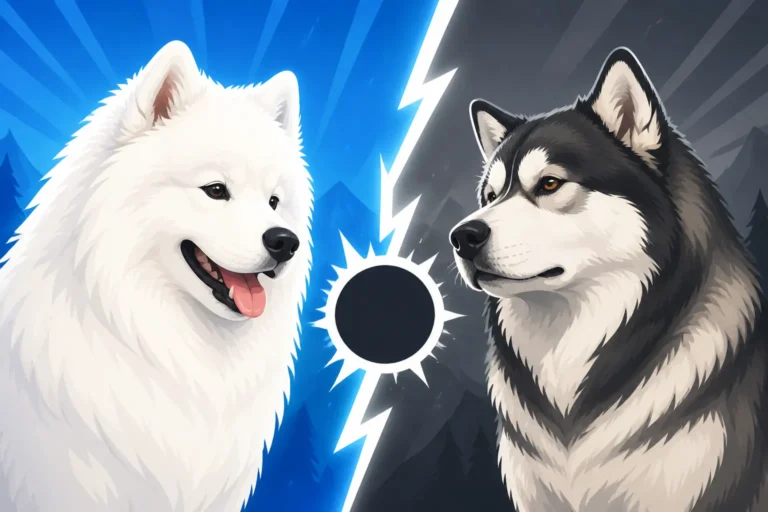
Whether the Nenets Herding Laika Is the Same as a Samoyed
Many Samoyed enthusiasts, curious about the deep roots of our beloved "Smiley Dogs," often wonder if the ancient working dogs of Siberia, specifically the Nenets Herding Laika, are one and the same as the modern Samoyed we cherish today. It’s a common point of confusion, and understandably so, given their shared heritage and striking visual similarities. This guide will delve into the fascinating history and contemporary distinctions between these two incredible canine lineages, clearing up exactly how they relate to each other in the present day.
The Deep Roots: Where Arctic Dogs Began
To truly understand the relationship between the Samoyed and the Nenets Herding Laika, we have to journey back to the vast, unforgiving landscapes of Siberia and the Arctic. For millennia, indigenous peoples in these regions relied on versatile canine companions for survival. These dogs weren't just pets; they were integral to daily life, performing a multitude of tasks essential for their human counterparts.
The Ancestral Line of the Siberian North
The dogs that roamed these icy plains alongside nomadic tribes were truly remarkable creatures, embodying resilience, intelligence, and an unparalleled ability to thrive in extreme cold. These ancient Arctic spitz-type dogs were the common ancestors of many northern breeds we know today, including not only the Samoyed but also the Siberian Husky, Alaskan Malamute, and various Laika types. They were the very first fuzzy partners to the people, helping to hunt, guard, and transport.
It’s easy to imagine these magnificent, thick-coated canines, their breath steaming in the sub-zero air, moving with purpose across endless snow-covered tundra. They were hardy, self-sufficient, and possessed an innate understanding of their environment. This deep ancestral connection is why many northern breeds share common physical traits, such as their dense double coats, pricked ears, and curled tails. They are all testament to a shared heritage molded by the harsh realities of their environment and the specific needs of the nomadic cultures they served.
The Nenets People and Their Canine Companions
Among these indigenous groups were the Nenets, a nomadic people from the Yamal Peninsula in northwestern Siberia. Their entire way of life revolved around reindeer herding, a demanding existence that required highly capable dogs. These dogs weren't just assistants; they were partners, guardians, and often, beloved family members who would share the warmth of their human companions' tents at night, an ancient tradition that speaks volumes about their close bond.
The dogs bred and kept by the Nenets were specifically selected for traits crucial to herding semi-wild reindeer across vast distances. They needed stamina, intelligence, the ability to work independently, and a strong but not overly aggressive herding instinct. This constant selection for specific working abilities over generations led to the development of a distinct type of dog, a specialized herding laika, perfectly adapted to the Nenets' unique lifestyle. Their survival literally depended on these dogs, making the breeding and training of their canine companions a serious matter of tradition and necessity. The Nenets of the Yamal Peninsula Bred the Samoyed to survive, and those dogs were the forerunners of our modern Samoyeds.
The Modern Samoyed: A Breed Transformed
While the modern Samoyed shares an undeniable genetic link with the dogs of the Nenets, its journey into a recognized breed in the Western world took a different path, shaping its purpose, appearance, and even its temperament in unique ways.
From Siberian Tundra to Western Recognition
The Samoyed’s story as a distinct breed truly began in the late 19th and early 20th centuries when European explorers and traders venturing into the Arctic encountered these beautiful, smiling dogs. Captivated by their striking appearance and friendly demeanor, they brought some specimens back to Europe, particularly England. These early imports formed the foundation stock for what would become the modern Samoyed breed.
Unlike their counterparts still working with the Nenets, these imported dogs were primarily admired for their aesthetic qualities and agreeable personalities. They quickly transitioned from rugged working animals to cherished companions and show dogs. This shift in purpose, from the practical demands of the tundra to the aesthetic standards of the show ring, began to subtly, yet significantly, alter the breed's development. It emphasized specific physical traits that appealed to Western tastes, sometimes at the expense of certain working abilities that were paramount in their homeland. This period of globalization for the Samoyed paved the way for its worldwide recognition.
The Samoyed Breed Standard
The formal establishment of the Samoyed breed involved creating a detailed breed standard. This standard, developed by kennel clubs and breed fanciers, precisely outlines the ideal physical characteristics, movement, and temperament of a Samoyed. It describes everything from the exact shade of white, cream, or biscuit in the coat, to the shape of the eyes and the famous "Samoyed smile." This smile, by the way, isn't just charming; it's thought to have a practical purpose, preventing icicles from forming around the mouth and eyes in extreme cold. Why the Samoyed Smiles is a fascinating tale in itself!
This standardization process, while crucial for preserving breed integrity and predictability, inherently meant that the focus shifted away from the raw, functional utility that defined the Nenets Herding Laika. Breeders in the West aimed to produce dogs that conformed to this written ideal, leading to a degree of uniformity in appearance and temperament that might differ from the more diverse working types found in Siberia. The selection criteria became more about aesthetics and companionability, rather than solely about their ability to herd reindeer for days on end.
The Nenets Herding Laika: A Living Working Legacy
In stark contrast to the Samoyed's journey into the show ring and family home, the Nenets Herding Laika has largely remained a working dog in its ancestral homeland, its purpose and traits still intimately tied to the nomadic reindeer herding culture.
A Traditional Herding Dog First and Foremost
For the Nenets people, the dogs they breed and work with are not a "breed" in the Western sense of having a strict, written standard for appearance. Instead, they are selected primarily for their working abilities, focusing on traits like endurance, herding instinct, resilience, and adaptability to the harsh Arctic environment. These dogs are truly indispensable, playing a critical role in managing large herds of reindeer, protecting them from predators, and assisting with their movement across vast stretches of land. Their lives, and the lives of the Nenets, are interwoven in a dance of survival and partnership.
These Laikas possess a keen intelligence and an almost intuitive understanding of reindeer behavior. They work independently, often out of sight of their human handlers, making complex decisions about herd movement and safety. Their barks are used to control the herd, and their agility allows them to navigate challenging terrain effortlessly. This continued emphasis on working capability ensures that the Nenets Herding Laika retains the robust health, stamina, and instincts honed over countless generations of practical application. The work they do is demanding, requiring a dog that is physically and mentally tough.
Subtle Differences in Appearance and Temperament
While a Nenets Herding Laika might bear a strong resemblance to a modern Samoyed – sharing that dense white double coat, pricked ears, and curled tail – there can be subtle differences. Because their selection is based on function rather than strict appearance, there can be a wider range in size, coat texture, and even head shape among working Laikas. They might be a bit leaner, a touch rangier, and their expressions perhaps more intense, reflecting their serious working role.
In terms of temperament, while both share a friendly nature, the Nenets Herding Laika often possesses a more pronounced prey drive and a stronger independent streak, necessary for their herding duties. They are bred to make decisions on their own and to range far from their handler. A Samoyed, while still intelligent and sometimes stubborn, has been selectively bred over generations to be more of a companion, often thriving on closer human interaction and a more biddable nature. This isn't to say one is "better" than the other, but rather that their respective environments and breeding goals have subtly shaped their psychological make-up. The Herding Instinct Nobody Expects From a Samoyed is a vestige of this shared past.
Key Distinctions and Why They Matter
So, are they the same? The simplest answer is no, not anymore. While they share a common ancestor, their paths diverged significantly once the Samoyed was brought to the Western world and became a recognized breed.
Divergent Breeding Goals
The fundamental difference lies in their breeding goals. The modern Samoyed, as recognized by kennel clubs around the world, is bred to a written standard emphasizing specific aesthetic traits and a generally amiable companion temperament. Its purpose is primarily as a show dog, a family pet, or to participate in various dog sports. The focus is on conformation, beauty, and being a good canine citizen in a domestic environment.
The Nenets Herding Laika, on the other hand, is a landrace population of dogs, continuously bred for its utility in herding reindeer in the Arctic. Their selection is purely functional: only the most effective, hardy, and intelligent herders are allowed to reproduce. Appearance is secondary to ability. They are a living, breathing example of natural selection guided by human need, still fulfilling their ancient role in a challenging environment. This difference means that while they look similar, the genetic pressures and human intervention shaping each group have been entirely different for over a century. The Health Tests Both Samoyed Parents Should Have are a reflection of these Western breeding goals.
Impact on Temperament and Instincts
These divergent breeding goals naturally lead to differences in temperament and instinct. A modern Samoyed, while retaining some of its ancestral working drives, has been softened and refined for companion life. They are known for being playful, affectionate, and generally good-natured, though they still possess a northern breed independence and vocal nature. The Samoyed Scream and Why It Is Not Barking is a perfect example of their unique vocalizations, which are very much still present.
The Nenets Herding Laika, by contrast, would likely be too intense and too independent for most typical pet homes. Their powerful herding instincts, high energy levels, and need for a demanding job are deeply ingrained. They are bred for sustained work in extreme conditions, often requiring them to think for themselves and exert dominance over reindeer. While intelligent and loyal to their handlers, they are not typically looking for the same kind of cuddly companionship that a Samoyed might offer. These are working dogs through and through, where their survival and the survival of the herd depend on their instincts.
Here's a quick comparison of the two:
| Feature | Modern Samoyed | Nenets Herding Laika (Nenetskaya Olenegonnaya Laika) |
|---|---|---|
| Primary Purpose | Companion, show dog, dog sports | Reindeer herding, guarding |
| Breeding Standard | Strict, written aesthetic standard | Functional selection for working ability |
| Appearance | Uniform, pure white/cream/biscuit preferred | More variation in size, coat, and structure allowed |
| Temperament | Friendly, playful, affectionate, companionable | Independent, highly driven, intense herding instinct |
| Current Status | Globally recognized breed | Landrace, working dog population in Siberia |
| Selection Focus | Conformation and pet traits | Stamina, intelligence, herding prowess |
Ultimately, while the Nenets Herding Laika represents the living heritage from which the Samoyed sprung, they are now distinct entities. The Samoyed is the refined, Westernized descendant, cherished for its beauty and charm, while the Nenets Herding Laika continues its ancient, demanding work on the Siberian tundra, a testament to pure, unadulterated canine utility. Understanding this distinction enriches our appreciation for both these incredible dogs and the unique paths they have traveled.
Disclaimer
This article is for general informational purposes only and does not constitute professional advice. Laws, prices and regulations vary by location and change over time. Consult a qualified professional for guidance on your specific situation.