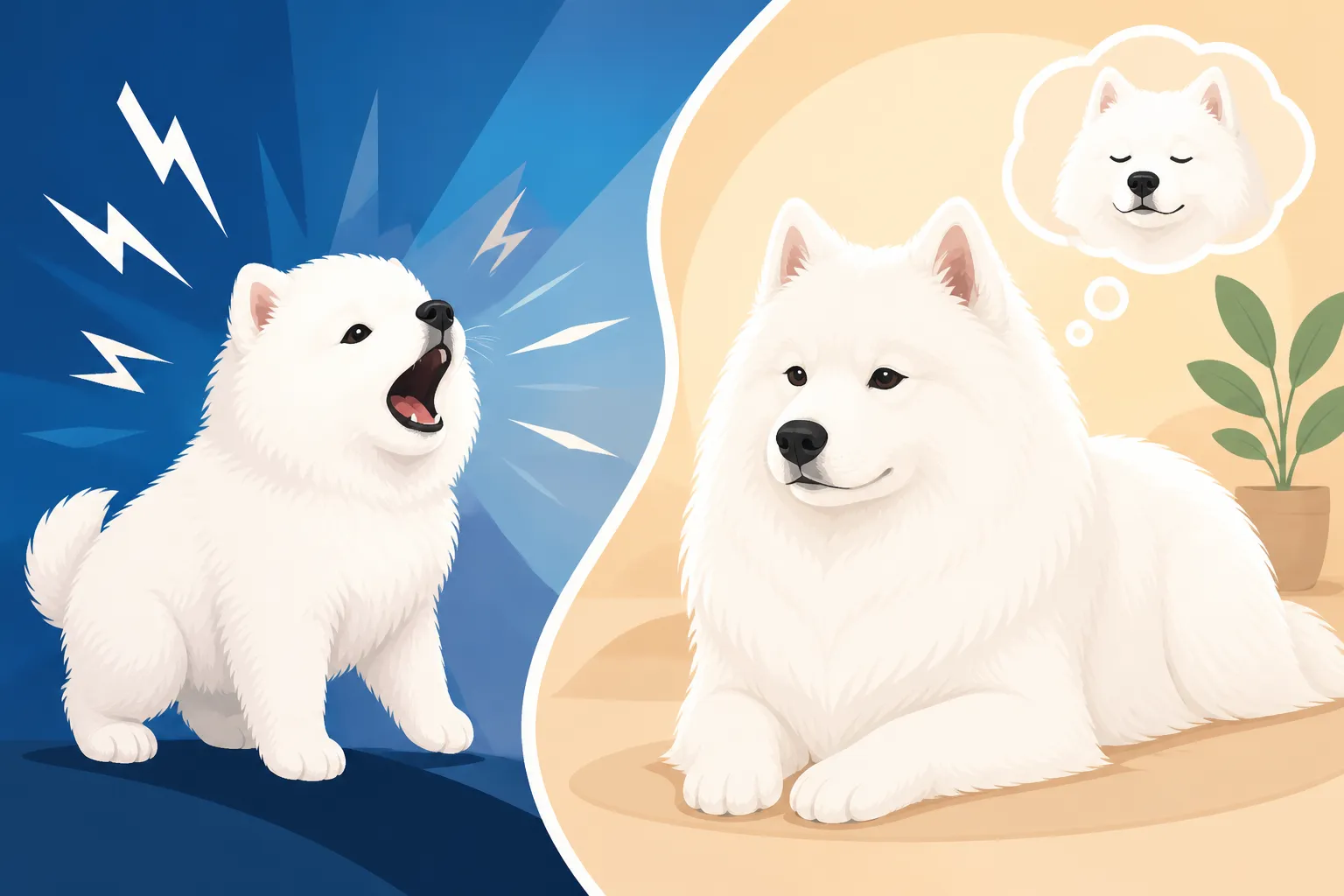
The Age a Samoyed Grows Quieter
The chorus of barks, grumbles, and "Aroooos" from a Samoyed can be absolutely charming, right up until it's 3 AM or your neighbors are sending you side-eye. Many Samoyed parents find themselves wondering if their fluffy cloud will ever settle into a more serene existence, questioning if there’s an age when the constant commentary finally softens. This guide dives deep into the vocal tendencies of our beloved Samoyeds, exploring how their communication changes over time and, more importantly, what realistic expectations you should have for a quieter life with your expressive companion.
The Early Years: When Every Sound Is a Discovery
Let's be honest: Samoyed puppies are little balls of fluff and noise. From the moment they arrive home, they're experimenting with their vocal cords, testing out every whine, yap, and excited squeak. This isn't just them being cheeky; it's a natural part of their development and how they interact with their new world. It's a phase that many new owners find both endearing and, occasionally, utterly exhausting.
Puppy Vocalizations: Whines, Yips, and Attention-Seeking
During those first few months, a Samoyed puppy's vocal repertoire is all about communication. They whine when they're hungry, need to go out, or just want your undivided attention. They'll let out sharp yips during playtime, especially when grappling with a favorite toy or wrestling with a littermate (or your shoe). These sounds are fundamental ways they express their needs and excitement. It’s also often when they start practicing their signature "Samoyed scream," a piercing, attention-grabbing vocalization that can surprise even seasoned dog owners. This isn't usually tied to pain or distress; it's just their way of saying, "Hey! Look at me!"
Many owners mistakenly think this early noisiness is a sign of poor training or an issue unique to their puppy. But it's actually quite typical. Puppies are like human toddlers learning to talk; they're trying out all the words, even if they don't quite know what they mean yet. They haven't learned impulse control, nor do they understand that their piercing squeals might not be appreciated during a quiet family dinner. It's a period of intense learning and vocal experimentation, and setting clear boundaries from the start, such as teaching a "quiet" cue, is crucial. If you’re just starting out, programs like BAXTER & Bella offer invaluable resources for navigating these early stages, helping you establish good habits before the more challenging adolescent period hits.
The Adolescent "Talker": Finding Their Voice (and Volume)
As your Samoyed transitions from puppyhood into adolescence, typically between six months and two years, their vocalizations can sometimes intensify rather than quiet down. This is the period when they really "find their voice," so to speak. What started as experimental yips can morph into full-blown conversations, howls directed at sirens, or expressive grumbles that sound eerily human. This is also when their innate tendencies, like the powerful "Samoyed scream," become more pronounced. Owners often report that this is when their once-cute puppy noises evolve into truly impactful sounds.
This increase in vocalization often stems from a combination of factors: increased confidence, developing personality, and a growing awareness of their environment. They might start barking more at things outside the window, howling along with distant ambulances, or simply demanding attention with a louder, more insistent tone. They are also often exploring their independence and testing boundaries, and sometimes vocalizing is their way of pushing those limits. It's a challenging time for owners, as the sheer volume can be overwhelming, making you wonder How Vocal Every Samoyed Is. This stage requires consistent training and a deep understanding of why your Samoyed is vocalizing. Are they bored? Anxious? Over-excited? Addressing the root cause is far more effective than just trying to silence the symptom.
Factors Influencing a Samoyed's Vocal Tendencies
While age plays a role in the type of vocalization, it's not the sole determinant of how quiet your Samoyed will become. Many other elements contribute to their overall noisiness. Understanding these factors can help you better manage their talkative nature.
Genetics and Breed Tendencies
First and foremost, Samoyeds are, by nature, a vocal breed. They were bred by the Nenets people to herd reindeer, guard their camps, and communicate with their human companions. This historical role means they have a deeply ingrained inclination to use their voices. They're not silent guardians; they're communicative partners. Expecting a Samoyed to be as quiet as a breed known for its placid nature, like a Basset Hound or a Great Dane, is simply unrealistic. Their "Samoyed scream" is legendary for a reason – it's a powerful sound they deploy for excitement, frustration, or simply to get your attention. It's part of their charm, albeit a loud part.
You might have heard the phrase, "Samoyeds don't bark, they talk!" and there's a lot of truth to that. They have a wide range of vocalizations beyond the standard bark, including howls, grumbles, chuffs, and that distinctive scream. Some lines are naturally more vocal than others, a trait passed down through generations. If you met your puppy's parents and they were quiet, you might have a slightly better chance at a less vocal adult, but it's never a guarantee. Understanding Why a Samoyed Vocalizes Instead of Barking can help you appreciate their unique communication style, even when it's disrupting your peace.
Environment and Stimulation Levels
A Samoyed's environment plays a huge role in how much they vocalize. A dog left alone for long periods without adequate mental or physical stimulation is far more likely to develop nuisance barking, howling, or screaming. They get bored, lonely, or anxious, and vocalizing becomes an outlet for that pent-up energy or emotion. Imagine being confined to a small space with nothing to do – you'd probably complain too! This is particularly true for Samoyeds who thrive on companionship and activity.
Conversely, a Samoyed living in a bustling household with lots of noise and activity might also vocalize more, simply because they're constantly reacting to stimuli. Think about a busy urban apartment versus a quiet suburban home. The constant sounds of city life – sirens, people talking, other dogs barking – can become triggers for a Samoyed who feels the need to comment on everything. Providing a structured environment, consistent routine, and appropriate outlets for their energy can significantly impact their noise levels. This includes ensuring they get plenty of exercise and mental enrichment to tire them out both physically and mentally.
Training and Socialization
This is perhaps the biggest factor you can influence. An untrained Samoyed, or one that has learned that being loud gets them what they want, will naturally be more vocal. If your Samoyed barks at the door and you immediately rush to see who it is, you've just reinforced that barking works. If they scream for attention and you give in by petting them, they learn that screaming is an effective communication tool. It’s not their fault; they’re just being dogs, responding to what works for them.
Early and consistent training is paramount. Teaching a "quiet" cue, rewarding calm behavior, and managing their environment to prevent triggers can make a world of difference. Proper socialization also helps them learn how to react appropriately to different situations and stimuli, reducing anxiety-induced vocalizations. It’s also important to address specific issues like Separation Anxiety in a Samoyed with targeted training, as this can be a major source of prolonged vocalization. Don't underestimate the power of consistent positive reinforcement and patience; it's a marathon, not a sprint, with a Samoyed.
Training Strategies to Encourage a Quieter Samoyed
While you might never have a truly "silent" Samoyed – and who would want one, really? Their vocalizations are part of their charm – you can absolutely manage and reduce excessive noise. Training isn't about silencing them entirely, but about teaching them appropriate times and ways to express themselves.
Establishing a "Quiet" Command
One of the most effective tools in your arsenal is a solid "quiet" command. This doesn't magically silence your dog forever, but it teaches them to stop vocalizing on cue. Start by deliberately triggering a bark, perhaps by knocking on a door or ringing a doorbell. The moment they bark, hold a treat to their nose. They'll likely stop barking to sniff the treat. As soon as they're quiet for a second, say "Quiet" and give them the treat. Repeat, gradually increasing the duration of quietness before rewarding. Consistency is key here. Every single time they vocalize inappropriately, use the cue and reward the silence.
It takes dedication, but a well-trained "quiet" cue is invaluable. Imagine your Samoyed doing a full-blown "Arooo!" at the Amazon delivery driver. Instead of yelling, which often just adds to the noise, a calm "Quiet" followed by a reward for silence can interrupt the behavior. Many online training platforms, such as BAXTER & Bella, provide step-by-step guides and video tutorials on teaching this and other essential commands, making it easier for owners to implement effective strategies at home.
Managing Environmental Triggers
Prevention is often the best medicine when it comes to excessive vocalization. Identify what triggers your Samoyed's noise and try to manage those situations. If they bark at people walking past the window, consider privacy film or curtains. If they howl at every siren, try playing white noise or calming music. For dogs who react strongly to doorbells, teach them to go to a designated "place" (like their bed) when the bell rings, rewarding them for staying calm there.
It's also about managing their energy. A bored Samoyed is a noisy Samoyed. Ensure they get ample physical exercise – long walks, runs, or structured play. Remember that mental stimulation is just as important. Puzzle toys, snuffle mats, and training sessions can tire their brains, reducing the urge to "talk" out of boredom. For a particularly vocal dog, you might want to consider How Much Exercise Quiets a Samoyed to find that sweet spot of tired and happy.
Consistency, Patience, and Professional Help
Training a Samoyed, especially on vocalization, requires immense consistency and patience. Samoyeds are intelligent but can be quite independent. They'll test your boundaries, and if they find an inconsistency, they'll exploit it. Everyone in the household needs to be on the same page with commands and rewards. If one person allows attention-seeking barking while another discourages it, your Samoyed will get mixed signals and continue the behavior that occasionally gets a reward.
If you're struggling, don't hesitate to seek professional help. A certified professional dog trainer or behaviorist can help identify the root cause of the vocalization and develop a tailored training plan. Sometimes, what looks like nuisance barking might actually be a sign of underlying anxiety or frustration that needs a more nuanced approach. A local trainer, or even a virtual coach from an online program, can provide invaluable guidance, especially when dealing with specific challenges. This investment in understanding What a Behaviorist Costs a Samoyed Owner With a Barker can save you countless hours of frustration and improve your relationship with your Samoyed significantly.
When Does a Samoyed Actually Get Quieter? Realistic Expectations
So, after all that, when does a Samoyed finally calm down? The honest, if slightly disappointing, answer is: it depends, and "quiet" is a relative term for this breed. There isn't a magical age where they suddenly become silent.
Maturation and a Gentle Decline in Reactivity
Generally, most Samoyeds start to settle down and become less intensely reactive as they move out of adolescence and into adulthood, typically around two to three years of age. This is when their brains are fully developed, and they've learned more about the world and their place in it. They might still be vocal, but the frantic, attention-seeking yips of a puppy or the dramatic screams of a teenager often mellow into more deliberate communication. For example, a mature Samoyed might offer a few deep barks at the doorbell rather than a prolonged screaming fit. They learn to self-regulate a bit better.
This period of maturation means they are often less impulsive and have a greater capacity for learned behaviors. This is the age when all that consistent training you've been doing finally starts to pay off more noticeably. You might find that your "quiet" cue becomes more effective, and they spend more time in calm, settled states. It's not silence, but a noticeable reduction in unnecessary noise. Understanding The Age a Samoyed Finally Matures can help you adjust your expectations and celebrate the small victories of a more composed companion.
"Quiet" Means Less Unnecessary Vocalization
It's crucial to redefine what "quiet" means when you own a Samoyed. It doesn't mean they'll stop making noise altogether. A truly "quiet" Samoyed in the traditional sense is often an anomaly. Instead, aim for a Samoyed that understands when it's appropriate to vocalize and when it's not. They might still greet you with an excited "Arooo!" when you come home, or offer a deep bark to alert you to a stranger at the door. These are natural, acceptable forms of communication for the breed.
The goal is to eliminate or significantly reduce nuisance barking – the incessant, unprovoked, or attention-seeking vocalizations that disrupt your home and neighbors. A well-adjusted adult Samoyed will still have a voice and won't hesitate to use it when they feel it's necessary. However, they'll be much less likely to "talk back" just because they're bored or to demand things from you incessantly, provided you've put in the consistent training.
Lifelong Management, Not a Finish Line
Think of managing Samoyed vocalization as a lifelong journey, not a destination. Even a mature, well-trained Samoyed might have moments of increased vocalization, perhaps due to stress, a change in routine, or novel stimuli. For instance, moving to a new house might cause an otherwise quiet Samoyed to bark more frequently as they adjust to new sights and sounds. Similarly, as they enter their senior years, changes in hearing or cognition might lead to new vocal behaviors. Caring for a Samoyed Past Nine often involves adjusting to new quirks, which can sometimes include changes in their vocal habits.
The key is to remain vigilant and continue with positive reinforcement. Keep up with their exercise, mental enrichment, and consistent rules. Tools like durable chew toys (readily available on Amazon) can help redirect their energy when they feel the urge to vocalize. Regular reinforcement of the "quiet" command, even when they're already calm, helps keep it sharp. Embrace their communicative nature, but guide it towards polite expression rather than incessant chatter.
| Vocalization Type | Typical Triggers | Age Range Most Common | Expectation in Adulthood |
|---|---|---|---|
| Whining | Needs (potty, hunger), loneliness, anxiety, attention-seeking | Puppy-Adolescent | Should significantly decrease, mostly for true needs. |
| Yipping/Barking | Play, excitement, warning, perceived threat, attention-seeking | Puppy-Adolescence-Adult | Reduces in intensity/frequency, becomes more purposeful. |
| Howling | Sirens, other dogs, loneliness, communication over distance | Adolescent-Adult | May persist, especially with triggers, but less constant. |
| Samoyed Scream | Extreme excitement, frustration, strong demands, specific triggers | Adolescent-Adult | Can persist, sometimes for life, but manageable with training. |
| Grumbling/Chuffing | Contentment, mild protest, "talking" to owner, settling | Adolescent-Adult | Often increases as they mature; a form of happy conversation. |
In the end, while your Samoyed may never be a silent companion, they can become a wonderfully communicative dog who understands when it's appropriate to "talk." It takes time, patience, and consistent effort on your part, but the reward is a happy, well-adjusted Samoyed whose barks and howls are a joy, not a nuisance.
Disclaimer
This article is for general informational purposes only and does not constitute professional advice. Laws, prices and regulations vary by location and change over time. Consult a qualified professional for guidance on your specific situation.