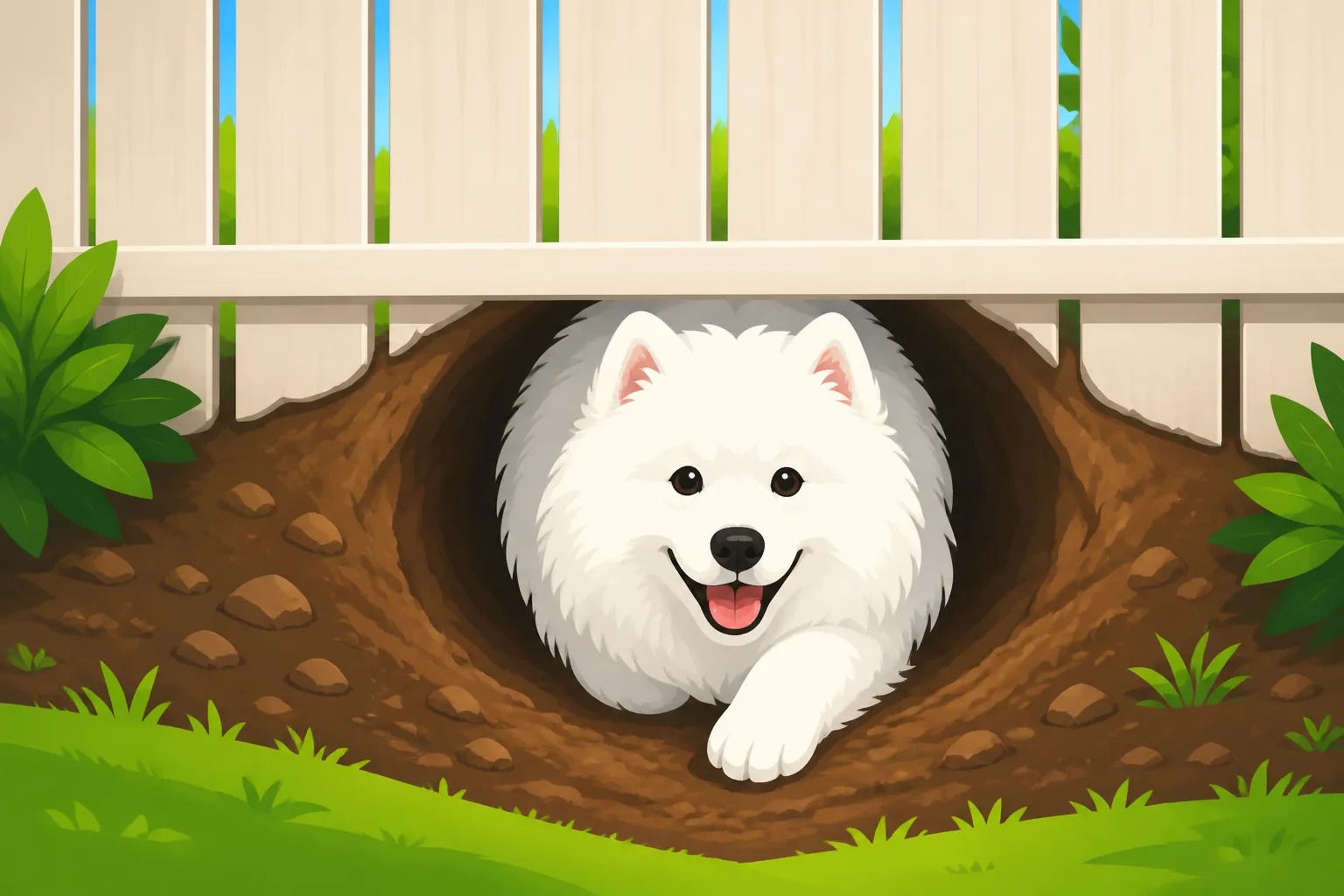
The Tunnel a Samoyed Digs Under a Fence
Oh, the infamous Samoyed tunnel! If you're reading this, chances are you've experienced that heart-stopping moment when you look out into your yard and realize your fluffy escape artist has decided the fence line is merely a suggestion, not a solid boundary. It’s a common, utterly frustrating problem for Samoyed owners, who often feel like they’re locked in an endless battle of wits with their clever, digging companions. This guide is here to help you understand why your Samoyed is tunneling under the fence and, more importantly, how you can put a stop to it and keep your beloved companion safely contained.
Why Your Samoyed Views Your Fence as a Suggestion, Not a Barrier
Let's be real, Samoyeds are magnificent creatures, but they weren't bred to sit politely in a perfectly manicured suburban yard. Their ancestors were working dogs, built for vast, open spaces and a life of purpose. That deep-seated instinct for exploration, for hunting, for doing something, doesn't just vanish when they become our cherished house pets. When a Samoyed sees a fence, especially one that doesn't extend deep into the ground, they don't necessarily see an insurmountable wall. They see a puzzle, a challenge, or perhaps just a mild inconvenience separating them from a whole world of smells, sights, and potential adventures.
Many owners find themselves constantly patching holes, burying chicken wire, or even building elaborate underground barriers. It feels like a losing battle because we're often fighting against their very nature. Understanding that foundational drive is the first step toward finding a lasting solution. It’s not about them being "naughty" or "defiant"; it's about channeling their instincts appropriately.
Deciphering the "Why": Reasons Behind the Great Escape Under the Fence
It's tempting to think your Samoyed is just trying to make your life difficult, but there are usually very clear, instinctual reasons behind their tunneling behavior. Pinpointing the exact motivation for your Samoyed is crucial to finding an effective deterrent.
The Instinct to Explore and Hunt
Samoyeds are intelligent, curious dogs with a high prey drive. That tantalizing scent of a squirrel that just scurried under the fence, or the faint odor of a rabbit burrow beyond your property line, can be an irresistible siren call. Their noses are incredibly powerful, and once they latch onto a scent, their instinct tells them to follow. Digging under a fence is simply the most direct route to the source of that fascinating smell. This isn't a behavior they can easily "turn off"; it's hardwired. This ties into Why a Samoyed's Recall Cannot Be Trusted when they're off-leash and pursuing something.
Consider a typical scenario: your Samoyed is peacefully napping in the sun, then suddenly springs up, sniffs the air, and heads straight for a particular spot along the fence. Chances are, something interesting has just passed by or is residing just out of sight. For them, it’s not just a fence; it’s a portal to a thrilling chase.
Seeking Coolness or Comfort
Samoyeds are built for cold climates, with their magnificent double coats designed to insulate them from extreme temperatures. While this coat is fantastic in winter, it can make summer days incredibly uncomfortable. Even with access to shade and water, the ground itself might not be cool enough. Many Samoyeds dig because they're trying to create a cool hollow to lie in. A fence line often offers a sliver of consistent shade, making it a prime target for a digging project. They're not trying to escape as much as they're trying to find relief from the heat. This is a common reason for The Digging a Samoyed Does Because It Is Hot.
You might observe this behavior more frequently on warmer days, or if your yard has extensive sun exposure. If your Samoyed tends to dig shallow scrapes in shaded areas elsewhere in the yard, it's a good indicator that they're just trying to cool down.
Boredom and Lack of Mental Stimulation
A bored Samoyed is a destructive Samoyed. These dogs are smart and need a "job" to do, or at least plenty of mental and physical engagement. If they're left alone in the yard for long periods without toys, interaction, or stimulating activities, they'll invent their own entertainment. And often, that entertainment involves digging. Tunneling under the fence provides a sense of accomplishment, an outlet for their energy, and the thrilling possibility of a grand adventure. This kind of digging often stems from a lack of The Job a Samoyed Actually Needs.
Think about it: from your Samoyed's perspective, the world outside the fence is full of novelty, while the yard might feel like a repetitive, unexciting space. Digging becomes a fun, rewarding activity that offers a potential "prize"—freedom and new experiences. This is one of the key reasons Why Samoyeds Are Surrendered to rescues, as owners underestimate their needs.
Separation Anxiety or Fear
While less common for tunneling specifically, strong emotional distress like separation anxiety can sometimes manifest in desperate escape attempts, including digging. If your Samoyed becomes highly anxious when left alone, paces, barks incessantly, or tries to chew through barriers, digging under the fence might be another symptom of their distress. Similarly, sudden loud noises like fireworks or thunderstorms can trigger a fear response, leading a dog to try to escape what they perceive as danger.
This type of digging is usually accompanied by other signs of anxiety or fear. It's not a calm, methodical digging, but often frantic and desperate, leaving noticeable signs of distress.
Fortifying Your Fortress: Practical Solutions to Prevent Tunneling
Once you understand why your Samoyed is digging, you can implement targeted solutions. Simply filling in holes won't work long-term; you need to address the root cause and make the fence line less appealing or harder to breach.
Physical Barriers and Deterrents
The most direct approach to stopping a Samoyed from tunneling is to create a physical barrier they cannot dig through or under.
- Burying Wire Mesh or Concrete: This is often the most effective, albeit labor-intensive, solution. Dig a trench along the base of your fence, about 1-2 feet deep and 1-2 feet wide. Install galvanized wire mesh (like hardware cloth or strong chicken wire) vertically into the trench, bending it at a 90-degree angle to create an "L" shape facing inward towards your yard. This means if your Samoyed starts digging, they'll hit the mesh first. The inward bend discourages them from digging further out. Fill the trench with dirt or concrete. For persistent diggers, concrete footings are almost infallible.
- Real-life scenario: I had a friend with a Samoyed who was an expert at finding weak spots. After countless hours of patching, she finally went with the buried wire mesh. It took a weekend of hard work, but the peace of mind knowing her dog couldn't tunnel out was worth every ache and pain. You can find robust wire mesh options on Amazon.
- "L" Footer or Paving Slabs: Similar to buried wire, you can lay large paving slabs or concrete blocks flush with the ground along the inside perimeter of your fence. They should extend at least 1-2 feet into the yard. This creates a hard, immovable surface your Samoyed will encounter if they try to dig down.
- Rocks or Gravel: For a less permanent or less intense solution, a trench filled with large, smooth river rocks or coarse gravel can be a deterrent. Samoyeds generally don't enjoy digging through uncomfortable, sharp, or heavy materials. This might not stop the most determined tunnelers, but it can certainly slow them down.
Here's a comparison of common barrier types:
| Barrier Type | Installation Difficulty | Effectiveness Against Samoyed Digging | Cost Range | Durability | Notes |
|---|---|---|---|---|---|
| Buried Wire Mesh | Medium-High | High | Moderate-High | High | Requires trenching; L-bend inward is key. |
| Concrete Footings | High | Very High | High | Very High | Most permanent; labor-intensive. |
| Paving Slabs/Blocks | Medium | High | Moderate | High | Laid flat on the ground; can be moved if needed. |
| Large Rocks/Gravel | Low-Medium | Moderate | Low-Moderate | Medium | May not deter highly motivated diggers; can be messy. |
| Buried Wire Stops a Samoyed Digging Out | (See above) | (See above) | (See above) | (See above) | Direct link to a more detailed discussion on this specific solution. |
Strategic Landscaping
Sometimes, the simplest solutions are right under our noses.
- Planting Dense, Thorny Bushes: Along the fence line, consider planting varieties like thorny roses, barberry, or other dense, somewhat prickly bushes. Samoyeds generally avoid uncomfortable vegetation, and these can create a natural barrier. Just ensure they're pet-safe.
- Adding Visual Barriers: Sometimes, simply breaking up the visual line of the fence with taller plants or decorative elements can make the "other side" less enticing by making it less visible.
- Creating a "No-Dig Zone": If a particular spot is a favorite tunneling area, place something large and immovable there. A heavy planter, a large decorative rock, or even a small shed can block access and force your Samoyed to reconsider.
Scent and Taste Deterrents
While not always foolproof for a determined Samoyed, certain scents and tastes can be a deterrent.
- Citrus or Coffee Grounds: Dogs generally dislike strong citrus scents. You can spread citrus peels or spray a diluted citrus oil solution along the fence line. Spent coffee grounds also have a strong odor and can be spread. Reapplication is necessary, especially after rain.
- Pet-Safe Digging Repellents: There are commercial products designed to deter digging. Always ensure they are non-toxic and safe for your Samoyed and other wildlife before use. You can often find these types of products on Amazon.
Beyond the Barrier: Managing Your Samoyed's Innate Digging Drive
While physical barriers are essential for immediate safety, truly addressing the tunneling means looking at your Samoyed's overall well-being and finding appropriate outlets for their natural drives.
Adequate Exercise and Mental Stimulation
This is perhaps the most critical factor. A tired Samoyed is a happy Samoyed, and a less destructive one.
- Physical Exercise: Samoyeds need a good amount of vigorous exercise daily. This isn't just a quick walk around the block. Think long walks, hikes, off-leash play in a secure area (since A Samoyed's Recall Cannot Be Trusted), or even dog sports like canicross or bikejoring if they're cleared by your vet. If they're regularly pulling, they are doing what they were bred to do. A Samoyed that has had its physical needs met is far less likely to feel the urge to escape. This is crucial for understanding How Much Exercise a Samoyed Needs.
- Mental Enrichment: Samoyeds are smart. They need their brains worked as much as their bodies.
- Puzzle Toys: Interactive puzzle toys filled with treats can keep them engaged for a good chunk of time.
- Training Sessions: Short, positive training sessions throughout the day can be incredibly stimulating. Teaching new tricks, practicing obedience commands, or even trying out something like scent work can tap into their intelligence. A program like BAXTER & Bella offers excellent resources for this kind of consistent, engaging training.
- Chew Toys: High-quality, durable chew toys can help alleviate boredom and satisfy their natural chewing instincts.
- Regular Outings: Novelty is key. Trips to different parks, pet-friendly stores, or even just exploring new walking routes can prevent boredom.
Creating a Designated Digging Zone
If your Samoyed just loves to dig (and many do!), instead of fighting it entirely, consider providing an approved outlet.
- Build a Digging Pit: Dedicate a specific area of your yard as "their" digging spot. This could be a sandbox, a raised garden bed filled with sand and dirt, or simply a corner of the yard you don't mind getting messy.
- Encourage Use: Bury some high-value treats or favorite toys in the digging pit to encourage your Samoyed to use it. When you see them digging in the pit, praise them enthusiastically and reward them. If they start digging elsewhere, gently redirect them to their designated spot. This is covered in more detail in Giving a Samoyed Its Own Digging Pit.
Supervision and Consistency
Never underestimate the power of vigilant supervision.
- Active Monitoring: When your Samoyed is in the yard, especially in the initial stages of curbing the digging, actively watch them. If you see them start to sniff or scratch at the fence line, immediately interrupt them with a cheerful "leave it" or a recall to you for a game or treat. The goal is to prevent the behavior from becoming ingrained.
- Leash Time in the Yard: For persistent diggers, you might need to keep them on a long line while in the yard, allowing you to quickly intervene and redirect their attention if they head for a digging spot. This isn't a long-term solution, but it can be an effective training tool.
- Consistent Training: Positive reinforcement is your best friend. Every time your Samoyed chooses not to dig, or engages in an approved activity, reward them. Use clear commands and be consistent across all family members. BAXTER & Bella provides excellent structured guidance that can help establish consistency in training.
Addressing Heat-Related Digging
If you suspect your Samoyed is digging for coolness, ensure they have ample ways to beat the heat.
- Shade and Water: Always provide plenty of fresh, cool water and multiple shaded areas in your yard.
- Cooling Mats and Elevated Beds: Offer cooling mats or elevated dog beds that allow air circulation. You can find these readily on Amazon.
- Kiddie Pools: Many Samoyeds enjoy a shallow kiddie pool to splash in during warm weather.
- Indoor Access: On truly hot days, your Samoyed should have access to air conditioning and be primarily indoors. Their thick coats are not designed for sustained heat exposure. This is critical for A Samoyed Built for Sixty Below in an American Summer.
When to Seek Professional Help
If you've tried everything and your Samoyed is still tunneling under the fence, or if the digging is accompanied by other concerning behaviors like extreme anxiety or destructiveness, it might be time to consult with a professional.
- Certified Professional Dog Trainer (CPDT-KA): A trainer specializing in positive reinforcement can help you assess your Samoyed's specific motivations and develop a tailored training plan. They can also help you with advanced obedience and enrichment strategies.
- Veterinary Behaviorist: For cases involving severe separation anxiety or other complex behavioral issues, a veterinary behaviorist (a vet with specialized training in animal behavior) can provide a comprehensive diagnosis and treatment plan, which may include medication in conjunction with behavior modification.
Remember, patience and consistency are key when dealing with deeply ingrained Samoyed behaviors. They are intelligent, loving dogs, but they require understanding and appropriate outlets for their strong instincts. With the right strategies, you can have a happy, well-adjusted Samoyed who stays safely in your yard.
Disclaimer
This article is for general informational purposes only and does not constitute professional advice. Laws, prices and regulations vary by location and change over time. Consult a qualified professional for guidance on your specific situation.