Car Sickness in a Samoyed
It's heartbreaking to see your usually joyful, smiling Samoyed turn into a drooling, panting, and anxious mess the moment they step into the car. What should be a fun adventure to the park or a necessary trip to the vet often becomes a stressful ordeal for both you and your beloved furry friend. This guide is here to walk you through understanding why your Samoyed might get car sick, how to spot the signs, and most importantly, effective, practical strategies to make car rides a much calmer, happier experience for everyone involved.
Understanding Why Your Samoyed Gets Car Sick
Car sickness, or motion sickness, in dogs is far more common than many owners realize, and Samoyeds, with their sensitive natures, can be particularly susceptible. It’s not just about a weak stomach; there's a complex interplay of physical sensations and psychological associations at play. When your Samoyed is showing signs of distress in the car, it's usually a combination of these factors creating an unpleasant experience.
The Vestibular System and Motion Sickness
At its core, motion sickness is a physiological response. Dogs, just like humans, have a vestibular system in their inner ear that's responsible for balance and spatial orientation. When a dog is in a moving vehicle, especially one with lots of turns, stops, and accelerations, their eyes might see things moving, but their inner ear is sending different signals about motion to their brain. This disconnect, this sensory mismatch, can lead to confusion, dizziness, and ultimately, nausea. Think about how you feel on a winding road if you try to read a book – it’s a similar, unsettling feeling for your Samoyed.
Puppies and younger dogs are often more prone to motion sickness because their vestibular systems aren't fully developed yet. It's a bit like a human toddler getting queasy on a merry-go-round. As they mature, many dogs outgrow this sensitivity to some extent. However, for some Samoyeds, this inherent sensitivity can persist into adulthood, making even short journeys a challenge. The breed's sensitive disposition might also contribute, as they can be more acutely aware of these physical sensations.
Beyond just the inner ear, other physical factors can play a role. A full stomach before a car ride can certainly exacerbate nausea. Just as you wouldn't eat a huge meal right before a roller coaster, giving your Samoyed a heavy breakfast before a long drive is asking for trouble. Additionally, some dogs might have underlying gastrointestinal sensitivities that make them more prone to upset stomachs, which motion sickness then compounds. It's always a good idea to consider your Samoyed's overall physical health when troubleshooting car sickness.
Negative Associations and Anxiety
While the physical aspect is significant, for many Samoyeds, car sickness quickly evolves into a psychological issue fueled by negative associations and anxiety. If every car ride has ended in vomiting, drooling, or a general feeling of misery, your Samoyed isn't going to be thrilled about hopping into the car again. They start to associate the car itself, the sound of the keys, or even the sight of their leash with that terrible, queasy feeling. This anticipatory anxiety can begin long before the car even moves.
This learned aversion means that even if the physical motion sickness improves, the anxiety about the idea of the car ride can trigger symptoms. You might see your Samoyed panting, whining, or trying to hide as soon as they realize a car trip is imminent. This is not stubbornness; it's genuine fear and distress. It's a vicious cycle where anxiety makes them feel worse, and feeling worse increases their anxiety for next time. Breaking this cycle requires patience and a systematic approach to retraining their emotional response.
Consider the destinations. Does your Samoyed only go to the vet or the groomer in the car? If so, the car becomes a harbinger of unpleasant experiences. It’s vital to counteract these negative associations by making car rides predict positive outcomes. A quick trip to the dog park, a visit to a friend's house for playtime, or even just a short drive around the block ending with a favorite treat can start to shift their perception. Building positive memories is key to overcoming the mental hurdle of car sickness. You can find excellent durable treats on sites like Chewy that can make car rides a positive experience.
Age and Susceptibility
As mentioned, puppies are generally more susceptible due to their immature vestibular systems. A young Samoyed puppy, especially on their first few rides home or to early vet appointments, might experience motion sickness more intensely. This early experience can then lay the groundwork for those negative associations that linger into adulthood. If a puppy has a traumatic or intensely nauseating first car ride, it can be a much tougher battle to overcome later.
However, it's not exclusively a puppy problem. Adult Samoyeds can also develop car sickness, sometimes seemingly out of nowhere. This could be triggered by a particularly long or bumpy ride, a stressful event that happened in the car, or even an underlying health issue that makes them suddenly more sensitive. Older Samoyeds, too, might start to experience motion sickness if they develop conditions that affect their balance or general well-being. Keeping an eye on any sudden changes in your adult Samoyed's tolerance for car rides is important.
It’s also worth noting that individual personality plays a huge role. Some Samoyeds are just more sensitive and prone to anxiety than others, making them more predisposed to car sickness. A highly excitable or nervous Samoyed might find the confined space and unfamiliar sensations of a car ride overwhelming, even without a strong physical motion sickness component. Understanding your particular Samoyed's temperament is crucial in tailoring an effective management plan. For insights into their general nature, you might find The Household a Samoyed Was Built For an interesting read.
Recognizing the Signs of Car Sickness in Your Samoyed
Sometimes, the signs of car sickness are glaringly obvious – a pool of vomit on the back seat is hard to miss. But Samoyeds, like many dogs, can be subtle in their distress, especially in the early stages or if they're trying to hide their discomfort. Learning to read these more nuanced signals can help you intervene before the situation escalates, making the experience less traumatic for your dog.
Subtle Clues Before the Trip
The cues often start even before you've left the driveway. You might notice your Samoyed becoming restless or pacing when they see you grab your car keys or their harness. They might try to avoid going near the car, dragging their feet, or even trying to hide under a bed or behind furniture. This avoidance behavior is a clear indicator that they associate the car with something unpleasant. It's not defiance; it's self-preservation.
Once inside the car but before it starts moving, look for changes in their breathing and posture. Increased panting, even if it's not hot, is a classic sign of anxiety in dogs. They might start to drool excessively, a clear precursor to nausea. Lip licking, yawning (especially when not tired), or a lowered body posture can also signal that their anxiety levels are already rising. They might refuse treats, which is unusual for a Samoyed, indicating their discomfort overrides their desire for food.
A Samoyed's eyes can tell you a lot. Dilated pupils, a tense facial expression, or constantly scanning their surroundings without settling are all indications of stress. Some Samoyeds might even whine or whimper softly, trying to communicate their apprehension. Being attuned to these early, subtle signs allows you to address the anxiety component of car sickness proactively, rather than waiting for full-blown nausea to set in. You want to nip it in the bud before they even hit peak distress.
Obvious Symptoms During Travel
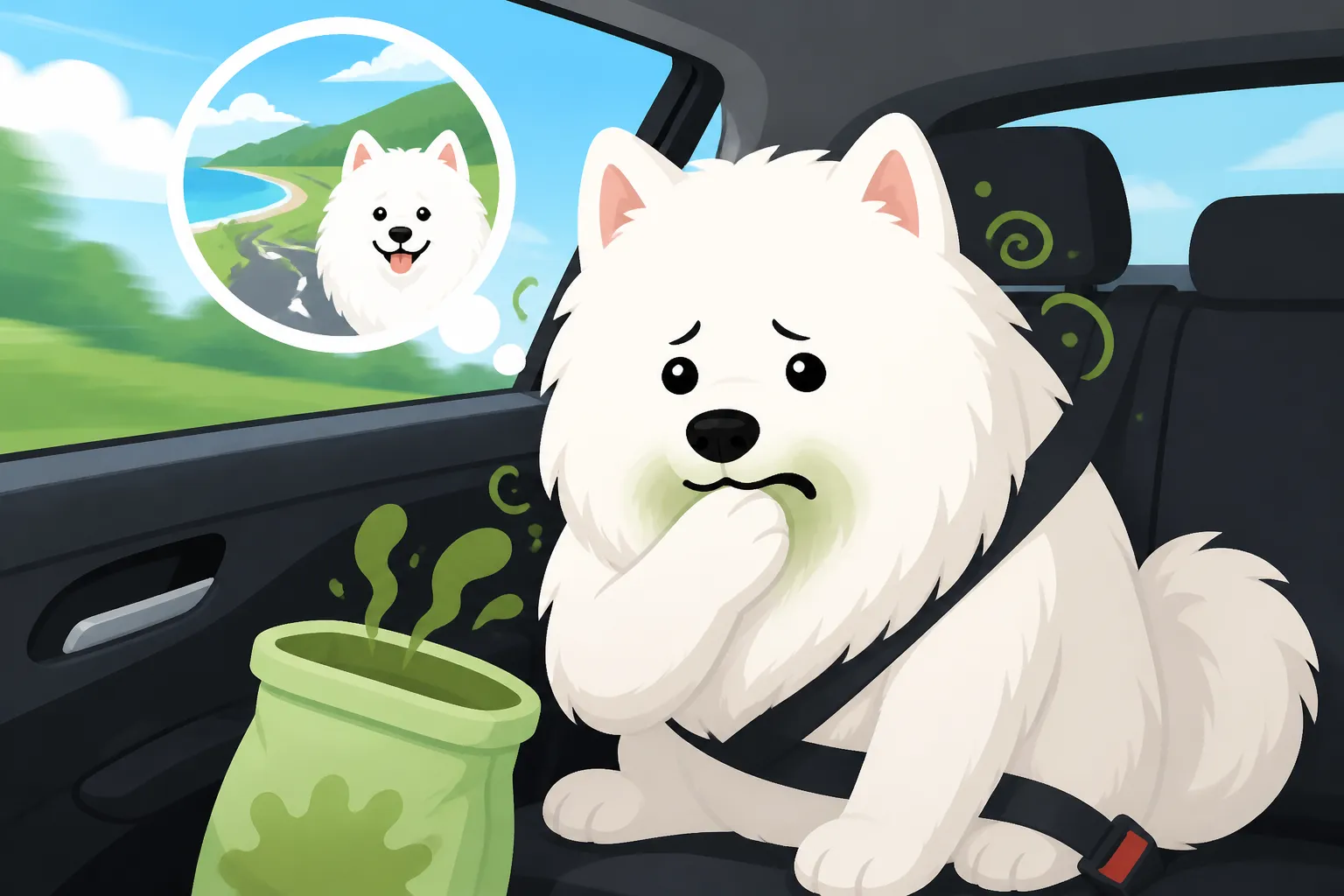
Once the car starts moving, if your Samoyed is suffering from motion sickness, the symptoms usually become much more apparent. The most common and unmistakable sign is, of course, vomiting. While unpleasant for us, it's a clear indication that their stomach is severely upset. Before vomiting, you'll almost certainly notice an increase in drooling, often to the point where they are soaking their fur or the car seat. This is their body's way of trying to expel whatever is making them feel sick.
Panting will likely intensify, becoming more rapid and shallow, often accompanied by an anxious or worried expression. Your Samoyed might become extremely restless, shifting positions frequently, standing up, lying down, and generally unable to settle. They might whine persistently, bark, or even let out a distressed "Samoyed scream" that is quite distinct from their usual vocalizations. If you want to know more about their vocal nature, check out The Samoyed Scream and Why It Is Not Barking.
In severe cases, your Samoyed might also experience diarrhea during or shortly after the car ride. This is less common but can happen with intense nausea and anxiety. They might also appear lethargic or withdrawn after the trip, sleeping heavily as if recovering from an ordeal. If you see any of these overt signs, it's a clear signal that the current travel method isn't working and needs to be adjusted.
Post-Trip Behavior
The effects of car sickness don't necessarily end the moment you arrive at your destination. A Samoyed who has experienced a difficult car ride might be subdued, quiet, and less enthusiastic than usual. They might refuse to eat or drink for a while, or appear unusually tired. This recovery period is a sign of how taxing the experience was on their system.
Conversely, some Samoyeds might exhibit a burst of frantic energy or excitement upon exiting the car, as if relieved to finally be free of the moving vehicle. This rebound energy, while seemingly positive, is still a reaction to stress. It shows they were holding tension and are now releasing it. You might notice them shaking off excess energy, sniffing around intensely, or needing to immediately relieve themselves.
If your Samoyed consistently takes a long time to "bounce back" after a car ride, or if they continue to show signs of anxiety (like hiding or avoiding you) even after being out of the car, it's a strong indicator that their car sickness is a significant problem. Documenting these behaviors can be helpful for your veterinarian if you decide to seek professional advice. Understanding these post-trip signals is just as important as recognizing the in-car symptoms for a comprehensive picture of their distress.
Practical Strategies to Make Car Rides Smoother for Your Samoyed
Overcoming car sickness in a Samoyed is rarely a quick fix. It requires a patient, multi-faceted approach, combining training, environmental adjustments, and sometimes, medication. The goal is to gradually change your Samoyed's association with the car from one of dread to one of neutrality or even enjoyment.
Acclimation and Desensitization Training
This is the cornerstone of addressing anxiety-induced car sickness. Start incredibly small. Don't even turn on the car. Simply open the car door and let your Samoyed investigate at their own pace. Offer high-value treats (like those from Ollie or other palatable options) and praise just for being near the car. If they're comfortable, encourage them to put their paws on the seat, then get fully in. Always keep these initial sessions very short, positive, and end them before any signs of anxiety appear. The idea is to build a library of good experiences.
Once they're happy getting into the stationary car, move to the next step: sitting in the car with the engine off. Again, treats, praise, and a short duration. When that's comfortable, try turning the engine on for a few seconds, then off. Gradually increase the time the engine is running. The key is never to push them past their comfort level. If they show signs of stress, you've gone too fast, and you need to backtrack. Many trainers emphasize short, frequent sessions over long, infrequent ones for desensitization. For general obedience training that can help with patience and calm, you might find guidance in Training a Samoyed That Finds Obedience Negotiable.
Finally, start with very short, gentle drives. A quick trip around the block, literally a minute or two, followed by immediate praise and a favorite reward (like a game of fetch in the yard, if that's a positive outlet for them). Slowly increase the duration and distance of these positive rides. Always aim for a happy destination – the dog park, a friend’s house, or even just a quick walk in a new area – to reinforce the idea that car rides lead to good things. Avoid making the first longer trips to the vet or groomer.
Optimizing the Car Environment
The physical environment inside the car can significantly impact your Samoyed's comfort. First, ensure they are securely restrained. A car harness attached to a seatbelt or a well-ventilated crate can provide a sense of security and prevent them from being tossed around by movement. Being unrestrained can worsen motion sickness and is also unsafe. For crate training tips, consider reading Whether a Samoyed Puppy Should Be Crated. You can find various sizes and styles of travel crates and safety harnesses on Amazon or Chewy.
Secondly, consider where your Samoyed sits. Many dogs do better in the front seat (if safely secured and airbags are off, or if you have a back-seat specific harness), where they can see the road ahead, similar to how looking at the horizon helps humans. If they are in the back, ensuring they can see out a window rather than just the seat in front of them can help. Crack a window slightly to provide fresh air, which can alleviate nausea, but don't open it so much that they could jump out or get injured.
Minimize strong smells in the car, as these can exacerbate nausea. Avoid air fresheners or strong perfumes. Keep the car cool, especially for a thick-coated Samoyed. Overheating can quickly lead to discomfort and nausea. If it's a particularly sunny day, consider sun shades on the windows to reduce glare and heat. A favorite blanket or toy from home can also provide a familiar, comforting scent, which can help reduce anxiety. A non-slip mat under their feet or in their crate can also provide stability and confidence.
Natural Remedies and Over-the-Counter Aids
Before jumping to prescription medications, many owners find success with natural or over-the-counter options. Ginger, often given in capsule form or as a small ginger snap cookie (check ingredients for xylitol), is a well-known anti-nausea remedy. Start with a small dose to see how your Samoyed reacts. Calming pheromone sprays or diffusers designed for dogs, like Adaptil, can be sprayed in the car or on their bedding a little while before the trip to help reduce anxiety.
Herbal calming supplements containing ingredients like chamomile, L-theanine, or tryptophan can be purchased at pet stores or online, often found on Chewy. These are designed to promote relaxation without sedation. Always discuss these with your vet before starting, especially if your Samoyed is on other medications. Some owners also swear by specific pressure point wraps, like the ThunderShirt, which applies gentle, constant pressure to calm anxious dogs, similar to swaddling a baby.
For some dogs, simply having an empty stomach can make a huge difference. Try not feeding your Samoyed for a few hours before a car ride. Offer only a small amount of water or an ice cube. If the journey is long, plan for breaks where they can stretch their legs, relieve themselves, and have a small drink. A distraction, like a favorite chew toy or a puzzle toy filled with a small amount of treats, can also sometimes help redirect their focus from the unpleasant sensations.
Prescription Medications
When all other methods fall short, or if your Samoyed's car sickness is severe and consistent, prescription medication from your veterinarian can be a lifesaver. There are several options available, each working a little differently.
One common medication is maropitant citrate (brand name Cerenia), which is an anti-emetic specifically approved for motion sickness in dogs. It works by blocking the neurotransmitters in the brain that trigger vomiting. It's often given a couple of hours before travel and can prevent nausea and vomiting for a full 24 hours. Your vet will determine the appropriate dosage for your Samoyed's weight.
Another class of medications includes sedatives or anti-anxiety drugs. These are not always ideal as they can make your Samoyed groggy, but for extreme cases of anxiety, they can help break the cycle of fear. Medications like acepromazine (a sedative) or trazodone (an anti-anxiety medication) might be prescribed for short-term use for car travel. These are typically given before the trip and help to calm your Samoyed, making them less reactive to the motion and the associated anxiety. It's crucial to discuss the pros and cons of these with your vet, as well as potential side effects.
Your vet might also suggest trying antihistamines like dimenhydrinate (Dramamine) or diphenhydramine (Benadryl), which can have a mild sedative effect and help with nausea. However, not all antihistamines are safe or effective for dogs, and dosages differ significantly from human doses. Never give your Samoyed human medication without explicit instructions and dosage from your veterinarian. They can guide you on the safest and most effective pharmaceutical approach. You should also be aware of the potential for increased What a Samoyed's Vet Bills Look Like when incorporating prescription medications into your dog's care.
| Strategy | Description | Pros | Cons |
|---|---|---|---|
| Acclimation Training | Gradual exposure to the car, starting with stationary positive experiences. | Addresses root cause of anxiety, long-term solution. | Requires significant time and patience. |
| Crate/Harness | Securely restraining the dog in the car. | Safety, provides sense of security, reduces motion impact. | Some dogs dislike confinement, requires training. |
| Fresh Air/Cool Temp | Cracking windows, keeping AC on. | Simple, immediate relief for physical discomfort. | May not be enough for severe cases, external weather dependent. |
| Ginger | Small doses of ginger (cookie, capsule). | Natural, often effective for mild nausea. | May not work for all dogs, specific dosage needed. |
| Pheromone Sprays | Sprays or diffusers that release calming pheromones. | Non-sedating, helps reduce anxiety. | Effectiveness varies by individual, might not address motion sickness. |
| Prescription Meds | Anti-emetics (Cerenia) or anti-anxiety drugs (Trazodone). | Highly effective for severe nausea and anxiety. | Can have side effects, requires vet consultation, not a training substitute. |
When to Consult Your Vet About Samoyed Car Sickness
While many cases of mild car sickness can be managed with home strategies and training, there are times when a professional opinion from your veterinarian is absolutely necessary. Don't hesitate to reach out if you're feeling overwhelmed or if your Samoyed's condition isn't improving.
Persistent or Worsening Symptoms
If you've diligently tried various desensitization techniques, environmental adjustments, and over-the-counter remedies, and your Samoyed's symptoms are still severe, persistent, or even getting worse, it's definitely time to schedule a vet visit. This is especially true if the vomiting is frequent, if they are showing extreme distress, or if the recovery time after a trip is excessively long. Waiting too long can entrench the negative associations, making it even harder to treat in the future.
A worsening situation can also include a Samoyed who previously tolerated car rides well suddenly developing severe car sickness. This kind of sudden change should always prompt a vet check-up, as it could indicate an underlying medical issue rather than just motion sickness. Your vet can provide a diagnosis and recommend the most appropriate course of action, potentially including prescription medications or a referral to a veterinary behaviorist.
Don't feel like you've failed if you need to turn to medical intervention. For some Samoyeds, the physical component of motion sickness is so strong that training alone isn't enough to break the cycle. Medication can provide a necessary "reset," allowing the training and positive associations to finally take hold without the overwhelming sensation of nausea. Think of it as giving your Samoyed a fighting chance to enjoy car rides again.
Ruling Out Other Medical Conditions
It's crucial to remember that symptoms like vomiting, drooling, panting, and lethargy are not exclusive to car sickness. They can be signs of other underlying medical conditions, some of which could be serious. Before concluding that your Samoyed simply has car sickness, your veterinarian will want to rule out other possibilities.
For example, inner ear infections or other vestibular disorders not related to motion can cause dizziness and nausea, mimicking car sickness. Gastrointestinal issues, certain neurological conditions, or even pain from conditions like Arthritis in an Older Samoyed could contribute to a dog's reluctance to travel or their physical discomfort during movement. Your vet might perform a thorough physical exam, blood tests, or even imaging to ensure there isn't another health problem at play.
This diagnostic process is vital because treating car sickness caused by, say, an ear infection with anti-nausea medication alone wouldn't address the root problem. Your vet will ensure a holistic approach, making sure your Samoyed's overall health is in check before focusing solely on motion sickness management. This peace of mind alone is worth the trip to the clinic.
Discussing Medication Options
Once any underlying medical conditions have been ruled out, your vet can discuss specific prescription medication options tailored to your Samoyed's needs. They will consider your dog's size, age, general health, and the severity of their car sickness. As discussed earlier, anti-emetics like Cerenia or anti-anxiety medications might be prescribed.
Your vet will provide precise dosage instructions, explain potential side effects, and tell you how far in advance of travel the medication should be given. They can also advise on how to combine medication with behavioral modification techniques for the best long-term outcome. It's often a combination of approaches that yields the most success. Remember that medication isn't a magic bullet; it's a tool to help facilitate the training and desensitization process.
Don't hesitate to ask your vet any questions you have about the medications, including how they work, how long your Samoyed might need to be on them, and what to do if you notice any adverse reactions. They are your best resource for navigating your Samoyed's health and well-being. With their guidance, and your patience and persistence, you can significantly improve your Samoyed's experience with car travel, turning those dreaded trips into much more manageable, even enjoyable, outings.
Disclaimer
This article is for general informational purposes only and does not constitute professional advice. Laws, prices and regulations vary by location and change over time. Consult a qualified professional for guidance on your specific situation.