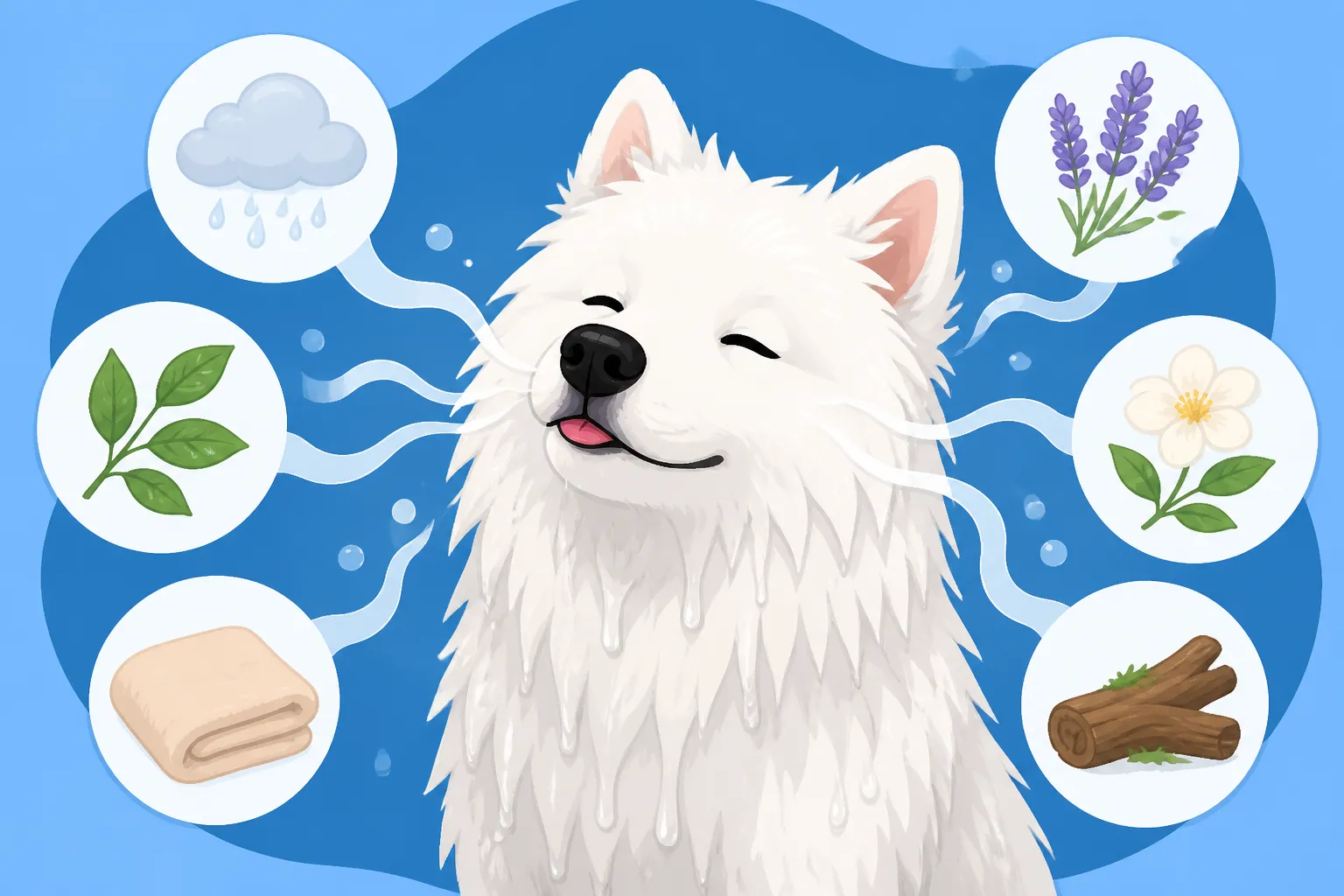
What a Wet Samoyed Smells Like
Oh, the infamous "wet dog smell"! If you're a Samoyed owner, you've likely experienced this unique aromatic phenomenon. It's not just a passing whiff; it's a pervasive, almost primal scent that can cling to everything from your sofa to your very soul after your beautiful white cloud gets a thorough soaking. This guide is going to dive deep into exactly what that smell is, why your Samoyed seems to amplify it, and what you can do to manage it, because let's face it, we all love our Sammies, but sometimes their post-bath or puddle-jumping aroma can be a lot.
The Science Behind the "Wet Dog" Scent: It's Not Just Water
It’s easy to think a wet dog just smells like, well, wet dog. But there's a whole lot more going on than just water interacting with fur. The truth is, that distinctive odor is a complex cocktail of microorganisms, natural oils, and the chemical byproducts they create, all amplified by the presence of water.
Why Water Magnifies the Funk
When your Samoyed gets wet, the water doesn't just sit on the surface of their fur. It penetrates deep into their incredibly dense double coat, reaching down to the skin. This moisture provides a perfect breeding ground for bacteria and yeasts that naturally live on your dog's skin and in their fur. As these microorganisms feast on the oils and dead skin cells, they produce volatile organic compounds (VOCs). These compounds are what we perceive as "smell."
When the fur is dry, these VOCs are still present, but they’re not as easily released into the air. Think of it like a sponge: when dry, it holds onto everything. When wet, it releases its contents more readily. Water, being polar, helps to dissolve and lift these odor-causing molecules from the fur, making them airborne and much more noticeable to our noses. The humidity created by the evaporating water also helps to carry these scent molecules more effectively, spreading that damp dog smell far and wide. It's an invisible cloud of microscopic funk, and your Samoyed, with their luxurious coat, is a master at brewing it.
The Role of Natural Oils and Skin Microbiome
Every dog's skin produces natural oils (sebum) that protect their skin and coat. These oils, while vital for skin health, also serve as a food source for the bacteria and yeasts mentioned above. A healthy skin microbiome is a delicate balance of these microorganisms. However, when things get damp, this balance can be temporarily skewed, leading to an overgrowth of certain odor-producing species.
Your Samoyed’s incredible coat is designed to repel water and keep them insulated, but once water gets past that outer guard coat and into the dense undercoat, it tends to stay there. This creates a warm, moist environment right against their skin, which is prime real estate for these little smell factories to get to work. The deeper the moisture penetrates and the longer it takes to dry, the more pronounced and lingering that wet Samoyed scent will be. This is why a quick splash in a puddle might result in a milder smell than a full-on bath where the undercoat is thoroughly soaked. It's a testament to the ingenuity of their natural insulation, but also a challenge for us, their human companions, to manage the resulting aroma.
Why a Samoyed's Coat Is a Scent Amplification System
Let's be honest, all dogs smell when they're wet, but a Samoyed's double coat takes it to a whole new level. It's truly a marvel of natural engineering, designed to thrive in sub-zero temperatures, but it comes with a few aromatic quirks when exposed to water in warmer climates.
The Double Coat's Unique Structure
A Samoyed's coat isn't just fluffy; it's a two-layer system that’s incredibly efficient at what it does. The outer layer, called the guard coat, consists of long, coarse, and relatively straight hairs. These hairs are somewhat water-repellent, designed to shed snow and ice. Then, underneath that, lies the true magic: a dense, woolly undercoat. This undercoat is incredibly soft, thick, and designed to trap air, providing unparalleled insulation against the cold.
When water hits this coat, the guard hairs can initially repel some of it. But if your Samoyed is swimming, running through sprinklers, or getting a proper bath, that water inevitably seeps through to the undercoat. Once it's in the undercoat, it's in. The dense, absorbent nature of the undercoat acts like a giant sponge, holding onto moisture for a surprisingly long time. This prolonged dampness, right against the dog's body, is the perfect incubator for those odor-causing microorganisms we talked about earlier. Unlike a short-coated dog that might air-dry relatively quickly, a Samoyed can remain damp to the skin for hours, or even days, if not properly dried. This also means that anything your Samoyed rolls in when wet – mud, grass, who-knows-what – gets trapped even more effectively, contributing to the overall scent profile. The denser the coat, the more surface area for those odor-producing microbes to flourish. A Samoyed's Coat Is Insulation, Not Decoration is a great read if you want to understand more about this incredible fur.
The "Shedding Dirt" Myth and Reality
You might have heard that Samoyeds "shed dirt" or that their coats are self-cleaning. While there's a kernel of truth to this – their guard hairs do a remarkable job of preventing mud from truly sticking and when dried, much of it can be brushed out – this doesn't extend to odors, especially when wet. The mechanisms that allow dirt to fall off a dry Samoyed's coat don't eliminate the microscopic organisms that cause the wet dog smell.
In reality, the natural oils in their coat, combined with environmental factors, can contribute to the "base" scent even before they get wet. When water is added, those oils, dirt, and microorganisms combine to create a much more potent aroma. Think of it less as shedding dirt and more as shedding a damp, earthy, slightly musky aura when soaked. It’s definitely not a fragrance we typically bottle and sell! For more on how their coats naturally handle dirt, check out How a Samoyed's Coat Sheds Dirt on Its Own.
Minimizing the Damp Dog Drama: Keeping Your Samoyed Fresh
Nobody wants their home to smell like a permanent dog park after a rain shower. Thankfully, there are plenty of strategies you can employ to minimize that distinctive wet Samoyed aroma. It’s all about proactive care and efficient drying!
Effective Drying Techniques: Beyond the Towel
When your Samoyed gets wet, simply toweling them off usually isn't enough, especially if the undercoat is soaked. You need to get that fur bone dry to prevent the bacterial and yeast growth that leads to odor.
- High-Velocity Dryer (Force Dryer): This is your absolute best friend. A force dryer uses powerful, unheated or low-heat air to literally blow the water out of the coat. It's incredibly efficient at separating the dense undercoat and getting right down to the skin. This not only dries them faster but also helps to de-shed loose fur, which can also harbor odors. If you’re serious about managing wet dog smell, investing in one is highly recommended. You can find excellent options on Amazon or Chewy. Just make sure to introduce it slowly and positively to your Samoyed, as the noise can be intimidating at first. For a deeper dive, read Drying a Samoyed to the Skin.
- Absorbent Towels: Start with super-absorbent microfiber towels to blot as much water as possible before using a dryer. Gently squeeze and pat the fur, rather than rubbing vigorously, which can cause mats.
- Comb or Brush: While drying with the force dryer, use a slicker brush or a comb to help lift the hair and ensure air circulates evenly throughout the coat. This also helps prevent matting, which can trap moisture and odor.
- Air Drying (with caution): If you absolutely must air dry, ensure your Samoyed is in a warm, well-ventilated area, and brush them frequently to help air penetrate. However, this method is very slow for a Samoyed and significantly increases the risk of persistent wet dog smell.
Grooming Routines to Prevent Odor Buildup
Regular grooming is your first line of defense against a smelly Samoyed, wet or dry.
- Consistent Brushing: Brushing your Samoyed several times a week, and daily during coat blows, removes dead hair and distributes natural oils. This prevents matting, which can trap moisture, dirt, and bacteria. It also keeps their skin healthy. How Often a Samoyed Needs Brushing offers great insights here.
- Scheduled Baths: While Samoyeds are often touted as self-cleaning, a regular bath (every 4-6 weeks, or as needed) is essential to remove accumulated dirt, oils, and dead skin cells. Over-bathing can strip natural oils, but under-bathing allows odor-causing elements to build up.
- Thorough Drying Post-Bath: This ties back to the previous point, but it's so crucial it bears repeating. Every bath must be followed by a thorough drying process, preferably with a force dryer, to eliminate moisture from the undercoat.
Products and Solutions: Shampoos, Conditioners, and Sprays
The right products can make a big difference in maintaining your Samoyed’s freshness.
- Quality Shampoos and Conditioners: Look for shampoos specifically designed for dogs, ideally those formulated for white coats or for odor control. Products containing natural deodorizers like baking soda or oatmeal can be effective. Always follow up with a good conditioner to keep the coat healthy and manageable. You can find a wide array of options on Chewy or Amazon.
- Deodorizing Sprays: For a quick refresh between baths, a pet-safe deodorizing spray can help. These are not a substitute for proper grooming and drying but can be useful for minor touch-ups. Ensure they are specifically for dogs and don't contain harsh chemicals or perfumes that could irritate your Samoyed's skin.
- Wipes: Keep pet-friendly wipes on hand for cleaning paws, mouths, or quick spot treatments after muddy adventures. This helps prevent tracked-in dirt from becoming embedded in their coat and creating new odor sources.
- Diet and Supplements: While primarily an external issue, a healthy diet contributes to healthy skin and coat, which can indirectly impact overall odor. Ensuring your Samoyed receives proper nutrition can help maintain the balance of their skin's natural oils. Brands like Ollie focus on fresh, balanced nutrition that supports overall canine health.
Here’s a quick comparison of common drying methods:
| Method | Pros | Cons | Effectiveness for Samoyeds |
|---|---|---|---|
| Air Drying | No equipment needed, low cost | Very slow, high risk of odor, mats, skin issues | Low |
| Towel Drying Only | Quick initial moisture removal, low cost | Ineffective for dense undercoat, can cause matting | Low-Medium |
| Human Hair Dryer | Readily available, controlled heat | Too hot for dog's skin, inefficient, can damage fur, takes forever | Low |
| High-Velocity Dryer | Most effective, fast, de-sheds, reduces odor | Initial investment, can be noisy, requires training for dog | High |
When the Smell Means More: Health Considerations
While the common "wet dog smell" is usually just a natural, albeit sometimes intense, phenomenon, there are times when a particular odor, especially when wet, might signal an underlying health issue. It's important to differentiate between typical damp dog aroma and something that indicates a problem.
Identifying Concerning Odors
A normal wet Samoyed smell is usually a combination of earthy, musky, and damp. It's a natural smell, even if it's strong. However, if you notice any of these specific odors, it's time to pay closer attention and consult your veterinarian:
- "Frito Feet" or Yeast Infection Smell: If the odor is distinctly like corn chips or stale bread, especially from their paws or ears, it could indicate a yeast infection. Yeast thrives in warm, moist environments, and a persistently damp undercoat or uncleaned ears can be prime locations.
- Fishy Odor: A strong, fishy smell often points to anal gland issues. When these glands become full or impacted, they can release a foul-smelling liquid. Your dog might also be scooting or licking excessively if this is the case.
- Sour or Rancid Smell: A sour or rancid smell, particularly from the skin or ears, could indicate a bacterial skin infection (pyoderma) or ear infection. This is often accompanied by redness, itching, flakiness, or discharge.
- Sweet or Fruity Odor: While less common for skin, a sweet or fruity smell on your dog's breath can sometimes be a sign of diabetes, especially if combined with increased thirst and urination.
- Metallic Smell: A metallic odor, particularly after an injury or if there's blood, is a clear sign that something is amiss and warrants immediate attention.
Common Skin Issues Amplified by Moisture
Samoyeds, with their luxurious coats, are prone to certain skin conditions that can be exacerbated by prolonged dampness. These conditions can contribute significantly to unusual or persistent odors.
- Hot Spots (Acute Moist Dermatitis): These are painful, red, oozing skin lesions that appear suddenly. They are often triggered by excessive licking, scratching, or chewing in response to an irritation (like a bug bite, allergy, or mat). Moisture trapped in the fur makes hot spots worse and allows bacteria to multiply rapidly, leading to a strong, often unpleasant odor. If you suspect a hot spot, especially under that dense coat, a vet visit is crucial. Whether a Samoyed Gets Hot Spots Under Its Coat provides more information on this.
- Allergies: Environmental or food allergies can cause your Samoyed to chew, lick, and scratch excessively, leading to skin irritation and secondary infections. When this irritated skin gets wet, the existing bacterial or yeast overgrowth will produce a much stronger odor.
- Sebaceous Adenitis: This is an inflammatory skin disease that affects the sebaceous glands, leading to dry, flaky skin, hair loss, and a distinctive odor. While less common, it’s a genetic condition seen in Samoyeds, and the altered skin barrier can make them more susceptible to other odor-producing skin issues.
- Poorly Dried Coats Leading to Dermatitis: Even without a specific condition, simply not drying a Samoyed thoroughly after getting wet can lead to skin irritation, fungal growth, and bacterial proliferation due to the constant dampness. This is why investing in good drying habits is not just about smell, but about skin health.
If you ever find yourself thinking, "This isn't just a wet dog smell, this is different," trust your instincts and consult your veterinarian. They can help diagnose any underlying issues and get your fluffy friend back to smelling like a relatively fresh cloud.
Disclaimer
This article is for general informational purposes only and does not constitute professional advice. Laws, prices and regulations vary by location and change over time. Consult a qualified professional for guidance on your specific situation.