How the English Standard Shaped the Modern Samoyed
The Samoyed’s familiar white coat, curled tail, and smiling expression can look like timeless features, but the modern breed was shaped by human choices as well as its northern roots. English breeders and kennel authorities helped turn a group of working dogs into a more consistently described show breed. Here’s what the English standard emphasized, what it left behind, and how its influence still shows today.
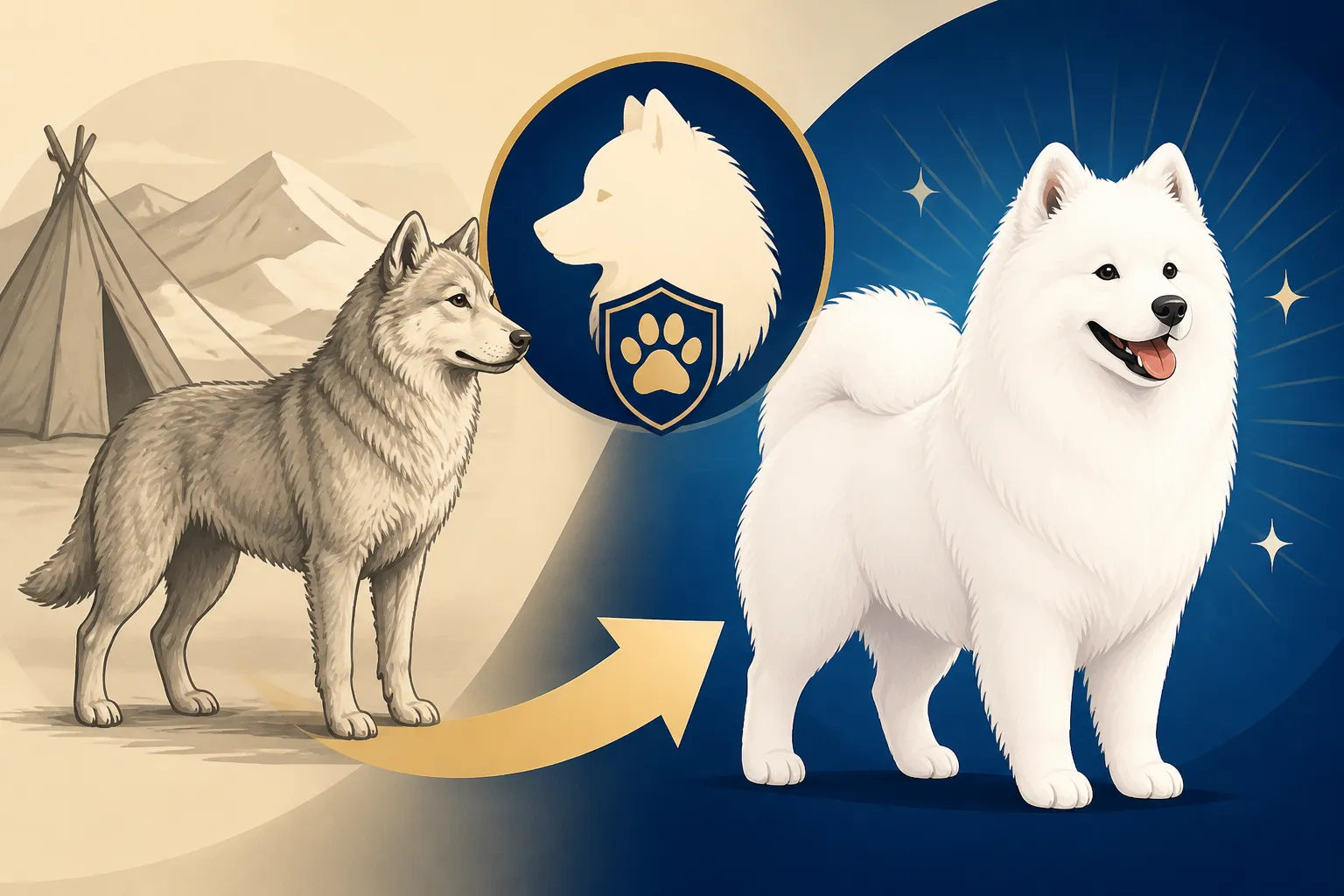
From northern working dogs to an English breed
The dogs behind the modern Samoyed
Samoyeds originated among the Samoyedic peoples of northern Russia and Siberia, where dogs worked alongside families in demanding conditions. They helped move people and goods, worked with reindeer, and lived close to the people who depended on them. These dogs were not developed first as show animals. Their usefulness, hardiness, and ability to live as part of a household mattered in everyday life.
When European explorers and travelers brought some of these dogs west, they introduced them to a very different setting. In Britain, the dogs attracted attention for their striking appearance and their ability to work in cold conditions. But the early imported dogs were not necessarily uniform in size, coat, or color. Their backgrounds and roles varied, and the breed had not yet been shaped by a single, widely adopted written description.
The story of The Nenets of the Yamal Peninsula Bred the Samoyed provides useful context for understanding why a formal standard could never capture the breed’s whole history. A written standard describes the dogs breeders want to preserve; it does not describe every dog that existed before organized breeding. The English standard would help establish a recognizable type, but it could not contain the full range of the Samoyed’s working past.
How the breed took shape in Britain
A small number of imported dogs became especially important to the developing breed in Britain. Enthusiasts bred from these early arrivals and their descendants, gradually building pedigrees and a more consistent population. As interest grew, the need for a shared description became practical: breeders, judges, and prospective owners needed a way to agree on what counted as a Samoyed.
That description did more than list physical traits. A breed standard gives judges a common framework for assessing dogs and gives breeders a reference point when deciding which animals to use in a breeding program. Over generations, those choices can influence what becomes typical. If a particular coat, outline, or expression is repeatedly rewarded, breeders may seek to reproduce it.
For a closer look at the people and dogs involved in the breed’s early British history, see Who Brought Samoyeds Out of Siberia. It is worth keeping the distinction clear: the imported dogs and their descendants formed the basis of the modern registered breed, while the standard gave that developing breed a more settled written identity.
What the English standard emphasized
A recognizable outline and balanced build
The English standard helped describe the Samoyed as a strong, active, balanced dog rather than a dog defined by one showy feature. The desired overall impression was of a northern working dog with substance and stamina, not an exaggerated animal built only for display. Proportion and balance mattered because they supported the picture of a dog capable of moving efficiently and working in a harsh climate.
This emphasis affects how a Samoyed should look in profile and in motion. A dog can have a beautiful coat and still lack the overall balance the standard intends. Likewise, a larger or heavier dog is not automatically a better example of the breed. The ideal is not simply “more coat” or “more size,” but a combination of structure, movement, and breed character.
That broader idea fits the breed’s original working background. The Samoyed was expected to travel, pull, and keep pace with people, so sound movement mattered. What the Nenets Bred the Samoyed to Do helps explain why the standard’s attention to functional structure is more than a cosmetic preference.
The coat, color, and expression
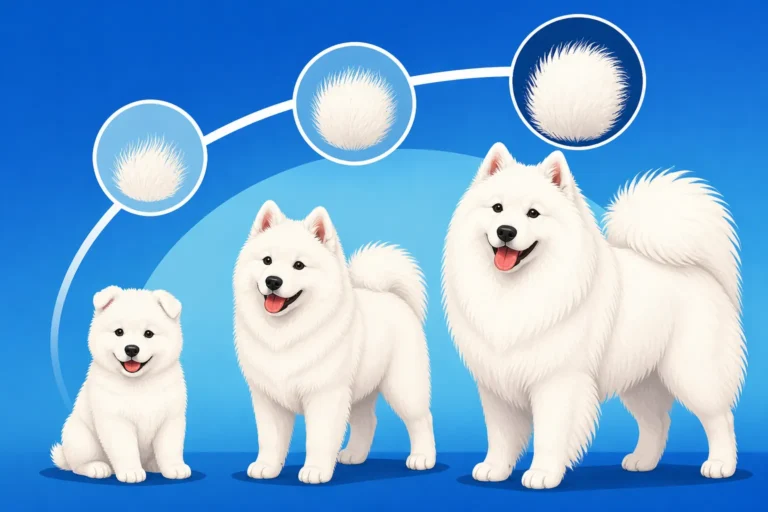
The dense double coat is one of the Samoyed’s most recognizable features. Its outer hairs and insulating undercoat suit a cold-weather breed, and the English standard helped establish expectations for coat quality and presentation. The coat should contribute to the dog’s characteristic outline without obscuring the fact that the Samoyed is a working spitz with a solid, balanced body beneath it.
Color also became part of the written identity. The Samoyed is strongly associated with white, but accepted color descriptions have included variations such as cream and biscuit markings, depending on the applicable standard. That is one reason a dog with a slight warm tint is not necessarily a different breed or a poorly bred Samoyed. Standards describe acceptable variation rather than requiring every dog to look like a blank sheet of snow.
The familiar “Samoyed smile” comes from the shape and carriage of the mouth and lips, creating a friendly expression. It is easy to treat that expression as a cute accessory, but it is part of the recognizable breed type that people and judges came to expect. For more on how that feature developed and what it does, see Why a Samoyed's Mouth Curls Upward and The Colors a Samoyed Comes In.
Temperament and the working-dog character
A standard does not create temperament on its own, but it can describe the character expected of the breed. The Samoyed should be alert, friendly, and capable of working with people. That matters because a dog’s historical role was not simply to pull a sled; it also had to coexist with the family and respond to human direction.
This is part of what separates a breed standard from a fashion sketch. A good standard connects appearance with purpose. A Samoyed that looks striking but is unable to move comfortably or cope with ordinary handling does not represent the full ideal. Good breeding therefore involves more than selecting a dramatic coat or a photogenic face.
The standard’s influence should not be confused with a guarantee about an individual dog. Samoyeds still vary in personality, energy, confidence, and trainability. Anyone considering one should look beyond appearance and think carefully about daily life, including exercise, coat care, and time spent with the dog. Whether a Samoyed Suits a First Time Owner offers a practical companion read for people weighing that decision.
How a written standard changes a breed
Standards guide judges and breeders
A breed standard is a shared reference, not a blueprint that makes every dog identical. Judges use it to assess how closely an individual dog matches the described ideal. Breeders may use it when deciding which dogs to pair, while breed clubs and registries use standards to communicate a consistent understanding of the breed.
Those choices accumulate. If judges repeatedly reward a certain outline, breeders may prioritize dogs with that outline. If the standard stresses a correct coat and balanced movement, those traits are more likely to remain central in breeding decisions. The process is gradual, shaped by many breeders and generations rather than by a single document or one influential person.
There is a practical tension here. A standard can help preserve recognizable breed qualities, but if people interpret it narrowly, they may focus too heavily on appearance. Responsible breeding has to balance conformation with soundness, health, and temperament. A healthy dog that can move comfortably and live well should matter more than a single exaggerated feature.
English influence and differences among standards
The English standard did not exist in isolation. As the breed spread, kennel organizations in other countries developed their own written standards. These descriptions share a broad picture of the Samoyed, but wording, measurements, and emphasis can differ. Those differences do not necessarily mean that one country’s dogs are a separate breed; they reflect the way different kennel systems formalize breed expectations.
For exhibitors, the applicable standard matters because judges assess dogs according to the rules of the show organization and country. For pet owners, the differences are usually less important than understanding the shared essentials: a sound, balanced northern dog with the coat, structure, and character associated with the breed. The comparison in Whether the Samoyed Standard Differs Between Countries can help explain why the same dog may be described somewhat differently across national systems.
It is also useful to separate a standard from a complete history. A standard tells you what a kennel organization considers desirable at a particular point in the breed’s development. It does not prove that every Samoyed in the past had those traits, nor does it tell the whole story of the people who developed the dogs. For that broader background, How the English Standard Shaped the Modern Samoyed belongs alongside accounts of the breed’s working history, not in place of them.
Reading the modern Samoyed through its history
What the standard preserved and what it could not
The English standard helped preserve a recognizable Samoyed identity as the breed moved from its original northern setting into organized British breeding and showing. It gave people a common vocabulary for discussing size, coat, proportions, movement, and expression. Without that shared description, the modern registered breed might have developed less consistently across breeders and generations.
At the same time, no standard can preserve every quality of the dogs that came before it. Working ability, endurance, adaptability, and close bonds with people are part of the breed’s history, but they can be harder to capture in a show ring than coat texture or outline. They remain important when evaluating whether a Samoyed is a good fit for a home, even if they are not as immediately visible in a photograph.
The standard is best understood as one influence among several: original purpose, imported foundation dogs, breeders’ choices, kennel rules, and the lives Samoyeds lead today. The breed’s development is also tied to the people who kept and worked with these dogs, as explored in Who the Nenets Who Bred the Samoyed Are.
What this history means for a prospective owner
If you are choosing a Samoyed, the standard can help you understand what the breed is meant to look like, but it should not be your only guide. Ask about health testing, temperament, and the daily care the parents receive. Meet the dogs if possible, and look for a breeder who can discuss both the strengths and the challenges of the breed without presenting appearance as the whole story.
A Samoyed’s thick coat requires regular brushing and sensible grooming. If you are putting together a basic care kit, retailers such as Chewy may be one place to compare brushes, combs, and other routine supplies. The important point is choosing tools that suit a dense double coat and learning how to use them without damaging the skin or coat.
The breed’s history also helps explain why modern ownership involves more than admiring a white coat. A Samoyed was shaped to be active and socially connected, and many still need substantial interaction and purposeful exercise. Chewy can be a convenient place for owners to browse everyday pet supplies, but food and health decisions are best made with guidance from a veterinarian who knows the individual dog.
A little historical perspective can make breed standards easier to read. They are not instructions to chase a perfect-looking dog at any cost. They are a record of the qualities breeders and kennel organizations have chosen to define and preserve. When those ideals are balanced with health, sound movement, and a good match between dog and household, the standard becomes a useful lens rather than a checklist. For day-to-day care questions, owners can also compare practical grooming supplies through Chewy while keeping the dog’s comfort and veterinary needs at the center.
Disclaimer
This article is for general informational purposes only and does not constitute professional advice. Laws, prices and regulations vary by location and change over time. Consult a qualified professional for guidance on your specific situation.