Pulling: What a Samoyed Was Actually Bred to Do
Oh, the infamous "Samoyed pull"! If you’ve ever walked a Samoyed, you know that distinct, unwavering forward momentum, often accompanied by a happy, panting smile. It’s not just a bad habit or a sign your dog is particularly rambunctious; for a Samoyed, pulling is as natural as breathing. This guide is here to help you understand why your fluffy companion is so inclined to lean into the leash, how to manage it, and even how to channel that incredible energy into activities that both of you will love.
The Samoyed's Ancestral Imperative: A History of Hauling
To truly grasp why your Samoyed feels so compelled to pull, we need to take a journey back in time, to the windswept plains of Siberia and the nomadic people they lived alongside. The Samoyed isn't just a pretty face; they are a working breed through and through, forged by centuries of partnership with humans in one of the harshest environments on Earth. Their very existence was intertwined with tasks that required strength, endurance, and that innate desire to move forward against resistance.
Life with the Nenets and the Reindeer Herds
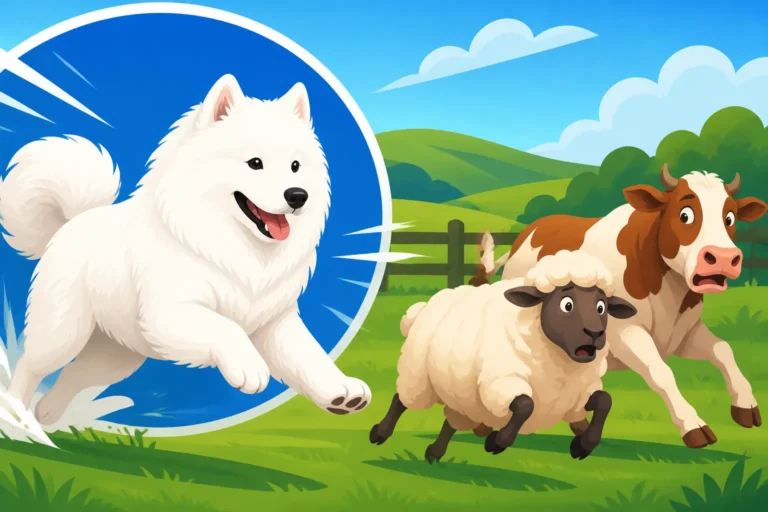
The Samoyed breed hails from the Arctic regions of Siberia, specifically with the Nenets people, a nomadic tribe who relied heavily on reindeer. These dogs weren't just pets; they were integral members of the community, essential for survival. Their primary role was not solely pulling, but also herding. They would help manage large reindeer herds, guiding them, protecting them from predators, and assisting in their seasonal migrations. This lifestyle meant constant movement, often covering vast distances across challenging terrain. You can learn more about their original caretakers in The Nenets of the Yamal Peninsula Bred the Samoyed.
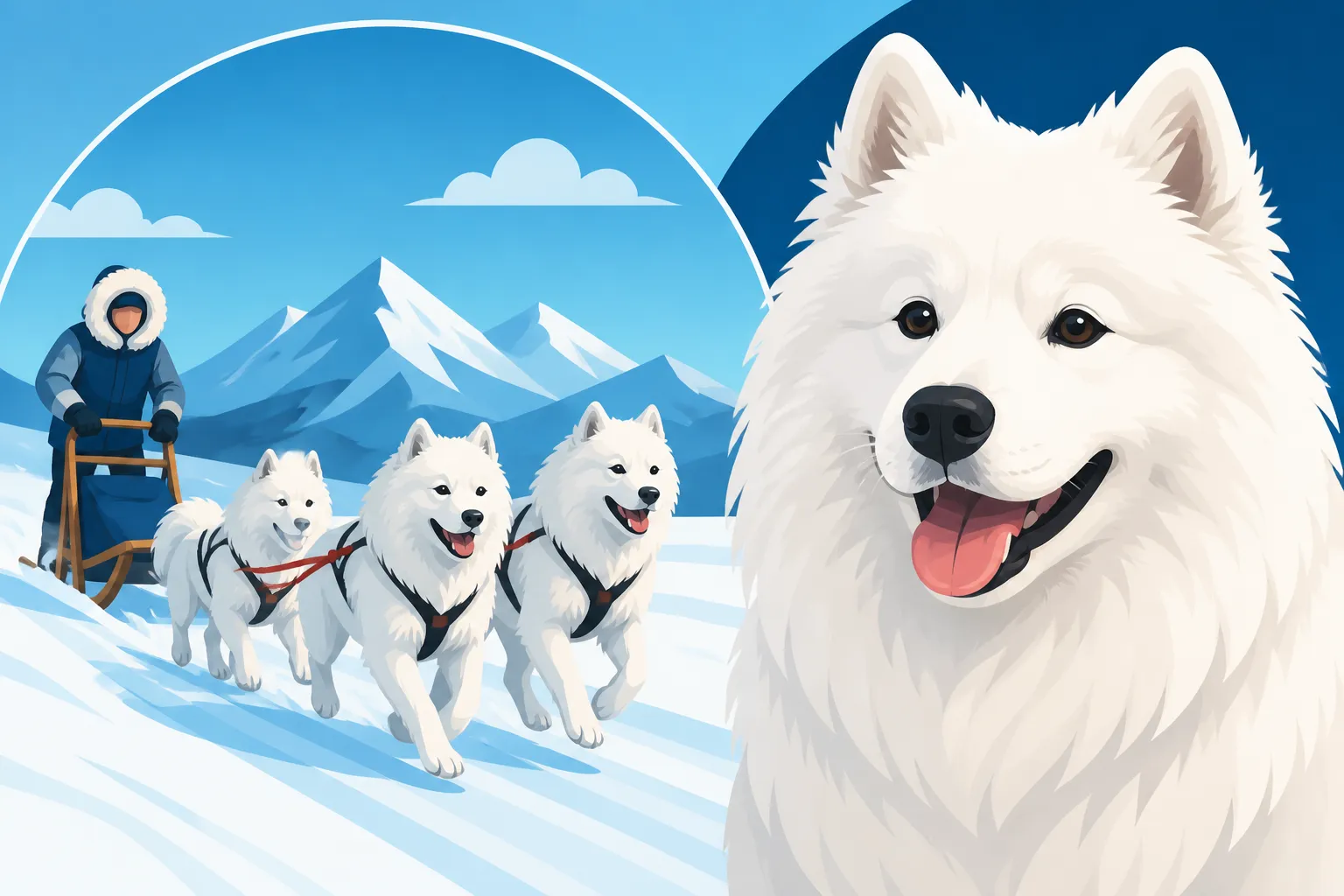
Beyond herding, these dogs were also relied upon for their strength to transport supplies. Imagine a small group of dogs tethered together, pulling a narta (a type of sled) laden with the family's possessions, furs, or freshly hunted game across miles of snow and ice. This was not recreational sledding; it was a fundamental aspect of daily life. The ability to pull was less a learned trick and more a genetic blueprint for survival, deeply ingrained over generations.
Early Sledding Roles and Expeditions
While primarily herders and companions, the Samoyed’s pulling capabilities became increasingly recognized and utilized beyond their native lands. When early explorers and traders encountered these dogs, they quickly understood their immense potential. Unlike some other northern breeds bred specifically for speed in racing, Samoyeds were valued for their steady endurance, their incredible resilience in extreme cold, and their cooperative nature. They might not have been the fastest, but they were dependable, tireless workers.
It was during the late 19th and early 20th centuries that Samoyeds truly shone on the global stage, becoming the canine heroes of polar exploration. Expeditions to the North and South Poles, often facing unimaginable conditions, relied on these hardy dogs to pull sleds carrying vital supplies, equipment, and even the explorers themselves. Their thick double coats, their cheerful disposition even in the face of adversity, and their powerful build made them indispensable. These were dogs bred to perform arduous tasks in frigid temperatures, and pulling a load was simply what they did.
Understanding the Pulling Instinct: It’s Not Disobedience
Many new Samoyed owners become frustrated with their dog's constant pulling, viewing it as a behavioral problem or a lack of training. While training is definitely key, it's vital to shift your perspective and understand that for a Samoyed, pulling isn't necessarily an act of defiance; it's a deeply rooted, highly reinforcing natural behavior. Trying to "train out" pulling entirely is often a battle against their very genetic make-up.
Genetic Predisposition: Hardwired for Hauling
Think of a Golden Retriever's urge to retrieve, or a Border Collie's desire to herd. For a Samoyed, the impulse to pull is just as strong, if not stronger. They have generations of ancestors who survived because they could efficiently move forward with a load, whether it was a small family sled or a polar explorer's gear. This isn't just about physical strength; it's a mental and emotional drive. When they feel a harness connect to something and they can lean into it, their instinct tells them, "This is what I'm supposed to do."
This genetic predisposition means that even a well-socialized, well-trained Samoyed puppy will likely exhibit pulling tendencies. They are often born with a natural inclination to oppose pressure on their chest and shoulders, pushing against it rather than yielding. This isn't them being stubborn; it's their intrinsic programming. Ignoring this fundamental aspect of their breed can lead to endless frustration for both dog and owner.
The Joy of Forward Motion and Work
For a Samoyed, pulling isn't just a task; it's often a source of immense joy and fulfillment. There's a particular satisfaction they get from feeling that resistance, from moving forward with purpose. Watch a Samoyed hooked up to a sled or even just a cart, and you'll often see that characteristic "Samoyed smile" broaden, their tail wagging furiously, eyes bright with excitement. This is them in their element, doing what they were bred to do.
This inherent pleasure in work and forward motion is a powerful motivator. When you understand that pulling is deeply reinforcing for them, it changes how you approach training. Instead of fighting against the pull, the goal becomes to channel it, to provide appropriate outlets for this natural drive, and to teach them when it's okay to pull and when they need to walk politely beside you. It's about working with their instincts, not against them.
The Mechanics of Pulling: How a Samoyed is Built for It
It's one thing to say Samoyeds were bred to pull, but it's another to appreciate the incredible physical adaptations that make them so perfectly suited for the job. From their robust skeletal structure to their luxurious coat, every part of a Samoyed contributes to their efficiency and resilience as a working dog.
Anatomy for the Job: Strength and Endurance
A glance at a Samoyed reveals a dog built for power and stamina, not necessarily speed. They possess a robust, muscular build with strong bones. Their deep chest provides ample lung capacity, crucial for sustained effort in cold air, while their well-sprung ribs protect vital organs during strenuous activity. The strong, straight front legs are designed to absorb impact and provide powerful propulsion, perfectly aligned with broad, well-muscled shoulders that allow them to lean into a harness and exert force.
Their hindquarters are equally powerful, with strong, muscular thighs that drive them forward with each stride. This combination of front-end power and rear-end drive creates a balanced, efficient pulling machine. Their gait is typically strong and tireless, enabling them to cover long distances without quickly fatiguing. They are built for the long haul, not a quick sprint.
The Double Coat as Essential Protection
While not directly involved in the mechanics of pulling, the Samoyed's famous double coat is absolutely critical for their ability to perform their duties in harsh environments. This isn't just fluff; it's a meticulously designed insulation system. The dense, soft undercoat provides an incredible layer of warmth, trapping air close to the body, while the longer, coarser guard hairs protect against snow, ice, and wind. A Samoyed's Coat Is Insulation, Not Decoration highlights just how vital this coat is.
This coat also prevents ice and snow from accumulating and causing discomfort or frostbite. When working in deep snow, the coat acts as a shield, keeping their body temperature stable and protecting their skin. Without this protective barrier, a Samoyed would quickly succumb to the elements, making prolonged pulling work impossible. It's a testament to natural selection, ensuring that only the most resilient dogs survived to pass on their traits.
Endurance Over Speed: The Samoyed's Pulling Style
When comparing a Samoyed to other sled dog breeds, you'll notice a distinct difference in their pulling style. Breeds like Siberian Huskies are often celebrated for their incredible speed and athleticism, designed for racing. Samoyeds, while capable of bursts of speed, excel in endurance. They are the steady, reliable marathon runners of the sled dog world, not the sprinters.
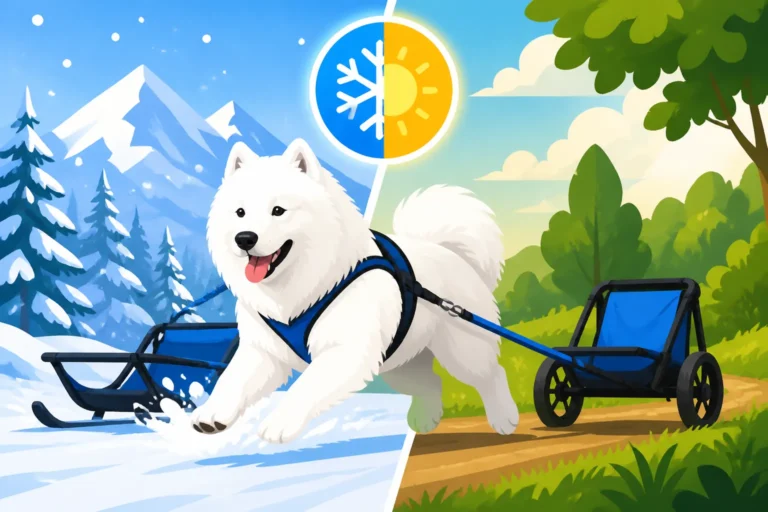
Their pulling style is characterized by a consistent, powerful lean into the harness, maintaining a steady pace over extended periods. This is a direct reflection of their original job – herding reindeer and moving nomadic camps, which required a methodical, energy-efficient approach rather than high-speed dashes. This endurance makes them excellent partners for activities like skijoring or long-distance recreational sledding, where a consistent pace and stamina are more valuable than blistering speed. If you're wondering how much they can really pull, How Much a Samoyed Can Pull offers more insight.
Training for Success: Channeling the Pulling Instinct Safely
Since pulling is so deeply ingrained, the goal isn't to stop a Samoyed from pulling entirely, but rather to teach them when and where it's appropriate. This involves a combination of solid foundational obedience and specialized pulling training, ensuring both safety and enjoyment for everyone involved.
Foundation Obedience: The Crucial First Step
Before you even think about specialized pulling activities, your Samoyed needs a rock-solid foundation in basic obedience. This is non-negotiable for any well-adjusted dog, but especially for a powerful, intelligent breed like the Samoyed. Commands like "sit," "stay," "come," and "leave it" are not just polite manners; they are safety commands that will be essential both on and off the trail. An uncontrolled Samoyed with a strong pulling drive can be a hazard to themselves, other people, and wildlife. Training a Samoyed That Finds Obedience Negotiable can offer helpful strategies.
Focus on positive reinforcement methods, rewarding desired behaviors with high-value treats and praise. Samoyeds respond incredibly well to motivation and fun, and less so to harsh corrections. Consistency is paramount. Everyone in the household needs to use the same commands and expectations. This foundational training builds a strong communication bridge between you and your Samoyed, which is vital before you introduce them to more complex tasks like pulling. Consider looking into online resources for structured training, such as the programs offered by BAXTER & Bella, which can guide you through these crucial early stages with expert advice.
Introducing the Harness: Making It a Positive Experience
The moment you put a pulling harness on your Samoyed, it's like flipping a switch. For them, it signifies "work time" or "go time." Therefore, it's essential to associate the harness with positive experiences from the very beginning. Start by letting them sniff and explore the harness, then put it on for short periods, immediately followed by treats and praise. Don't rush into pulling. Let them wear it around the house for a bit, making it a normal part of their routine.
When you do introduce actual pulling, start with very light loads or just a person walking ahead of them while they are in the harness. Keep initial sessions short, positive, and fun. You want them to associate the harness and the act of pulling with enjoyment, not frustration or discomfort. A properly fitting pulling harness is crucial here – it should allow for full range of motion, distribute pressure evenly across their chest and shoulders, and not rub or chafe. Generic walking harnesses are not suitable for actual pulling work.
Learning Basic Commands for Pulling
Once your Samoyed is comfortable in their pulling harness, it's time to teach them specific commands for directional control and speed. These commands are often distinct from your regular obedience cues. Essential pulling commands include:
- "Hike!" or "Go!": To start moving forward.
- "Whoa!" or "Stop!": To halt completely. This is incredibly important for safety.
- "Gee!": To turn right.
- "Haw!": To turn left.
- "On By!": To pass distractions without stopping or veering.
Practice these commands repeatedly in a quiet, low-distraction environment first. Use clear vocal cues and hand signals. Start with one command at a time, making sure your dog understands it before moving to the next. High-value treats are your best friend during this phase. Remember that consistency and patience are key. Samoyeds are intelligent but can be opinionated; they might take a bit longer to grasp that these commands apply specifically to pulling work.
Gear Up: Essential Equipment for a Pulling Samoyed
Having the right equipment is not just about making the activity possible; it's about ensuring the safety, comfort, and efficiency of both you and your Samoyed. Investing in quality gear designed for canine pulling sports is crucial.
Choosing the Right Harness
This is perhaps the most critical piece of equipment. Forget the everyday walking harness; for pulling work, you need a specialized pulling harness. There are several types, each designed for different activities:
- X-Back Harness: This is a common and versatile harness, ideal for sledding, canicross, bikejoring, and skijoring. It distributes the pulling force evenly across the dog's chest and back.
- H-Back or Shoulder Harness: Good for lighter loads or shorter pulling sessions, offering more freedom of shoulder movement.
- Weight Pulling Harness: Specifically designed for heavy weight pulling competitions, these harnesses have extra padding and wider straps to distribute extreme pressure.
The fit of the harness is paramount. A poorly fitting harness can cause chafing, restrict movement, or even injure your dog. It should allow free movement of the shoulders and hips, distribute pressure evenly, and not impede breathing. It's often best to consult with experienced mushers or specialized gear retailers to ensure you get the perfect fit. You might find a wide variety of excellent pulling harnesses, including those from reputable brands, on platforms like Amazon.
Line and Belt Considerations
Beyond the harness, you'll need a suitable line (or gangline if working with multiple dogs) and a human pulling belt for most activities.
- Pulling Line: This connects the dog's harness to your belt or the sled/cart. It should be strong, durable, and have some elasticity to absorb shocks, especially if you're running (canicross) or biking (bikejoring). Bungee lines are excellent for this purpose, preventing jarring stops and starts. The length will vary depending on the activity – shorter for canicross, longer for sledding to keep dogs from tangling.
- Canicross/Skijor Belt: For activities where you're actively participating (running or skiing), a comfortable human belt is essential. These belts are designed to distribute the pulling force across your hips and lower back, protecting your spine and allowing you to maintain good form. They often feature leg straps to keep the belt in place and prevent it from riding up.
Ensuring that both the line and the belt are of good quality, free from fraying, and properly connected is vital for safety. Always double-check your connections before setting out.
Beyond the Basics: Booties and Cooling Vests
Depending on your local climate and the type of pulling activity you pursue, you might need additional accessories to protect your Samoyed:
- Dog Booties: These are indispensable for protecting paws from abrasive surfaces (like pavement or gravel), sharp ice, or extreme cold. If you're doing any substantial pulling on varied terrain, booties can prevent painful cuts, abrasions, or frostbite. They also help if your dog has sensitive paw pads.
- Cooling Vests/Pads: While Samoyeds are built for cold, even they can overheat if working too hard in warm weather. A cooling vest can help regulate their body temperature, though working in true heat is never recommended. A Samoyed Built for Sixty Below in an American Summer offers more details on managing their temperature.
- First-Aid Kit: Always carry a basic first-aid kit for both yourself and your dog when out on the trails. Accidents can happen, and being prepared can make a significant difference.
Beyond the Sled: Other Ways to Satisfy the Pulling Drive
You might not have a full team of dogs or miles of snowy trails at your disposal, but that doesn't mean your Samoyed's pulling instinct has to go unfulfilled. There are many modern, accessible ways to channel that energy and provide them with a fantastic mental and physical workout.
Canicross and Bikejoring: Human-Powered Pulling
These are increasingly popular sports that allow your Samoyed to pull you while you run (canicross) or bike (bikejoring). They are fantastic ways to bond with your dog and get a workout together.
- Canicross: Imagine trail running, but with your Samoyed tethered to you, leading the way and providing a helpful tow. This is a high-energy sport that utilizes your dog's natural pulling instinct. It requires a proper canicross harness for your dog, a bungee line, and a comfortable pulling belt for you. It's an incredible cardiovascular workout for both of you and a wonderful way for your Samoyed to feel a sense of purpose.
- Bikejoring: Similar to canicross, but you're on a mountain bike. Your Samoyed pulls from the front, allowing you to cover more distance at a faster pace. This sport demands good bike handling skills and excellent directional control from your dog. A bikejor attachment (often an antenna-like bar extending from your bike frame) is recommended to keep the line clear of your front wheel.
Both activities require a degree of fitness from you and your dog, along with solid obedience commands like "whoa," "gee," and "haw" for safety and control. Whether a Samoyed Enjoys Skijoring is a good related read, as skijoring uses similar principles but on skis.
Weight Pulling: A Test of Strength
Weight pulling is a sport designed to test a dog's strength and determination. Dogs are hitched to a cart or sled loaded with increasing amounts of weight and must pull it a short distance. While not for every Samoyed, those with a strong, powerful build and an intense drive to pull often excel.
This sport requires specialized, heavy-duty harnesses to safely distribute the load and prevent injury. Training for weight pulling should always be done gradually and under the guidance of experienced individuals to ensure the dog's physical health and proper technique. It's a fantastic way to build muscle and fulfill that deep-seated need to move heavy objects, but it's crucial to prioritize safety above all else.
Everyday "Work": Packs and Wagons
Even if competitive sports aren't your thing, you can still give your Samoyed a sense of purpose on everyday walks.
- Dog Backpacks: Outfitting your Samoyed with a well-fitting dog backpack (when empty, start with a light load) allows them to carry their own water, treats, or even your keys. This provides a mild form of resistance and gives them a "job" during walks, often reducing casual leash pulling. It’s important not to overload the pack and to ensure it fits comfortably without chafing.
- Pulling a Child's Wagon or Cart: For the truly adventurous and well-trained Samoyed, pulling a small child's wagon or a utility cart (with very light loads and under strict supervision) can be a fun way to engage their pulling drive. This should only be attempted with a dog that has excellent directional control and a calm temperament, and never with children in the wagon until you are absolutely certain of your dog's reliability. Always prioritize safety and keep the loads light.
Common Challenges and Solutions for the Puller
Even with the best intentions and the right gear, living with a dog whose primary instinct is to pull can present some unique challenges. Understanding these and having strategies in place will make your life much easier and your Samoyed much happier.
Managing the Strong Puller on Casual Walks
This is where most Samoyed owners feel the frustration. You're just trying to enjoy a pleasant stroll, and your Samoyed is dragging you down the street like a freight train. The key here is to differentiate between work time (when pulling is allowed and encouraged in a proper harness) and walk time (when polite leash manners are expected).
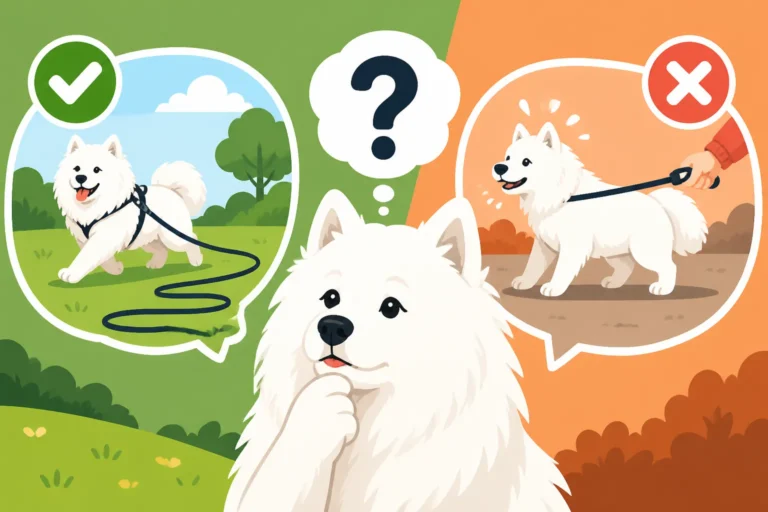
To manage polite walking, tools like a front-clip harness or a head halter can be incredibly effective. A front-clip harness discourages pulling by redirecting the dog's momentum sideways when they pull, making it physically harder for them to lean into it. Head halters give you more control over the dog's head, and where the head goes, the body often follows. These are training aids, not substitutes for actual training. Consistent practice with loose-leash walking, rewarding your Samoyed for staying by your side, is essential. Remember, What a Samoyed Will Work For often involves high-value treats and praise, especially for maintaining a loose leash.
Preventing Injury: For Both Dog and Human
A powerful pulling dog can easily cause injuries if not managed correctly. For the dog, improper gear can lead to neck strain, shoulder injuries, or chafing. For the human, falls, shoulder dislocations, or back pain are real risks.
Always use appropriate, well-fitting equipment. Never use a retractable leash for a Samoyed, especially if they have a strong pulling drive; the sudden jerks can cause serious neck and spinal injuries to your dog and severe rope burns or falls for you. Keep pulling activities on appropriate surfaces – soft trails are better than hard pavement. Pay attention to your dog's signals; if they seem tired, sore, or unwilling to work, stop. Regular veterinary check-ups are also crucial to ensure your working Samoyed remains in peak physical condition.
Dealing with Drive in Inappropriate Situations
The Samoyed's drive to move forward can be a challenge when distractions appear. A squirrel darting across the path, another dog, or a new scent can trigger an intense surge of pulling power, making them ignore your commands. This is where your foundational obedience, particularly "leave it" and a strong "come," becomes your ultimate safety net.
Practice these commands diligently in increasingly distracting environments. Use a long line in a safe, open area to practice recall and "leave it" from a distance. The goal is to build such a strong positive association with obeying your commands that it outweighs the immediate gratification of chasing or pulling. Patience is key, as is understanding that sometimes, their instincts will simply be too strong. In such cases, managing the environment (e.g., avoiding known squirrel hotspots) or using your training tools (front-clip harness) is your best bet.
Embracing the Pull: A Different Perspective on Walks
Ultimately, owning a Samoyed means embracing their unique qualities, and their powerful desire to pull is certainly one of them. Instead of viewing it as a constant struggle, you can learn to see it as an opportunity to deepen your bond and provide immense fulfillment for your furry friend.
Shifting Your Mindset: From Frustration to Fulfillment
It's easy to get frustrated when your arm feels like it's being pulled out of its socket, but imagine how much happier you and your Samoyed could be if you reframed their pulling. Instead of resisting their inherent nature, consider finding outlets for it. Think of it as a natural drive that needs an appropriate channel, much like a Border Collie needs to herd or a Labrador needs to retrieve.
When you allow your Samoyed to engage in pulling activities, you're not just exercising their body; you're nurturing their spirit. You're giving them a job, a purpose, and a chance to do what they were literally bred for. This can lead to a much calmer, happier, and more well-adjusted dog in the home, as their energy and instincts have been properly addressed.
The Bond of Working Together
There's something incredibly special about working in tandem with your dog. Whether it's the rhythmic thud of their paws ahead of you during canicross, the gentle tug on your belt as they lead a sled, or simply the focused determination in their eyes as they pull a cart, these experiences build a unique kind of partnership. It's a shared endeavor, a collaborative effort where both of you are working towards a common goal.
This shared work strengthens your bond in ways that passive walks often cannot. Your Samoyed learns to trust your commands in dynamic situations, and you learn to read their body language and anticipate their movements. It's a dance of communication and mutual respect that enriches the relationship between you and your loyal companion. The Age a Samoyed Can Start Sledding provides helpful guidance if you're considering serious pulling sports.
Enjoying the Journey: It's a Samoyed Thing
So, the next time your Samoyed leans into their harness with all their might, take a moment to appreciate what you're seeing. This isn't just a dog being difficult; it's a living echo of their ancestors, a powerful connection to their heritage. It's a Samoyed thing.
By understanding, respecting, and channeling this incredible instinct, you can transform what might have been a frustrating aspect of ownership into one of the most rewarding. Embrace the pull, find activities that suit both of you, and enjoy the incredible journey with your magnificent, working Samoyed. After all, that's what they were born to do.
Disclaimer
This article is for general informational purposes only and does not constitute professional advice. Laws, prices and regulations vary by location and change over time. Consult a qualified professional for guidance on your specific situation.