Whether a GPS Collar Is Worth It for a Samoyed
Oh, the sheer panic of looking out the door for your beloved Samoyed, only to find an open gate and an empty yard. It’s a gut-wrenching feeling that many Samoyed parents know all too well, turning leisurely walks into white-knuckle experiences and backyard playtime into constant vigilance. This guide dives deep into whether a GPS collar truly offers the peace of mind and practical solution you're hoping for when it comes to keeping track of your adventurous, Houdini-esque Samoyed.
The Samoyed's Undeniable Urge to Roam
Let's be real: Samoyeds are notorious for their wanderlust. They were bred for vast, open spaces, herding reindeer across endless tundras and pulling sleds for miles. That deep-seated instinct to explore and follow their nose is still very much alive in our fluffy companions today, even when they're living in a suburban backyard. Understanding this intrinsic drive is the first step in addressing their escape artist tendencies.
Why Your Samoyed Becomes a Houdini
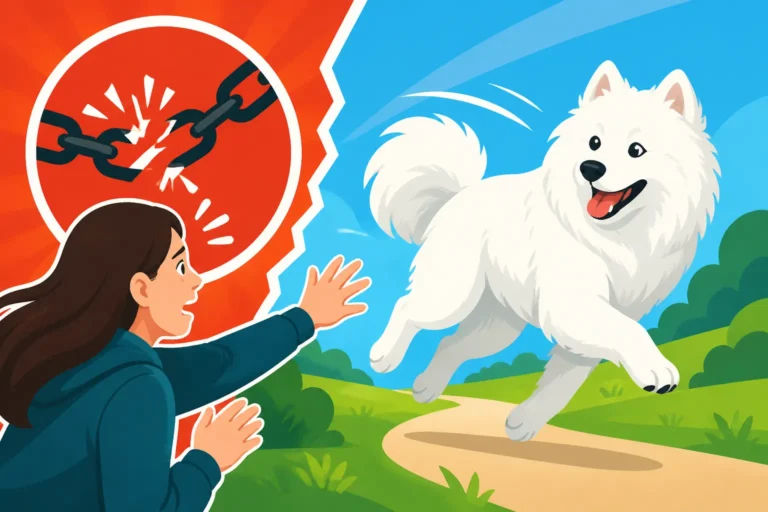
It’s not personal, it’s primal. Your Samoyed isn't trying to upset you when they find a weakness in your fence or slip out an open door; they're simply responding to centuries of genetic programming. Their ancestors roamed freely, and while our modern world doesn't offer that luxury, the urge to cover ground and investigate interesting scents remains potent. This is why a simple leash slip can turn into a frantic search, or a moment of inattention by a gate can lead to a missing dog poster. How a Samoyed Gets Out of Anything You Build isn't an exaggeration; it's a testament to their cleverness and determination when motivated.
The Siren Song of Scent and Sound
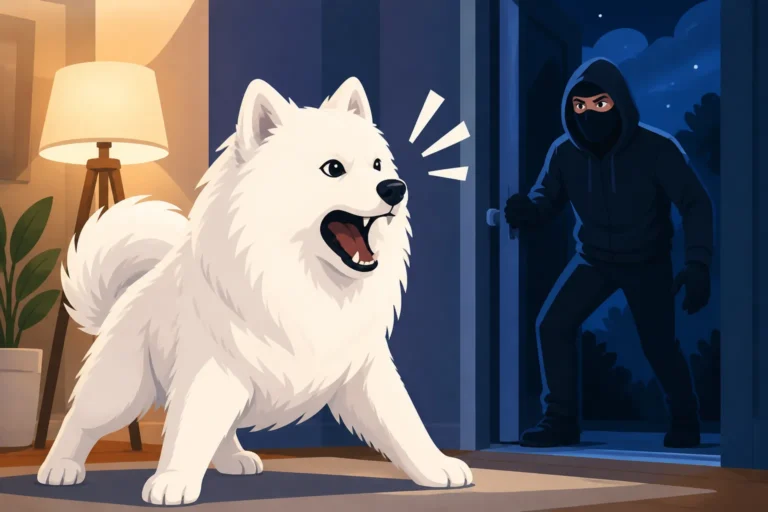
Imagine a world where every waft of interesting air tells a story. That's your Samoyed's reality. A rabbit that just ran through the bushes, a squirrel scampering up a tree, or even another dog walking a few blocks away – these are irresistible calls to action. Their powerful sense of smell pulls them forward, and their intelligent, independent nature often means they'll follow that scent trail far beyond what you might consider a reasonable distance. A distant siren, the rumble of a truck, or even just the whisper of the wind carrying new smells can pique their curiosity and spur them to investigate, often leading them far from home before you even realize they're gone. Why a Samoyed's Recall Cannot Be Trusted becomes painfully clear in these moments.
What a GPS Collar Actually Offers
Given the Samoyed's inherent desire to explore, it's no wonder many owners turn to technology for help. GPS collars aren't just fancy gadgets; they're tools designed to give you real-time location data, which can be invaluable for a breed known for its wandering ways. But what exactly do they bring to the table?
Real-Time Tracking and Geofencing
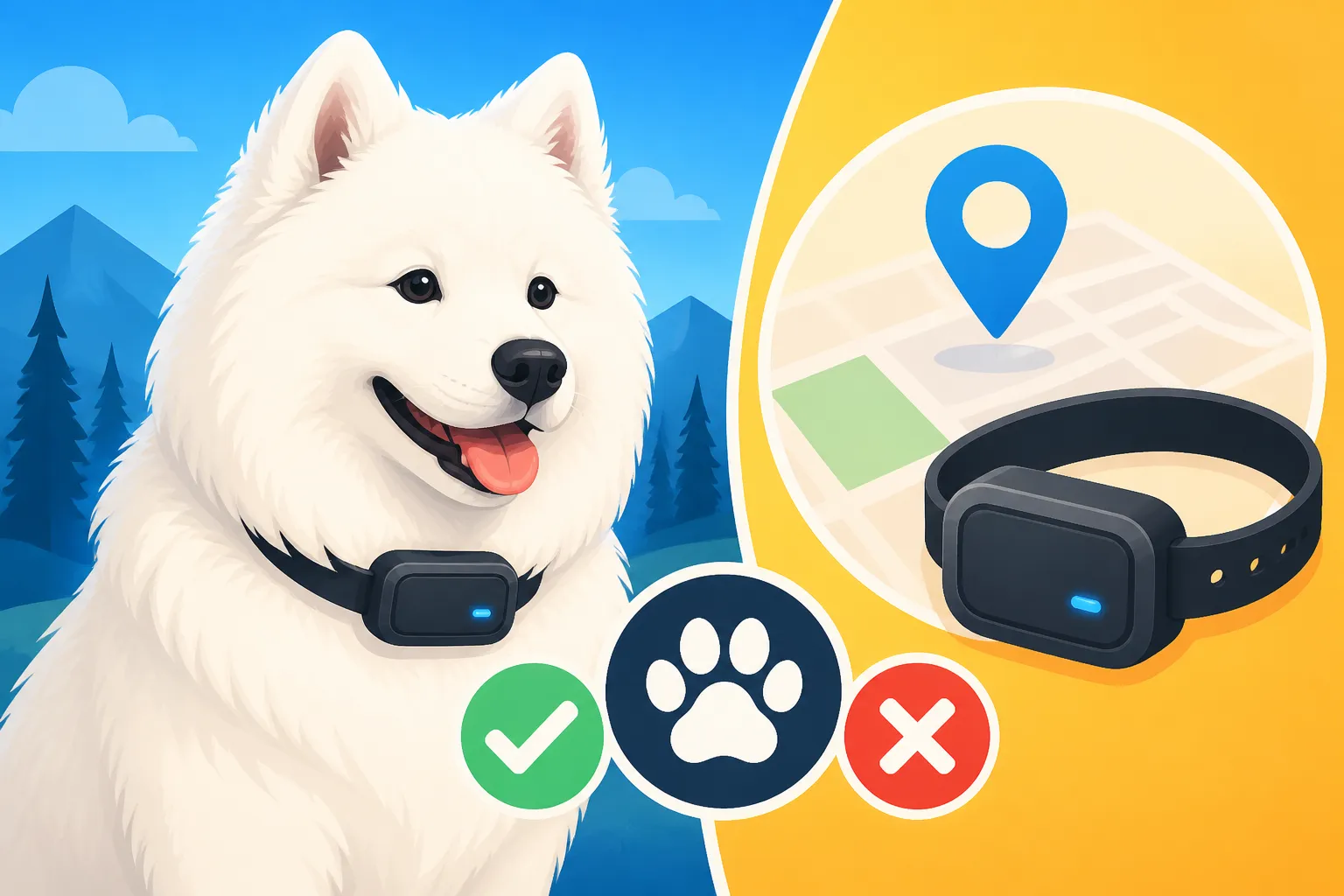
The core benefit of a GPS collar is, of course, knowing exactly where your Samoyed is at any given moment. Most modern GPS collars pair with a smartphone app, providing a map view of your dog's location. This means if Fluffy decides to embark on a solo adventure, you can open your app and see their progress down the street, across the park, or even into a neighbor's yard.
Many collars also offer "geofencing" capabilities. This allows you to set up virtual boundaries around your home or other safe areas. If your Samoyed crosses this invisible fence, you'll receive an instant alert on your phone. This proactive notification can be a game-changer, giving you precious minutes to intervene before your dog gets too far or into serious trouble. Imagine setting a geofence around your property; the moment your Samoyed's collar signals it's crossed that line, you get an alert, allowing you to react quickly rather than discovering their absence much later. This immediate heads-up can alleviate much of the anxiety associated with their escape tendencies.
Activity Monitoring and Health Insights
Beyond just location, many GPS collars offer additional features that contribute to a holistic view of your Samoyed's well-being. Activity monitoring is a common one, tracking steps taken, distance covered, and even calories burned. For a high-energy breed like the Samoyed, this data can be useful for ensuring they're getting enough exercise and maintaining a healthy weight.
While not a substitute for veterinary care, consistent activity data can also sometimes provide early warnings of potential health issues. A sudden, unexplained drop in activity could signal discomfort or illness, prompting you to investigate further. Some collars even offer sleep tracking or provide insights into behavioral patterns, all of which can contribute to a deeper understanding of your dog's daily routine and overall health. While these aren't the primary reasons for getting a GPS collar, they add another layer of value, transforming a simple tracker into a more comprehensive wellness tool.
Choosing and Using a GPS Collar for Your Samoyed
Navigating the world of GPS collars can feel overwhelming with all the options out there. It's not just about picking the first one you see; it's about finding the right fit for your Samoyed's needs and your lifestyle.
Key Features to Look For
When you're browsing options, whether it's on a big retailer like Amazon or a specialized pet tech site, consider these essential features:
- Battery Life: This is paramount. A GPS collar is useless if it dies halfway through your Samoyed's grand escapade. Look for models that offer several days of battery life on a single charge, or at least a full 24 hours with frequent tracking, and ideally, an option for low-power mode. You want to avoid the panic of a dead battery when you need it most.
- Durability: Samoyeds are active, and their adventures can be rough on gear. Look for collars that are waterproof and built to withstand mud, snow, and rough-and-tumble play. A flimsy collar won't last long on a determined Samoyed.
- Tracking Accuracy and Range: While most GPS collars are quite accurate, some perform better in dense urban areas or heavily wooded regions. Check reviews and specifications to ensure the device will work reliably in your typical environment. Consider if you need worldwide coverage or if local coverage suffices.
- Subscription Plans: Most GPS collars require a monthly or annual subscription fee for cellular service to transmit location data. Compare these plans carefully, as costs can vary significantly. Some brands offer flexible plans, while others require longer commitments. This recurring cost is an important factor in the overall "worth it" calculation.
- Size and Comfort: A Samoyed has a thick coat and often a substantial neck. Ensure the collar is comfortable, lightweight enough not to bother them, and doesn't get lost in their dense ruff. Many devices are designed to attach to an existing collar, so verify it will fit securely without causing chafing or irritation, especially on that luxurious fur.
Setting Up and Integrating Into Daily Life
Once you’ve chosen a collar, proper setup and integration are crucial for its effectiveness. Don't just clip it on and hope for the best!
- Initial Charging and App Setup: Fully charge the device before first use. Download the companion app and follow the instructions to pair the collar and set up your profile. This usually involves creating safe zones (geofences) around your home and frequently visited areas like a dog park or a friend's house.
- Testing: Before relying on it, do a few test runs. Have a trusted family member take your Samoyed for a walk with the collar on while you track them from the app. Test the geofence alerts by having them step just outside the boundary. This helps you understand how quickly alerts are received and the typical accuracy of the device in real-world conditions.
- Getting Your Samoyed Used to It: Some dogs are unfazed by new gear, others might need a gentle introduction. Start by letting your Samoyed wear the collar for short periods indoors, perhaps during meal times or while receiving treats. Gradually increase the wear time. Pair it with positive reinforcement, making sure they associate the collar with good things. Ensure it’s not too tight or too loose – you should be able to comfortably slip two fingers under the collar.
- Battery Management: Make charging the GPS collar a part of your regular routine, perhaps nightly alongside your phone, or every few days depending on its battery life. Consider setting a reminder on your phone. Nothing is more frustrating than needing the tracker only to find it dead.
GPS Collars as Part of a Multi-Layered Safety Approach
While a GPS collar is an incredibly valuable tool, it's important to understand that it's not a magical solution that replaces all other safety measures. Think of it as a vital layer in a comprehensive safety strategy, especially for a clever and independent Samoyed.
Reinforcing Traditional Safety Measures
Even with a GPS collar, you absolutely cannot skimp on the basics. A sturdy, secure fence that your Samoyed can't dig under or jump over is paramount. How High a Samoyed Can Jump a Fence and The Tunnel a Samoyed Digs Under a Fence are real concerns that need physical barriers. Regularly inspect your fence for weak spots, loose boards, or areas where your Samoyed might be able to squeeze through. Training is also non-negotiable. While a Samoyed’s recall can be challenging, consistent positive reinforcement training, perhaps with resources from a platform like BAXTER & Bella, can improve their responsiveness, even if it's never 100% reliable off-leash in an unfenced area. Always use a leash in unfenced public spaces, and ensure it's a secure one that won't snap or slip.
Furthermore, ensure your Samoyed wears a traditional ID tag with your current contact information, alongside their rabies tag. Microchipping is another critical backup; if your Samoyed is found without their collar, a quick scan at a vet or shelter can reunite you. The GPS collar is an active tracking device, but ID tags and microchips are passive, always-on identification methods that serve as crucial fallback options when technology might fail.
Understanding the Limitations
GPS collars, like any technology, have their limits. They rely on cellular service and GPS satellite signals, which can be spotty in remote areas, dense urban canyons, or even indoors. A dying battery, as mentioned, renders the device useless. These devices are also not foolproof against theft; if someone intentionally removes the collar, your tracking ends.
It's also important to manage expectations regarding a "perfect" recall. A GPS collar helps you find your Samoyed, but it doesn't prevent them from running off or immediately bring them back. You still need to go to their location, which might be in an unsafe area. For these reasons, continuous training and a secure environment remain the foundation of your Samoyed's safety plan. Whether a Samoyed Can Ever Be Off Leash is a question many Samoyed owners grapple with, and while a GPS collar helps mitigate the risk, it doesn't eliminate the fundamental need for caution and responsible handling.
| Feature | Pros for Samoyeds | Cons for Samoyeds |
|---|---|---|
| Real-time Tracking | Pinpoints location immediately if they escape | Relies on cellular/GPS signal, can be spotty |
| Geofencing | Instant alerts when they leave a defined safe area | Can have false alarms; doesn't prevent crossing line |
| Activity Monitor | Helps ensure adequate exercise for high-energy breed | Not a medical diagnostic tool; general data |
| Battery Life | Longer battery means less frequent charging | Shorter battery can fail during an extended escape |
| Durability | Withstands rugged play, snow, and mud | Cheaper models may break easily with active dogs |
| Subscription Cost | Access to network for tracking data | Adds a recurring expense to ownership |
| Size/Weight | Comfortably fits around a Samoyed's thick neck | Can be bulky or get lost in their dense fur if not sized correctly |
Beyond the Collar: Comprehensive Safety Strategies
Even with the best GPS collar, a Samoyed's safety hinges on a holistic approach that includes diligent training, a secure home environment, and a proactive mindset.
Training for Real-World Scenarios
While Samoyeds are intelligent, they can also be independent and easily distracted. That's why dedicated, consistent training is crucial. Focus on a strong "stay" command, especially at open doors or gates. Practice "leave it" to deter them from chasing tempting scents or objects. Even if your Samoyed's recall is not perfect, working on it diligently can buy you crucial seconds. Positive reinforcement methods, as championed by trainers like BAXTER & Bella, are particularly effective with Samoyeds, who respond far better to rewards and praise than to harsh corrections. Enrolling in obedience classes can provide structured learning and help proof commands in distracting environments. Whether a Samoyed Can Compete in Obedience shows that with dedication, these dogs can be well-trained members of the family, even if their instincts are strong.
Consider specific training for door manners: teach your Samoyed to sit and wait patiently whenever a door opens, only proceeding when given a release cue. This small habit can prevent countless dash-outs. Socialization from a young age is also vital to ensure they are comfortable and calm in various environments and around different people and animals, which can be helpful if they ever do get lost and need to interact with strangers who find them.
Creating an Escape-Proof Environment
Your home and yard are your first line of defense. A GPS collar is for after an escape, but a secure environment prevents it in the first place. For Samoyeds, this means going above and beyond standard fencing.
- Height and Material: Fences should ideally be at least 6 feet high and made of a material that is difficult to climb or chew, like solid wood or sturdy welded wire, rather than chain link which they can scale.
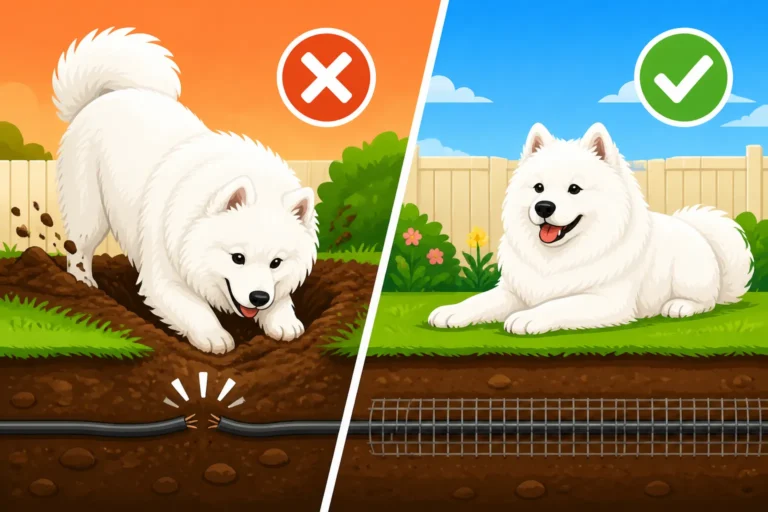
- Digging Prevention: Samoyeds are avid diggers, especially when trying to cool off or follow a scent. Burying chicken wire or a concrete footer along the base of your fence can prevent tunneling. Some owners even create a designated Giving a Samoyed Its Own Digging Pit elsewhere in the yard to redirect this natural behavior away from the fence line.
- Gate Security: Gates need robust latches – ideally two, or even a padlock – that your clever Samoyed can't manipulate. Self-closing and self-latching gates add an extra layer of protection, reducing human error.
- Indoor Security: Pay attention to open windows, especially on lower floors, and ensure screens are sturdy. Teach children and visitors the importance of keeping exterior doors closed and being mindful when entering or exiting. Even a momentary lapse can lead to a Samoyed bolting out the door.
- Supervision: Never leave your Samoyed unsupervised in the yard for extended periods, even with a secure fence. Accidents happen, and a determined Samoyed can find or create a weakness surprisingly quickly.
Ultimately, a GPS collar is a powerful tool for Samoyed owners, offering a significant layer of security and peace of mind. It won't replace good training or a secure environment, but it acts as a crucial safety net for a breed whose wanderlust is as legendary as their smile. For many, the cost and effort are well worth it for the ability to quickly locate their beloved companion should they decide to explore beyond their boundaries.
Disclaimer
This article is for general informational purposes only and does not constitute professional advice. Laws, prices and regulations vary by location and change over time. Consult a qualified professional for guidance on your specific situation.