Whether a Samoyed Can Compete in Obedience
Many Samoyed owners eventually wonder if their charming, fluffy companion, who often seems to march to the beat of their own drum, is truly capable of excelling in something as precise as competitive obedience. It’s a valid question, especially when your Samoyed has just “charmed” their way out of a recall or decided that sniffing that particularly interesting patch of grass is far more important than your carefully practiced “heel.” This guide aims to tackle that very thought, delving into the Samoyed's unique temperament and intelligence, and whether they possess the drive and focus to not just participate, but genuinely thrive, in the demanding world of obedience trials.
Understanding the Samoyed Temperament in the World of Obedience
It's easy to look at a Samoyed and see a happy-go-lucky, eternally smiling dog, and indeed they are. But beneath that beautiful, fluffy exterior lies a mind that is both intelligent and, shall we say, independent. This isn't a breed that lives to please in the same way some other working breeds do. Their historical role wasn't about rigid, immediate compliance but rather about making intelligent decisions while herding reindeer or pulling a sled, often at a distance from their human companion. This breeds a certain self-reliance that can be misinterpreted as stubbornness when you’re trying to teach them a perfect front and finish.
The frustration is real when you’ve put in the effort, and your Samoyed seems to deliberately ignore a command they know perfectly well. You might find yourself asking, "Is my Samoyed just being stubborn, or do they simply not 'get' obedience?" The truth is, they get it, but they also weigh whether they want to do it, and what's in it for them at that particular moment. This isn't malicious; it's just how their brains are wired. They are problem-solvers who were expected to think for themselves in harsh environments, not automatons. This inherent characteristic means training a Samoyed for obedience requires a different approach than, say, a German Shepherd or a Border Collie.
The Myth of Samoyed Stubbornness
Let's debunk a common misconception right off the bat: Samoyeds aren't truly "stubborn" in the sense of being unintelligent or untrainable. Instead, they are deeply intelligent and independent thinkers. They process information, and then they decide if your request aligns with their current motivation. If it doesn’t, you’ll be met with that famous "Samoyed smile" and a distinct lack of movement. This can be exasperating when you're trying to achieve precision in an obedience ring where fractions of a second and exact positioning matter.
Their historical job, often working semi-independently with reindeer, meant they had to make decisions on their own. They weren't bred to respond instantly to every single command without question. So, when you ask your Samoyed to do a perfect recall amidst a tantalizing smell, they're not being disobedient out of spite; they're prioritizing what their ancient instincts tell them is important. Understanding this fundamental difference is the first step toward successful obedience training with a Samoyed. It's about channeling their natural intelligence and drive, not trying to break their spirit.
High Drive, Selective Focus
Samoyeds possess an impressive drive, but it's often directed toward things that they find rewarding. This could be chasing squirrels, exploring new scents, or simply interacting joyfully with people. The challenge in obedience is to harness that drive and direct it toward the structured tasks required in the ring. They are often highly food-motivated, which is a huge advantage, but they can also quickly decide a piece of kibble isn’t worth the effort if a more exciting distraction is present. What Actually Motivates a Samoyed is a critical piece of the puzzle here.
Their selective focus means that training needs to be engaging, varied, and constantly reinforced with high-value rewards. Repetition for repetition's sake quickly leads to boredom, and a bored Samoyed is a Samoyed that has suddenly developed hearing loss. Long, drawn-out training sessions are often counterproductive. Instead, short, fun, and highly rewarding bursts of training tend to be far more effective in keeping their attention and enthusiasm.
Strategies for Training a Samoyed for Obedience
Training a Samoyed for obedience isn't about crushing their spirit or forcing compliance; it's about building a strong relationship based on trust, mutual respect, and positive reinforcement. Their independent nature demands that you make obedience their idea of fun, rather than a chore.
Positive Reinforcement is Key
For Samoyeds, positive reinforcement isn't just a suggestion; it's an absolute necessity. Harsh corrections or yelling will not only be ineffective but will actively damage your bond and make your Samoyed shut down or simply decide you're not worth listening to. Why Raising Your Voice Fails on a Samoyed explains this in detail. They respond best to clear, consistent, and reward-based methods. This means using treats, praise, toys, and games to mark desired behaviors. Every correct response should be a celebration!
Imagine you're teaching your Samoyed to hold a "stay" while you walk away. If they break the stay and you get angry, they learn that staying is associated with your anger, not with a tasty treat. If, however, you consistently reward them for even small increments of staying, and calmly reset when they make a mistake, they learn that staying leads to good things. This is especially true when distractions are present. Start in a quiet environment, then slowly introduce distractions, always rewarding heavily for success. Many fantastic resources, like online courses from BAXTER & Bella, emphasize these positive methods, which are truly the bedrock of successful Samoyed training.
Keep Training Sessions Short and Fun
Samoyeds can get bored easily. Long, repetitive drills are a recipe for disengagement. Instead, aim for multiple short training sessions throughout the day, each lasting only 5-10 minutes. This keeps them excited and prevents them from getting mentally fatigued. Think of it as bite-sized learning that leaves them wanting more. These short bursts also allow for more variety in your training, which is crucial for a Samoyed.
Varying your locations, types of rewards, and even the order of commands can keep things fresh. One day you might work on recalls in the park, the next on a precise heel in your living room, followed by some fun tricks. This prevents predictability and keeps your Samoyed guessing and engaged. It's also important to end every session on a high note, even if it means doing an easy command they nail every time, followed by a jackpot of treats and praise.
Motivation and Value
As discussed, Samoyeds are selective. What motivates them might change day by day, or even moment by moment. You need to be flexible and creative with your rewards. While some dogs will work tirelessly for a basic kibble, your Samoyed might demand high-value treats like boiled chicken, cheese, or hot dogs for challenging tasks or in distracting environments. Investing in a good treat pouch (easily found on Amazon) is essential for quick, easy access to rewards.
Beyond food, play can be a powerful motivator. A quick game of fetch, a tug session, or even just a joyous chase can be a fantastic reward for a successful obedience exercise. Understanding What Actually Motivates a Samoyed and being ready to offer those high-value rewards is paramount. It's also about making yourself the most exciting thing in the environment, which is a continuous challenge with a Samoyed's love for exploration.
Building a Strong Foundation
Competitive obedience isn't just about teaching commands; it's about building a solid foundation of focus, engagement, and a strong working relationship. This starts from puppyhood. Early socialization and puppy classes are invaluable for exposing your Samoyed to different environments, people, and other dogs, all of which contribute to a confident, adaptable adult dog. The First Year With a Samoyed Puppy outlines many of these crucial early steps.
Teaching basic manners and impulse control early on sets the stage for more advanced obedience. Things like waiting patiently at the door, walking politely on a leash, and coming when called (even if it's always on a long line initially) are fundamental. These aren't just polite behaviors; they build the muscle memory and mental framework for the precise actions required in an obedience ring.
Samoyeds in Competitive Obedience
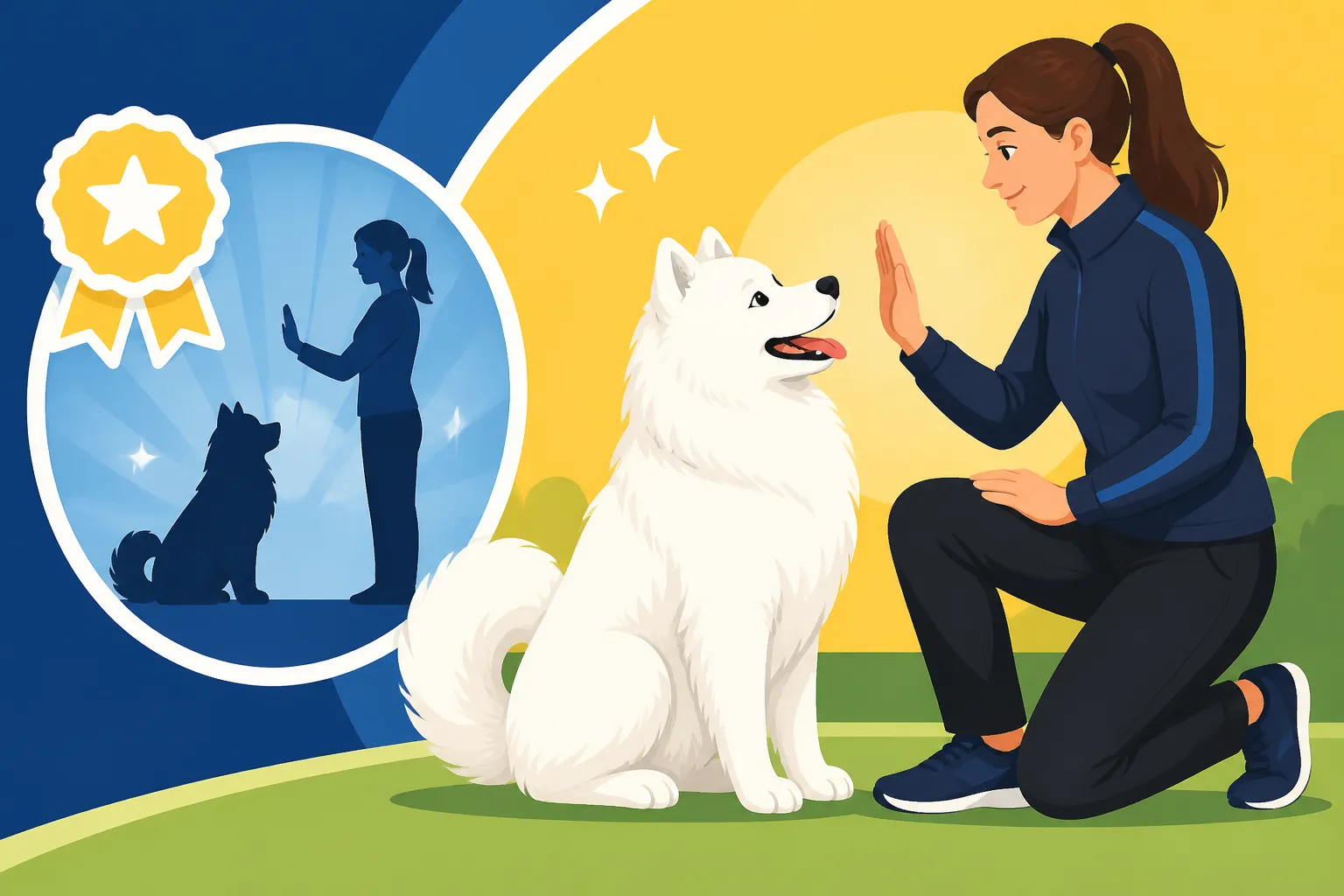
So, can a Samoyed truly compete in obedience? The resounding answer is yes, absolutely! While they might not be the most common breed you see topping the charts at every trial, successful Samoyed teams prove time and again that with the right approach, dedication, and a deep understanding of the breed, these fluffy powerhouses can earn titles and impress judges.
Their presence in the obedience ring is a testament to the dedication of their handlers. When a Samoyed performs a beautiful heel, a precise retrieve, or a rock-solid stay, it's not just a trained behavior; it's a triumphant collaboration between dog and handler, overcoming the breed's natural independent streak through patient, consistent, and fun-filled training.
Types of Obedience Competition
There are various levels and types of obedience competitions, ranging from basic beginner classes to advanced utility exercises. Understanding these can help you decide where your Samoyed might shine.
| Obedience Class | Description | Samoyed Suitability |
|---|---|---|
| Novice (CD) | Beginner level. Focuses on basic commands: heel on leash, stand for exam, heel off leash, recall, long sit, long down. | Good starting point. Focus on engagement and making it fun. Recall and off-leash heeling are initial challenges but achievable with consistency. |
| Open (CDX) | Intermediate level. Adds more complex off-leash work: retrieve on flat, retrieve over high jump, broad jump, drop on recall, long sit, long down (out of sight). | More challenging, especially retrieves and jumps. Requires strong motivation and desire to work with handler. |
| Utility (UD) | Advanced level. Includes scent discrimination, directed retrieve, signal exercises (no verbal commands), group stand for exam, directed jumping. | Highly challenging for many Samoyeds due to the precision, sustained focus, and specialized skills required. Exceptional handler-dog bond and motivation are crucial. |
| Rally Obedience | A more relaxed, fun form of obedience. Teams navigate a course of numbered stations, performing a different exercise at each. | Excellent for Samoyeds! It's less rigid, allows verbal encouragement, and keeps moving, which suits their active minds and desire for engagement. |
Rally obedience is particularly popular with Samoyed owners because it allows for more handler communication and is less about robotic precision and more about teamwork and flowing through a course. This often aligns perfectly with the Samoyed's love of interaction and activity. It's a fantastic stepping stone for competitive obedience or a rewarding discipline in itself. Whether a Samoyed Suits Rally is a great article to dive deeper into this.
Challenges and Rewards
The biggest challenge with a Samoyed in obedience is maintaining their focus and enthusiasm in a sterile, often repetitive environment, especially when there are exciting smells or other dogs nearby. Their inherent desire to greet everyone can make a "long stay" or a "stand for exam" quite the test of willpower for both dog and handler. Whether a Samoyed Gets Bored of Drilling is a real consideration here.
However, the rewards are immense. Watching your Samoyed confidently execute a perfect heel or a speedy retrieve is incredibly satisfying, not just because they did it, but because you know the unique journey you took to get there. It deepens your bond and provides both of you with mental stimulation and physical exercise. A Samoyed that has a job, even if it's competitive obedience, is a happy, fulfilled Samoyed. The sheer joy they exude when they "get it" and earn their reward is infectious.
How to Get Started in Obedience with Your Samoyed
If you're feeling inspired to embark on an obedience journey with your Samoyed, here are some actionable steps to get you started on the right paw.
Find the Right Class or Instructor
Look for local obedience classes that emphasize positive reinforcement and are taught by instructors experienced with northern breeds or "independent" dogs. A good instructor will understand that a Samoyed isn't going to respond like a Border Collie and will offer tailored advice. Avoid any class that uses harsh corrections or force. Online programs like those offered by BAXTER & Bella can be a great way to start building foundational skills at home before committing to in-person classes, giving you a solid base to work from.
Ensure the class environment is as low-stress and fun as possible initially. You want your Samoyed to associate obedience with positive experiences, not pressure. It's okay to try a few different instructors or club classes until you find one that's a good fit for you and your Samoyed.
Consistent Practice at Home
Class once a week isn't enough. Obedience skills are built through consistent, short daily practice sessions at home. Integrate training into your daily routine. Practice a "sit" before dinner, a "stay" while you open the door, or a short "heel" on your walk. Repetition, even small bits, is how skills become ingrained. Remember, How Many Repetitions a Samoyed Needs might be more than you expect, but keeping them short and sweet helps.
Vary the environment for practice. Start in a quiet room, then move to your backyard, a local park, and eventually busier public places. This helps generalize the behaviors, so your Samoyed understands that "sit" means "sit" everywhere, not just in your kitchen. Always carry high-value treats (from Amazon, of course!) and be ready to reward enthusiastically.
Embrace the Journey, Not Just the Destination
Obedience training with a Samoyed is often a marathon, not a sprint. There will be days of incredible breakthroughs and days where you feel like you're starting from scratch. That's okay! Celebrate the small victories, learn from the setbacks, and most importantly, enjoy the process of working and bonding with your amazing dog. The goal isn't just about earning titles (though that's a fantastic bonus!), but about deepening your understanding of your Samoyed and strengthening your partnership.
Remember that every Samoyed is an individual. Some will take to obedience like a duck to water, while others will require more patience and creativity. Adjust your expectations, stay positive, and focus on building a happy, willing partner. You'll find that even if you never step into a formal competition ring, the journey of obedience training will enhance your life with your Samoyed in countless ways, making them a more attentive, engaged, and well-behaved companion.
Disclaimer
This article is for general informational purposes only and does not constitute professional advice. Laws, prices and regulations vary by location and change over time. Consult a qualified professional for guidance on your specific situation.