Whether a Rescue Samoyed Trusts Again
Welcoming a rescue Samoyed into your home is an act of pure love and optimism, but let's be honest, it often comes with a unique set of challenges. One of the most heartbreaking can be the feeling that your new fluffy family member doesn't quite trust you. You're pouring out all your affection, offering a safe haven, and yet they might still be wary, withdrawn, or even fearful. It's a tough situation, leaving many of us wondering if that deep, unconditional bond we dream of is even possible. This comprehensive guide is here to assure you that yes, a rescue Samoyed can absolutely learn to trust again, and to help you navigate that often complex, but ultimately incredibly rewarding, journey.
Understanding the Roots of Distrust in Rescue Samoyeds
It’s completely understandable to feel a pang of frustration when your rescue Samoyed shies away from your hand or gives you the cold shoulder. After all, you’re offering them everything good in the world! But it's crucial to remember that their reactions aren't personal; they're echoes of their past and often deeply rooted in their unique Samoyed nature.
The Weight of Past Experiences
Every rescue dog, including our beautiful Samoyeds, comes with a history that we rarely know in full detail. Was it neglect? Abuse? A previous owner who simply didn’t understand the breed's needs or misinterpreted their vocalizations? The answers are usually a mystery, but the impact of those experiences is very real and present in their behavior. A Samoyed might have been constantly yelled at for barking, which is a natural Samoyed trait, leading them to anticipate a negative reaction whenever a new sound occurs or they feel the need to communicate. Or perhaps they spent long, lonely hours confined, developing severe Separation Anxiety in a Samoyed that makes them wary of being left alone, even for a moment.
These past traumas aren't just forgotten the moment they step into your loving home. They become ingrained patterns in their brain, influencing their fight, flight, or freeze responses. If a dog has learned that humans are unpredictable or a source of fear, their guardedness is a self-protective shield, not a rejection of your kindness. It’s their way of staying safe in a world that has, at some point, let them down. It’s hard not to take it personally, but truly, it’s about their survival mechanism kicking in. They're not trying to be difficult; they're trying to cope.
Breed Traits That Can Be Misinterpreted as Distrust
Beyond potential past trauma, Samoyeds themselves possess a fascinating mix of independence, intelligence, and a touch of the stubborn spirit. These traits, while endearing to many, can sometimes be misunderstood, especially when a dog is already stressed. Their famous "Samoyed smile" can, quite ironically, hide a lot of internal processing or even anxiety. What might look like aloofness could simply be their independent nature at play, or even a coping mechanism.
For instance, their natural tendency to vocalize, which often manifests as "the Samoyed scream" or various "woos" and "a-roos," can be quite loud and persistent. If a previous owner couldn't handle the noise, the dog might have been punished for expressing itself. Now, in your home, they might be anxious about vocalizing, or their vocalizations could be heightened due to stress. You might find yourself wondering The Samoyed Scream and Why It Is Not Barking is such a common topic among Samoyed owners, and for good reason!
Furthermore, Samoyeds were bred to herd reindeer and pull sleds, which means they have a strong desire to roam and explore. This instinct can lead to escape attempts if not properly managed, and a past owner might have misinterpreted this as a lack of bonding or defiance. If they were punished for these natural tendencies, they might now associate walks or outdoor time with anxiety or constantly be on alert for an escape opportunity. Understanding these inherent breed characteristics is crucial. It helps you differentiate between genuine distrust stemming from trauma and typical Samoyed quirks that are amplified by the stress of a new environment. Remember, these fluffy cloud dogs also crave companionship – they were bred to sleep in tents with their human families. If a rescue Samoyed spent a lot of time alone, or endured multiple rehomings, they might struggle with forming new attachments, fearing abandonment. This can manifest as either extreme clinginess or, conversely, a reluctance to form deep bonds. This complex wiring means patience is your number one tool.
The Marathon of Rebuilding Trust: Patience and Consistency are Key
Rebuilding trust with a rescue Samoyed isn't a sprint; it's a marathon, and sometimes it feels like an ultra-marathon. It demands immense patience, unwavering consistency, and a profound willingness to see the world from their perspective. But every small step forward, every flicker of recognition in their eyes, is a massive victory.
Creating a Safe and Predictable Environment
The very first, and arguably most important, step in earning your Samoyed's trust is to make them feel utterly safe. This isn't just about providing food and shelter; it's about establishing a consistent routine, offering them a quiet, personal space, and ensuring all interactions are predictable and positive. Sudden movements, loud noises, or an ever-changing schedule can be incredibly unsettling for a dog trying to heal. Think of their initial days, weeks, or even months with you as a gentle re-introduction to a world they might have learned to fear.
A comfy crate, perhaps covered with a blanket to create a den-like feel, can become their sanctuary. This isn't a punishment space, but a haven where they can retreat, feel secure, and decompress without being disturbed. Many new rescue owners find the "3-3-3 rule" helpful in setting expectations: it often takes 3 days for a dog to decompress and start to relax, 3 weeks to learn the new routine and begin to feel comfortable, and 3 months to truly settle in and show their authentic personality. This timeline can be even longer for deeply traumatized dogs.
A predictable routine helps your Samoyed understand what to expect from their new life. Regular feeding times, consistent potty breaks, and a set schedule for walks help them relax, knowing their basic needs will always be met by you. This doesn't mean you can never be spontaneous later on, but in those crucial early days, structure and routine are your absolute best friends. For a dog that might have learned that humans are unpredictable, consistent positive reinforcement is paramount. Every desirable behavior, no matter how tiny—a soft glance in your direction, a calm sit, choosing to come closer—should be acknowledged with calm praise, a gentle scratch (if they allow it), or a high-value treat. This teaches them that good things consistently happen when they interact with you, fostering a positive association.
The Language of Gentle Communication
Samoyeds are remarkably intelligent and incredibly observant. They pick up on the most subtle cues, from your body language to your tone of voice. When you’re focused on building trust, it’s essential to keep your voice soft, calm, and consistently reassuring. Avoid direct, intense eye contact, especially initially, as this can be perceived as a challenge or threat to a wary dog. Instead, try a softer gaze, looking slightly away, or using your peripheral vision. When you approach them, always do so from the side, allowing them to see you clearly, rather than looming over them from the front. Crouching down to their level can also make you appear less intimidating and more approachable.
Offer an open hand, let them sniff at their leisure, and if they pull away, respect that boundary immediately. Never chase them or force interaction. These small acts of respecting their space and autonomy, repeated consistently over time, will gradually chip away at their apprehension. They’ll learn that you listen, that you understand, and that you won’t push them further than they’re comfortable going.
Consider using a long line for walks in secure, open areas. This provides your Samoyed with a sense of freedom to explore, sniff, and move at their own pace, while still keeping them safely connected to you. It reduces the feeling of being constantly reined in, which can be particularly important if they've had negative experiences with leashes or confinement in the past. This controlled freedom helps them associate you with positive experiences and exploration, rather than restriction. You can find quality long lines on Amazon, perfect for giving them that bit of space while still maintaining safety.
Practical Strategies for Cultivating a Bond
Building a strong, trusting bond with your rescue Samoyed is an active process. It involves more than just providing food and shelter; it requires intentional, positive interactions that gradually show them they are safe and loved.
Positive Reinforcement and Engaging Activities
When it comes to training, positive reinforcement is absolutely non-negotiable for a rescue Samoyed. Harsh corrections, yelling, or punishment will not only fail to teach them anything but will actively erode any budding trust you’ve managed to build. Instead, focus entirely on rewarding desirable behaviors. High-value treats—think tiny pieces of cooked chicken, cheese, or even specific dog-safe liver treats—can work wonders. Even a verbal "Good job!" delivered in a happy tone can be incredibly effective when paired with a treat. Clicker training, introduced gently and positively, can also be a fantastic way to communicate clearly and consistently what behaviors you like.
Engaging activities that tap into their natural instincts can significantly strengthen your bond. Samoyeds, as working dogs, thrive on having a "job." This doesn't necessarily mean they need to be pulling a sled (though some might absolutely love finding out Whether a Samoyed Enjoys Skijoring!), but it can include mental stimulation like scent work, puzzle toys, or even just long, leisurely "sniffy" walks where they get to explore and process the world at their own pace. A simple game of "find the treat" hidden around the house can be mentally stimulating and fun, turning mealtime into a positive interaction. These shared, positive activities teach them that interacting with you is enjoyable and rewarding.
Grooming, while a necessity for a Samoyed’s magnificent double coat, can be a major trust-builder or a source of great anxiety. Start slow and make every grooming session a positive experience. Gentle brushing with a soft brush, coupled with treats and praise, can gradually transform it into a bonding ritual. For their notoriously thick coats, a good quality undercoat rake, easily found on Amazon, can help manage shedding without discomfort, turning a necessary chore into a shared, pleasant activity. Remember, The Grooming Bill on Twenty Pounds of Samoyed Undercoat can be daunting, so learning to do some grooming at home not only saves money but also provides more opportunities for this crucial bonding.
Respecting Boundaries and Understanding Body Language
Learning to read your Samoyed's subtle body language cues is one of the most vital skills you can develop. A tucked tail, flattened ears, yawning (not out of tiredness, but stress), lip licking, or turning their head away can all be signs of stress, discomfort, or even an impending over-threshold reaction. Respect these signals. If they’re retreating, give them space. Don’t force interactions, don’t try to "make" them come to you. This respect teaches them that you understand their limits and will not push them past their comfort zone, which is a fundamental cornerstone of trust.
Sometimes, a rescue Samoyed might prefer certain types of physical contact over others. Some might adore gentle scratches behind the ears, while others might find being petted on the head threatening. Pay close attention to their reactions: a relaxed posture, a soft gaze, or leaning into your hand are good signs. The moment they show discomfort—even a subtle stiffening or pulling away—stop. Always allow them to initiate contact for attention, rather than invading their personal space. Over time, as trust grows, they will likely become more open to different forms of affection and even seek them out.
Establishing clear, consistent rules and boundaries also fosters a deep sense of security. Dogs, especially those with an uncertain past, thrive on understanding what is expected of them. This isn't about being harsh or dominating; it's about providing predictable structure and guidance. For example, teaching a "place" command or a "wait" at the door gives them clear guidance on appropriate behavior, reducing anxiety about the unknown. Remember, a rescue Samoyed is learning a whole new language and a completely new set of rules in your home. The more consistent you are, the faster they will learn to trust that you are a reliable guide. This is a huge part of Settling a Rehomed Adult Samoyed.
Here's a quick look at common behaviors and how to interpret them:
| Behavior | Potential Sign of Distrust (Past Trauma) | Potential Samoyed Quirk (Breed Trait) | How to Respond |
|---|---|---|---|
| Avoiding Direct Eye Contact | Fear, submission, learned aversion to gaze | Also submission, sometimes independence | Look away, blink, approach from the side; don't force eye contact |
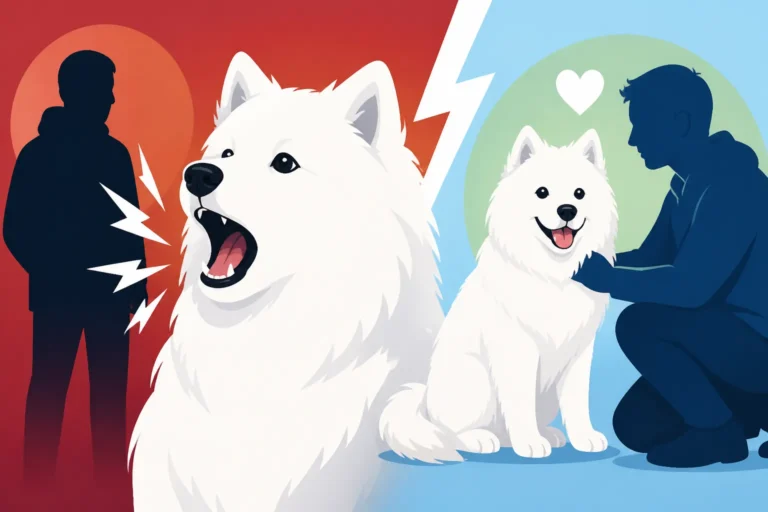
| Excessive Vocalization | Anxiety, frustration, previous punishment for noise | Natural breed tendency to "talk," boredom, excitement | Address anxiety, provide enrichment, teach a "quiet" cue, seek professional help if extreme |
| Hiding/Retreating | Fear, feeling overwhelmed, seeking security | Seeking a quiet spot to rest, decompress, or cool down | Provide a designated safe space (like a covered crate), respect boundaries, don't force interaction |
| Pulling on Leash | Anxiety, desire to flee, over-excitement, past lack of training | Strong sled dog instinct, high prey drive | Positive reinforcement for loose leash, use appropriate harness, engage in pulling sports if suitable |
| Destructive Chewing/Digging | Stress, boredom, Separation Anxiety in a Samoyed | Natural Samoyed tendency, exploring, thermoregulation (digging to stay cool) | Provide appropriate chew toys, mental enrichment, designated digging spot, consider cooling methods |
| Not Coming When Called | Learned selective hearing, poor recall history | Independent nature, prey drive, "what's in it for me?" | Use high-value treats for recall, practice on a long line, proof in varied environments |
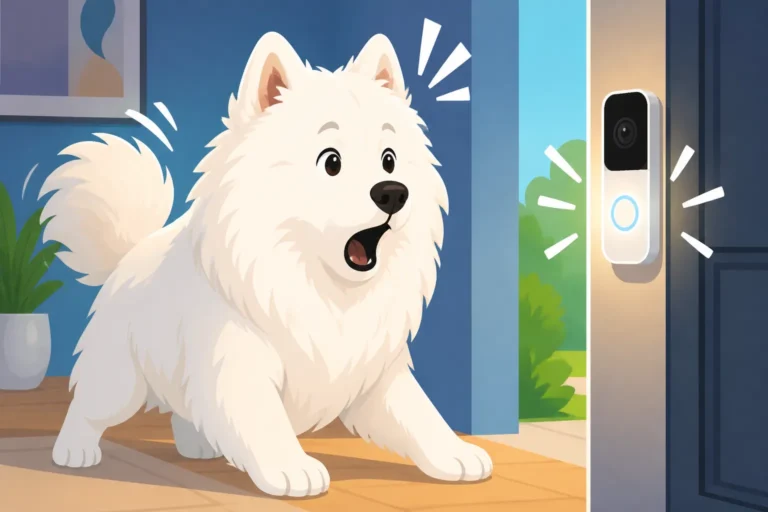
| Startling Easily | Hyper-vigilance due to past trauma, noise sensitivity | Can be naturally sensitive to sudden loud noises | Introduce new sounds gradually and positively, create a calm home environment |
When Professional Guidance Can Make All the Difference
There will undoubtedly be moments in your journey where the challenges seem insurmountable, or your Samoyed’s behaviors are more complex or intense than you anticipated. I want to stress that it is absolutely okay, and often necessary, to seek professional help. This isn't a sign of failure on your part, but rather a testament to your commitment to giving your Samoyed the best possible chance at a happy, trusting life.
Recognizing When You Need Extra Support
If your Samoyed is exhibiting behaviors such as aggression (even subtle growling or nipping), severe fear that prevents them from engaging in normal life, persistent destructive behaviors that go beyond normal puppy antics, or prolonged anxiety that doesn't improve with your consistent, positive efforts, it's time to call in the experts. A certified professional dog trainer or, for more severe cases, a veterinary behaviorist can provide invaluable guidance. These professionals are equipped to handle deeply ingrained behavioral issues that are beyond the scope of general obedience training.
A qualified professional will conduct a thorough assessment of your Samoyed’s specific needs, look for potential triggers for their behaviors, and help you develop a tailored plan. They can teach you advanced communication techniques and help manage deeply ingrained behavioral issues. For example, a veterinary behaviorist might explore if there’s an underlying medical condition contributing to the fear or anxiety, or if short-term medication might be beneficial to help your Samoyed cope and learn more effectively while you work on behavior modification. They can also advise on managing issues like How Many Hours a Samoyed Can Be Left if your dog is struggling with solitude.
Don't hesitate to reach out to the rescue organization you adopted from. Many rescue groups have extensive resources and recommendations for trainers or behaviorists they trust who specialize in rehomed dogs. They often have experience with the specific challenges rescue Samoyeds present and can connect you with people who truly understand the nuances of Whether a Rescue Samoyed Trusts Again from a professional, empathetic perspective.
The Benefits of Structured Training Programs
Even if your Samoyed already knows some basic commands, enrolling in a positive reinforcement training class can be incredibly beneficial. It provides a structured environment for controlled socialization (at a safe distance initially, if needed, allowing your Samoyed to observe without being forced to interact) and helps solidify your communication and bond. It’s also a wonderful opportunity for you, the owner, to learn to read your dog’s signals better and develop your handling skills with the guidance of an expert. For dogs with a past, predictability is crucial, and a good class offers that consistent structure.
If your Samoyed is too anxious for immediate group classes, online courses can be an excellent bridge. Platforms like BAXTER & Bella offer comprehensive online puppy and dog training programs that emphasize positive methods, which can be done at your own pace in the comfort and safety of your own home. This allows you to build a strong foundation of trust and skills before potentially moving to in-person classes. Remember that Training a Samoyed That Finds Obedience Negotiable is often an art form, and every tool and bit of expert guidance helps! These programs can provide structure for The Job a Samoyed Actually Needs, helping to channel their energy positively.
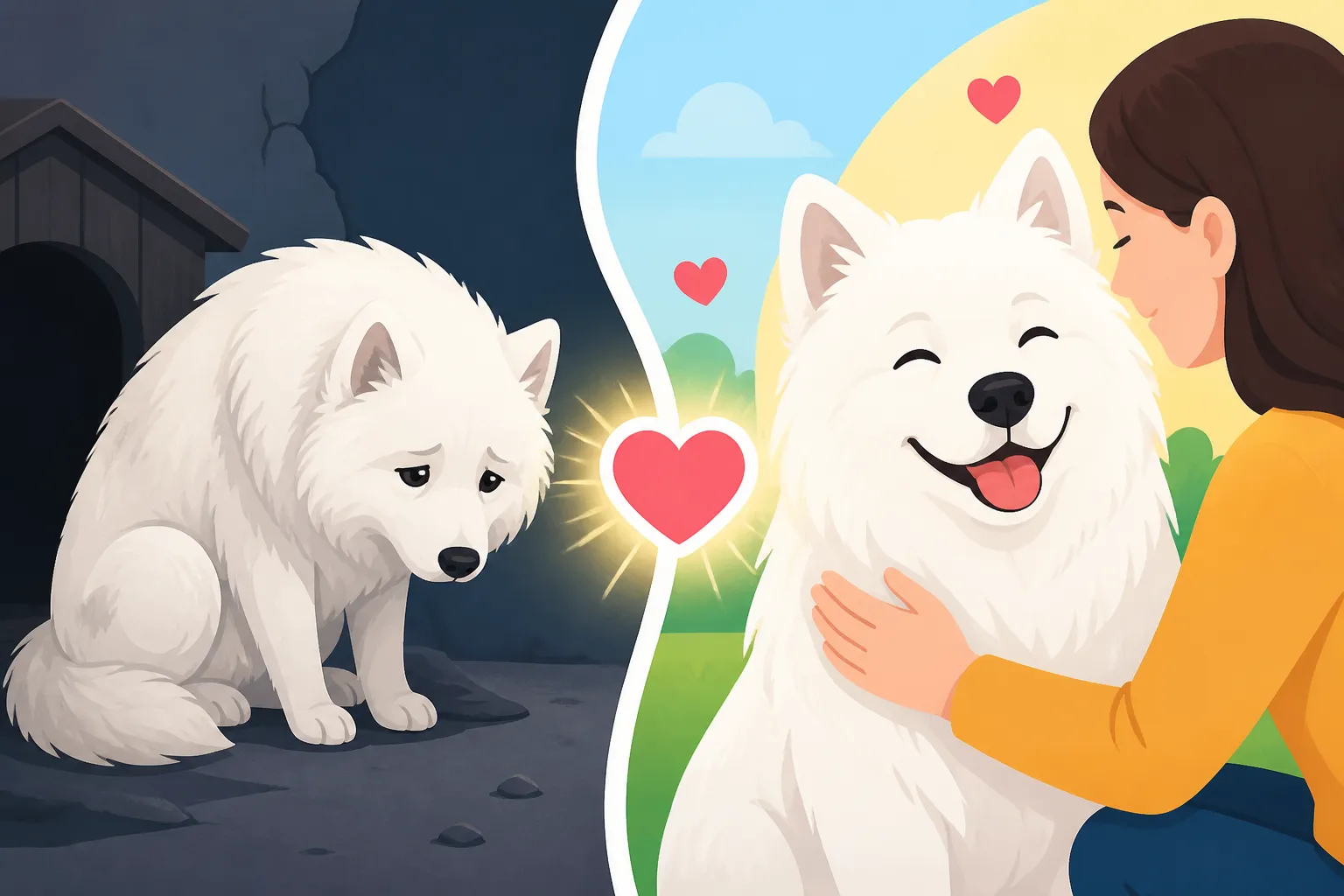
Ultimately, rebuilding trust with a rescue Samoyed is a deeply rewarding journey. It demands immense patience, unwavering consistency, and a profound willingness to understand the world from their perspective. There will be setbacks, sure, and some days might feel like two steps back for every one step forward. But every small step forward is a triumph, a tiny crack in the wall of their past fears. The bond you forge with a rescue Samoyed who learns to trust you again will be all the stronger, all the more profound, for the challenges you’ve overcome together. They can trust again, and often, they will trust you more fiercely and deeply for having seen them through their struggles and shown them what true, unconditional love feels like.
Disclaimer
This article is for general informational purposes only and does not constitute professional advice. Laws, prices and regulations vary by location and change over time. Consult a qualified professional for guidance on your specific situation.