Whether a Samoyed Nips at Heels
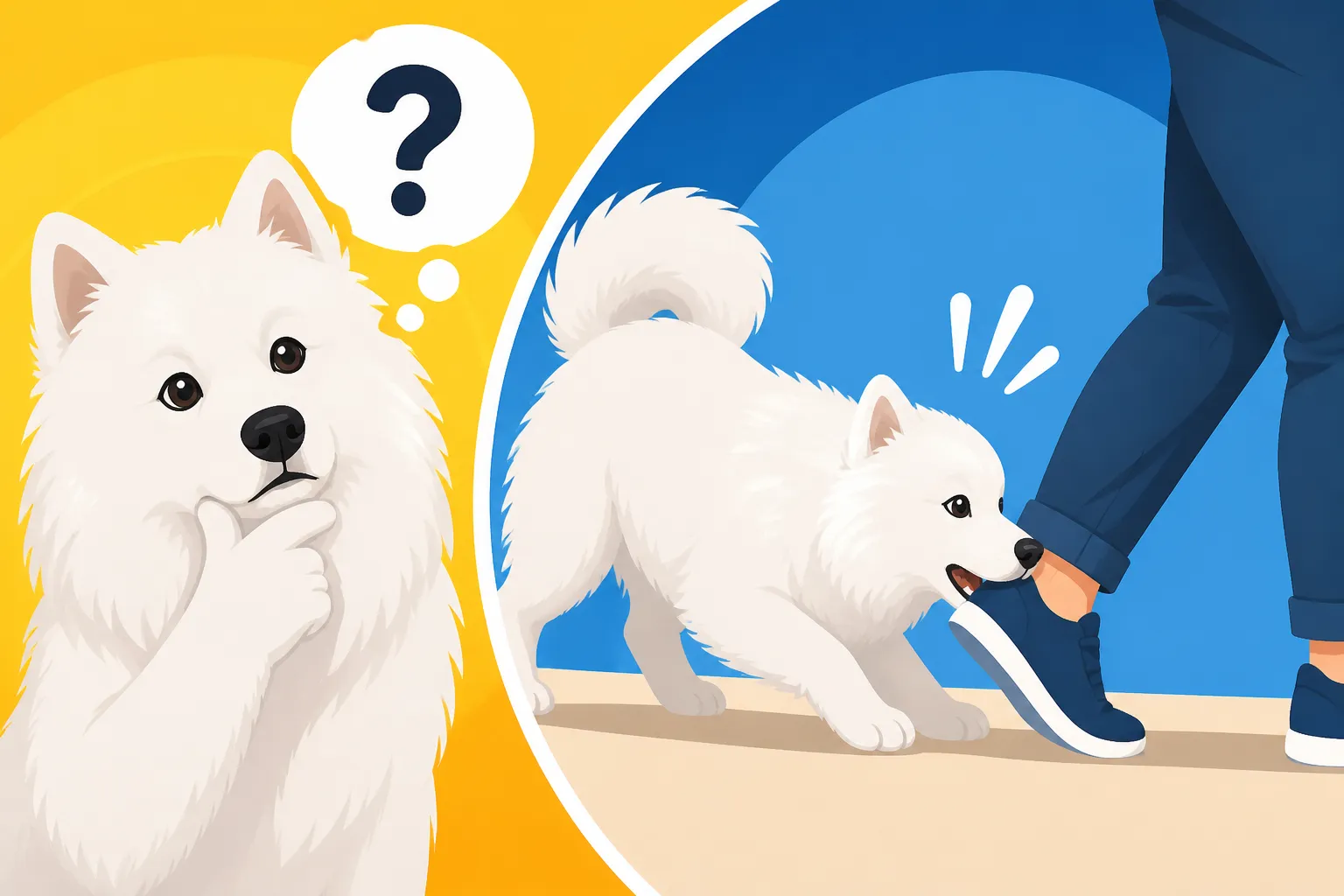
It's incredibly common for Samoyed owners to find themselves startled, and sometimes even a little bewildered, when their beautiful, smiling companion suddenly nips at their heels. This isn't just a fleeting puppy behavior for many; it can persist into adulthood, especially during moments of high excitement or activity. This guide is here to shed light on why your fluffy friend might be exhibiting this instinctual behavior, validate your frustrations, and offer a comprehensive, empathetic roadmap to understanding, managing, and ultimately reducing heel nipping in your Samoyed.
Understanding the Samoyed's Deep-Seated Herding Instinct
When a Samoyed puppy or adult dog nips at your heels, it’s rarely out of malice. Instead, it’s often a deeply ingrained behavior stemming from their ancient heritage. These beautiful dogs were not just bred for their striking looks or their ability to pull sleds; they were also vital working partners in herding reindeer for the nomadic Nenets people of Siberia.
Tracing the Ancestral Traits
The Samoyed’s history is one of cooperation and purpose. For thousands of years, these dogs lived alongside their human families, protecting, pulling, and yes, herding. The herding style of the Samoyed differs significantly from, say, a Border Collie, which uses intense eye-stalking and rapid, precise movements. Samoyeds engaged in a looser, broader style of herding, helping to gather and move large flocks of semi-wild reindeer across vast, open landscapes. This often involved nipping at the heels or flanks of the reindeer to encourage them to move in a desired direction. It was an essential part of their job, a way to communicate and control the herd.
When your Samoyed nips at your moving feet, or perhaps the fast-moving feet of a child or another pet, they are, in essence, trying to do what their ancestors did: manage the "herd." Your movement triggers that deeply embedded genetic memory, and they respond with the instinctual action they were bred for. It's a fundamental part of their genetic blueprint, a relic of their working past. Recognizing this primal drive is the first and most crucial step in managing the behavior, because it allows you to approach it with understanding rather than frustration or anger. You’re not dealing with a disobedient dog, but rather one fulfilling an ancient, internal programming.
This herding instinct isn't just some abstract concept; it manifests in very real, tangible behaviors. The urge to gather, to direct, to keep things moving or stop them from scattering, is incredibly strong in many Samoyeds. This behavior can be particularly pronounced in puppies who are just discovering their capabilities and testing the boundaries of their physical prowess and influence. However, it can certainly persist into adulthood, especially if not consistently addressed, and often surfaces in high-arousal situations. It’s not a personal affront; it’s a natural, albeit inconvenient, expression of their heritage. For a deeper dive into this fascinating aspect of their lineage, you might find The Herding Instinct Nobody Expects From a Samoyed to be a really enlightening read.
Playful Nips Versus Herding Nips
It's vital for Samoyed owners to learn to differentiate between a purely playful nip and one that is rooted more directly in their herding instinct. While both require intervention and guidance, understanding the underlying motivation can help you tailor your response more effectively. A playful nip, particularly from a puppy, often happens during exuberant roughhousing sessions or when they are exploring the world with their mouths. Puppies, much like human toddlers, use their mouths to interact with their environment and learn about textures, pressure, and boundaries.
These playful nips might target hands, arms, or even clothing, and are usually accompanied by loose, wiggly body language, a soft or open mouth, and an overall demeanor that screams "I'm just having fun!" These are often part of a puppy's learning process for bite inhibition, where they figure out how much pressure is too much when interacting with their littermates or human family. They’re testing limits, but it’s often in the context of playful engagement rather than directional control.
Herding nips, on the other hand, tend to be much more focused and often directed specifically at the lower legs, ankles, or heels. They most frequently occur when the "target" (you, a child, another pet) is moving quickly, running away, or changing direction suddenly. The body language might be subtly different: the dog might be more low to the ground, intensely focused on the movement, and sometimes accompanied by a low "woof" or a focused stare as they attempt to "steer" the moving object. While there's still an element of engagement and sometimes play, the intent behind a herding nip is often about control and direction, rather than just simple mouthing. If you have active children, you’ll definitely want to check out Why a Samoyed Nips a Running Child for more specific advice.
Both types of nipping absolutely require consistent, clear intervention, but the approach can be refined based on the motivation. For playful nipping and teething, the primary focus is on redirection to appropriate chew toys and teaching a soft mouth. For herding-focused nips, the strategy often shifts towards managing movement, providing alternative, acceptable outlets for that powerful herding drive, and reinforcing calm, settled behavior around moving targets. It's about channeling that intense energy into productive behaviors, rather than attempting to suppress an instinct that is so deeply woven into the fabric of the Samoyed breed.
Common Triggers and Motivations for Heel Nipping
Beyond the instinctual drive, there are several common situations and underlying motivations that can exacerbate or directly trigger heel-nipping behavior in Samoyeds. Understanding these immediate triggers allows you to be more proactive in your management and training strategies.
High Arousal and Excitement
One of the most frequent culprits behind Samoyed heel nipping is simply an overflow of high arousal or excitement. Picture this: you walk through the door after a long absence, and your Samoyed erupts into a flurry of joyful barks, happy yips, and frantic tail wags – the classic "Samoyed greeting." As you begin to move through the house, perhaps towards the kitchen or to kick off your shoes, that surge of overwhelming happiness and excitement can spill over. For many Samoyeds, this excess energy manifests as chasing and nipping at your moving feet, a powerful way for them to express their intense joy and try to engage you even further in their happy dance. It's not an act of aggression; it's an unchanneled, over-the-top expression of intense emotion.
This phenomenon isn't solely confined to greetings. Any scenario that significantly elevates your Samoyed's energy levels can act as a trigger. This could include children playing loudly and running through the house, the arrival of new visitors, the startling ring of the doorbell, or even just a particularly vigorous game of chase or tug with another dog. In these highly stimulating moments, their innate herding impulse can merge with their sheer excitement, leading them to feel an irresistible urge to "control" or interact with the rapidly moving stimuli around them. Recognizing these specific triggers is invaluable, as it empowers you to anticipate the behavior and intervene before the nipping starts, rather than always being in a reactive mode.
Think about a human child who gets overly excited and begins to jump, scream, or run wildly. They're not necessarily trying to be naughty; they simply haven't yet learned appropriate self-regulation for such intense bursts of energy. Similarly, for a Samoyed, their mouth is a primary tool for exploration, communication, and interaction. When this natural tendency is combined with a strong, intrinsic herding impulse and a flood of excitement, those excited nips at moving heels can become almost inevitable without consistent and clear guidance. Implementing consistent management and dedicated training is paramount to teaching them alternative, more acceptable ways to channel and express their boundless enthusiasm.
Seeking Attention and Engagement
Let’s face it: Samoyeds are incredibly social dogs, and they absolutely thrive on human attention and interaction. If your Samoyed discovers that nipping at your heels, even if it elicits a sharp "no!" or a quick, frustrated glance, effectively gains your focus, they are highly likely to repeat that behavior. In their world, negative attention is still attention, and for a dog that craves interaction and connection, any form of acknowledgment can be a powerful reinforcer. This is particularly true if they feel neglected, bored, or if their earlier, more subtle attempts to get your attention (like nudging, pawing, or whining) have been ignored.
It’s an unfortunate but common scenario where owners unknowingly reinforce the very behavior they want to stop. Imagine you’re engrossed in a task, perhaps cooking dinner or working at your computer. Your Samoyed might nudge your hand, but you’re focused and don't respond. Then they might paw at your leg, still no response. Finally, they deliver a quick, sharp nip to your ankle, and boom – you immediately turn, exclaim, and react. From your Samoyed's perspective, this interaction just taught them a clear lesson: "Aha! That's the magical action that finally gets Mom or Dad to pay attention to me!" Breaking this unintentional cycle requires a deliberate and consistent strategy of ignoring the unwanted nipping behavior (by disengaging completely) and instead, lavishly rewarding any calm, desired behaviors that do get your attention.
This attention-seeking behavior also ties into the Samoyed's inherent desire to be an active participant in whatever you're doing. They are very much "velcro dogs" who want to be deeply involved in family life and activities. If they perceive that you are moving away, disengaging from them, or heading off to do something without them, they might instinctively try to physically prevent that perceived separation by nipping at your heels. It’s their way of urgently communicating, "Hey, wait for me! What exciting thing are we doing? Can I come too?" Recognizing this underlying motivation allows you to take proactive steps: either involve them appropriately in your activity or teach them to settle patiently nearby, thereby circumventing their need to resort to nipping to get your attention or prevent your departure.
Strategies for Managing Heel Nipping in Samoyed Puppies
Managing heel nipping is often easiest and most effective when addressed during puppyhood. Samoyed puppies, with their boundless energy and rapidly developing minds, are sponges for learning, and instilling good habits early on can save a lot of headaches down the road.
Redirecting Teething and Play Bites
Samoyed puppies, much like all puppies, are natural explorers, and their mouths are their primary tool for investigating the world around them. Those tiny, needle-sharp puppy teeth are constantly in use, not just for play, but also as they navigate the discomfort of teething, typically between eight and sixteen weeks of age. It's completely normal and expected for them to mouth and nip at almost everything they encounter, including your hands, feet, and yes, your moving ankles. The crucial approach here is not to punish them for these natural puppy behaviors, but rather to consistently and gently redirect this innate urge towards appropriate, acceptable outlets. This means having a diverse arsenal of durable, puppy-safe chew toys readily available at all times.
When your Samoyed puppy begins to nip at your skin or clothing, your immediate response should be to calmly and quickly offer them a suitable chew toy. This could be a rubber Kong toy stuffed with a smear of peanut butter, a sturdy rope toy, or a specially designed teething ring. The very instant their mouth connects with the designated toy, enthusiastically praise them ("Good chew, buddy!") or immediately offer a tiny, high-value treat. The overarching goal is to make the experience of chewing on the toy far more rewarding and satisfying than nipping at your flesh. Absolute consistency is paramount in this stage; every single person in your household must respond in the exact same way, every single time the puppy nips. It takes hundreds, if not thousands, of positive repetitions for a puppy to fully internalize and understand this new behavioral rule.
Another highly effective technique for teaching appropriate bite pressure is the "yelp and disengage" method. If your puppy nips too hard, immediately let out a sharp, high-pitched "ouch!" or a distinct "yelp!" This mimics the sound another puppy would make when playtime gets too rough. Following this sound, instantly withdraw all attention and interaction. This means turning your back, crossing your arms, walking out of the room for a brief 10-15 second period, or gently placing them in a playpen. This teaches them, in a way they instinctively understand, that hard bites abruptly end all the fun. When you re-enter the space, or when they calm down, you can then re-engage calmly, perhaps with an appropriate toy. This method is incredibly effective for helping them develop crucial bite inhibition, teaching them to gauge how much pressure is acceptable and how much is not. Comprehensive online puppy training programs, such as those offered by BAXTER & Bella, often delve into these critical early socialization and bite inhibition techniques, providing structured guidance for new owners.
Managing Overstimulation and Energy Outlets
Young Samoyeds are renowned for their incredible bursts of energy, which can quickly lead to a state of overstimulation. A puppy who is frantically zooming around, barking excessively, and nipping at everything in their path is often overtired or overly stimulated, remarkably similar to a human toddler throwing a full-blown tantrum. In these moments of hyper-arousal, logical commands or direct scolding often become completely ineffective. Attempting to physically restrain or sternly reprimand an already overstimulated puppy can frequently backfire, escalating the nipping and making them even more agitated and frenzied.
The most effective strategy in these situations is proactive management. It’s essential to ensure your Samoyed puppy is receiving appropriate amounts of physical exercise tailored to their age and developmental stage. This generally means short, frequent play sessions rather than one single, long, exhausting outing that could potentially overtax their growing bodies. Additionally, providing ample mental stimulation through engaging puzzle toys, brief but focused training sessions, or stimulating scent games can be just as, if not more, effective than purely physical exertion in tiring out their energetic minds. A Samoyed puppy who is both physically and mentally satisfied is significantly less likely to resort to frenzied nipping out of boredom or excess energy. There's a vast selection of excellent puzzle toys available on platforms like Amazon that can keep their intelligent minds fully engaged.
Learning to recognize the early warning signs of an impending overstimulated state before the nipping spirals out of control is a key skill for any Samoyed owner. Indicators such as excessive panting, frantic and seemingly aimless running, increased vocalization (like yipping or insistent barking), or a somewhat glazed, unfocused look in their eyes can all signal that your puppy is nearing their threshold. When you observe these signs, it’s the perfect moment to initiate a "calm down" break. Gently guide them to their comfortable crate for a forced nap, or move them to a quiet, puppy-proofed area of your home with a safe, long-lasting chew toy. This teaches them crucial self-regulation skills and effectively prevents the nipping behavior from even beginning. Remember, the journey through The First Year With a Samoyed Puppy is a continuous learning experience for both you and your furry companion, filled with opportunities to build foundational good habits.
Training and Behavioral Adjustments for Adult Samoyeds
While it’s always easier to address heel nipping in puppyhood, it's absolutely not too late to work with an adult Samoyed. The principles remain similar, but the approach might require even more patience and unwavering consistency to reshape ingrained behaviors.
Consistency and Redirection
If your adult Samoyed is still engaging in heel nipping, understand that consistency in your response is going to be your most potent and indispensable tool. This isn't a behavior that can be fixed with a single command or a few days of effort; it requires a systematic, long-term commitment to modifying a deeply ingrained behavior pattern. Every single time your Samoyed attempts to nip at your heels, your reaction must be precisely the same, predictable, and calm. Any form of inconsistency will only serve to confuse your dog, making the behavior significantly harder to extinguish and potentially reinforcing it on an intermittent schedule, which is notoriously difficult to break. This absolute uniformity means that every single person living in your household must be fully on board, understanding and applying the exact same rules and consistent reactions every time the nipping occurs.
The fundamental strategy remains consistent redirection, much like with puppies, but perhaps with an even stronger emphasis on positive reinforcement for not nipping. When you anticipate a potential nipping scenario (for instance, as you stand up quickly, move briskly across a room, or begin an exciting activity), immediately present your Samoyed with a high-value, appropriate toy to chew or carry in their mouth, or a tasty treat. Extravagantly praise and reward them with enthusiasm for choosing to engage with the toy or treat instead of targeting your heels. If, despite your efforts, they still manage to nip, immediately disengage from all interaction. This means instantly stopping all movement, turning your back, and completely ignoring them for a very brief period (just a few seconds, until they show a moment of calm). As soon as they display even a flicker of calmness, you can then re-engage positively, perhaps by offering the toy again.
It's also highly beneficial to thoroughly analyze the specific contexts in which the nipping behavior most frequently occurs. Is it exclusively when you run? Does it happen only when children are playing loudly? Is it triggered by certain household routines? Identifying these precise triggers allows you to implement highly targeted management strategies. For example, if the nipping always happens when you're preparing to leave the house, practice walking calmly, then speeding up, then slowing down, always being prepared to redirect their attention to an appropriate activity. Crucially, ensure that your Samoyed is receiving ample amounts of appropriate physical and mental exercise; a bored Samoyed will almost certainly find its own (often undesirable) ways to entertain itself, as thoughtfully discussed in What a Bored Samoyed Does to a House. A physically and mentally satisfied dog is far less likely to develop or persist with problematic behaviors.
Teaching Impulse Control and Alternative Behaviors
Teaching robust impulse control is an absolutely critical component for any Samoyed who regularly nips at heels. This isn't just about stopping a behavior; it’s about actively training and reinforcing specific, positive behaviors that are entirely incompatible with nipping. Foundational obedience commands such as "sit," "stay," "wait," and a strong "go to your mat" or "place" command become invaluable tools in your training arsenal. Practice these commands frequently throughout the day, particularly in the types of situations that typically precede a nipping episode. For example, before you make a quick movement across the room that might trigger their herding instinct, ask your Samoyed to "sit" and "stay" calmly on their mat. Reward them generously and enthusiastically for holding that position while you move, helping them to connect calm behavior with positive outcomes.
Your ultimate goal is to establish a new, stronger neural pathway in your Samoyed’s brain. Instead of instinctively resorting to nipping when stimulated or excited, you want them to automatically default to a calm, learned alternative behavior. If your Samoyed tends to nip when you first arrive home, rather than allowing a chaotic, over-the-top greeting, proactively teach them to "go to their mat" or "place" and wait patiently and calmly until you are settled and ready to initiate a calm, controlled petting session. This process demands consistent dedication and patience, but Samoyeds are remarkably intelligent and genuinely eager to please their beloved humans once they clearly understand what is expected of them. Structured training programs, such as those provided by BAXTER & Bella, frequently incorporate systematic lessons on impulse control that can be profoundly beneficial for owners struggling with this type of behavior.
Beyond basic obedience, introducing structured play activities that effectively channel your Samoyed's inherent energy and drives in constructive ways can be incredibly helpful. Games like controlled tug-of-war (with clear rules about dropping the toy on command), engaging rounds of fetch, or even specific pulling sports like carting or Whether a Samoyed Suits Bikejoring can serve as excellent, appropriate outlets for their significant physical and mental energy. These types of activities not only provide vigorous exercise but also satisfy their innate desire to work, interact, and engage their bodies and minds without resorting to undesirable behaviors like nipping. Remember, training a Samoyed often feels more like a collaborative negotiation than strict command enforcement, so discovering what truly motivates them – whether it's treats, toys, or lavish praise – is the ultimate key to success, a concept we delve into further in What Actually Motivates a Samoyed.
Environmental Management and Proactive Prevention
Sometimes, the most effective training isn't about teaching your dog what to do, but rather managing their environment to prevent them from practicing unwanted behaviors in the first place. For heel nipping, creating an environment that sets your Samoyed up for success is paramount.
Structuring the Environment for Success
A well-managed environment can significantly reduce the opportunities for your Samoyed to engage in heel nipping. If you've identified that your dog tends to nip when there's a lot of activity in a specific area, such as the kitchen during meal prep or when guests are mingling, consider using a baby gate or a sturdy ex-pen to safely contain them in a different, quieter part of the house. This isn't intended as a punishment; rather, it's a strategic management technique that proactively sets both you and your Samoyed up for success by preventing the undesirable behavior from even occurring. Every single time the nipping doesn't happen because the environment was managed, it inadvertently reinforces the calm, alternative behavior you desire.
Utilizing a lightweight house line can also be a game-changer for managing your Samoyed's proximity indoors. A house line, which is a thin, light leash attached to their collar that drags on the floor (never used for tying them out!), allows you to gently guide your Samoyed away from your heels or to prevent them from getting too close when you're moving around. This provides a way to manage their physical interaction without constantly bending down, physically pushing them away, or engaging in a repetitive struggle. For those high-energy moments or when you need a break, having a safe, designated "chill-out" zone – such as a comfortable crate outfitted with a favorite, long-lasting chew toy – can be an incredibly beneficial management tool, offering them a place to decompress and settle.
It’s crucial to take the time to observe and identify the precise times and specific locations where heel nipping is most likely to manifest. Is it predominantly in certain rooms? Does it occur during particular times of the day, such as early morning or evening zoomies? Are certain family members more frequently targeted than others? Once you accurately identify these patterns and triggers, you can implement highly targeted and effective management strategies. For instance, if the nipping consistently occurs during dinner preparation, proactively provide your Samoyed with a high-value, long-lasting chew or puzzle toy in their crate before you even start cooking. If it's when children are engaged in boisterous play, consider having a dedicated, supervised play session with your Samoyed first, followed by directing them to a quiet space with a favorite interactive toy. This proactive, preventative approach is invariably far more effective and less frustrating than constantly reacting to the behavior after it has already occurred.
Ensuring Adequate Exercise and Mental Stimulation
A truly tired Samoyed is, more often than not, a well-behaved Samoyed. These magnificent dogs were selectively bred for immense endurance and demanding work in challenging environments, meaning they possess significant and non-negotiable energy requirements. A chronic lack of sufficient physical exercise is one of the most common underlying causes for a wide array of undesirable behaviors, including persistent heel nipping. They absolutely require more than just a quick, leisurely stroll around the block. Daily, vigorous physical activity, such as extended brisk walks, invigorating runs, challenging hikes, or structured, high-energy playtime, is not just beneficial, but absolutely essential for their overall well-being and behavioral health. If you're an active owner, considering engaging in dog sports like agility, canicross (running with your dog), or even dog sledding can provide excellent outlets for their boundless energy.
Beyond the vital need for physical exertion, mental stimulation is an equally critical component of a Samoyed's daily routine. Samoyeds are intelligent, problem-solving dogs with active minds that require regular challenges. Engage them in frequent, short training sessions – even just 5-10 minute bursts scattered throughout the day – where you work on teaching new tricks, refining existing commands, or practicing more complex sequences. Puzzle toys, engaging scent games (like hiding treats around the house), and even simply allowing them ample time to sniff and explore extensively during walks can provide invaluable mental enrichment. A mentally stimulated dog is considerably less likely to invent their own "jobs," such as the often-annoying task of herding your ankles. For detailed guidance on appropriate exercise levels, be sure to read How Much Exercise a Samoyed Needs.
A well-balanced routine that seamlessly integrates both robust physical activity and stimulating mental engagement serves a dual purpose: it effectively dissipates excess energy and simultaneously satisfies their profound innate drives. This comprehensive approach leaves them far less prone to resorting to frustrating behaviors like heel nipping, which often stem from boredom, pent-up energy, or a general lack of fulfillment. Think of it as preventative medicine for a host of potential behavioral issues. When your Samoyed's fundamental needs are consistently met, they are far more likely to be the calm, joyful, and affectionate companions you desire, rather than a persistent ankle-biter. Tools like interactive feeders or slow-feeder bowls, readily available on platforms like Amazon, can provide excellent mental engagement during meal times, making them work a little for their food and extending their feeding experience.
When to Seek Professional Guidance
While many instances of Samoyed heel nipping can be effectively managed with consistent training and environmental adjustments, there are certain situations where seeking professional help becomes not just advisable, but truly necessary.
Recognizing When You Need Extra Help
For the vast majority of Samoyed owners, diligently applying the strategies outlined above—such as consistent redirection, maintaining a unified household approach, and providing ample physical and mental stimulation—will lead to significant and positive improvements in their dog’s behavior. However, there are clear indicators that suggest the heel nipping might be more deeply entrenched, more severe, or potentially linked to other underlying issues, warranting intervention from a professional. If you've been consistent, patient, and proactive, but the nipping remains frequent, intense, or shows signs of escalating in severity (such as increasingly harder bites, growling that seems genuinely agitated rather than playful, or a marked reluctance to disengage), these are definite signals that you might benefit from expert assistance.
Another critical red flag is if the heel nipping behavior begins to be accompanied by other concerning or atypical behaviors. This could include sudden displays of resource guarding (where your Samoyed aggressively protects food, toys, or even specific people), uncharacteristic aggression towards unfamiliar individuals or other animals, or a persistent inability to calm down and settle even after a period of excitement. While true aggression is relatively rare in the generally amicable Samoyed breed, any shift towards harder bites, a more rigid or tense body posture, or what appears to be genuinely hostile body language demands immediate attention from a qualified professional. It is always, unequivocally, better to err on the side of caution and address potential behavioral problems early, rather than allowing them to fester and become more deeply ingrained or dangerous over time.
Furthermore, if you find yourself feeling consistently overwhelmed, frustrated, or simply aren't seeing the desired progress despite your diligent efforts, that is a perfectly valid and important reason to reach out for professional support. The journey of dog training and behavior modification can be inherently challenging, and sometimes, an objective, experienced eye can identify subtle nuances you might have missed or offer tailored advice that precisely addresses your specific dog’s personality and your unique household dynamics. There is absolutely no shame in seeking expert guidance; in fact, it demonstrates a profound commitment to your Samoyed's long-term well-being, happiness, and your own peace of mind. Remember, a harmonious relationship benefits both ends of the leash.
Finding a Qualified Trainer or Behaviorist
When the time comes to seek professional help for your Samoyed's heel nipping, it is absolutely paramount that you find a qualified, ethical, and compassionate trainer or certified professional dog behaviorist. Critically, you should actively avoid any trainers who advocate for or utilize harsh corrections, intimidation tactics, or outdated dominance-based methodologies. These types of confrontational approaches can be incredibly detrimental to a Samoyed's typically gentle and sensitive temperament. Such methods can not only exacerbate fear-based or anxiety-driven behaviors but can also severely erode the vital foundation of trust and companionship between you and your dog. A genuinely good, modern professional trainer will exclusively focus on positive reinforcement methods, building a strong, respectful relationship, and motivating your Samoyed through rewards and clear communication, which aligns perfectly with the breed's inherently cooperative and intelligent nature.
When vetting potential professionals, look for reputable certifications from recognized organizations. These might include credentials from the Certification Council for Professional Dog Trainers (CCPDT), the Karen Pryor Academy (KPA), or the International Association of Animal Behavior Consultants (IAABC). Don't hesitate to ask for references from past clients, and if at all possible, try to observe a training session in person (or virtually) before committing. A truly competent and ethical trainer will take the necessary time to thoroughly understand your dog's complete history, assess your specific home environment, and listen attentively to all your concerns regarding the nipping. They should be able to articulate their training philosophy and methods clearly, in a way that is easy for you to understand, and crucially, they should prioritize educating you on how to consistently apply and continue the training effectively long after their sessions conclude.
An initial consultation with a qualified professional might involve a detailed intake questionnaire followed by an observation session of your Samoyed, often within your own home environment. This allows them to see the behavior in its natural context. They will then work with you to develop a customized, step-by-step training plan specifically designed to address the root causes of the nipping, rather than merely attempting to suppress the visible symptom. In more complex or severe cases, or if there's any suspicion of an underlying medical condition contributing to the behavior, a veterinary behaviorist might be recommended for a comprehensive assessment. While an investment, seeking professional guidance can often be one of the wisest decisions you make, ultimately paving the way for a more harmonious, joyful, and bite-free life with your cherished Samoyed.
| Nipping Trigger | Common Characteristics | Recommended Immediate Response | Long-Term Strategy |
|---|---|---|---|
| Herding Instinct | Focused on lower legs, targets moving feet (running, walking away), often intense stare | Stop all movement, redirect to a sturdy tug toy or fetch, verbally praise calm behavior | Teach "place" or "stay" during movement, channel instinct into structured dog sports |
| Excitement/Overstimulation | Frantic, high energy, often accompanied by barking, zoomies, loss of focus | "Time out" in a quiet crate with a calming chew, remove from stimulating environment | Increase structured exercise & mental games, teach relaxation protocols, identify triggers |
| Attention-Seeking | Occurs when ignored, escalates if initial attempts for attention fail | Immediately disengage (turn back, ignore), reward any calm behavior or offering of a toy | Proactive engagement when calm, teach "touch" or "bow" for attention, ignore unwanted bids |
| Teething (Puppy) | Any part of the body, accompanied by chewing on objects, loose body language | Immediately offer appropriate chew toy (e.g., Kong, teething ring), "yelp & disengage" if too hard | Ensure variety of chew toys, consistent redirection, gentle bite inhibition training |
| Fear/Discomfort | (Rare in Samoyeds) Accompanied by tense body, growling, whale eye, attempts to retreat | Stop interaction, give dog space, avoid direct eye contact | Consult professional behaviorist; may require desensitization and counter-conditioning |
Heel nipping in a Samoyed is almost always an expression of an underlying instinct or a learned behavior born out of excitement or a desire for attention. It's not a sign of a "bad" dog, but rather a normal dog trying to communicate or act on its deepest drives. By understanding the ancestral roots of the behavior, recognizing immediate triggers, and applying consistent, positive reinforcement-based training methods, you can guide your Samoyed to channel their energy into more appropriate outlets. Patience, consistency, and a deep well of understanding will be your best allies in fostering a harmonious home life with your smiling, fluffy companion.
Disclaimer
This article is for general informational purposes only and does not constitute professional advice. Laws, prices and regulations vary by location and change over time. Consult a qualified professional for guidance on your specific situation.