Whether a Samoyed Gets Bored of Drilling
Oh, the joys of training a Samoyed! One moment they're a superstar, nailing every 'sit' and 'stay,' and the next, they're looking at you like you've asked them to solve a complex algebraic equation. If you've ever felt like your fluffy friend gets utterly bored with repetitive drills, you're absolutely not alone. This guide dives deep into why Samoyeds might seem to lose interest in training repetitions, and how you can keep them engaged and learning, rather than just staring blankly at your treat pouch.
The Samoyed Mindset: Why "Drilling" Can Fall Flat
Let's be honest, Samoyeds are incredibly intelligent, charming, and utterly beautiful dogs. They learn quickly, sometimes almost too quickly, which can be a double-edged sword when it comes to training. Their brilliance means they grasp concepts rapidly, but it also means they get fed up with doing the same thing over and over again. Unlike some breeds that thrive on routine and repetition, a Samoyed's keen mind needs constant stimulation and novelty to stay engaged. They weren't bred to be automatons; they were bred to work cooperatively and make decisions alongside their human companions in harsh conditions.
Built for Independence, Not Endless Drills
Think about the Samoyed's historical role. They weren't just sled pullers; they were herders, companions, and protectors for the Nenets people in Siberia. This meant they needed to be capable of independent thought, able to assess situations and react appropriately without direct, constant instruction. When you ask a dog with this kind of genetic blueprint to perform the same "sit, stay, come" sequence ten times in a row in your living room, it's like asking a brilliant engineer to spend all day sorting paperclips. Their brains are wired for more complex tasks and problem-solving, not mindless rote memorization. They understand what you want, often after just a few repetitions, and then they wonder, "Okay, I got it. What's next? Or can I go sniff that interesting smell now?" This isn't stubbornness, though it can feel like it; it's an expression of their inherent intelligence and desire for mental stimulation.
This independent streak also means they're constantly evaluating the "why" behind your requests. If the reward isn't compelling enough, or the task feels pointless to them, their motivation wanes. They are inherently sociable and want to please you, but they also have a strong sense of self-preservation of their own energy and interests. Pushing through endless drills can actually be counterproductive, leading to frustration for both you and your Samoyed. You might find yourself saying, "My Samoyed knows this! Why aren't they doing it?" when the real answer is, "My Samoyed knows this, and now they're bored!"
Smart, Yes, But Not Always Compliant
There's a big difference between intelligence and eager compliance, especially with Samoyeds. They are undoubtedly smart, often quick to pick up new commands and tricks. However, their intelligence comes with a strong will and a distinct opinion on whether your request is worth their effort at any given moment. This is a common trait in many Spitz breeds and can be a huge source of frustration for owners expecting blind obedience. They're not deliberately trying to be difficult; they're simply expressing their personality. You might have noticed that Where the Samoyed Ranks for Obedience Intelligence isn't always at the top of the charts, not because they can't learn, but because they often choose not to perform if their heart isn't in it.
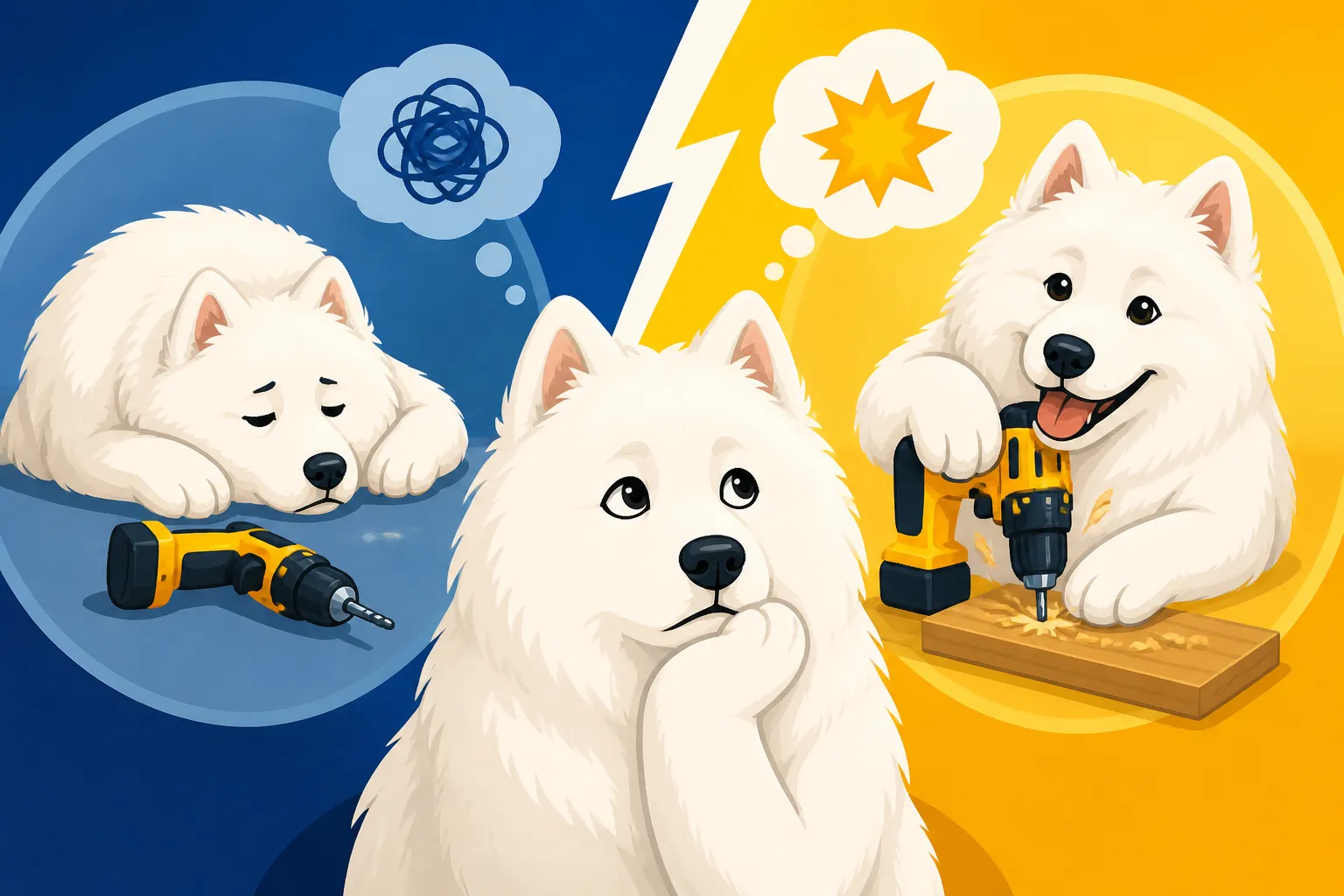
This means that while they might learn a new command in three repetitions, asking for it fifteen times in a row can lead to diminishing returns. You'll see their focus drift, their responses slow, and their enthusiasm plummet. They're not like a robot you can program; they're thinking, feeling individuals with their own preferences. If the training isn't stimulating, varied, or sufficiently rewarding, their internal cost-benefit analysis will often conclude that napping or exploring is a far better use of their time. This isn't a sign of a bad dog, but rather a dog telling you, in its own fluffy way, that it's time to switch things up. Their intelligence demands respect and creativity from their trainers.
Spotting the Signs: Is Your Samoyed Just Bored or Something Else?
Recognizing boredom in your Samoyed during a training session is crucial for maintaining a positive relationship and effective learning. Sometimes, what looks like stubbornness or a lack of understanding is actually a clear signal that your dog's brain has checked out. Missing these cues can lead to frustration on both sides and make future training even harder. It's about learning to read your Samoyed's subtle, and sometimes not-so-subtle, ways of communicating their feelings.
Subtle Cues of Disinterest
Samoyeds are masters of the "polite protest." They might not just outright refuse, especially if they are still puppies, but they'll give you clear indicators that their mind is wandering. One of the most common signs is yawning, not because they're tired (though that can be a factor if sessions are too long), but as a stress or boredom signal. They might also start looking away from you, sniffing the ground intently, or constantly grooming themselves in an exaggerated manner. Their body language might become looser, less attentive, or they might simply sit and stare into space, rather than at your hand holding the treat.
You might also notice a decrease in their response time. A command they usually execute instantly might suddenly take several seconds, or require multiple repetitions from you, not because they've forgotten, but because they're taking their sweet time, weighing their options, or just trying to appear busy. If they start refusing high-value treats that they normally adore, that's a huge red flag. It tells you that whatever mental game they're playing inside their head is more interesting than the delicious reward you're offering. They might even try to solicit play instead, nudging you with their nose or offering a play bow, a clear sign they'd rather be doing something fun and interactive.
When Boredom Turns into "Samoyed Attitude"
If the subtle cues are ignored, boredom can quickly escalate into what many Samoyed owners affectionately (or exasperatedly) call "Samoyed attitude." This is when the polite protest turns into more overt expressions of disinterest. They might flat-out ignore commands, turn their back to you, or even walk away from the training area altogether. You might experience the famous Samoyed vocalizations – not necessarily barking, but a dramatic whine, a grumble, or even a full-blown The Samoyed Scream and Why It Is Not Barking, as if to say, "Seriously, are we still doing this?" This isn't malice; it's just their dramatic way of communicating that they are done.
Sometimes, this "attitude" can manifest as playful nipping or mouthing, trying to redirect your attention to something more enjoyable for them. They might grab at the leash or your clothes, or start jumping up, all as attempts to change the dynamic of the interaction. It's their way of trying to take control of the situation and find something more engaging to do. This is a critical point to recognize, because pushing a Samoyed past this stage can create negative associations with training, making them less willing to participate in the future. Remember that Why Raising Your Voice Fails on a Samoyed, so resorting to harsh corrections will only damage your bond and make them even more resentful of repetitive drills.
Rekindling the Spark: Engaging Training Methods for Your Samoyed
The good news is that keeping your Samoyed engaged in training is entirely possible – it just requires a bit more creativity and understanding of their unique personality. The key is to make training a fun, collaborative experience rather than a strict, repetitive chore.
Variety is the Spice of Training Life
The absolute best way to combat boredom is to introduce variety into your training routine. Instead of doing the same three commands in the same spot, mix things up! Change the order of commands, practice in different locations (the living room, the backyard, a quiet park), and vary the distractions. If you've been working on "sit" for five minutes, switch to a brief game of fetch or a quick "find the treat" game before returning to "sit" for a single, perfect repetition. Keep sessions short and sweet, ideally no more than 5-10 minutes for an adult Samoyed, especially if you're doing "drills." As discussed in Whether Short Sessions Suit a Samoyed, brevity is often more effective.
Think about incorporating different types of exercises. Instead of just basic obedience, try some trick training, scent work, or even simple agility exercises in your backyard. Samoyeds love to problem-solve, so puzzle toys filled with treats from places like Amazon can be a fantastic way to engage their minds before or after a training session. Consider teaching them practical life skills, like politely greeting people at the door, or walking nicely on a leash around novel environments. These skills are inherently more engaging because they have real-world application, which resonates more with a Samoyed's intelligent and practical nature.
High-Value Rewards and Real-World Application
When your Samoyed is asked to do something they find a bit dull, the reward needs to be extra compelling. Forget the bland kibble bits; bring out the cooked chicken, cheese, or hot dogs. What a Samoyed Will Work For is often tied directly to how delicious the treat is or how much fun the activity is. Vary your rewards too – sometimes it's a super yummy treat, sometimes it's a quick game of tug, sometimes it's enthusiastic praise and ear scratches. The unpredictability of the reward can actually increase their engagement.
Furthermore, connect the training to real-life situations. Instead of just asking for a "stay" in the kitchen, ask for a "stay" while you open the front door (and practice safety first!). Instead of practicing "come" in a boring hallway, practice it at the dog park when there are distractions (starting on a long line, of course!). Making commands functional helps your Samoyed see the value in performing them, and they'll be much more likely to participate with enthusiasm. For example, if you're trying to teach them to walk nicely on a leash, have the reward be the opportunity to continue the walk to a new, exciting sniffing spot, rather than just a treat in your hand. This shifts their motivation from a simple transaction to a desired outcome.
Making Training a Game, Not a Chore
At its heart, training should be a game that you and your Samoyed play together. If it feels like a chore to you, it will definitely feel like a chore to them. Infuse enthusiasm into your voice, use playful body language, and celebrate their successes with genuine joy. Samoyeds thrive on positive reinforcement and appreciate a happy, engaging trainer.
Use toys as rewards, hide-and-seek games, or even incorporate short bursts of running and jumping. For instance, if you're practicing recall, make it a fun chase game where they come to you for a reward, then you run a short distance and call them again. This keeps their energy up and their minds active. You can even try using a clicker, which helps mark the exact moment of correct behavior and keeps the pace of training brisk and clear. When training feels like an exciting adventure with you, their favorite person, they'll be much less likely to get bored. Remember that even though How Many Repetitions a Samoyed Needs to learn a new skill might be few, they still need ongoing reinforcement in a fun way to keep that skill sharp.
| Training Tactic | Description | Why it Works for Samoyeds |
|---|---|---|
| Short Sessions | 5-10 minutes maximum per session, several times a day. | Prevents mental fatigue and keeps interest high. |
| Vary Locations | Practice in different rooms, yard, park, friend's house. | Generalizes commands and adds novelty. |
| Mix Commands | Don't drill one command; rotate through 3-5 different ones. | Keeps their intelligent minds challenged and prevents predictability. |
| High-Value Rewards | Use soft, smelly treats (cheese, chicken), or favorite toys. | Motivates them to work even for tasks they find less exciting. |
| Game-Based Training | Incorporate play, hide-and-seek, or chase into lessons. | Taps into their natural desire for fun and interaction. |
| Real-Life Scenarios | Practice commands where they're actually needed (e.g., "stay" at door). | Demonstrates the purpose and value of the command. |
| Trick Training | Teach fun tricks like "wave," "spin," or "bow." | Engages their problem-solving skills and builds confidence. |
Beyond the Basics: Advanced Engagement and When to Seek Help
If your Samoyed continues to show signs of boredom despite your best efforts, or if you're simply looking for new ways to channel their incredible energy and intelligence, there are many avenues to explore. Advanced training and professional guidance can open up a whole new world for both you and your fluffy companion.
Exploring Dog Sports and New Challenges
Samoyeds absolutely thrive when they have a job to do. Their heritage as working dogs means they crave purpose and physical and mental exertion. If your Samoyed is bored with basic obedience, consider diving into dog sports. Activities like Whether a Samoyed Can Do Agility, rally obedience (Whether a Samoyed Suits Rally), carting/sledding (Whether a Samoyed Can Earn a Sledding Title), or even Whether a Samoyed Takes to Scent Work can be incredibly fulfilling for them. These sports require not only physical prowess but also significant mental engagement, strategic thinking, and teamwork with you. They provide an outlet for their natural instincts, whether it's pulling, using their nose, or navigating obstacles.
These more complex activities inherently offer variety and challenge, which are exactly what a Samoyed's intelligent mind needs. For example, in agility, no two courses are exactly alike, constantly requiring your Samoyed to think on their paws and respond to your cues. Scent work taps into their primal hunting instincts, engaging them in a way that "sit" on cue simply can't. Even something as simple as enrolling in an advanced obedience class or working towards their Whether a Samoyed Passes the Canine Good Citizen Test certification can provide structure and new goals that prevent boredom.
Learning from the Pros: Online Resources and Trainers
Sometimes, a fresh perspective and new ideas are all it takes. If you're feeling stuck, don't hesitate to reach out for professional help. A certified professional dog trainer or a behaviorist can assess your Samoyed's specific needs and offer tailored strategies to combat boredom and enhance engagement. They can introduce you to novel training techniques, help you build better communication, and suggest specific exercises that tap into your Samoyed's individual motivations. You might find that a few sessions with a good trainer can completely transform your training dynamic.
Beyond in-person training, there's a wealth of online resources available. Platforms like BAXTER & Bella offer comprehensive online puppy and dog training programs that emphasize positive reinforcement and offer a wide array of exercises to keep things interesting. You can access their materials at your own pace, which is perfect for busy Samoyed owners. Additionally, there are many excellent books, videos, and online communities dedicated to Samoyed-specific training challenges. Remember, a bored Samoyed can sometimes find its own (often destructive) entertainment, leading to issues like What a Bored Samoyed Does to a House or The Samoyed That Wakes the Neighbors. Investing in ongoing training and mental enrichment isn't just about teaching commands; it's about fostering a happy, well-adjusted companion who truly enjoys learning and spending time with you.
Disclaimer
This article is for general informational purposes only and does not constitute professional advice. Laws, prices and regulations vary by location and change over time. Consult a qualified professional for guidance on your specific situation.