What a Samoyed’s Double Coat Is Made Of
When you first lay eyes on a Samoyed, their glorious, cloud-like coat is probably the first thing that captures your attention. It's a hallmark of the breed, a vision of pristine white against their ever-present smile. But beneath that stunning exterior lies a complex, functional marvel designed for survival in some of the harshest environments on Earth. Understanding what this double coat is truly made of is key to appreciating and properly caring for your beautiful companion, ensuring their comfort and health.
The Samoyed's Evolutionary Masterpiece: A Double Coat Defined
The Samoyed's coat isn't just beautiful; it's a testament to centuries of natural selection in the frigid Siberian Arctic. Their ancestors, working alongside the Nenets people, relied on this specialized fur for warmth and protection in temperatures that would make most of us shiver just thinking about it. It’s not simply "fur"; it’s a sophisticated, multi-layered system that performs several vital functions. Knowing this helps us move beyond seeing it as merely an aesthetic feature and truly understand its biological importance.
The Insulating Undercoat: Softness Meets Survival
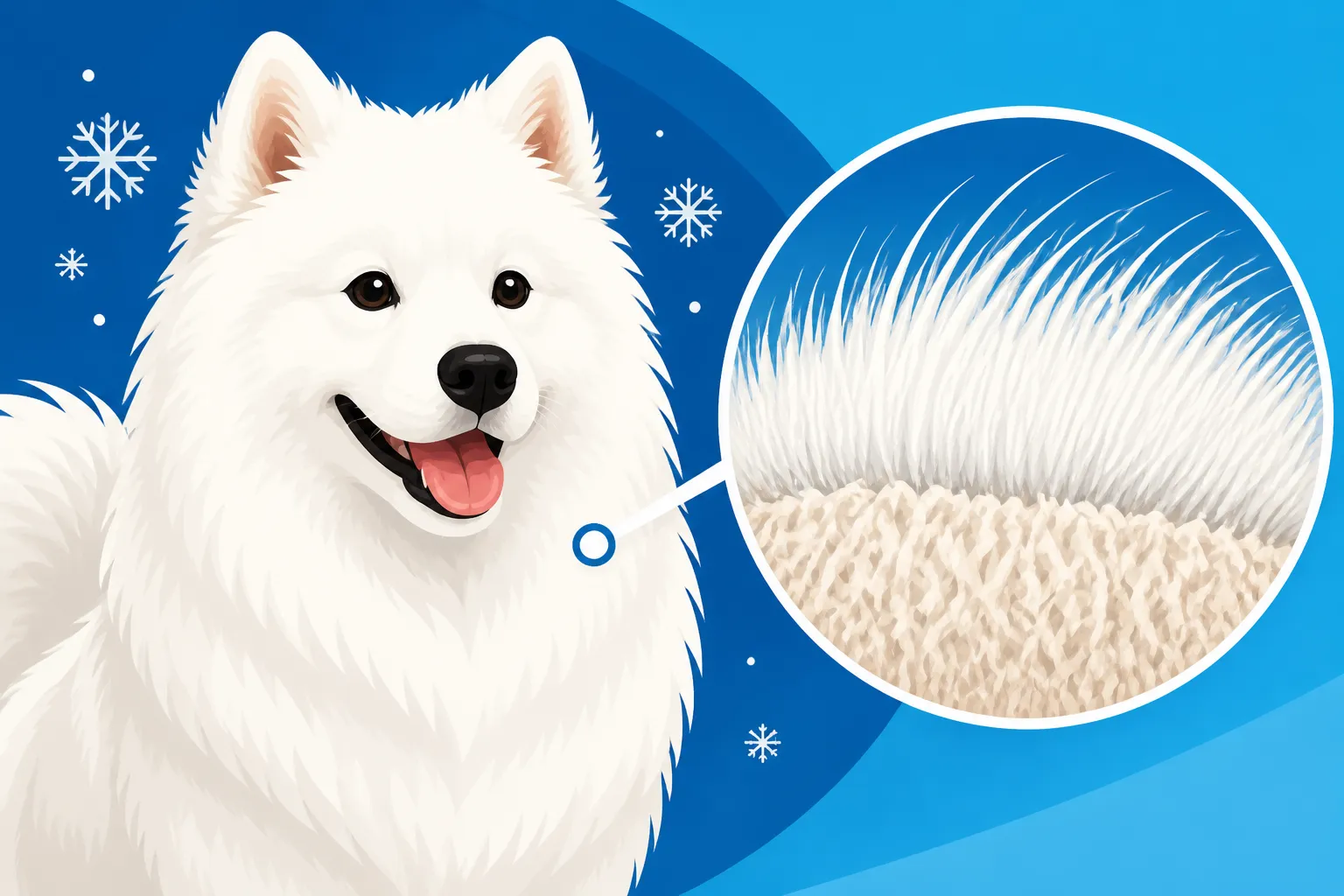
At the heart of the Samoyed's warmth is its incredibly dense, soft, and woolly undercoat. This layer is often described as feeling like cotton or cashmere, and for good reason – it's incredibly fine and abundant. The undercoat grows in tightly packed bundles, creating a thick barrier close to the dog's skin.
The primary role of this undercoat is insulation. The dense fibers trap air, forming an insulating layer that prevents body heat from escaping in cold weather. Imagine wearing a high-quality down jacket; the principle is very similar. This trapped air is what keeps the Samoyed comfortable in sub-zero temperatures, allowing them to thrive in environments where other breeds would quickly succumb to hypothermia. This incredible insulation also helps them in warmer weather by preventing heat from penetrating to the skin, acting like a natural air conditioner. Many people don't realize this, but A Samoyed's Coat Is Insulation, Not Decoration. It’s a marvel of natural engineering. This also highlights why brushing out dead undercoat is so important, as compacted dead fur can actually hinder this natural air circulation, making your Samoyed uncomfortable.
The Protective Outer Coat: Guard Hairs and Their Purpose
Overlaying that luxurious undercoat are the Samoyed's guard hairs. These are longer, coarser, and stiffer hairs that give the coat its characteristic crisp texture and gleaming white appearance. Unlike the soft, fluffy undercoat, the guard hairs are relatively straight and stand away from the body.
The guard hairs serve multiple protective functions. Firstly, they act as a physical shield against environmental elements. Think of them as the outer shell of a waterproof jacket. They repel water, sleet, and snow, preventing moisture from reaching the insulating undercoat and the skin, which would compromise the dog's warmth. This water-repellent quality is truly remarkable; you can often see water bead up and roll off a Samoyed's coat. Secondly, these stiffer hairs protect against minor abrasions and provide a barrier against insects and UV radiation. They also contribute to the "self-cleaning" nature of the Samoyed coat, allowing dirt and debris to mostly fall away once dry, a topic we will delve into further.
More Than Just Fluff: The Science Behind the Samoyed's Fur
It’s easy to look at a Samoyed and think "fluffy cloud," but their coat is so much more than that. It's a dynamic, living system constantly adapting to its environment and working to maintain the dog's internal homeostasis. The way these two distinct layers—the soft undercoat and the coarse guard hairs—work in tandem is what makes the Samoyed's coat truly special and critical for their health.
How the Coat Regulates Temperature
The Samoyed’s double coat is a masterclass in thermoregulation, performing a dual role in both cold and warm conditions. In winter, as we discussed, the dense undercoat traps a layer of warm air, preventing heat loss from the body. The guard hairs then act as a shield against wind, snow, and ice, keeping the elements from penetrating to the undercoat. This system is so effective that Samoyeds are perfectly comfortable in incredibly harsh, cold climates.
What often surprises people is that this same coat helps keep them cool in summer. The trapped air within the undercoat acts as an insulator against heat penetration. Think of it like the insulation in your house: it keeps the warm air in during winter and the cool air in during summer. The guard hairs, standing away from the body, allow for air circulation, preventing the undercoat from collapsing and losing its insulating properties. They also provide shade for the skin. However, this only works if the coat is clean, well-maintained, and free of mats. A matted coat, or one full of dead, un-shed undercoat, loses its ability to circulate air and actually traps heat against the body, making the dog overheat more easily. This is why A Samoyed Built for Sixty Below in an American Summer still needs proper coat management to stay cool.
Water Repellency and Self-Cleaning Properties
One of the most fascinating aspects of the Samoyed's guard hairs is their natural water-repellent quality. The individual guard hairs are not porous and are slightly oily, which causes water to bead up and roll off the coat rather than soaking in. This is incredibly important for a dog that evolved in snowy, icy conditions, as a wet coat loses its insulating properties and can lead to hypothermia. You'll notice after a walk in the rain or snow that your Samoyed often looks less soggy than other breeds; a good shake, and they're mostly dry.
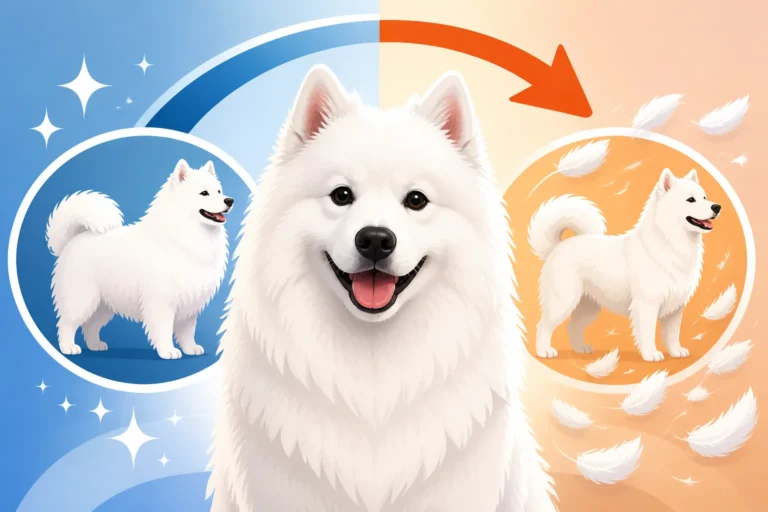
This repellent nature also contributes to the coat's remarkable self-cleaning properties. Mud, dirt, and debris tend to cling to the outer tips of the guard hairs. Once the mud dries, a quick shake or brush is often enough to dislodge it, leaving the coat surprisingly clean. It's a myth that Samoyeds need constant bathing to stay white; in fact, too frequent bathing can strip the natural oils from the guard hairs, reducing their protective qualities. This means less scrubbing for you and a naturally cleaner dog! You might be surprised at Why a Samoyed's Coat Stays Clean on Its Own.
Common Misconceptions and the Dangers of Misguided Grooming
Because the Samoyed's coat is so unique and demanding, there are a lot of misconceptions floating around, especially concerning how to best manage it. These misunderstandings can unfortunately lead to grooming practices that are not only unhelpful but downright harmful to your Samoyed's health and comfort. It's crucial for every Samoyed owner to be educated on what not to do as much as what to do.
The Myth of Shaving for Coolness
Perhaps the most persistent and damaging misconception is that shaving a Samoyed will help keep them cool in warm weather. This couldn't be further from the truth. As we've discussed, their double coat is designed to insulate against both cold and heat. Shaving removes this natural insulation, exposing their delicate skin to direct sunlight.
This direct exposure can lead to severe sunburn, which is painful and increases the risk of skin cancer. Furthermore, shaving disrupts the natural growth cycle of the coat. The guard hairs and undercoat grow back at different rates; the soft undercoat often grows back faster and denser, while the guard hairs can be slow to return, if they do at all. This results in a coat that is soft, woolly, and unable to properly regulate temperature, offer UV protection, or repel water. Essentially, you've removed their natural cooling system and left them vulnerable. This is why it's universally advised by breeders and veterinarians never to shave a Samoyed, a truth explored in Why Shaving a Samoyed Makes the Heat Worse.
The Risks of Improper Drying and Matting
While the Samoyed's coat has self-cleaning properties, it still requires proper maintenance, especially after baths or getting thoroughly wet. One of the biggest dangers, particularly for new owners, is improper drying. Because the undercoat is so dense, it can take an incredibly long time to dry completely. If moisture is trapped close to the skin for too long, it creates a perfect breeding ground for bacteria and fungi, leading to skin infections, hot spots, and unpleasant odors.
Matting is another significant concern. Mats form when the undercoat sheds but becomes tangled in the remaining fur, especially in high-friction areas like behind the ears, armpits, and hindquarters. These mats can be incredibly painful, pulling on the skin and restricting movement. More importantly, large mats compromise the coat's insulating ability by preventing air circulation, leading to skin irritation and making your dog hot and uncomfortable. They also trap moisture and dirt, exacerbating skin problems. Proper drying involves using a high-velocity force dryer to push water out from the skin, not just dry the surface. This ensures the undercoat is completely dry and helps prevent matting, as detailed in Drying a Samoyed to the Skin. Finding a good force dryer on sites like Amazon or through specialty pet retailers can be a game changer for at-home grooming.
Daily Care for a Lifelong Fluffy Friend
Caring for a Samoyed's magnificent double coat is a commitment, but it's a rewarding one that ensures your dog stays healthy, comfortable, and retains that iconic cloud-like appearance. It's not just about aesthetics; it's about their well-being. Establishing a routine from puppyhood will make grooming a positive experience for both of you.
Essential Brushing Techniques
Regular brushing is the cornerstone of Samoyed coat care. It serves multiple purposes: removing loose undercoat, preventing mats, distributing natural oils, and stimulating circulation to the skin. You'll need specific tools for this job. A good slicker brush is excellent for getting into the undercoat and pulling out dead fur, while a sturdy metal comb helps check for tangles and smooth the guard hairs. A pin brush can also be useful for general grooming and fluffing.
The key is to brush in layers, getting all the way down to the skin. Start at the bottom of a leg or flank and work your way up, parting the hair and brushing small sections at a time. This "line brushing" technique ensures you aren't just brushing the top layer of the coat. During shedding seasons, which happen roughly twice a year, this daily commitment becomes even more critical. During these "coat blows," as they are affectionately called, your Samoyed will shed copious amounts of undercoat. Regular brushing during this time prevents huge tangles and helps the new coat come in cleanly. Ignoring this can lead to painful matting that might require professional intervention. For more on this, check out How Often a Samoyed Needs Brushing. You can find excellent quality brushes and combs on Chewy, often with reviews from other Samoyed owners to guide your choice.
Managing the Infamous "Coat Blow"
The "coat blow" is a unique phenomenon for double-coated breeds like the Samoyed, and it's something every owner quickly becomes intimately familiar with. Roughly twice a year, typically in spring and fall (though this can vary with climate and individual dogs), your Samoyed will shed their entire undercoat in a relatively short period. This isn't just a bit of extra shedding; it's an explosion of fluff that can feel overwhelming if you're not prepared.
During a coat blow, it will literally look like it's snowing inside your house. You'll pull out handfuls of soft, woolly undercoat with every brush stroke. The goal is to remove as much of this dead hair as possible before it forms mats or gets embedded in every surface of your home. Daily, thorough brushing with an undercoat rake and slicker brush is paramount. Some owners even invest in professional grooming during this time, or use powerful force dryers (as mentioned, often found on Amazon) to help blast out the loose fur. This intense shedding period usually lasts a few weeks, and while it's a lot of work, staying on top of it will ensure your Samoyed remains comfortable and their new coat grows in beautifully. Understanding When a Samoyed Blows Its Coat can help you prepare for this biannual event.
Why the Double Coat is Essential for Samoyed Health and Comfort
Beyond aesthetics, the Samoyed's double coat is intrinsically linked to their overall health and well-being. It's a primary component of their physiological regulation and protection, making its proper care not just a preference, but a necessity. Neglecting the coat can lead to a cascade of problems that affect more than just their appearance.
Protection from the Elements Year-Round
The coat provides critical protection from the full spectrum of environmental challenges. In harsh winters, it’s their survival suit, shielding them from bitter winds, ice, and deep snow. Without this robust insulation, a Samoyed would quickly succumb to hypothermia, even in moderately cold temperatures. This is a direct link to their ancestral purpose, having The Samoyed Slept in the Tent to Keep People Alive in Siberian tents.
Conversely, in warmer months, the properly maintained coat acts as a barrier against the sun's harsh UV rays, preventing sunburn and heat absorption directly onto the skin. It also protects against insect bites and minor scratches from brush or debris. This dual protection means that whether it's scorching summer sun or biting winter winds, a healthy Samoyed coat is constantly working to maintain a stable and safe microclimate next to the dog's skin.
Impact on Skin Health and Overall Well-being
A healthy coat signifies a healthy dog. The density and texture of the Samoyed's fur are direct indicators of their skin health. A matted, dirty, or improperly maintained coat can quickly lead to a host of dermatological issues. Trapped moisture and debris can cause yeast infections, bacterial hot spots, and severe itching. These conditions are not only uncomfortable but can lead to chronic skin problems, hair loss, and even systemic infections if left untreated.
Furthermore, the coat's insulating properties directly affect the dog's comfort and stress levels. An overheated Samoyed, or one suffering from cold, will be stressed, lethargic, and potentially ill. Proper coat care, including nutrition that supports healthy skin and fur (like high-quality diets from brands you might find on Ollie or Chewy), contributes to their overall vitality, energy levels, and even their temperament. A comfortable Samoyed is a happy Samoyed, and a well-maintained coat is central to that comfort.
A Comparative Look at Coat Textures and Maintenance
Understanding the nuances of different parts of the Samoyed's coat can help fine-tune your grooming strategy. Not all fur on a Samoyed is the same, and different areas of their body may require slightly different attention due to variations in density, length, and texture.
| Coat Feature | Description | Primary Function | Grooming Focus |
|---|---|---|---|
| Undercoat | Soft, dense, woolly, grows close to the skin. | Insulation (hot & cold) | Regular brushing, de-shedding (especially during coat blow) |
| Guard Hairs | Longer, coarser, straight, stand away from body. | Protection (water, UV, abrasion) | Maintaining texture, checking for integrity |
| Ruff (neck) | Exceptionally thick and dense, especially on males. | Protection for vital neck area | Thorough, frequent brushing; mat prevention |
| "Pants" (hindquarters) | Longer, denser hair on the back of the thighs. | Protection for movement | Prone to matting; regular combing |
| Tail | Long, well-plumed, carried over the back. | Balance, warmth (curled up) | Gentle combing, especially during shedding |
| Head & Ears | Shorter, smoother coat, less dense than body. | Facial protection | Gentle brushing, checking for debris |
Regional Differences in Fur Density
While the general principle of a double coat applies across the entire Samoyed, there are notable regional differences in fur density and length. The most obvious is the magnificent "ruff" around their neck, which is significantly thicker and longer, especially on males. This provides crucial protection for a vulnerable area during their original working life. This density means the ruff requires extra attention during brushing to prevent mats from forming.
The "pants" – the longer, thicker fur on the back of their hind legs – also tend to be denser and are another common spot for mats, especially if your Samoyed enjoys rolling around or has long walks through brush. Conversely, the fur on their head and ears is generally shorter and less dense, requiring a gentler touch during grooming. Recognizing these variations helps you tailor your brushing technique, focusing more thoroughly on high-density, high-friction areas while being more delicate on sensitive spots.
The Role of Diet in Coat Health
Beyond external grooming, what goes into your Samoyed plays a huge role in the health and luster of their coat. A high-quality diet provides the essential nutrients for skin cell regeneration and hair growth. Proteins are the building blocks of hair, so a diet rich in high-quality animal protein sources is crucial. Fats, particularly Omega-3 and Omega-6 fatty acids, are vital for skin moisture and coat shine. These fatty acids help maintain the skin's barrier function, reducing dryness, flakiness, and itching, which in turn leads to a healthier, more resilient coat.
Deficiencies in these nutrients can manifest as a dull, dry, brittle coat, excessive shedding, or even skin problems. Many reputable dog food brands, which you can find on Chewy or even specialized services like Ollie, formulate their foods to support skin and coat health with balanced nutrition. Even if your dog isn't exhibiting obvious coat problems, providing a nutritious diet is a proactive step in maintaining that glorious Samoyed fluff for years to come. Remember that healthy skin is the foundation for a beautiful coat.
Disclaimer
This article is for general informational purposes only and does not constitute professional advice. Laws, prices and regulations vary by location and change over time. Consult a qualified professional for guidance on your specific situation.