Whether Ernest Kilburn Scott Named the Samoyed
When you read that Ernest Kilburn Scott “named” the Samoyed, it can sound as if one English traveler invented the breed’s name. The history is less tidy: Scott helped bring Samoyed dogs to Britain and draw attention to them, but that is not the same as proving he coined their name. Here’s what the claim means, what remains uncertain, and how to understand his role.
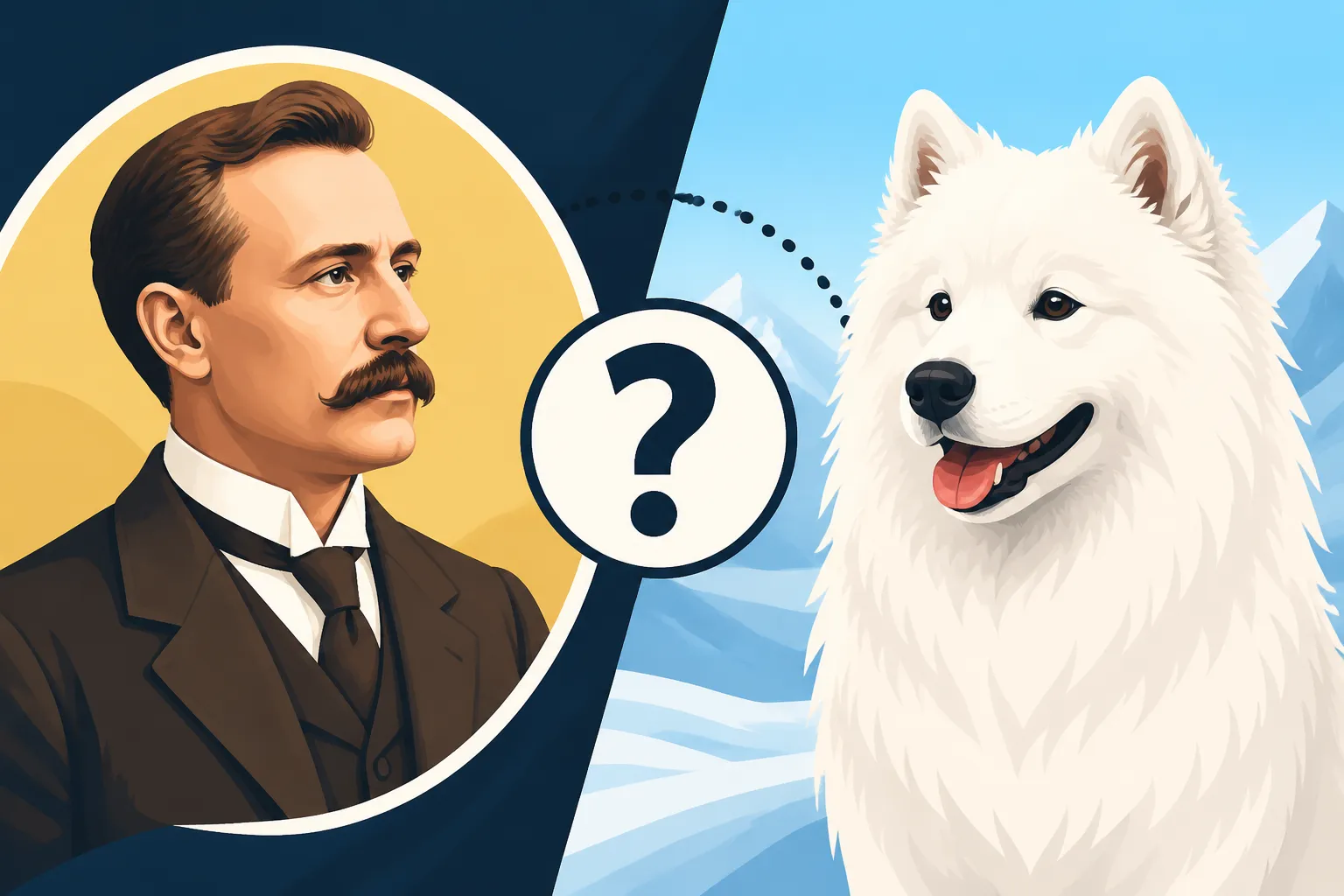
Did Ernest Kilburn Scott name the Samoyed?
The short answer is that Ernest Kilburn Scott is strongly associated with the Samoyed’s arrival and early promotion in Britain, but the claim that he personally created the breed name should be treated cautiously. Historical accounts often compress several different events—meeting the dogs, taking them to England, breeding or promoting them, and using the name—into one neat sentence.
That shortcut is understandable. Scott became an important figure in the breed’s early British history, so his name is often attached to the Samoyed’s origin story. But a person’s role in introducing a dog to a new audience does not automatically establish that the person invented the word used for it.
What is known about Scott’s connection to the breed
Ernest Kilburn Scott was an English zoologist who traveled in northern Russia in the late nineteenth century. Accounts of the breed’s history associate him with acquiring dogs in the region and bringing them to Britain. Those dogs helped introduce British audiences to a type of working dog that had long been kept by Indigenous peoples of the Russian Arctic and subarctic.
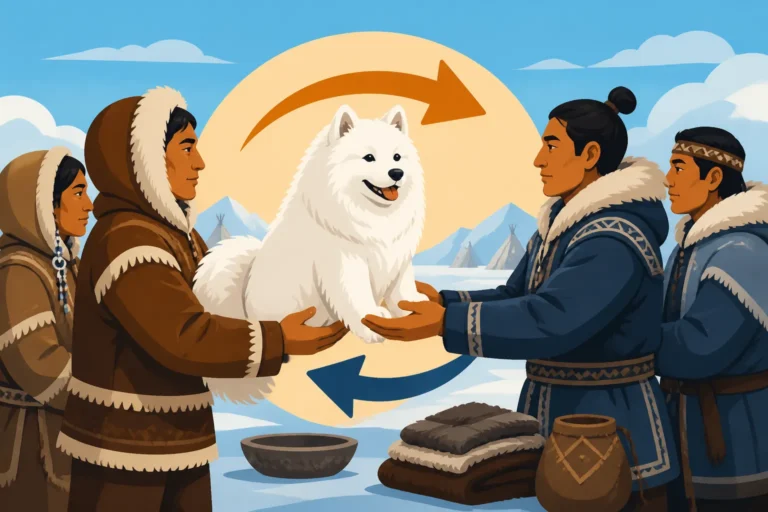
That distinction matters. Scott was not discovering a dog that had never existed before; he was encountering dogs already woven into people’s lives and livelihoods. Their work included herding reindeer and pulling sleds, alongside close contact with the families who kept them. For a broader picture of that relationship, see What the Nenets Bred the Samoyed to Do.
Scott’s importance is best understood as part of the breed’s transition into European kennel and exhibition culture. Once dogs were taken abroad, described in print, bred in a more organized way, and shown to the public, the name became more widely recognized in Britain. That influence is substantial, even if it does not prove he originated the name.
Why “introduced” and “named” get mixed up
Breed histories often tell a story in a single line: a traveler meets a dog, brings it home, and gives it a name. Real history is rarely so clean. A term may already be used in local or European accounts, while the traveler helps popularize it among a new group of readers and dog fanciers.
“Named the Samoyed” can therefore mean several different things:
- Scott personally coined the word “Samoyed.”
- He was among the first to use the term in Britain.
- He helped make the name familiar to British dog breeders and the public.
- Later breed histories linked the name to him because of his role in bringing dogs to Britain.
Those are not interchangeable claims. The first requires evidence that he created the word. The second and third are more consistent with the general story of his influence. When a source says he “named” the breed, it is worth checking whether it explains what it means by that word.
The breed’s name refers to people as well as dogs
The name “Samoyed” is connected to the peoples once commonly called Samoyedic peoples in European writing. The term is associated with several Indigenous groups and languages across northern parts of Eurasia; it is not simply a label Scott would have invented from the dogs’ appearance. The people most closely connected with the breed’s traditional history are often identified today as the Nenets, though the wider history involves more than one community.
The language around those communities has changed, and the history of the term itself is discussed and contested. That makes it especially important not to treat the dog’s name as a detached bit of branding. The history of Why the Name Samoyed Is Contested helps explain why the word can carry more complexity than a simple breed label suggests.
How the Samoyed name reached Britain
To understand Scott’s place in the story, it helps to separate the breed’s long history in its homeland from its comparatively recent visibility in Britain. The dogs existed as working companions before British breeders began shaping a recognizable show-breed identity. Scott’s travels belong to that later chapter, not to the beginning of the dogs themselves.
The dogs were established long before Scott’s travels
The Samoyed’s history reaches back to communities in northern Eurasia whose dogs worked in demanding conditions. These were not merely decorative white companions. They were valued for practical work and lived closely with people in a climate where cooperation between humans and animals mattered. The breed’s background is explored further in Where in Russia the Samoyed Comes From and How Old the Samoyed Breed Really Is.
It is also worth resisting the idea that there was one single moment when the breed suddenly came into being. Working dogs develop across generations, shaped by the needs and choices of the people who keep them. A modern breed name and written pedigree system may be relatively recent, while the underlying type of dog has a much older history.
That difference can be confusing if you are used to modern breed histories that begin with a club, a written standard, or a named founder. For the Samoyed, those records describe the breed’s formal recognition and spread in Europe; they do not mark the first appearance of the dogs or their relationship with the communities that developed them.
Scott helped make the dogs familiar to British audiences
Scott’s travels and imports gave British audiences a direct connection to dogs from the region. Once dogs arrived in Britain, they could be described, exhibited, bred, and discussed in ways that helped establish the Samoyed as a recognizable breed outside its homeland. This is the strongest reason his name remains prominent in the story.
The same pattern occurred with many breeds brought into European show culture: a traveler or breeder may become closely linked with the animal’s public introduction, even though the people who developed and used the dog are not the ones recorded in kennel histories. The resulting story can overemphasize the European intermediary and understate the older community history.
For context, Who Brought Samoyeds Out of Siberia looks at the wider movement of Samoyeds beyond their original communities. Scott is part of that history, but he was not the only person or event involved in making the dogs known internationally.
Early records do not always settle who first used a word
A name can be spoken, translated, printed, or standardized at different times. A term appearing in a British account does not necessarily mean the author invented it, and the first printed use that survives is not always the first use that ever occurred. Historical records are uneven, especially when the story crosses languages and cultures.
That is one reason claims about who “named” a breed can sound more certain than the evidence allows. To establish that Scott coined the name, a historian would need more than proof that he brought dogs to Britain or wrote about them. They would need evidence connecting him specifically to the creation of the term and showing that the term was not already in use.
A more careful description is that Scott helped bring Samoyed dogs to Britain and contributed to their recognition there. That wording gives him credit without assigning him authorship of a name that may have existed in other forms or contexts before his involvement.
| Claim about Scott | What it suggests | How cautiously to read it |
|---|---|---|
| Scott brought Samoyed dogs to Britain | He helped introduce the dogs to a British audience | A widely repeated part of the breed’s early British history |
| Scott promoted the breed | He helped increase public and breeder awareness | A reasonable description of his influence |
| Scott used the name in Britain | He may have helped make the name familiar there | Not the same as inventing it |
| Scott coined the name “Samoyed” | He created the word used for the breed | A stronger claim that needs specific evidence |
Why the naming story is often simplified
A simple origin story is easy to remember: one person travels, finds a dog, and names it. The Samoyed’s history is more complicated because it spans Indigenous communities, multiple languages, imported dogs, and later European breeding. When those layers are flattened into one sentence, Scott can end up being credited with more than the record clearly establishes.
Breed histories often focus on written records
Kennel histories tend to preserve details about imports, pedigrees, exhibitions, and breeders. Those details are useful for understanding how a modern breed developed in Britain and elsewhere, but they naturally give more space to the people and institutions that kept written records. Everyday knowledge held by the communities who had worked with these dogs for generations may be less visible in the same documents.
That imbalance can make the breed seem as if it began when it entered European records. It did not. The written history of the modern show breed is one chapter in a much longer relationship between northern peoples and their dogs. Learning about Who the Nenets Who Bred the Samoyed Are adds important context to that distinction.
The same caution applies to the word “found.” A European traveler may have encountered a dog unfamiliar to European readers, but that does not mean the animal or its working role was new. It means the dog entered a new set of records and a new public conversation.
The word “Samoyed” has its own complicated history
“Samoyed” is not simply a name attached to a dog by one British individual. It is linked to a broader historical label for peoples and languages, and the history of that label is not straightforward. Modern discussions may use “Samoyedic” for a language family, while specific communities are more accurately identified by their own names, such as Nenets where that is relevant.
This is why breed writing benefits from careful language. Saying “Scott named the Samoyed” can accidentally make it sound as though the breed’s identity began with him. Saying that Scott helped introduce Samoyed dogs to Britain is narrower, clearer, and better suited to the evidence typically repeated in breed histories.
If you encounter different explanations of the name, look for whether the writer distinguishes the name’s linguistic and cultural history from the dog’s later recognition as a formal breed. Those are related questions, but answering one does not automatically answer the other.
What a careful answer should say
A useful answer does not need to dismiss Scott’s role. He was important to the Samoyed’s early British story, and it is reasonable to mention him when discussing how the breed became known in Europe. The key is to avoid turning an important introduction into a definitive claim of invention unless the source provides strong evidence.
A careful summary of the historical claim would be: Scott helped bring Samoyed dogs to Britain and contributed to their early recognition there; whether he personally coined the breed’s name is not established simply by that role. That answer gives readers the distinction they need without pretending the historical record is neater than it is.
When you read a breed profile or hear the story from a breeder, notice the exact verb. “Imported,” “introduced,” “popularized,” and “named” each make a different claim. That small wording difference can keep a fascinating piece of Samoyed history from becoming an overly tidy legend.
How to read claims about Ernest Kilburn Scott
If you are researching Samoyed history for a puppy, a school project, or simple curiosity, you do not need to solve every uncertainty to understand the main point. A few practical questions can help you assess what a source is actually claiming and keep the story in context.
Check what the source means by “named”
If a source says Scott named the breed, ask whether it describes him inventing the word or simply using and popularizing it. A brief breed-history paragraph may use “named” loosely, while a more detailed account may distinguish the dog’s British introduction from the origins of the name.
Look for specific details rather than confident wording alone. Does the account say when and where Scott used the term? Does it discuss earlier use of related terms? Does it acknowledge the people and communities associated with the dogs before their arrival in Britain? If those questions are left unanswered, treat “named” as a shorthand rather than a proven act of coinage.
You can also compare the claim with broader histories of the breed. The Year the First Samoyed Reached England focuses on the dogs’ arrival, while a naming claim concerns the origin and adoption of a word. They may overlap in time, but they are not the same historical question.
Keep the traditional working history in view
A naming story is only one small piece of what makes the Samoyed’s history meaningful. The dogs were valued for their working abilities and close association with people in northern environments. Their later life as a British and international show breed should be understood alongside that earlier history, not as a replacement for it.
That context also helps explain why the breed’s history cannot be credited to one individual alone. Scott may have helped move particular dogs and their story into Britain, but the qualities that made those dogs valuable were shaped over generations by the communities who lived and worked with them.
Use precise wording when repeating the story
If you want to share the history accurately, try: “Ernest Kilburn Scott helped bring Samoyed dogs to Britain and make the breed known there; the claim that he personally coined the name is less certain.” It is clear, memorable, and does not overstate what an importation story can prove.
That phrasing also leaves room for the historical details that are not settled by a single sentence. The name has cultural and linguistic context; the dogs have a long history in northern Eurasia; and Scott belongs to the later story of their movement into Britain. Keeping those threads separate makes the story more accurate—and more interesting.
Disclaimer
This article is for general informational purposes only and does not constitute professional advice. Laws, prices and regulations vary by location and change over time. Consult a qualified professional for guidance on your specific situation.