Whether a Samoyed Suits a Hot Climate
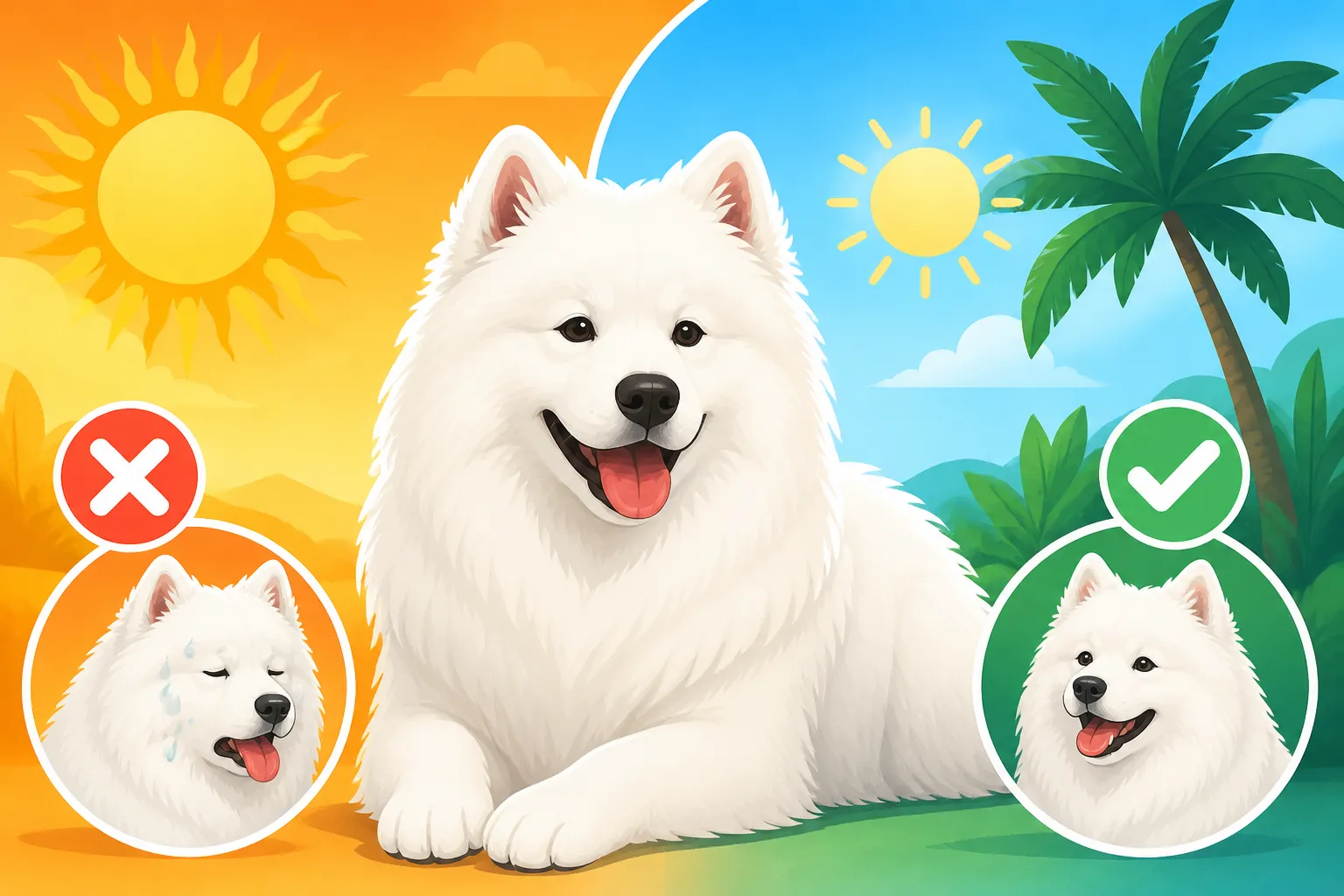
A Samoyed can live in a hot climate, but the breed’s thick double coat, high energy, and cold-weather heritage make summer management a serious part of daily care. In places such as Phoenix, Houston, or Miami, the key is not shaving the coat or hoping the dog will adapt; it is providing reliable indoor cooling, changing exercise routines, and recognizing overheating early.
Can a Samoyed Live in a Hot Climate
A Samoyed is not automatically unable to live somewhere warm. Many do, including in regions with long, hot summers. But a home in a warm climate needs to be set up around the dog’s comfort and safety, rather than treating heat as an occasional inconvenience.
Samoyeds have a dense undercoat beneath their longer guard hairs. The coat helps insulate them from cold and can provide some protection from direct sun, but it does not make them heatproof. Humidity, direct sunlight, exercise, poor airflow, and a warm indoor environment can all make it harder for a dog to lose excess body heat. The basics of this breed’s coat are explained in What a Samoyed's Double Coat Is Made Of and Why a Samoyed's Coat Insulates Against Heat as Well as Cold.
What matters more than the thermometer
A weather app can be a useful prompt, but the number alone does not tell you whether your Samoyed can safely handle a particular outing. Humidity makes panting less effective because moisture evaporates more slowly. A still, humid afternoon in Miami may feel more taxing than a dry morning in Phoenix, even when the temperature appears similar. Pavement, lack of shade, and a dog’s pace also matter.
Pay attention to the whole setting. Is there shade along your walking route? Is the dog panting heavily before you have gone far? Can you shorten the walk or turn back quickly? A Samoyed that is relaxed indoors with air conditioning is in a very different situation from one jogging beside a bicycle on sunlit pavement.
Individual dogs vary, too. Age, body condition, health, coat condition, and acclimation all affect heat tolerance. A young, fit adult may manage a carefully planned early-morning walk better than an elderly dog with a heart or breathing problem. Neither should be pushed simply because the breed is energetic.
What a hot-climate household needs to provide
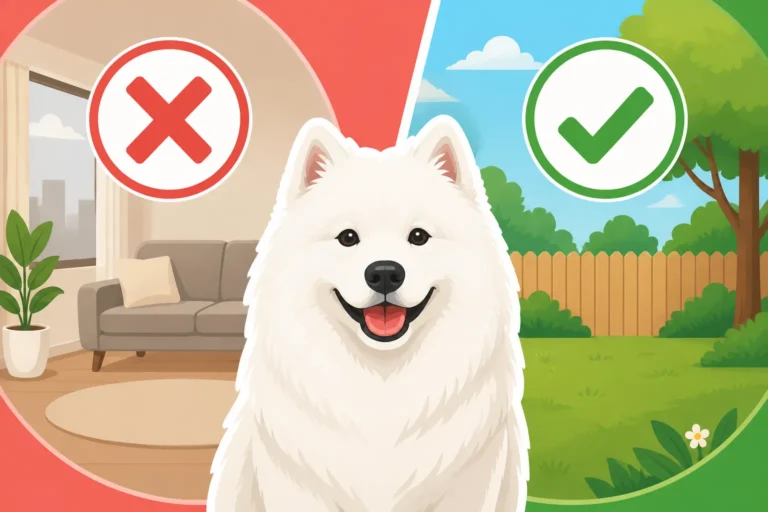
For many Samoyeds in warm regions, access to a reliably cool indoor space is essential. A fan may improve airflow, but it does not always cool a room enough on its own, particularly during hot or humid weather. If the household loses power or the air conditioning stops working, have a backup plan: a cooler location the dog can reach, a trusted person who can help, and a way to transport the dog safely.
Fresh water should be available indoors and outdoors, with bowls placed where the dog actually rests. Some dogs drink more readily from a fountain, while others prefer a familiar bowl. Retailers such as Chewy list different water-bowl and fountain styles, but what matters most is that your dog has clean water and that you can check it has not tipped over or emptied.
Think through the practical details before summer arrives. If your home is warm during the day while everyone is at work, can the dog stay in a cooled room? If your dog spends time in a yard, is there dependable shade and a way back indoors? A fenced yard is not a substitute for supervision: a dog can become distressed outside even if it can normally choose to go inside.
How to Keep a Samoyed Comfortable in Summer
The safest summer routine is usually a collection of small adjustments rather than one special gadget. Shift activity to cooler hours, make walks shorter when conditions are difficult, and give your dog a comfortable place to settle inside. For more detail on seasonal planning, see Water, Shade and the Summer Plan for a Samoyed.
Change the timing and intensity of exercise
In hot weather, aim for walks during the coolest part of the day, often early in the morning or later in the evening. Check the conditions where you will actually walk, not only the forecast for your neighborhood. A route with tree cover, grass, and access to water can be more comfortable than a long stretch of exposed sidewalk.
Keep exercise flexible. A Samoyed that usually enjoys a brisk walk may need a short sniffing walk, indoor training, or a food puzzle instead when it is hot. Avoid encouraging the dog to keep going just because it is pulling toward the park or seems excited. The goal is not to eliminate activity but to avoid demanding sustained exertion in conditions that make cooling difficult.
Pavement can heat up faster than the air. If you cannot comfortably keep your hand on the walking surface, choose a grassy route or wait for a cooler time. Even on grass, watch for heavy panting and slowing down. Guidance on adjusting walks appears in Whether a Samoyed Should Walk in Summer and How Early a Samoyed Should Be Walked in Summer.
Set up cooling options without relying on one product
A cool indoor floor, shade, and access to water may be more useful than a collection of accessories. Some dogs enjoy a cooling mat; others ignore it or chew it. If you try one, supervise your Samoyed at first and follow its care instructions. Chewy is one retailer where owners may find cooling mats and related pet supplies, but a product is only helpful if the dog will use it safely and the room itself is not too warm.
A shallow pool can offer supervised play for a dog that enjoys water, but do not assume every Samoyed wants to swim. Keep water clean, provide an easy way to get out, and stay nearby. Wetting the coat may provide temporary relief, especially when paired with airflow, but avoid leaving a dense coat wet for long periods. Thorough drying matters because moisture trapped near the skin can contribute to discomfort and coat problems.
Do not leave a Samoyed in a parked car, even for a brief errand. The interior can become dangerous quickly, and cracked windows do not make the car a safe place to wait. If the dog cannot come inside with you, leave the dog at home in a comfortable, cool environment.
| Situation | Safer adjustment | What to watch for |
|---|---|---|
| Warm morning walk | Choose a shaded route and keep it easy | Panting that becomes intense or does not settle |
| Hot afternoon | Stay indoors and use calm enrichment | Restlessness, weakness, or unusual drooling |
| Yard time | Provide shade, water, supervision, and indoor access | Seeking an exit, lying unusually still, or struggling to breathe |
| Cooling mat or pool | Introduce it with supervision and let the dog choose | Chewing, distress, or reluctance to use it |
| Unexpected heat or power loss | Move to a cooler location and contact your veterinarian for guidance | Any signs of heat illness |
Grooming and Coat Care in a Warm Region
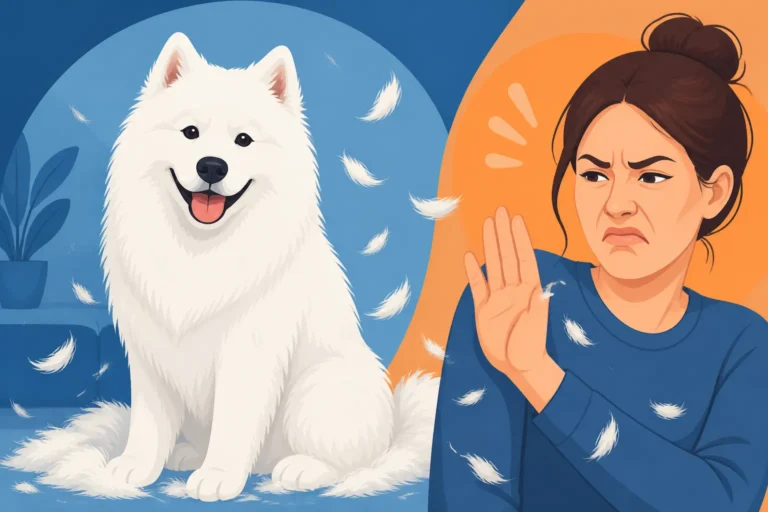
It can be tempting to remove a Samoyed’s coat when summer arrives. That is understandable: the shedding can be dramatic, and watching a fluffy dog pant may make shaving seem like the obvious fix. But shaving a double-coated dog is not a dependable way to prevent overheating, and it can expose skin to sun damage and interfere with the coat’s normal function.
Brush out loose undercoat rather than shaving
Regular brushing helps remove loose undercoat and lets you check the skin for mats, irritation, and debris. It also helps prevent packed, tangled areas that can make grooming uncomfortable. Pay particular attention to places where mats often form, such as behind the ears, under the collar, around the legs, and where the harness sits.
A coat that looks full is not necessarily a coat that needs to be cut off. Ask a groomer who understands double-coated breeds to help with de-shedding and basic trimming, especially if you are struggling to reach the skin with a brush. Do not use scissors to cut out a tight mat close to the body; a dog’s skin can be difficult to see through dense fur.
The advice in How Often a Samoyed Needs Brushing and Why a Samoyed Must Never Be Shaved can help you build a grooming routine. Chewy may carry brushes and combs in different styles, but choose tools that suit your dog’s coat and use them gently. If brushing is painful, the dog is intensely fearful, or mats are tight to the skin, ask a professional groomer or veterinarian for help rather than trying to force the process at home.
Keep the coat clean and dry
A clean, well-maintained coat is easier to brush and inspect. Bathe your Samoyed when there is a practical reason, such as dirt or odor, and dry the coat thoroughly afterward. Dense fur can stay damp near the skin even when the outer layer feels dry. That is especially worth considering in humid places such as coastal Florida or the Gulf Coast.
Do not use whitening products or frequent bathing simply to keep the coat looking bright. Skin comfort comes first. If the coat suddenly changes, the skin becomes itchy or red, or the dog develops a persistent odor, ask your veterinarian whether there is an underlying skin or health issue.
Recognizing Heat Stress and Making a Climate Decision
A Samoyed may be comfortable in a warm region when the household can consistently manage the environment. That same climate may be a poor fit if the dog is expected to spend long hours outdoors, exercise during the hottest part of the day, or stay in a home that cannot be kept cool. It helps to think honestly about your schedule, housing, and backup options before deciding.
Know when panting is more than ordinary cooling
Panting is a normal way for dogs to release heat, so panting by itself does not always mean an emergency. What matters is the intensity, the context, and whether your dog begins to recover after resting in a cooler place. Heavy or worsening panting, weakness, stumbling, unusual confusion, vomiting, collapse, or very dark or unusually pale gums are warning signs that need urgent veterinary attention.
If you suspect heatstroke, move your dog to a cooler area and contact an emergency veterinarian immediately. Follow the clinic’s instructions about cooling and transport. Do not delay getting help to try home remedies, and do not force water into a dog that is weak, confused, or unable to swallow normally. Heat illness can become life-threatening, so a dog with concerning symptoms needs prompt professional care.
It is useful to learn your Samoyed’s usual behavior when resting and after normal exercise. If the dog typically settles within a short time but is now panting hard and unable to get comfortable, treat that change seriously. Signs a Samoyed Is Overheating and How a Samoyed Should Be Cooled Down cover signs and first steps in more detail.
Decide whether your home and routine are a good fit
Before bringing a Samoyed into a hot-climate home, consider the daily realities—not just whether the dog can technically live there. Can you keep an indoor area comfortably cool? Can walks move to cooler hours? Is someone available to check on the dog during a heat wave? Can you avoid leaving the dog outdoors when you are away? If the answer to several of these questions is no, the challenge may be the household setup rather than the breed alone.
For someone who already has a Samoyed, a move to a warmer place does not automatically mean rehoming is necessary. Start by adapting the routine and discussing individual health concerns with a veterinarian. Older dogs, overweight dogs, puppies, and dogs with heart or respiratory conditions may need more cautious plans. A veterinarian can help you account for your dog’s health and the conditions where you live.
Also consider the less obvious costs of staying comfortable: air conditioning, cooling supplies, and changes to work or travel routines. Product listings from Chewy can help you compare categories such as cooling mats or water fountains, but supplies cannot replace shade, supervision, sensible exercise timing, and a cool indoor refuge. For broader breed-fit considerations, Whether a Samoyed Suits a Hot Climate is one part of deciding whether the Samoyed’s needs fit your household.
A Samoyed can enjoy life in a warm region when its people take heat seriously. Keep the dog’s coat maintained rather than shaved, adjust activity to the weather, provide access to a cool indoor space and fresh water, and treat signs of heat illness as urgent. The most useful question is not whether a Samoyed can tolerate one hot day; it is whether you can provide a safe, comfortable routine throughout the warm season.
Disclaimer
This article is for general informational purposes only and does not constitute professional advice. Laws, prices and regulations vary by location and change over time. Consult a qualified professional for guidance on your specific situation.