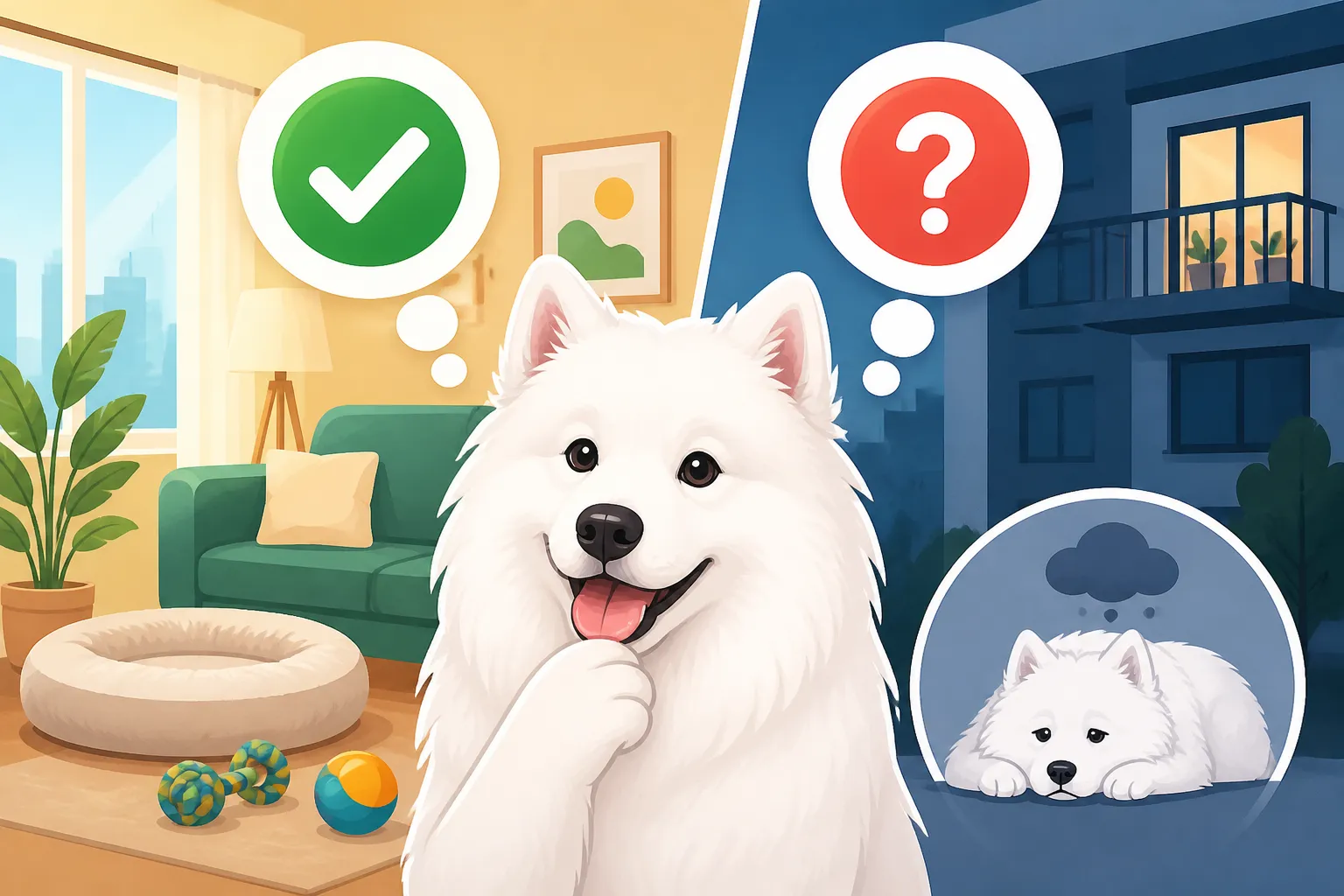
Whether a Samoyed Suits an Apartment
A Samoyed can live in an apartment, but the floor plan is rarely the hardest part. The real challenges are keeping this energetic, people-oriented dog exercised, managing vocalizations when neighbors are close, and staying on top of heavy shedding. This guide explains what apartment life asks of both you and your Samoyed—and how to tell whether your routine is a good fit.
Can a Samoyed Be Happy in an Apartment
Space matters less than daily routine
Samoyeds are medium-to-large dogs, but they do not automatically need a house with a backyard to thrive. A yard can make quick bathroom breaks easier, but it does not replace walks, play, training, or time with their people. A dog with plenty of space but little company or activity may struggle more than one in a modest apartment with a dependable routine.
Think about what an ordinary weekday would look like. If your Samoyed gets a brisk morning outing, chances to sniff and explore, indoor interaction, and another substantial outing later, apartment living may be workable. If the plan is a quick loop around the block followed by a long stretch alone, the dog may become bored, restless, or noisy.
A Samoyed’s exercise needs are individual, and age, health, and weather matter. Puppies need carefully managed activity while they grow, while healthy adults often enjoy a mix of walks, play, and activities that give them a job. For a fuller look at planning a routine, see How Much Exercise a Samoyed Needs.
A walkable neighborhood can help
An apartment in a walkable neighborhood may make it easier to build variety into the day. A route through a park, a quiet residential street, or a safe green space gives your dog more to do than repeatedly circling the same small patch of pavement. In a city such as Boston, Seattle, or Chicago, access to parks and pedestrian routes can be useful, but the practical details vary by building and neighborhood.
Do not assume that a nearby dog park will solve the exercise question. Some Samoyeds enjoy meeting other dogs; others prefer familiar companions or one-on-one play. A reliable walk, sniffing time, short training games, and supervised play can be more useful than relying on a crowded park as the main daily outlet.
Consider the route from your door to the outdoors, too. A high-rise may involve elevators, busy lobbies, and waiting for a lift when your puppy needs to go out quickly. A third-floor walk-up may be difficult with a growing dog, an older dog, or a Samoyed recovering from an injury. These are not reasons an apartment cannot work, but they should be part of your decision before bringing a dog home.
Match the dog to your particular apartment
“Apartment living” can mean a quiet ground-floor unit beside a park or a small upper-floor home with thin walls and a busy hallway. Those environments create very different experiences. Think about noise transfer, access to outdoor space, the building’s pet rules, and whether your neighbors are likely to hear a dog responding to hallway sounds.
Also look at your own tolerance for fur and everyday activity. A Samoyed’s coat can leave hair on floors, furniture, clothing, and the car. In a smaller home, that hair may feel more noticeable simply because there is less space to spread out. If you are already frustrated by daily cleaning, the coat may become a bigger issue than the apartment’s square footage.
For a closer look at the differences between apartment and condo life, see Whether a Samoyed Can Live in a Condo. The key question is not simply “Is this apartment big enough?” It is “Can I reliably meet this dog’s physical, social, and grooming needs in this home?”
The Main Apartment Challenges
Noise can become a neighbor problem
Samoyeds are often vocal. They may bark, howl, whine, or make a range of expressive sounds during play, when excited, or when they want attention. A dog that is merely chatty in a detached home can feel much louder in a building where sound carries through shared walls and hallways. For a detailed explanation of the breed’s voice, see How Loud a Samoyed Gets.
Noise is especially worth planning for if your dog reacts to footsteps outside the door, elevator sounds, delivery workers, or other dogs passing the apartment. A Samoyed may also vocalize when left alone, and that can be distressing for the dog as well as disruptive for neighbors. It is easier to prevent a pattern from becoming established than to wait until you have repeated complaints.
Start by noticing what sets off the sound rather than trying to stop every noise with a correction. If the dog barks when people walk past the door, use distance, calm redirection, and rewards for settling. A quiet cue can be useful when taught patiently; it is not a magic switch that makes a naturally communicative breed silent. See Teaching a Samoyed a Quiet Cue for more on building that skill.
| Apartment factor | Why it matters for a Samoyed | Practical step |
|---|---|---|
| Thin walls or shared hallways | Barking and howling may be heard by neighbors | Practice calm responses to hallway sounds and avoid leaving the dog to rehearse barking for long periods |
| Long workday away from home | A social, active dog may become bored or distressed | Arrange a midday visit, dog walker, or other appropriate break |
| No nearby green space | Exercise and toileting can take more planning | Map several safe walking routes before bringing the dog home |
| Small rooms and limited storage | Fur, grooming equipment, and dog supplies can take over quickly | Set up a washable resting area and a regular grooming station |
| Hot indoor conditions | A thick-coated dog can become uncomfortable in warm weather | Keep the home cool and plan outings for cooler parts of the day |
Being alone may be harder than being indoors
Many Samoyeds like being near their people. That can be lovely when you are home, but it can make a long, quiet day alone difficult. Some dogs settle comfortably after gradual practice; others show distress through vocalizing, pacing, chewing, or attempts to escape. Those behaviors are not simply bad manners, and punishing them can make the situation more stressful.
If you work outside the home, plan for the whole day rather than focusing only on the hours when you are gone. A morning walk can help, but it may not carry a young or energetic dog through a full workday. Depending on the dog, a trusted visitor, walker, daycare arrangement, or staggered household schedule may make a real difference. The best option depends on the individual Samoyed and the safety and suitability of the caregiver or facility.
Build alone time gradually, beginning with brief, calm departures rather than suddenly leaving the dog for hours. A stuffed food toy or safe chew may help some dogs settle, but enrichment does not replace companionship or a bathroom break. If you are weighing a regular work schedule against the breed’s social needs, Whether a Samoyed Can Be Left Alone is a useful companion guide.
Heat and coat care need a plan
Samoyeds have a dense double coat. Apartment living does not make the coat less demanding: loose undercoat can collect around furniture and can become especially noticeable during seasonal shedding. Regular brushing helps remove loose hair and gives you a chance to check for tangles, skin irritation, or debris. Fur is not a once-a-week problem for every dog, especially during a coat blow.
A compact home can make grooming supplies feel like clutter, so decide where brushes, towels, and a vacuum will live. You might keep a washable mat near the entrance and brush in one easy-to-clean area. If you shop for brushes, lint rollers, or washable covers, Chewy is one place owners may compare pet-care supplies; choose tools suited to your dog’s coat and grooming habits rather than buying a large set you may not use.
Warm weather is another apartment consideration. A Samoyed can live in a warm region, but needs shade, water, a comfortable indoor temperature, and exercise timed to avoid heat. A sunny top-floor apartment may warm up quickly, so check how the rooms feel in the afternoon and whether you can keep the space comfortable when you are away. Do not shave the coat to solve a heat problem; the coat has an insulating role, and shaving is not a substitute for cooling and sensible activity. See A Samoyed Built for Sixty Below in an American Summer and Why a Samoyed Must Never Be Shaved for more about coat and climate.
How to Make Apartment Life Work
Build a realistic daily schedule
A successful routine does not have to be elaborate, but it does need to be consistent. The goal is to provide movement, bathroom opportunities, companionship, and mental engagement throughout the day. Adjust the plan as your dog grows, changes, or shows you that the current routine is too much or too little.
A possible adult-dog weekday might look like this:
- Take a morning walk that allows time to sniff, toilet, and move at a comfortable pace.
- Offer a short training session or food puzzle before you leave.
- Arrange a midday bathroom break and interaction if you will be away for much of the day.
- Give your dog a second outing after work, with play or training suited to its energy and health.
- Set aside time for calm companionship and a brief coat check or brushing as needed.
This is a starting point, not a fixed prescription. A puppy will need more frequent toilet breaks and carefully managed activity. An older dog may benefit from shorter, gentler outings and easier access to rest. If the weather is hot, move activity to cooler hours and keep outdoor sessions shorter.
Give your dog indoor jobs
An apartment can feel dull if every day consists of the same short pavement loop. You can add variety indoors without needing a large room. Hide a few pieces of the dog’s regular food for a supervised scent game, practice simple cues in short sessions, or rotate safe toys so they remain interesting. A Samoyed may enjoy learning practical routines such as settling on a mat while you cook or waiting calmly before going through the door.
Choose activities that suit your dog and your home. Games that involve frantic running or jumping may be a poor fit in a small space, especially if they could disturb downstairs neighbors or lead to slips on hard flooring. Quiet sniffing games and brief training sessions can use energy without turning your living room into an indoor racetrack.
Some owners use puzzle feeders or durable toys to add structure to meals. Chewy may be a convenient place to browse these kinds of supplies, but check that a toy is appropriate for your dog’s size, chewing style, and supervision needs. No puzzle toy should be treated as a substitute for exercise, training, or a bathroom break.
Prepare for common-area manners
Apartment dogs share space with people who may not want an enthusiastic greeting from a fluffy, excited Samoyed. Practice walking through the lobby without pulling toward every person or dog. Reward your dog for keeping four paws on the floor, waiting politely at doors, and moving with you through elevators and corridors.
A leash and secure equipment matter even when the walk to the street is short. Some Samoyeds are quick to investigate an open door or an interesting distraction. Practice a pause at thresholds and keep control of the leash before the elevator opens. For more on the breed’s tendency to be vocal in close quarters, see Whether a Samoyed Suits a Quiet Neighborhood.
Also think through practical building rules before you adopt or bring home a puppy. Confirm that dogs are permitted, check any restrictions that apply to your situation, and understand expectations for shared spaces. Set up a plan for muddy paws, wet weather, and snow or road salt. Keep towels by the entrance, and rinse or wipe paws after walks when needed.
How to Decide Whether Your Apartment Is a Good Fit
Use the everyday test, not the square-footage test
Picture a difficult but ordinary day: it is raining, you have a busy work schedule, the elevator is slow, and your dog has more energy than usual. Can you still provide a toilet break, a useful walk, and enough company? Can you handle shedding in the space you have? If a neighbor reports barking, are you able to investigate the cause and adjust your routine?
A good fit does not mean every day will be perfect. It means you have realistic ways to deal with predictable challenges. For example, you might identify a reliable dog walker before your schedule becomes busy, locate a nearby route that is safe in poor weather, and make room for grooming tools before the first major coat shed.
If you are considering a puppy, remember that the early months can be particularly demanding in an apartment. Frequent toilet trips mean repeated trips through the building, and alone-time skills need to be built gradually. An adult Samoyed may already have some routines, but its exercise needs, vocal habits, and comfort with being alone still need to be assessed individually.
Signs your setup may need adjustment
A Samoyed who is not getting enough activity or support may show changes in behavior. Repeated barking when alone, destructive chewing, restless pacing, difficulty settling, or unusually intense attention-seeking are reasons to look closely at the routine. They do not prove that apartment life is impossible; they are signals to consider what the dog may need and whether any other cause should be ruled out.
Keep notes for a week if you are unsure. Record when the dog vocalizes, how long it has been alone, what exercise it had, and what was happening in the building. A pattern may emerge: perhaps the barking begins when the hallway gets busy, or the dog struggles on days without a midday visit. That is more useful than labeling the dog “stubborn” or assuming it will simply grow out of the behavior.
A vet or qualified behavior professional can help when behavior changes are persistent, severe, or difficult to interpret. Pain or illness can affect a dog’s behavior, and separation-related distress may need a thoughtful plan rather than trial-and-error punishment.
A practical suitability checklist
Use these questions to make the decision concrete:
- Can you provide daily walks, play, and mental engagement rather than relying only on a small outdoor area?
- Can your dog get bathroom breaks often enough for its age and needs?
- Is there a workable plan for time alone, including days when you are delayed?
- Can you manage vocalization in a building with nearby neighbors?
- Do you have space and time for regular brushing and cleanup?
- Can you keep the home comfortable during warm weather?
- Have you checked the building’s pet rules and planned for shared-space manners?
- Are you willing to adapt the routine if your Samoyed is more active or vocal than expected?
Mostly confident answers suggest that apartment life may be manageable, especially if you are prepared to adjust. Several uncertain answers are not an automatic no, but they deserve a plan before you commit. A Samoyed can be a devoted apartment companion when its needs fit the household; the same dog can be overwhelmed when exercise, company, noise management, and coat care are treated as afterthoughts.
Disclaimer
This article is for general informational purposes only and does not constitute professional advice. Laws, prices and regulations vary by location and change over time. Consult a qualified professional for guidance on your specific situation.