Whether a Samoyed Can Be Left Alone
Oh, the quintessential Samoyed dilemma: can these magnificent, fluffy shadows truly handle being left alone? It’s a question that plagues so many Samoyed owners, filling us with guilt and worry every time we step out the door. You’re not alone in wondering if that sweet, smiling face is actually masking a brewing storm of anxiety, or if your return will be met with the familiar symphony of a vocal Samoyed or, worse, a scene of playful, but costly, destruction. This guide is here to shed light on exactly how Samoyeds typically cope with solitude, what to watch for, and how to set them up for success so both you and your furry friend can navigate alone time with less stress.
Why Samoyeds Struggle with Solitude
Let's be real, a Samoyed isn't just any dog. They are a breed steeped in history as close companions, deeply woven into the fabric of human life for thousands of years. This isn't some romanticized notion; it's a fundamental part of their genetic makeup and temperament, and it directly impacts how they handle being left by themselves.
Their Bred Purpose and History
Imagine their ancestors, living alongside the Nenets people of Siberia. These dogs weren't just outdoor workers; they were family. They herded reindeer by day and, crucially, slept inside the tents with their human companions at night. This wasn't for warmth alone, though that certainly played a part when temperatures plummeted to unthinkable lows. It was for mutual protection and companionship. They were always within arm's reach, always aware of their human family. This constant, intimate contact fostered an incredibly strong bond, an inherent need for connection that has been passed down through generations. When you bring a Samoyed into your home, you're not just adopting a pet; you're inviting a millennia-old tradition of cohabitation into your life. They were literally bred to be with people, a fact eloquently explored in The Samoyed Slept in the Tent to Keep People Alive.
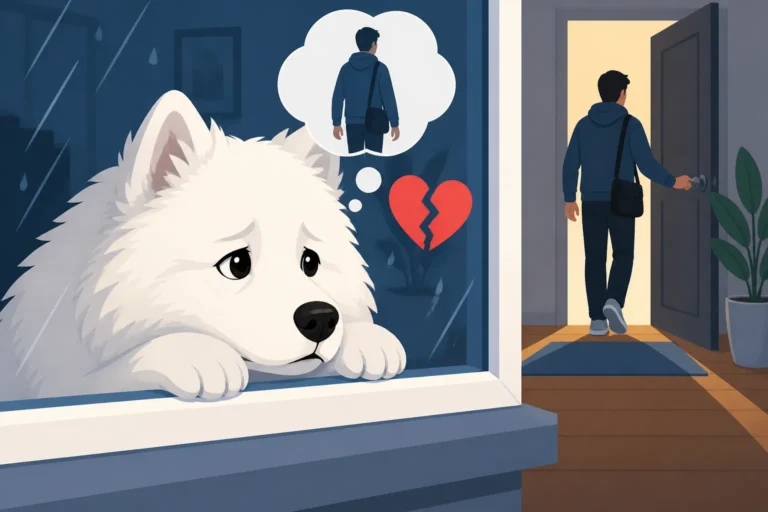
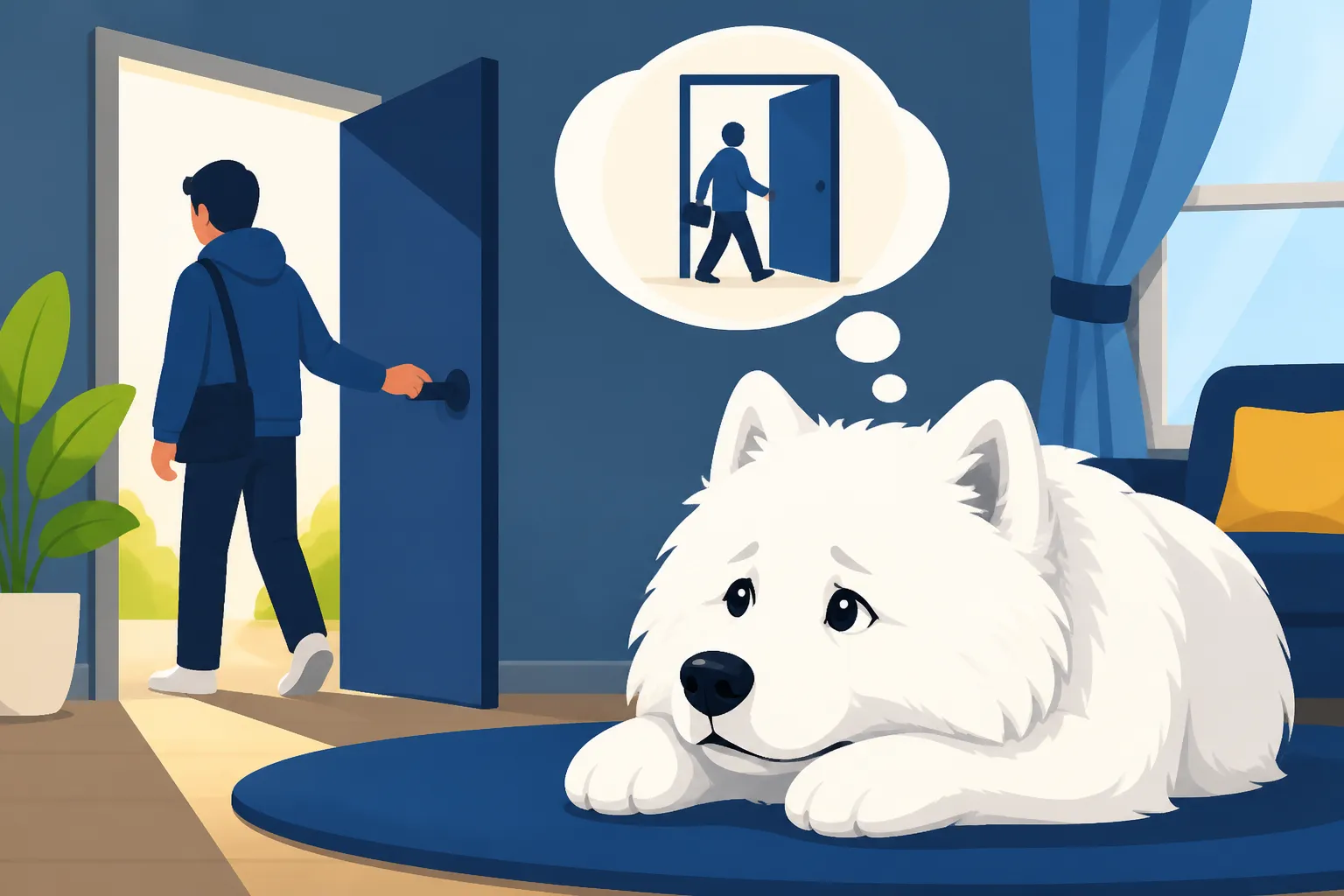
This history means that for a Samoyed, being alone isn't just a minor inconvenience; it can feel fundamentally unnatural. Their instinct tells them they should be part of the pack, contributing, watching, participating. When that connection is broken, even temporarily, it can trigger deep-seated feelings of unease or even abandonment. They don't understand that you're just going to the grocery store or work; they just know their pack leader, their source of comfort and security, is gone. This primal programming is incredibly difficult to override, and it’s why understanding their background is the first step in helping them adapt.
The "Velcro Dog" Tendency
If you own a Samoyed, you know exactly what I'm talking about when I say "Velcro dog." They often follow you from room to room, even just for a quick trip to the bathroom. They're happiest when they're curled up at your feet, or even just in the same room, observing your every move. This isn't clinginess in an annoying way; it's a genuine expression of their desire to be part of your world. They thrive on interaction, on being included, and on receiving attention, even if it's just a quiet presence. This profound attachment, while endearing, is precisely what makes alone time so challenging for them. The article Why a Samoyed Wants to Be in the Room With You dives deeper into this beloved trait.
This strong bond means that the absence of their human can feel like a significant loss, even if it's brief. For some Samoyeds, this manifests as mild boredom or a bit of vocal protest. For others, it can escalate into full-blown separation anxiety, where the dog experiences genuine panic when left alone. They might not just miss you; they might feel truly unsafe or abandoned, even in the comfort of their own home. It’s crucial not to dismiss this as mere naughtiness, but to understand it as a deeply felt emotional response stemming from their core nature.
High Intelligence and Boredom
Samoyeds are intelligent dogs, curious and quick to learn, but this intelligence can be a double-edged sword when it comes to being left alone. A smart dog with nothing to do is a dog looking for a job, and if you don't provide one, they'll invent their own – often to the detriment of your furniture, carpets, or sanity. They aren't content to simply sleep the day away; their minds are active, and they need stimulation. If they're left in a quiet house with no mental engagement, boredom sets in quickly.
This boredom isn't just a passive state; it's an active motivator for seeking entertainment. And what's entertaining to a Samoyed? Chewing on something new, exploring forbidden areas, or finding novel ways to express their discontent. This is where that innocent fluffball can transform into a furry wrecking ball. They might dismantle pillows, unpot plants, or even attempt impressive feats of escape. Their problem-solving skills, so useful in other contexts, become a challenge when they're trying to figure out how to alleviate their own boredom. It's not malicious; it's just a natural consequence of having a clever dog without sufficient mental outlets during periods of solitude.
Common Behaviors of a Lonely Samoyed
When a Samoyed is unhappy about being left alone, they're generally not subtle about it. Their distress or boredom often manifests in ways that are hard to ignore, and sometimes, even harder to mitigate. Understanding these behaviors is key to addressing the underlying issue rather than just reacting to the symptoms.
The Samoyed Scream and Vocalizations
Ah, the Samoyed scream. If you've never heard it, consider yourself lucky (or be prepared!). It's not a bark, not exactly a howl, but a unique, high-pitched, often ear-splitting vocalization that can sound anywhere from a frustrated toddler to a banshee. This is often their go-to method for protesting your absence. They might start with a few mournful howls, escalating to a sustained, powerful scream that echoes through the neighborhood. This isn't just noise; it's a deep-seated expression of their anxiety, boredom, or frustration. They're calling for their pack, for you, to return. The Samoyed Scream and Why It Is Not Barking provides a fantastic deep dive into this particular vocal quirk.
Beyond the scream, Samoyeds are generally quite vocal animals. They grumble, they "talk," they make a variety of expressive sounds. When left alone, these can multiply. You might hear incessant barking, a repetitive "woof" directed at nothing in particular, or a continuous whine. For neighbors, this can be a real point of contention, leading to complaints and stress for you. It's a clear sign that your Samoyed is struggling to cope with their environment without you there, and it's their primary way of trying to communicate that distress. Understanding How Loud a Samoyed Gets is crucial if you live in close proximity to others.
Destructive Chewing and Digging
For many Samoyed owners, coming home to a destroyed sofa cushion or a newly dug crater in the backyard is a painful reality of a lonely dog. Destructive chewing and digging are incredibly common stress or boredom relief behaviors. When their minds aren't engaged, and their anxiety levels rise, dogs will often turn to these instinctual actions to self-soothe. Chewing releases endorphins, which can help calm a stressed dog. Digging, for a Samoyed, is also a natural behavior – they might dig to create a cool spot in the summer, or simply because it's an engaging activity. The Digging a Samoyed Does Because It Is Hot offers insight into this behavior.
However, when it's done out of anxiety or profound boredom, it becomes problematic. They're not being "bad"; they're simply channeling their energy and emotions into an available outlet. This can mean shredded mail, gnawed furniture legs, torn-up carpets, or even holes in drywall. The value of the destroyed items aside, this behavior indicates a significant level of unhappiness in your dog. It's a plea for more appropriate stimulation or a solution to their anxiety. What a Bored Samoyed Does to a House offers more context on how boredom can lead to these costly habits.
Escape Attempts
Samoyeds are clever, and if they're motivated enough by loneliness or boredom, they can become surprisingly adept escape artists. They were historically bred to be independent and resourceful, traits that can be challenging when they're trying to reunite with you or simply find something more interesting to do. This isn't about being disobedient; it's about following an instinctual drive to explore or find their "pack." They might scale fences, dig under them with impressive speed, or even figure out how to open gates and doors. How a Samoyed Gets Out of Anything You Build is a testament to their ingenuity.
The concern with escape attempts is not just the potential for property damage or the stress of a lost dog, but the very real dangers a loose Samoyed faces. Traffic, other animals, and getting genuinely lost are all serious risks. A Samoyed doesn't have the best recall, especially when their instincts are driving them, making a speedy reunion difficult. This behavior is a strong indicator of a Samoyed who cannot comfortably be left unsupervised, particularly in an unsecured yard. They're telling you, loud and clear, that their need for connection or stimulation outweighs their willingness to stay put. Even simple latches can become a puzzle for a determined Samoyed, as discussed in The Gate Latch a Samoyed Learns to Open.
Setting Up for Success: Preparing Your Samoyed for Alone Time
Successfully teaching a Samoyed to be comfortable alone is less about forcing them into submission and more about building their confidence and trust. It requires patience, consistency, and a deep understanding of their needs.
Early Socialization and Independence Training
The foundation for a well-adjusted Samoyed who can tolerate alone time starts early, ideally during puppyhood. It's not just about exposing them to new sights and sounds, but also about gently introducing the concept of independence. This means starting with very short periods of separation, even just stepping into another room for a minute or two, and gradually increasing the duration. Make sure these separations are calm and uneventful, and that your returns are equally low-key – no huge fuss, which can inadvertently reward their anxiety upon your return.
One excellent way to approach this foundational training is through structured, positive reinforcement methods. Online puppy programs, such as those offered by BAXTER & Bella, can be invaluable resources. They provide step-by-step guidance on how to build confidence, establish routines, and teach basic obedience that contributes to a more secure dog. These programs often include modules specifically designed to help puppies develop independence and cope with short periods of solitude, giving you the tools to prevent separation anxiety before it even takes root. Remember, a confident puppy often grows into a confident adult, capable of handling life's ebbs and flows, including your temporary absences. This is a critical period for them, as explored in The First Year With a Samoyed Puppy.
Creating a Safe and Comfortable Den
Every Samoyed needs a personal space where they feel secure, undisturbed, and comfortable. For many, this comes in the form of a crate. A crate, when introduced positively, becomes their den – a safe haven rather than a prison. It should be just large enough for them to stand up, turn around, and lie down comfortably. Fill it with a soft bed, a favorite chew toy, and maybe even a blanket that smells like you. The goal is for them to associate their crate with positive experiences, relaxation, and safety. This is where they can retreat when feeling overwhelmed, or simply when they want to nap without interruption.
Beyond the crate, consider a dedicated "safe room" if crating isn't an option or is used in conjunction with a larger space. This could be a laundry room or a spare bedroom, puppy-proofed thoroughly. Remove anything they could chew, ingest, or destroy. Ensure it's not too warm, especially for a Samoyed, and has access to fresh water. This space should also be associated with positive things – special toys that only come out when you leave, or high-value treats. The aim is to create an environment where they feel contained, secure, and relaxed, making the experience of being alone less intimidating and more tolerable.
Routine and Predictability
Dogs, and especially intelligent breeds like Samoyeds, thrive on routine. They find comfort in predictability, knowing what to expect and when. Establishing a consistent schedule for feeding, walks, playtime, and alone time can significantly reduce anxiety. If your Samoyed knows that after their morning walk and breakfast, you'll leave for a couple of hours, but then you'll return for playtime, it helps them manage their expectations. The unknown is often scarier than the known.
Before you leave, always provide adequate exercise and a potty break. A tired Samoyed is generally a good Samoyed, more likely to settle down and rest than to pace and fret. Engage them in a good, long walk, a vigorous game of fetch, or even some mental stimulation with training exercises. This expends both physical and mental energy, leaving them more inclined to nap while you're gone. When you do leave, try to keep your departure low-key. Avoid prolonged goodbyes or excessive reassurance, as this can inadvertently signal to your dog that your leaving is a big, stressful event. Just a calm "I'll be back soon" and out the door. Your consistent actions will teach them that your departures are temporary and always followed by your return.
Tools and Strategies to Help Your Samoyed Cope
Even with solid training and a comfortable den, some Samoyeds need a little extra help to truly relax when you’re not around. Thankfully, there are many tools and strategies available to make alone time more manageable for everyone.
Enrichment Toys and Puzzle Feeders
A bored Samoyed is a destructive Samoyed. To combat this, mentally stimulating enrichment toys and puzzle feeders are absolute lifesavers. These aren't just toys; they're jobs that keep your Samoyed's brain engaged and their mouth busy in a positive way. A classic Kong toy, stuffed with peanut butter, kibble, or even frozen yogurt, can keep a Samoyed occupied for a good chunk of time. LickiMats, snuffle mats, and various treat-dispensing toys force them to "work" for their food, turning mealtime into a mental exercise.
You can find a huge variety of these items on platforms like Amazon, from simple rubber toys to intricate, multi-stage puzzles. Rotate these toys so your Samoyed doesn't get bored of them. Introducing a novel toy right before you leave can be particularly effective at redirecting their attention away from your departure. The key is to make these special "alone time" toys highly appealing, something they eagerly anticipate. This transforms your absence from a source of anxiety into an opportunity for a rewarding challenge.
Calming Aids and Background Noise
Sometimes, despite your best efforts, your Samoyed still feels anxious when left alone. In these cases, certain calming aids can make a noticeable difference. Pheromone diffusers, sprays, or collars, which release synthetic versions of natural dog appeasing pheromones, can help create a more serene environment. These aren't sedatives but rather signals that promote feelings of comfort and security. Some owners also find success with calming supplements containing ingredients like L-theanine or tryptophan, though it's always wise to discuss any supplements with your veterinarian first.
Background noise can also be surprisingly effective. A radio playing soft music, a TV left on a talk show, or a white noise machine can mask external sounds that might trigger barking or alarm in your Samoyed. It also provides a sense of company, filling the silence that can feel isolating. Some dogs even respond well to specialized "dog calming music" playlists available on streaming services. Experiment to see what works best for your Samoyed, creating an auditory environment that promotes relaxation rather than heightened awareness.
Monitoring Your Samoyed
One of the biggest worries for owners leaving their Samoyed alone is not knowing what's happening. Are they barking? Are they destroying things? Are they panicking? Pet cameras have become an indispensable tool for many owners. These cameras allow you to remotely check in on your Samoyed from your phone, giving you peace of mind and valuable insight into their behavior when you're not there. Many models offer two-way audio, so you can even speak to your dog, and some dispense treats, adding an element of positive reinforcement.
Knowing exactly how your Samoyed is coping allows you to adjust your strategies. If you see they're pacing and vocalizing after only 15 minutes, you know you need to shorten your absences and work on desensitization. If they're calmly napping, you can gradually extend your time away. Monitoring also helps you differentiate between genuine separation anxiety and simple boredom. You can find a wide range of reliable pet cameras on Amazon, offering features from basic video streaming to advanced motion detection and night vision. This real-time feedback is crucial for tailoring your approach and building your Samoyed's confidence in handling solitude.
How Long is Too Long?
This is the million-dollar question for many Samoyed owners, and the answer, unfortunately, isn't a simple one-size-fits-all. It largely depends on your individual Samoyed's age, temperament, training, and routine. However, we can lay down some general guidelines.
Puppy Considerations
Samoyed puppies, like all puppies, have very limited bladder control and an even more limited attention span for being alone. Expecting a young puppy to hold it for hours on end or to be perfectly calm by themselves is simply unrealistic and unfair. As a general rule of thumb, a puppy can typically hold their bladder for one hour per month of age, up to about 8-10 hours max for an adult dog. So, a 3-month-old puppy might only manage 3 hours at best, and that's pushing it. They also need frequent socialization and interaction to develop into well-adjusted adults.
For Samoyed puppies, alone time should be introduced very gradually and in short bursts. Start with minutes, not hours, and build up slowly. This is where a robust puppy-raising plan, perhaps from an online resource like BAXTER & Bella, can truly guide you. Never leave a young puppy alone for longer than they can comfortably hold their bladder, and ensure they have plenty of engaging, safe toys. The first year is crucial for developing their confidence and comfort with alone time, as highlighted in The First Year With a Samoyed Puppy. Rushing this process can lead to significant behavioral problems down the road.
Adult Samoyed Expectations
For a healthy, well-adjusted adult Samoyed with proper training and a solid routine, 4-6 hours of alone time is generally considered acceptable. Some individual Samoyeds might comfortably manage 7-8 hours, but this should be the absolute maximum. Remember, even if they can hold their bladder, a Samoyed thrives on companionship and mental stimulation. Leaving them alone for 8+ hours regularly can lead to boredom, pent-up energy, and eventually, destructive behaviors or vocalizations.
Before leaving your adult Samoyed for any extended period, ensure they have had ample exercise and a good potty break. A long walk, some vigorous playtime, or even a training session can help them settle down for a nap while you're gone. Provide them with those high-value enrichment toys to keep their minds busy. If your work schedule requires you to be away for longer stretches, consider options like a dog walker, a trusted friend, or a doggy daycare for part of the day. A Samoyed should not be regularly left alone for a full 8-9 hour workday without a break, as discussed in How Many Hours a Samoyed Can Be Left. Their social nature and energy levels simply aren't built for that kind of prolonged solitude.
Senior Samoyeds
As Samoyeds age, their needs change, and their tolerance for being left alone often decreases. Senior dogs might have reduced bladder control, requiring more frequent potty breaks. They may also experience cognitive decline, leading to increased anxiety, disorientation, or a greater need for reassurance. Joint pain or other age-related health issues can make them less comfortable, and they may not be able to settle as easily.
For senior Samoyeds, reducing the length of alone time is often necessary. If you work, arranging for mid-day check-ins, shorter shifts, or a dog walker becomes even more critical. Provide easily accessible, comfortable bedding and ensure their environment is quiet and calm. If you notice signs of increased anxiety or confusion when you leave, consult your veterinarian to rule out any underlying medical conditions. Adapting your routine to meet the evolving needs of your older Samoyed is a loving commitment, ensuring their golden years are as comfortable and stress-free as possible, as detailed in Caring for an Old Samoyed.
When to Seek Professional Help
While many Samoyeds can learn to cope with alone time, some struggle profoundly. It’s important to recognize when "struggling" tips over into genuine separation anxiety, a serious behavioral issue that requires professional intervention.
Recognizing the Signs of True Separation Anxiety
There's a big difference between a Samoyed who's a bit bored and barks for an hour, and one experiencing true separation anxiety. The latter involves a deep, genuine panic response when left alone. Signs of separation anxiety are often intense and consistent, occurring every single time you leave, regardless of how long you're gone. These can include:
- Excessive salivation or drooling: Not just a little slobber, but pools of saliva.
- Persistent, frantic vocalization: Non-stop screaming, howling, or barking, often accompanied by pacing.
- Destructive behavior, especially around exit points: Chewing doorframes, digging at windowsills, or attempting to escape a crate, often to the point of self-injury.
- Inappropriate urination or defecation: Even if they were just out, and especially if it's right near a door or window.
- Self-harm: Licking or chewing paws or flanks excessively, causing skin irritation or wounds.
- Frantic greeting: Over-the-top, often uncontrolled excitement upon your return, as if you've been gone for weeks.
These behaviors indicate a dog in genuine distress, not just one acting out. They aren't doing it to spite you; they are truly suffering from an anxiety disorder. It's a heartbreaking situation for both dog and owner, and it's a clear signal that home remedies and basic training aren't enough.
Consulting a Vet or Certified Behaviorist
If you suspect your Samoyed is experiencing true separation anxiety, the very first step should be a visit to your veterinarian. Your vet can rule out any underlying medical conditions that might be contributing to the behaviors, such as urinary tract infections or thyroid issues. Once physical causes are excluded, your vet can also recommend anti-anxiety medications in some cases, which can be a valuable tool to help reduce your dog's anxiety to a level where behavioral modification can actually be effective. Medication is rarely a standalone solution, but it can create a window of opportunity for training.
After the vet, or in conjunction with their guidance, seeking help from a certified professional dog trainer or a veterinary behaviorist is crucial. These professionals specialize in understanding and treating complex behavioral issues like separation anxiety. They can observe your dog's specific behaviors (often through video you provide), help you identify triggers, and develop a tailored, step-by-step modification plan. This plan might involve very gradual desensitization to your departures, counter-conditioning to create positive associations with being alone, and specific relaxation protocols. Trying to tackle severe separation anxiety on your own can be overwhelming and often ineffective, potentially worsening the problem. A professional provides the expertise and support needed to guide both you and your Samoyed through this challenging journey. The insights into Separation Anxiety in a Samoyed emphasize the need for dedicated professional guidance.
Training Resources and Support
For those moments when you're feeling overwhelmed or just need a refresher on positive training techniques, there are fantastic resources available. Beyond individual behaviorists, platforms that offer comprehensive online dog training can be incredibly beneficial. For instance, programs like those offered by BAXTER & Bella provide a wealth of information, from basic obedience to more nuanced behavioral challenges, all delivered through a positive reinforcement lens. They often include community forums, live Q&A sessions, and ongoing support, which can be a lifeline for owners dealing with a Samoyed who finds obedience negotiable, as discussed in Training a Samoyed That Finds Obedience Negotiable.
These types of resources can help you build your own confidence as a trainer and provide a framework for consistent practice, which is key to managing any Samoyed's behavior, especially around alone time. Learning how to properly condition your Samoyed to enjoy their crate, to understand "stay" cues, or to redirect their energy into appropriate outlets are all components that contribute to a dog more capable of handling solitude. Remember, addressing alone time issues is an ongoing process, and having a supportive network of information and guidance can make all the difference for both you and your beloved Samoyed.
| Behavior When Left Alone | Common Underlying Cause | Potential Solutions & Strategies |
|---|---|---|
| Excessive Vocalization | Anxiety, Boredom, Pack Calling | Ample pre-departure exercise, puzzle toys, calming music/TV, crate training, gradual desensitization, vet consultation for anxiety. |
| Destructive Chewing | Boredom, Anxiety, Puppy Teething | Durable chew toys (rotated frequently), stuffed Kongs, bitter sprays on forbidden items, adequate exercise, vet check for anxiety. |
| Inappropriate Urination/Defecation | Anxiety, Lack of Bladder Control, Medical Issue | Rule out medical issues (vet visit), frequent potty breaks before departure, shorter alone times, crate training, professional behaviorist for anxiety. |
| Escape Attempts (Digging, Jumping, Gate Opening) | High Drive to Reunite, Boredom, Fear | Secure fencing (buried wire, higher panels), strong gate latches, thorough exercise, mental stimulation, GPS collar, professional behaviorist. |
| Pacing/Restlessness | Anxiety, Unfulfilled Energy | Increased physical and mental exercise, calming aids, safe "den" space, monitoring with pet camera, vet consultation. |
| Self-Harm (Licking/Chewing Paws) | Severe Anxiety, Boredom, Allergies | Vet check for medical causes/allergies, puzzle toys, calming aids, professional behaviorist for separation anxiety. |
Leaving your Samoyed alone can certainly be a journey filled with unique challenges, but it's a journey that doesn't have to be walked in solitude (ironically!). By understanding their deep-seated need for companionship, recognizing the signs of distress, and patiently implementing consistent strategies, you can help your smiling cloud become more comfortable and confident when you're not physically present. It takes dedication, empathy, and sometimes, a little professional guidance, but seeing your Samoyed thrive, even when left to their own devices, is an incredibly rewarding experience.
Disclaimer
This article is for general informational purposes only and does not constitute professional advice. Laws, prices and regulations vary by location and change over time. Consult a qualified professional for guidance on your specific situation.