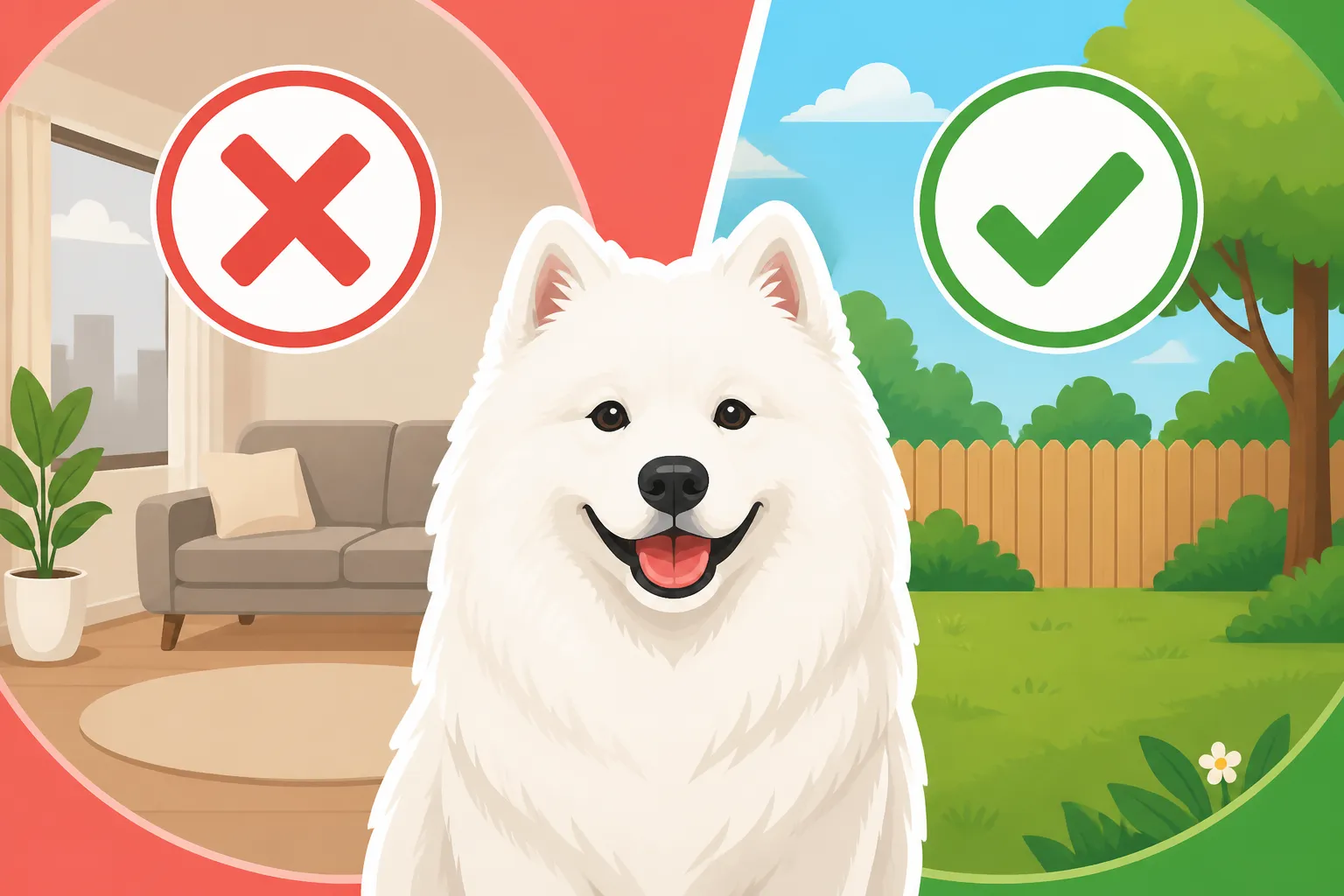
Whether a Samoyed Needs a Yard
A Samoyed can live happily without a private yard, but that does not mean outdoor exercise will take care of itself. If you live in an apartment, townhouse, or home with a small patio, the real question is whether you can provide safe, regular walks, play, training, and bathroom breaks. This guide explains what a yard does—and does not—offer, and how to decide whether your routine suits a Samoyed.
Does a Samoyed need a yard to be happy
A yard is convenient, not a substitute for daily care
A fenced yard can make bathroom trips and short play sessions easier. On a rainy morning, you may appreciate being able to open the door instead of getting dressed for a walk. A secure outdoor space can also give a dog room to sniff, stretch, and play at home.
But a yard does not automatically meet a Samoyed’s exercise or social needs. Many dogs spend little time outside alone, or simply wait near the door to come back in. A Samoyed may still need structured walks, opportunities to explore, and time with its people even if it has a large lawn.
Think of the yard as a useful extra rather than a daily-care shortcut. A dog with a yard but little interaction can become bored, noisy, or inventive about finding entertainment. A dog without one can thrive when the household reliably makes time for exercise, training, and outdoor breaks. What a Samoyed Needs Every Day offers a broader look at the routine behind a comfortable home life.
What matters more than the size of your property
A Samoyed’s day depends more on the quality and consistency of its routine than on whether your address includes a lawn. Before deciding, consider how often someone can take the dog out, how much time is available for activity, and whether your neighborhood offers safe places to walk.
For example, an owner in a Seattle apartment near sidewalks and parks may have more practical walking options than someone in a house on a busy road with a large but unfenced yard. In either case, the dog still needs supervision, a dependable bathroom schedule, and enjoyable activities. A nearby park can be helpful, but it does not replace secure handling or regular attention.
The same principle applies to the owner’s schedule. If your workday keeps you away for long stretches, a yard is not a complete solution to the dog’s need for company and activity. Consider whether a trusted walker, household member, or suitable dog-care arrangement can help. For a related discussion of daily energy needs, see How Much Exercise a Samoyed Needs and Whether a Samoyed Needs an Active Owner.
| Home setup | Potential advantages | What you still need to plan |
|---|---|---|
| House with a secure yard | Easier short bathroom trips and supervised outdoor play | Walks, interaction, training, and fence checks |
| House with an unfenced yard | Outdoor space may be available with close supervision | Leash use or a secure enclosure; never assume the dog will stay nearby |
| Apartment near walking routes | Regular walks can provide exercise and new smells | A dependable bathroom schedule, weather planning, and neighbor-friendly manners |
| Apartment far from green space | Indoor enrichment can help between outings | More deliberate planning for safe walks and varied outdoor experiences |
| Home with a small patio | Convenient access to fresh air when appropriate | A patio is not a substitute for walks or a safe place to exercise |
What a yard can and cannot do for a Samoyed
The benefits of a secure outdoor space
A properly enclosed yard can be useful for supervised play, short training sessions, and quick bathroom breaks. It can also give you space to practice recalls on a long line, play simple games, or let your dog sniff around without needing to travel to a park every time.
That convenience can matter during a busy week. If a Samoyed needs a brief outing between longer walks, a secure yard may make it easier to offer a quick change of scene. For puppies and older dogs, immediate access can also make bathroom routines simpler, provided someone is paying attention and taking the dog out at the right times.
Still, yard time is safest and most useful when it includes supervision. Check the fence and gate regularly, remove hazards, and be mindful of weather. A Samoyed may be tempted to dig, climb, or investigate a weak spot, so a yard should be treated as a managed space—not as a place where the dog can be left indefinitely. How a Samoyed Gets Out of Anything You Build covers why an enclosure deserves more thought than simply putting up a fence.
Why a yard does not solve boredom or escape behavior
A Samoyed left outside alone may bark, dig, pace, or look for a way out. These behaviors are not proof that the dog is “bad” or ungrateful for having a yard; they may signal that it wants company, stimulation, or help settling. The breed’s sociable nature makes it especially important to consider what the dog is doing, not just where it is.
A dog that repeatedly digs beneath a fence or tries to open a gate needs more than a stronger barrier. Look at the circumstances: Is the dog alone for long periods? Is the yard uninteresting? Is it too warm, uncomfortable, or noisy outside? Is the dog getting regular walks and training? Addressing the cause matters alongside improving physical security.
If you are adding enrichment indoors, food puzzles, safe chew items, and short training games can make quiet periods more engaging. Chewy is one place owners may browse for basic enrichment supplies, but choose items suited to your dog’s size and chewing habits, and supervise anything new. For more on boredom-related behavior, see What a Bored Samoyed Does to a House.
Keeping a Samoyed safe without a yard
Make outdoor access predictable
Without a private yard, bathroom breaks need to be part of the household schedule. Puppies generally need more frequent opportunities than adults, and dogs may also need extra outings after waking, eating, drinking, playing, or settling after excitement. Your dog’s age, health, and individual habits affect the routine, so be prepared to adjust rather than expect every Samoyed to follow the same timetable.
In an apartment building, plan for the actual route from your door to the outdoor spot. An elevator ride, a long hallway, a busy lobby, or a winter coat-and-boots routine can add time. Keep a leash and cleanup bags accessible, and make the trip calm and consistent. If the dog tends to rush through doors, practice pausing before you step into hallways or onto the street. Teaching a Samoyed to Wait at a Threshold can help you think through that safety skill.
For walks, use secure equipment and stay attentive around traffic, wildlife, and other dogs. A Samoyed that is excited by a squirrel or an interesting smell may not respond reliably in the moment, even if it knows its cues at home. A long line can offer room to explore in a suitable open area while maintaining control, but it is not appropriate everywhere and should not be used where it could tangle people or dogs.
Choose exercise and play that fit the setting
You do not need a large lawn to offer meaningful activity. A walk through a neighborhood, a sniff-focused outing, training in a quiet indoor space, and a game of hide-and-seek with treats can all contribute to a dog’s day. Rotate activities so every outing does not feel identical. Even familiar streets can become more interesting when you slow down and let your dog investigate safely.
A practical routine might include a morning walk, a shorter bathroom outing during the day, and another walk or play-and-training session in the evening. The length and intensity should suit the individual dog, its age, health, weather, and conditioning. Avoid assuming that a Samoyed needs strenuous exercise every time it goes outside; steady, appropriate activity and mental engagement are more useful than pushing a dog past its comfort.
When buying a leash, harness, or puzzle toy, focus on fit, durability, and safe use rather than a long list of features. Chewy may be a convenient place to compare everyday pet supplies, while a local trainer or veterinarian can help with questions about equipment, mobility, or exercise limits. Whatever the home setup, Whether a Samoyed Suits an Apartment Building may help you weigh the additional realities of shared walls, stairs, and close neighbors.
How to decide whether your household can manage without a yard
Ask practical questions before bringing a Samoyed home
Be honest about your ordinary week, not just the ideal one. Who will take the dog out before work? What happens if it is raining, icy, or extremely hot? Can someone provide a bathroom break during a long day away? Where will you walk when a nearby park is crowded or closed? A workable plan should cover routine days as well as inconvenient ones.
Also think about the dog’s comfort in your particular building and neighborhood. A lively Samoyed may be vocal, and frequent trips through shared corridors can require patience and training. If you live in a condo, check building rules and consider how close neighbors might be affected by noise. The Household a Samoyed Was Built For offers a useful perspective on the breed’s people-focused nature and the kind of daily involvement it tends to suit.
If your schedule changes often, identify backup help before you need it. A friend, dog walker, or suitable daycare may provide support, but the right option depends on your dog’s temperament, health, and comfort with other dogs. A yard alone cannot cover a missed walk or a long stretch without companionship. For additional context, read Whether a Samoyed Can Be Left Alone.
Use a simple readiness check
You may be ready for a Samoyed without a yard if you can offer reliable bathroom breaks, regular walks, enrichment, training, and safe outdoor handling. You should also be comfortable going out in less-than-perfect weather and adapting the routine as your dog grows or its needs change.
Pause and rethink the plan if you are counting on a dog park to provide all exercise, expect the dog to entertain itself outdoors for hours, or cannot arrange breaks during a long absence. Those are challenges whether you have a yard or not. A secure yard can make life easier, but it does not remove the need for supervision, interaction, and a thoughtful routine.
If you already have a Samoyed and are trying to make a yard-free home work, start with one manageable change: set regular outing times, add a short training game, or identify a safe walking route close to home. Chewy can be one option for finding basic cleanup or enrichment supplies, but the most important resources are your time, attention, and a realistic plan. The answer is not that every Samoyed needs a yard; it is that every Samoyed needs a household prepared to meet its needs without relying on one.
Disclaimer
This article is for general informational purposes only and does not constitute professional advice. Laws, prices and regulations vary by location and change over time. Consult a qualified professional for guidance on your specific situation.