Whether a Samoyed’s Diet Should Change After Six
It’s a common moment for Samoyed owners: you’re looking at your fluffy, smiling companion, who still seems like a big puppy at six years old, and suddenly you start wondering about their diet. Is it time to switch to a "senior" food? The truth is, while your Samoyed might still have boundless energy, their body is subtly starting to change, and what nourished them perfectly as a young adult might not be ideal for their long-term health as they mature. This guide will walk you through the nuances of your Samoyed's nutritional needs as they approach their golden years, helping you make informed decisions to keep them healthy and happy.
Understanding the "Senior" Threshold for Samoyeds
Six years old often feels like a crossroads for many dog owners. For some breeds, six might already place them firmly in the "senior" category, but for a Samoyed, it's more of a gentle transition into middle age. They still have so much life and sparkle in their eyes! However, internally, their bodies are subtly preparing for the later stages of life, and acknowledging this early can make all the difference in their comfort and longevity.
Subtle Shifts in Energy and Metabolism
You might not notice it overnight, but around the six-year mark, many Samoyeds begin to exhibit slight shifts in their energy levels. Those intense, hour-long zoomies might become a little less frequent, or they might seem content with slightly shorter walks. This isn't necessarily a sign of illness, but rather a natural slowing down of their metabolism. Their bodies aren't burning calories with the same youthful efficiency they once did. This metabolic shift means that if their diet remains unchanged, and their activity naturally decreases, they are at a higher risk of gradual weight gain, which can exacerbate other age-related issues.
It's important to be observant of these subtle changes. Does your Samoyed take more naps than they used to? Are they less enthusiastic about retrieving a toy after the first few throws? These observations, combined with a chat with your vet, are crucial indicators that it might be time to start thinking proactively about their diet. Ignoring these signs can lead to a creeping weight gain that's much harder to reverse down the line.
Why "Six" Isn't Exactly "Old" but is a Benchmark
While six is far from "old" for a Samoyed, who can often live well into their early teens, it's a common benchmark for veterinarians and pet nutritionists to start discussing preventative senior care. Think of it as hitting your own mid-thirties; you're not elderly, but you might start thinking about things like joint health or a slightly different exercise routine. For Samoyeds, this age is when the internal wear and tear of years of active life might start to show up in less obvious ways, like a slightly stiffer gait after a long rest, or a less robust immune response.
This benchmark isn't about slapping a "senior" label on your still-vibrant Samoyed, but rather about encouraging a proactive approach to their health. It's an excellent time to re-evaluate their overall lifestyle, including their diet, exercise routine, and general well-being. By making small, thoughtful adjustments now, you can help smooth their path into their actual senior years, ensuring they remain comfortable and joyful for as long as possible. For more insights into how their age is categorized, you might find The Age a Samoyed Counts as a Senior helpful.
Tailoring Nutrition to Your Maturing Samoyed's Needs
As your Samoyed gracefully enters its middle years, their nutritional requirements don't drastically change overnight, but certain aspects become more critical. It’s all about supporting their changing body and minimizing the risks of common age-related issues. The goal is to provide a diet that helps them maintain a healthy weight, supports their joints, and considers the health of their internal organs as they mature.
Managing Weight and Calorie Intake
One of the most significant challenges for maturing Samoyeds is weight management. As we discussed, their metabolism naturally slows down. This means that the same amount of food they ate at three years old might now lead to gradual weight gain if their activity levels aren't as high. An overweight Samoyed is not just a cosmetic issue; it puts immense strain on their joints, heart, and other organs, increasing the risk of conditions like diabetes and arthritis. Many owners struggle with Whether a Samoyed Gains Weight Easily because their fluffy coat can hide those extra pounds.
The key here is calorie control and a balanced diet. Look for foods that are slightly lower in calories per serving but still packed with essential nutrients. Portion control becomes even more critical, and you might need to adjust their daily intake based on their actual weight and activity level. Remember, treats add up! If you're using treats for training or just because you love them (who doesn't love treating a Sammy?), opt for low-calorie options or reduce their meal portions accordingly. If you're unsure about the right calorie count, your vet can help create a tailored plan. For those interested in managing their Samoyed's weight, articles like Getting Weight Off a Samoyed and Whether a Samoyed's Weight Should Be Logged Monthly offer excellent advice.
For busy owners, services like Ollie can provide pre-portioned, human-grade food that takes some of the guesswork out of calorie counting, though it's still crucial to monitor your dog's weight. Alternatively, checking out the wide range of reduced-calorie or "light" senior formulas on platforms like Chewy or Amazon can give you plenty of options to compare ingredients and find something suitable.
Supporting Joints and Mobility
Years of romping, pulling, and playing take their toll on a Samoyed’s joints. As they mature, cartilage can wear down, and inflammation can become more common, leading to conditions like arthritis. Even if your Samoyed isn’t showing overt signs of pain now, around six is a prime time to start thinking proactively about joint support through their diet.
Many senior dog foods include ingredients specifically aimed at joint health, such as glucosamine, chondroitin, and omega-3 fatty acids. These nutrients can help support cartilage health, reduce inflammation, and improve overall mobility. If your current food doesn't contain these, or if your vet recommends additional support, you might consider supplements. However, always discuss any new supplements with your vet to ensure they are appropriate and correctly dosed for your Samoyed. You can find many reputable joint supplements on Amazon or Chewy.
Proactive joint care through diet and appropriate exercise can significantly improve your Samoyed’s quality of life as they age. Don't wait until you see your dog limping or struggling to get up. Early intervention can help delay the onset and severity of joint issues. If you’re concerned about future joint problems, reading Arthritis in an Older Samoyed or Whether a Samoyed Needs Joint Support Early could provide further valuable information.
Kidney Health and Protein Considerations
Kidney health is another vital consideration for maturing dogs, including Samoyeds. As dogs age, their kidneys can become less efficient at filtering waste products from the blood. While Samoyed Hereditary Glomerulopathy is a specific genetic condition primarily affecting males, general kidney function can still decline with age for any Samoyed.
Traditionally, lower protein diets were recommended for older dogs to ease kidney strain. However, modern veterinary science suggests that this isn't always necessary for all senior dogs, and in some cases, can even lead to muscle mass loss. The key is to provide high-quality, easily digestible protein in appropriate amounts. Too little protein can lead to muscle wasting, while excessively high protein might strain already compromised kidneys.
Regular veterinary check-ups, including blood work and urinalysis, are crucial to monitor your Samoyed's kidney function. Your vet can advise you on the most suitable protein level for your individual dog based on these tests. It’s also wise to ensure your Samoyed has consistent access to fresh water to support kidney function. For more information on monitoring kidney health, consider Whether a Samoyed Needs Yearly Kidney Bloodwork.
Making the Dietary Switch Smoothly and Effectively
Deciding to change your Samoyed's diet is one thing; actually making the switch smoothly is another. Dogs, much like people, can be sensitive to sudden dietary changes, and your fluffy friend deserves a transition that prioritizes their comfort and digestive health.
Choosing the Right Senior Formula
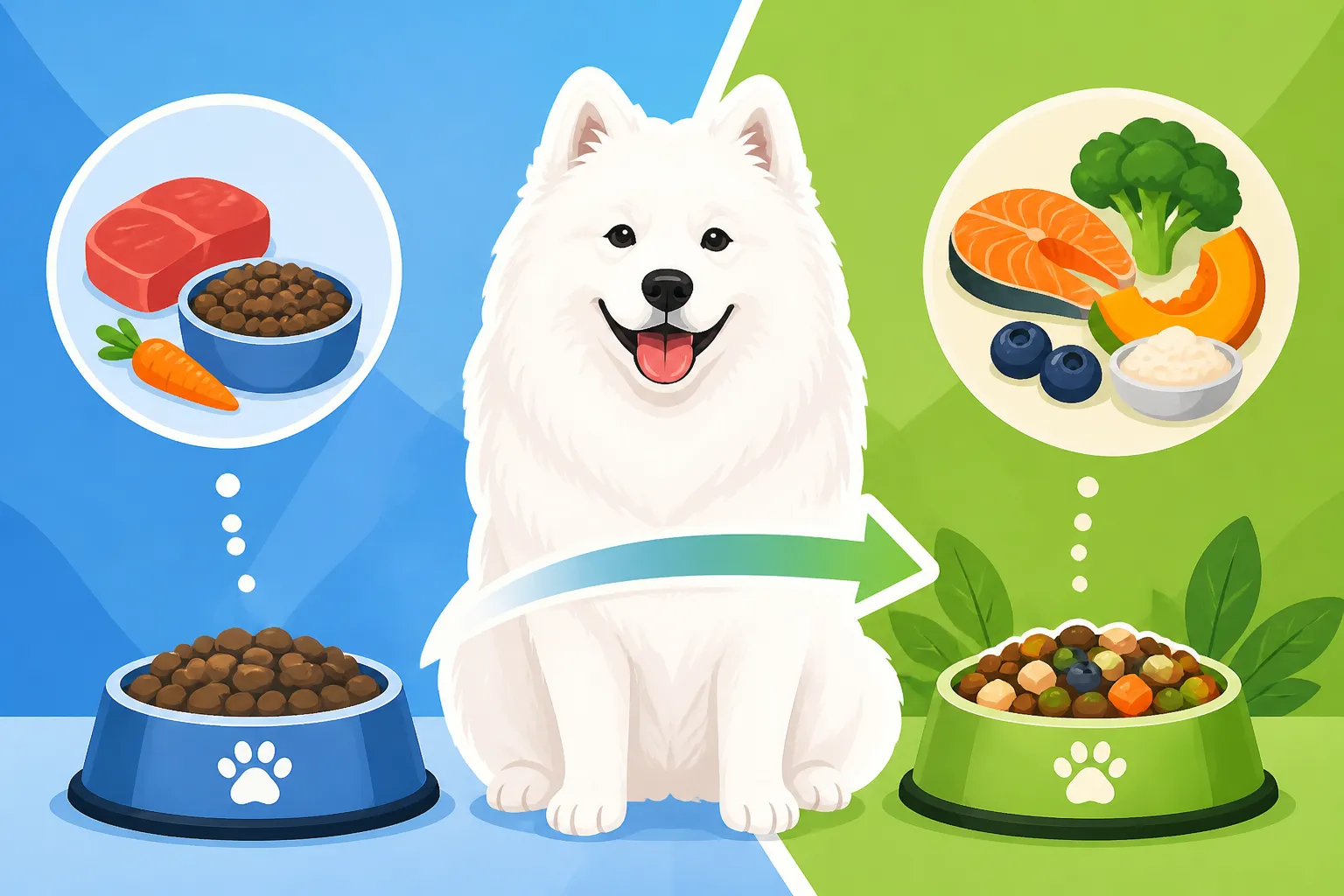
When you're ready to make the switch, start by researching senior-specific formulas. These foods are generally formulated with the needs of older dogs in mind: often slightly fewer calories to prevent weight gain, adjusted protein levels (usually high-quality and easily digestible), and often boosted with supplements like glucosamine and chondroitin for joint support, and antioxidants for overall cellular health.
Consider ingredients carefully. Look for whole, identifiable protein sources as the first ingredient, healthy fats, and digestible carbohydrates. Avoid fillers and artificial additives that can upset sensitive stomachs. Some brands, like those found on Chewy, offer specialized diets for various senior health concerns, from weight control to kidney support. If you're unsure, ask your vet for recommendations, especially if your Samoyed has any specific health conditions that require a tailored diet. Many brands also offer "all life stages" foods, but these might not address the specific nuances of a maturing Samoyed's metabolism as effectively as a targeted senior formula.
The Gradual Transition Method
A sudden change in diet can lead to digestive upset, including diarrhea or vomiting, which is no fun for anyone, especially your Samoyed. The key is to introduce the new food gradually over a period of 7 to 10 days. Start by mixing a small amount of the new food with their old food, gradually increasing the proportion of the new food while decreasing the old.
Here’s a typical transition schedule:
| Day | Old Food | New Food |
|---|---|---|
| 1-2 | 75% | 25% |
| 3-4 | 50% | 50% |
| 5-6 | 25% | 75% |
| 7+ | 0% | 100% |
Watch your Samoyed closely during this period. If they show any signs of digestive upset, slow down the transition and hold at the current ratio for an extra day or two until their system adjusts. Patience is crucial here to prevent discomfort and ensure they accept their new diet readily. Don't be afraid to take a full two weeks if your Samoyed has a particularly sensitive stomach.
The Importance of Regular Veterinary Check-ups
Changing your Samoyed's diet after six years old isn't a one-time event; it's part of an ongoing commitment to their health as they age. Regular veterinary check-ups become even more critical during this phase. Your vet can perform comprehensive physical exams, blood tests, and urinalysis to detect any subtle changes in their health that might warrant further dietary adjustments.
These check-ups are also a perfect opportunity to discuss your Samoyed's weight, body condition, and any changes in their behavior or appetite. Your vet can provide personalized advice based on their findings, ensuring your Samoyed's diet is perfectly matched to their evolving needs. Think of your vet as your most valuable partner in Caring for an Old Samoyed. Early detection of issues like early kidney changes or developing arthritis can allow for dietary and lifestyle interventions that significantly improve their quality of life.
Disclaimer
This article is for general informational purposes only and does not constitute professional advice. Laws, prices and regulations vary by location and change over time. Consult a qualified professional for guidance on your specific situation.