Whether a Samoyed Should Walk at Midday
Picture this: it's a beautiful, sunny afternoon, the kind that just begs for a walk, and you look at your fluffy Samoyed, whose smiling face seems to say, "Let's go!" But deep down, you know that inviting sunshine can be a real enemy for our beloved northern dogs. Many Samoyed owners grapple with the dilemma of maintaining their dog's exercise routine while protecting them from the very real dangers of summer heat. This comprehensive guide is here to shed light on why midday walks are often a serious health risk for Samoyeds and to provide practical, realistic strategies for keeping your furry friend happy, healthy, and cool when the temperatures rise.
Understanding the Samoyed's Unique Heat Vulnerability
Our Samoyeds are magnificent creatures, built for a life of pulling sleds across frozen tundras and snuggling up with their Nenets companions in frigid tents. Their physiology is a marvel of natural engineering, perfectly adapted to extreme cold. But what makes them so resilient in winter can become their biggest vulnerability when the sun is high and the air is warm.
The Double Coat: A Blessing and a Burden
That glorious, cloud-like coat that defines the Samoyed breed is a double-edged sword when it comes to heat. It's not just a beautiful fashion statement; it's a highly efficient insulation system. The coarse outer guard hairs protect against snow, ice, and even reflect some sunlight, while the dense, woolly undercoat traps a layer of air close to the body. This air acts as an insulating barrier, keeping heat in during the winter. The frustration for many owners lies in understanding that this same mechanism makes it incredibly difficult for heat to escape when the weather turns warm. Why a Samoyed's Coat Insulates Against Heat as Well as Cold is a concept that often surprises new owners.
While it's true that the coat can offer some protection from direct sun, it's primarily designed to ward off freezing temperatures, not to dissipate excessive body heat in a warm climate. When your Samoyed is out in the midday sun, especially if they're active, their body is generating internal heat, and that magnificent coat is actively working against them by holding it in. It's like wearing a heavy winter parka in July – you might be shielded from the sun, but you'll be cooking inside. This is a common misconception, and it's vital for Samoyed owners to grasp that their dog's coat, despite its aesthetic appeal, doesn't miraculously transform into a cooling system.
Samoyed Physiology and Heat Stress
Beyond their incredible coat, a Samoyed's basic physiology also makes them particularly susceptible to heat stress. Dogs don't sweat all over their bodies like humans do; their primary method of cooling down is through panting. As they pant, moisture evaporates from their tongue and respiratory tract, which helps to cool their blood. However, this system has its limits. In high humidity, evaporation is less efficient. When a Samoyed, with its thick insulating coat, is exercising in warm weather, its body generates heat faster than it can be released through panting.
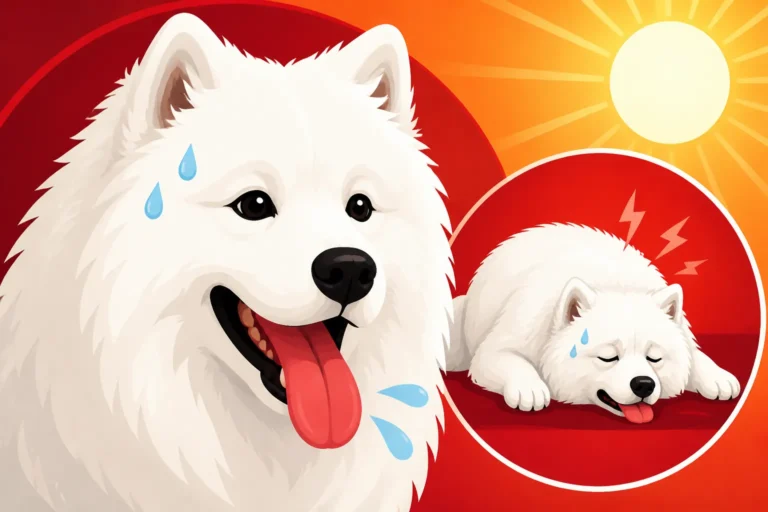
Consider a hot summer day in, say, Arizona or even a humid August afternoon in Ohio. The air itself is warm, offering no relief. Your Samoyed's internal temperature starts to climb. Their heart has to work harder to pump blood to the surface of their skin in an attempt to dissipate heat. If the heat generation outpaces heat loss, their core body temperature can quickly reach dangerous levels, leading to heat exhaustion and potentially life-threatening heatstroke. This isn't just about discomfort; it's a genuine medical emergency that can happen much faster than many owners realize, especially with a breed so stoic and eager to please.
Why Midday Walks Are a Major No-Go
The temptation to take your Samoyed for a walk during what feels like "normal" dog walking hours can be strong. However, for a breed like the Samoyed, those midday hours present a serious health hazard that should be avoided at all costs.
The Peak Heat Window
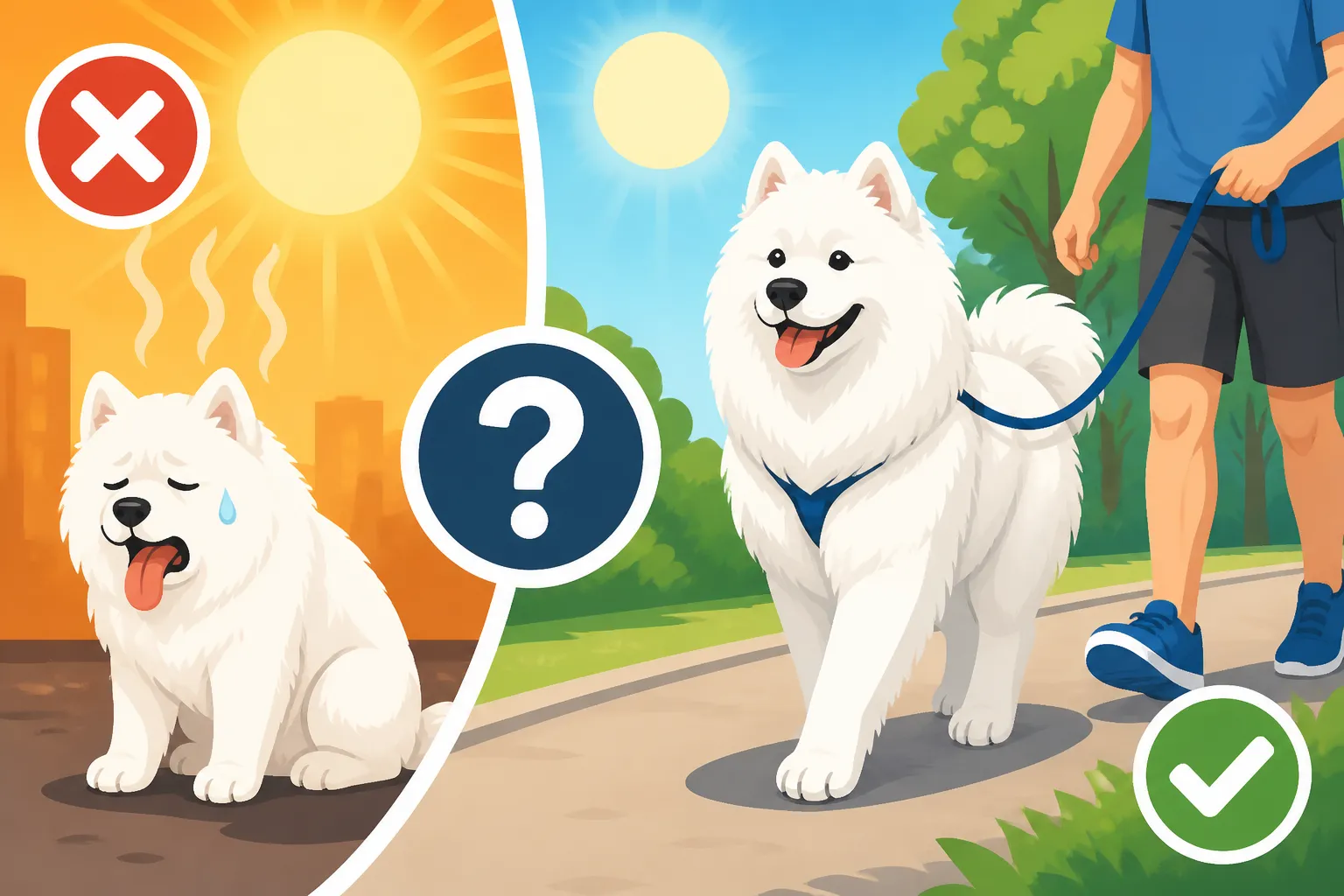
"Midday" isn't just about the clock striking noon; it encompasses the period when the sun is highest in the sky and temperatures are at their peak. Depending on your location, this can range from late morning (10 AM or 11 AM) through to mid-afternoon (3 PM or 4 PM). During this window, not only is the ambient air temperature at its highest, but ground surfaces like asphalt, concrete, and even dark-colored pavement absorb and radiate an incredible amount of heat.
Imagine walking barefoot on a black asphalt driveway in the middle of a summer afternoon – it’s unbearable, right? That's exactly what your Samoyed's paws are enduring. Their paw pads, while tough, are not impervious to extreme heat, and they can suffer burns quickly. Beyond direct paw burns, the heat radiating from the ground directly affects their body temperature, especially since they are closer to the ground. This combination of hot air, radiating ground heat, and the Samoyed's insulating coat creates a dangerous oven-like environment. The cumulative effect of sun exposure combined with physical exertion during these peak hours simply overwhelms their natural cooling mechanisms.
Recognizing the Signs of Overheating
It's absolutely critical to be vigilant for the signs of overheating in a Samoyed, because by the time they become obvious, your dog could already be in a dangerous situation. Samoyeds, with their ever-present "smile," can be notoriously good at hiding discomfort until it's severe. You might initially mistake their labored panting for normal exertion, but there's a fine line.
Here are the key indicators that your Samoyed might be in distress:
- Excessive, frantic panting: Far more intense than usual post-exercise panting, and it doesn't slow down quickly.
- Profuse drooling: Often thick and sticky saliva.
- Bright red gums or tongue: A sign of increased blood flow trying to cool the body.
- Weakness or lethargy: They might slow down, stumble, or even collapse.
- Vomiting or diarrhea: The body's system is shutting down.
- Dizziness or disorientation: Staggering, uncoordinated movements.
- Glazed eyes: A sign of shock.
These aren't just signs of being "a little too warm"; these are emergency signals. If you see these, you need to act immediately to cool your dog down and seek veterinary attention. Signs a Samoyed Is Overheating can escalate terrifyingly fast. Owners often feel a pang of guilt, wishing they had recognized the danger sooner, which is why proactive prevention is so vital. It's not worth the risk for a quick walk.
Safer Alternatives for Samoyed Exercise
Just because midday walks are off-limits doesn't mean your Samoyed needs to miss out on exercise and mental stimulation. There are plenty of fantastic ways to keep them active and happy without exposing them to dangerous heat.
Early Mornings and Late Evenings: Your New Best Friends
For outdoor adventures, the solution is simple: adjust your schedule. Embrace the early bird life or become a night owl! The coolest parts of the day are typically before 8 AM and after 7 PM, or even later during peak summer. This is when the sun is lower, and crucial surfaces like pavement have had a chance to cool down.
Before you head out, do the "five-second rule" pavement check: place the back of your hand on the asphalt or concrete for five seconds. If it's too hot for your hand, it's too hot for your Samoyed's paws. If the ground is still radiating heat, consider sticking to grassy areas or waiting longer. During these cooler walks, focus on consistent, steady exercise rather than intense bursts. A leisurely sniff-walk in the morning dew or an evening stroll when the air is crisp can be incredibly fulfilling for your Samoyed. Remember to bring plenty of water in a portable bowl, readily available from retailers like Chewy or Amazon, and offer frequent breaks. This also ties into How Early a Samoyed Should Be Walked in Summer to ensure the safest experience.
Indoor Activities and Water Play
When outdoor temperatures make even early mornings or late evenings risky, it's time to get creative indoors! Your Samoyed still needs mental and physical stimulation. Puzzle toys are fantastic for engaging their minds and can be purchased from stores like Amazon. You can stuff Kongs with frozen treats to provide a long-lasting challenge and a refreshing snack. Basic obedience training sessions, learning new tricks, or playing hide-and-seek with treats around the house are excellent ways to bond and burn energy without overheating. For dogs that enjoy it, a flirt pole can provide a great burst of activity in a cooler room.
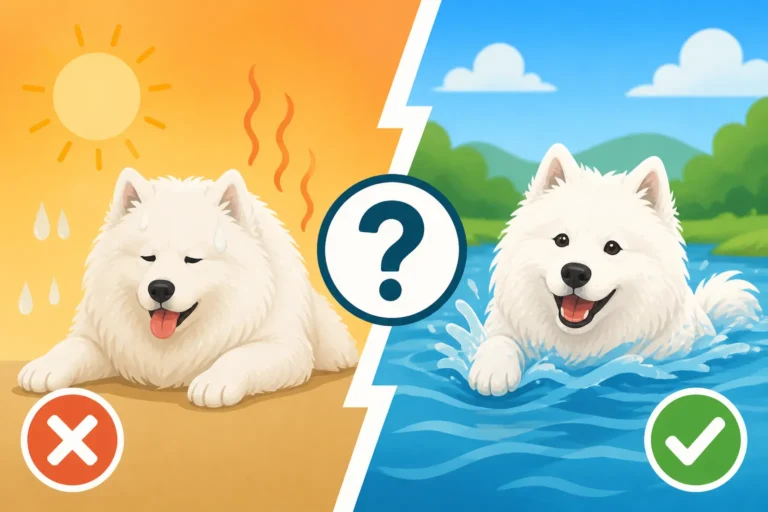
Water play is another phenomenal way to beat the heat. A simple kiddie pool filled with a few inches of water can provide endless fun and a fantastic cooling opportunity. Many Samoyeds adore splashing around, digging in the water, and even "herding" toys. Supervised time with a sprinkler or a gentle hose spray can also be a wonderful relief. For those lucky enough to have access to safe, clean swimming spots, swimming is a full-body workout that keeps core temperatures down. Just make sure to thoroughly dry their undercoat after any water activity to prevent skin issues. Whether a Samoyed Should Be Wet Down in Heat can be very effective, but ensure it's done correctly and thoroughly.
Proactive Heat Management Beyond Walk Times
Managing a Samoyed's comfort in warmer weather extends beyond just choosing the right time for walks. It requires a holistic approach to their daily environment and routine.
Hydration and Environmental Control
Water is your Samoyed's best friend, especially during warmer months. Ensure they always have access to fresh, cool water, both indoors and out. Change the water frequently, and consider adding ice cubes to their bowl to keep it extra refreshing. If you have multiple dogs or a very active Samoyed, consider having several water bowls strategically placed around the house and yard. For walks, always carry a collapsible water bowl and a supply of water.
Indoors, air conditioning is not a luxury for a Samoyed; it's a necessity in many climates. Whether a Samoyed Needs Air Conditioning is not really a question if you live in an area that experiences significant warm periods. Keep your home cool, especially during peak heat hours. If you need to leave your Samoyed home alone, ensure the A/C is running and that fans are positioned to circulate air. If you're concerned about your energy bill, remember that What Air Conditioning Adds to a Samoyed Household is a small price to pay for your dog's health and safety. Even on milder days, strategically placed fans can make a big difference in air circulation. Many Samoyeds will seek out cool, tiled floors to lie on, which is a natural cooling strategy.
Dietary Considerations and Weight Management
A healthy, well-maintained weight plays a significant role in your Samoyed's ability to cope with heat. Overweight dogs have an extra layer of fat that acts as insulation, making it even harder for them to cool down. It also puts more strain on their cardiovascular system, which is already working harder in the heat. Whether a Samoyed Owner Must Watch Its Weight Closely is always important, but even more so when temperatures rise.
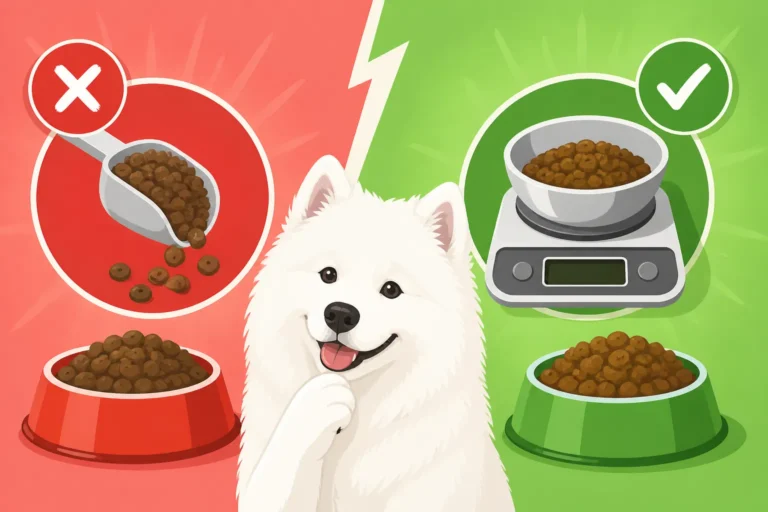
Feeding a high-quality, balanced diet helps maintain optimal health and weight. There are many excellent kibble options, but some owners also opt for fresh food delivery services like Ollie, which can offer precise portion control and high-quality ingredients. Avoid overfeeding, and be mindful of calorie-dense treats. Instead of fatty chews, opt for frozen vegetables like green beans or baby carrots as refreshing, low-calorie treats that can even offer a slight cooling effect. Discussing your Samoyed's diet and ideal weight with your veterinarian can help tailor a plan that supports their health and heat tolerance year-round.
Safe vs. Unsafe Walk Conditions for Samoyeds
To give you a clearer picture, here's a quick comparison of what to look for when deciding if it's safe to take your Samoyed for an outdoor adventure.
| Factor | Safe Conditions | Unsafe Conditions |
|---|---|---|
| Time of Day | Before 8 AM, after 7 PM (or later) | 10 AM – 4 PM (peak sun and heat) |
| Air Temperature | Below 70°F (21°C) | Above 75°F (24°C), especially with high humidity |
| Ground Temperature | Cool to the touch (use 5-second hand test) | Hot to the touch (cannot comfortably hold hand for 5s) |
| Humidity | Low to moderate | High (makes panting less effective) |
| Sun Exposure | Shady areas, overcast days | Direct sunlight for prolonged periods |
| Activity Level | Leisurely walks, sniff-fari | High-intensity exercise, running, fetching |
| Hydration | Constant access to fresh, cool water | Limited water access |
Ultimately, your Samoyed's well-being is paramount. Whether a Samoyed Refuses to Walk in Heat is a clear signal that should always be heeded. It's far better to err on the side of caution and keep them indoors or engage in safe, cooling activities than to risk their health for a walk at an inappropriate time. Their happy, healthy "Sammy smile" is worth every bit of planning and care you put into their summer routine! The Digging a Samoyed Does Because It Is Hot is another common behavioral sign that they are trying to cool themselves down.
Disclaimer
This article is for general informational purposes only and does not constitute professional advice. Laws, prices and regulations vary by location and change over time. Consult a qualified professional for guidance on your specific situation.