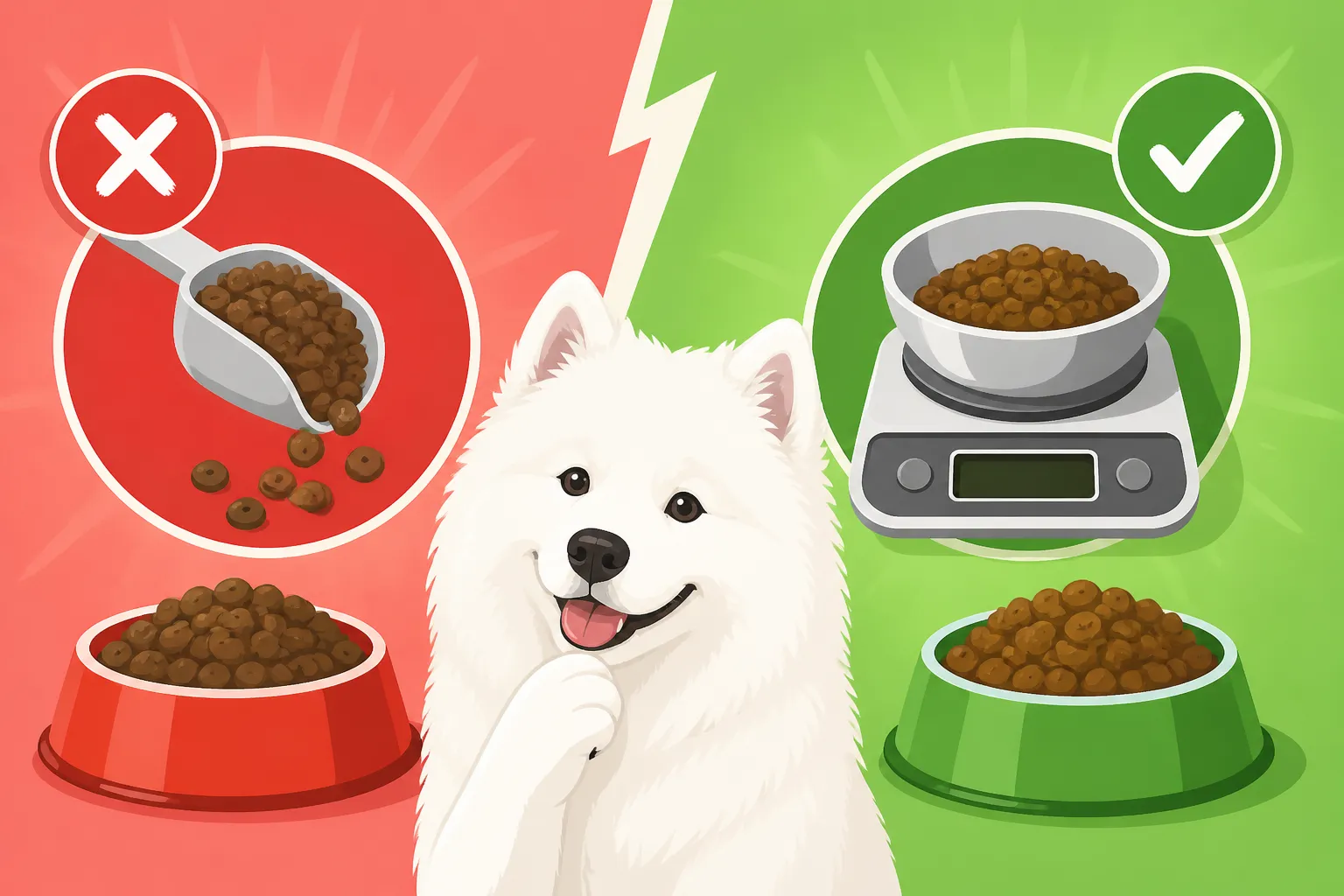
Whether a Samoyed Should Be Fed by Weight Rather Than Scoop
Trying to figure out exactly how much to feed your magnificent Samoyed can feel like a real guessing game sometimes, can't it? You stare at the bag, it says "1-2 cups," and you think, "Okay, but what kind of cup? Level? Heaping? And is my Samoyed a '1-cup' or a '2-cup' kind of dog?" This common frustration often leads to unintentional over or underfeeding, especially for a breed like ours where their glorious coat can hide a multitude of sins beneath. This guide will dive deep into why feeding your Samoyed by weight, rather than relying on a vague scoop, offers a far more accurate and beneficial approach to their health and well-being.
The Inherent Flaws of the Scoop Method for Samoyeds
Let's be honest, the scoop method is convenient, but it's wildly imprecise. We've all been there: you grab the measuring cup from the kitchen drawer, or maybe even that old yogurt container you've designated as the "dog food scoop," and you just fill it up. But think about how many variables are at play with every single scoop. It’s not just about the size of the scoop itself, which can vary wildly between brands or even within your own kitchen.
First, there’s the issue of density. Not all kibbles are created equal. Some are light and airy, while others are dense and compact. A cup of one brand might weigh significantly less or more than a cup of another, even if the caloric content per cup is advertised as similar. This means that if you switch kibble brands but stick to the same "two scoops" you always gave, you could be drastically altering your Samoyed's daily calorie intake without even realizing it. Imagine you’re trying to bake a cake, but one day a "cup" of flour weighs 4 ounces and the next it weighs 6 – your recipe would be a disaster! The same inconsistency applies to your dog's nutrition.
Then there's the human element. Are you consistently leveling off each scoop, or are you giving a generous "heaping" scoop on days when you’re rushed or feeling extra loving? Most of us aren't precise chefs when it comes to dog food. That little bit extra, day in and day out, really adds up. For a Samoyed, whose ideal weight can be masked by that luxurious double coat, these small daily caloric creepages can lead to weight gain that you don't notice until it's become a more significant issue. Whether a Samoyed Gains Weight Easily is a genuine concern, and imprecise feeding only exacerbates it.
The Precision Advantage: Why Weight-Based Feeding is Superior
Moving away from the scoop and towards a digital kitchen scale might seem like an extra step, but for a Samoyed, it offers unparalleled precision and a host of benefits that truly make a difference in their long-term health. When you feed by weight, you eliminate all the guesswork and inconsistencies we just talked about. Each meal provides the exact same amount of food, and therefore, the exact same caloric intake, every single time.
This consistency is crucial for maintaining your Samoyed's ideal body condition. Their dense, fluffy coats are a double-edged sword: beautiful, but they make it incredibly difficult to accurately assess their weight and muscle mass by sight alone. Feeling for ribs and a tuck-up becomes much harder, especially if you're not doing it regularly. By feeding a precisely weighed amount, you know exactly how many calories your Samoyed is consuming. This makes it far easier to manage their weight, whether they need to maintain, lose, or even gain a little. Why a Samoyed Owner Must Watch Its Weight Closely is not just vet advice; it's a practical necessity for our breed.
Moreover, if your Samoyed ever develops health conditions like Diabetes in a Middle Aged Samoyed, precise weight-based feeding becomes absolutely non-negotiable. For a diabetic dog, every calorie counts, and consistency in food intake is vital for regulating blood sugar levels and insulin dosages. The same goes for other conditions where a specific body weight or nutrient intake is critical. Whether an Overweight Samoyed Is More Likely to Get Diabetes highlights just one of the many reasons why proactively managing their weight through accurate feeding is so important.
Think of it this way: instead of "two scoops," you're now aiming for, say, "200 grams" of kibble. This measurement is objective, repeatable, and eliminates all ambiguity. You can pick up an affordable digital kitchen scale on Amazon that will make this process incredibly simple and fast. It might take an extra few seconds per meal, but the peace of mind knowing you're providing consistent nutrition is well worth it.
Making the Switch: How to Implement Weight-Based Feeding
Transitioning from scoop to scale for your Samoyed's meals is surprisingly straightforward, but it requires a little initial legwork. Don't worry, it's not complicated, and once you get the hang of it, it becomes second nature.
Step-by-Step Guide to Accurate Feeding
-
Find Your Kibble's Caloric Content: Every reputable dog food brand provides nutritional information. Look for the "kcal/cup" or "kcal/gram" (kilocalories per cup or gram) on the bag. This is usually found in the feeding guidelines section. If you feed a fresh food diet like Ollie, their meal plans are typically already portioned by weight and calorie content, making this step even easier. If you use a brand found on sites like Chewy, check their product page or the manufacturer's website for this crucial detail.
-
Determine Your Samoyed's Ideal Daily Calorie Needs: This is the most critical step and often requires a chat with your veterinarian. Factors like age, activity level, metabolism, and whether they're spayed/neutered all play a role. A general guideline might suggest X calories per pound of ideal body weight, but your vet can give you the most accurate starting point. How Much a Samoyed Should Eat is a complex question that truly depends on the individual dog.
-
Calculate the Weight of Food Needed: Once you know your Samoyed's daily caloric requirement and your kibble's calories per gram, you can calculate the exact weight of food.
- Example: If your Samoyed needs 1200 kcal/day and your kibble has 3.5 kcal/gram:
- 1200 kcal / 3.5 kcal/gram = 342.8 grams of kibble per day.
- If you feed twice a day, that’s approximately 171 grams per meal.
- Example: If your Samoyed needs 1200 kcal/day and your kibble has 3.5 kcal/gram:
-
Invest in a Digital Kitchen Scale: This is your new best friend. They are inexpensive and readily available. Look for one that measures in grams and has a tare function (to zero out the bowl's weight).
-
Start Weighing: Place your Samoyed's food bowl on the scale, hit "tare" to zero it out, and then pour in the kibble until you reach your calculated weight. It's that simple!
Adjusting and Monitoring Your Samoyed
Even with precise calculations, every Samoyed is an individual. Monitor their body condition closely over the next few weeks. Are they maintaining weight? Gaining? Losing? You should be able to feel their ribs easily without pressing hard, and they should have a discernible waist when viewed from above. Don't be afraid to adjust the daily food amount by a small percentage (e.g., 5-10%) up or down based on what their body tells you. It’s much easier to make small, informed adjustments when you're working with precise weights rather than guessing with scoops.
Remember, a Samoyed's majestic fur can hide subtle changes in their physique. What a Samoyed's Ruff Hides Weight Gain is a real challenge for owners. Regularly feeling along their sides and over their spine, in addition to weighing their food, gives you the full picture.
Troubleshooting and Addressing Common Concerns
Making a change in routine, even a small one, can sometimes feel daunting. You might have questions about whether this method is really necessary or how it fits into your busy life. Let's tackle some of those common concerns head-on.
Is It Really Worth the Extra Effort?
Initially, yes, it might take a moment longer to grab the scale. But in the grand scheme of your Samoyed's health and longevity, those few extra seconds are an investment. Consider the potential vet visits, medication costs, and overall impact on quality of life that can arise from chronic over or underfeeding. A healthy weight can significantly reduce the risk of joint problems, diabetes, and other weight-related issues as they age. Think of it as preventative care you can do at home every day.
For example, when your Samoyed reaches their senior years, their metabolism often slows down, and their caloric needs may change. What a Samoyed's Diet Should Change After Six is a common consideration for older dogs. Having a precise feeding method already in place makes it incredibly simple to make those small, necessary adjustments to keep them at a healthy weight and support their aging body.
What About Different Types of Food?
The principle of feeding by weight applies universally, regardless of the type of food.
- Kibble: As discussed, this is where the biggest impact is often seen due to variations in density and scoop consistency.
- Wet/Canned Food: Often, wet food has its caloric content listed on the can. You can weigh this out too, though the density is usually more consistent than kibble by volume.
- Fresh/Raw Diets: Many prepared fresh or raw food services, like Ollie, already provide pre-portioned meals based on your dog's specific needs, often in weighed bags or containers. If you prepare your own raw or fresh food, weighing each ingredient is already standard practice for safety and nutritional balance.
The key is simply knowing the caloric density of whatever you're feeding and accurately measuring that quantity.
My Samoyed Seems to Eat a Lot, But Never Gains Weight.
While precise feeding helps prevent weight gain, it's also excellent for ensuring your Samoyed is getting enough if they're a particularly active or lean individual. Some Samoyeds are energetic and burn calories quickly, making it seem like they eat a lot for their size. If you've been feeding by scoop and your Samoyed is consistently lean, switching to weight-based feeding with your vet's calorie recommendation can help you ensure they're meeting their energy needs without over-calculating. This ensures you're not falling into the trap of just giving "more scoops" without knowing the actual caloric impact. How Many Cups a Day an Adult Samoyed Eats can sometimes be misleading if not tied to precise caloric content.
A Quick Comparison: Scoop vs. Weight Feeding
Here's a simplified look at why feeding by weight offers a clearer path to consistent nutrition for your Samoyed:
| Feature | Scoop Feeding | Weight Feeding |
|---|---|---|
| Precision | Low (highly variable) | High (exact and repeatable) |
| Consistency | Poor (depends on scoop size, user, kibble density) | Excellent (same amount every time) |
| Weight Management | Difficult (easy to over/underfeed unknowingly) | Easy (small, informed adjustments possible) |
| Health Monitoring | Reactive (notice weight change after it happens) | Proactive (prevents issues, supports health goals) |
| Disease Management | Risky (inconsistent intake for specific conditions) | Essential (critical for conditions like diabetes) |
| Tools Needed | Any cup-like object | Digital kitchen scale |
| Initial Effort | Low | Moderate (initial calculation) |
| Ongoing Effort | Low | Low (quick weigh, becomes routine) |
Ultimately, while "scooping" might seem easier at first glance, the benefits of weight-based feeding for your Samoyed's health, longevity, and consistent well-being far outweigh the minimal extra effort. It’s a simple change that can make a profound difference in the quality of care you provide, ensuring your fluffy friend thrives at their ideal weight. This approach helps support the idea that Whether a Lean Samoyed Lives Longer is a valid question, and precise feeding is one way to aim for that longevity.
Disclaimer
This article is for general informational purposes only and does not constitute professional advice. Laws, prices and regulations vary by location and change over time. Consult a qualified professional for guidance on your specific situation.