Whether a Samoyed Pulls as Hard as a Malamute
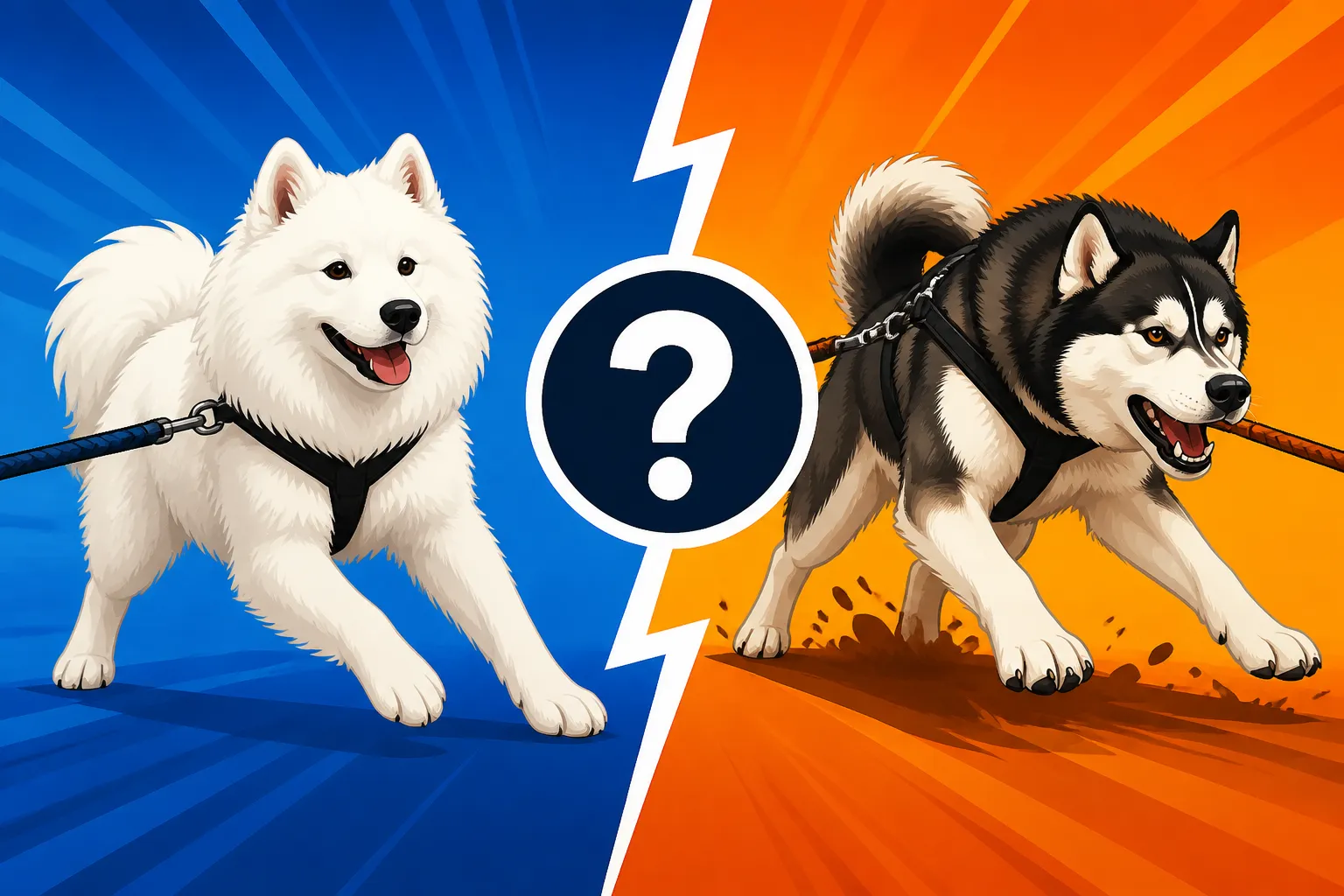
A Samoyed can pull with surprising force, but a Malamute is generally the more powerful dog for hauling heavy loads because of its greater size and freight-pulling heritage. That does not mean every Malamute outpulls every Samoyed. Training, conditioning, motivation, harness fit, terrain, and weather all affect what an individual dog can safely do.
How Samoyeds and Malamutes Differ as Pulling Dogs
Malamutes are generally built for heavier hauling
The Alaskan Malamute was developed to move freight across difficult Arctic terrain. Its substantial build and strength suit steady, heavy pulling, rather than simply sprinting ahead. That background is why people often picture a Malamute when they think of a powerful sled dog.
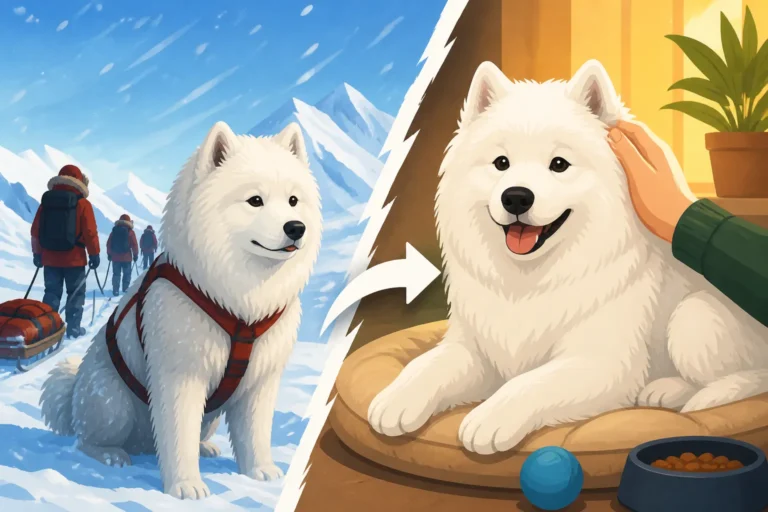
A Samoyed is also a genuine working northern breed, not just a fluffy companion with a pretty coat. Samoyeds pulled sleds and carried out other work alongside the people who developed them. But breed history does not make the two dogs identical in size, body type, or typical pulling style. The Samoyed Against an Alaskan Malamute comparison gives more context on their broader differences.
In everyday terms, a fit Malamute may have an advantage when the task involves moving a heavy load at a controlled pace. A Samoyed can still pull forcefully, especially when enthusiastic and well conditioned, but it is usually not the breed people choose specifically for the greatest hauling power.
Samoyeds can be strong, willing pullers
Owners are sometimes surprised by how much a Samoyed can lean into a harness. A dog that seems cheerful and bouncy on a neighborhood walk may become focused when it understands that pulling is the job. In suitable conditions, a Samoyed may enjoy activities such as canicross, skijoring, or pulling a light cart.
A Samoyed’s willingness to work is not the same thing as unlimited strength. A dog might pull hard for a burst, then tire, get distracted, or lose interest. Another may be less forceful but keep a more even pace. Those differences can appear between littermates, so breed descriptions should be treated as general tendencies rather than promises about a particular dog.
The Pulling: What a Samoyed Was Actually Bred to Do guide explores the breed’s working background. For a broader look at how the breeds compare in motion, see Whether a Samoyed Pulls as Hard as a Malamute alongside The Samoyed Against the Husky and the Malamute.
| Factor | Samoyed | Malamute |
|---|---|---|
| Typical pulling impression | Capable, energetic, and often eager to work | Often more powerful for heavy, steady hauling |
| General build | Medium-to-large northern dog, with individual variation | Usually more heavily built |
| Best comparison | Judge the individual dog, conditioning, and task | Judge the individual dog, conditioning, and task |
| Suitable activities | Canicross, skijoring, recreational pulling, and other suitable work | Recreational pulling and heavier work when safely conditioned |
| Main caution | Enthusiasm can exceed fitness or training | Strength can make poor equipment or handling especially risky |
The table describes broad tendencies, not a contest result. A smaller or poorly conditioned Malamute may pull less effectively than a strong, trained Samoyed. Likewise, an enthusiastic Samoyed should not be given a load simply because it seems eager.
What Determines How Hard a Dog Pulls
Size matters, but it is only one part of the picture
A dog’s body size and muscular condition influence how much force it can apply, but they do not tell the whole story. Age, health, fitness, confidence, footing, and the type of equipment all matter. A dog pulling across a firm, even trail faces a different task from one trying to move a cart over soft ground or up a slope.
Motivation also changes what an owner sees. One dog may charge forward because it loves the activity; another may pull steadily but without dramatic surges. Strong pulling can look impressive, but it is not automatically a sign that the dog is comfortable or physically ready. It may reflect excitement, poor leash manners, or an attempt to reach something.
For this reason, avoid judging pulling strength by a single walk or brief demonstration. A dog that drags its person toward a park is not necessarily prepared for organized pulling. Loose-leash walking and harness work are different skills, and each needs its own training. The Why a Samoyed Pulls on a Walk article covers that common everyday frustration.
Training and conditioning shape performance
A dog needs to learn the difference between walking on a regular leash and pulling in a work harness. Without that distinction, it may pull whenever it feels like moving faster, including at a busy corner or when the front door opens. Teaching cues such as “walk,” “wait,” and a consistent release cue helps make the activity safer and easier to manage.
Conditioning should build gradually. Start with easy sessions and short distances appropriate to the dog’s age and health, then increase difficulty only when the dog remains comfortable and recovers well. Puppies and adolescent dogs should not be asked to haul heavy loads or do demanding repetitive work while their bodies are still developing. Ask your veterinarian when your particular dog is ready for structured pulling. You can also read The Age a Samoyed Can Start Pulling before planning a training routine.
Good pulling is not just about strength. The dog should respond to cues, travel at a manageable pace, and remain willing to work without being pushed beyond its limits. A strong dog that cannot be safely stopped or redirected is not ready for a crowded trail, road crossing, or group activity.
Choosing Equipment and an Activity Safely
Match the harness to the activity
For pulling, a properly fitted pulling harness distributes force across the dog’s body. A standard collar is not the right place to attach a load, and an everyday walking harness may not be designed for sustained pulling. Fit matters: equipment that rubs, restricts movement, or shifts during work can make even a short session uncomfortable.
When comparing equipment, check the harness maker’s fitting guidance and look for a design intended for the specific activity. If you browse options through a retailer such as Chewy, use the product information as a starting point, not as proof that a particular harness will fit your dog. Take measurements carefully and check the fit while the dog is standing and moving. A local mushing club or an experienced trainer may also be able to help assess the setup.
Chewy may be one place owners look when comparing basic dog gear, but do not choose a harness based only on a product photo or a breed label. Dogs of the same breed can have different proportions, and the right fit should allow free shoulder movement without pinching or chafing. Check the dog after each early session for redness, sore spots, or a change in gait.
Start with a manageable activity
For many pet Samoyeds, a controlled activity such as canicross or skijoring offers a better starting point than attempting to haul a heavy cart. These activities still require instruction, suitable equipment, and good judgment about footing and weather. If you are new to pulling sports, seek guidance from a qualified trainer or local club rather than improvising a setup.
Before a session, consider the route, surface, temperature, and the dog’s recent activity. A steep hill, slippery path, or hot day can turn an easy outing into a hard physical effort. Samoyeds and Malamutes both have thick coats, so take heat seriously and plan for cool conditions, access to water, and breaks. The Whether a Samoyed Should Pull in Warm Weather guide is useful when deciding whether conditions are appropriate.
Chewy can help owners compare everyday items such as reflective accessories or water bowls, but those extras do not replace safe training and supervision. For equipment that bears pulling force, use gear made for the activity and check it before each outing. If the dog appears reluctant, sore, overheated, or unusually tired, stop rather than trying to coax one more run.
How to Tell Whether Your Dog Is Ready
Watch the dog, not just the load
Readiness is not measured by how much weight a dog can move. Notice whether your dog is moving smoothly, responding to familiar cues, and staying engaged without frantic lunging. A dog that repeatedly stops, lags behind, changes its stride, or tries to avoid the harness may be uncomfortable, tired, distracted, or unsure about the task.
After activity, pay attention to recovery. Persistent limping, stiffness, unusual exhaustion, or reluctance to move deserves a pause and, if it continues or seems significant, veterinary advice. Do not assume that a dog is fine because it kept pulling during the session; excitement can mask discomfort. Check paws and harness-contact areas, especially after unfamiliar terrain.
If your dog already has a health concern, is overweight, or has not been exercising regularly, ask your veterinarian before starting a pulling program. A gradual plan can be adjusted for the dog’s condition and fitness. The aim is an enjoyable activity the dog can repeat comfortably, not a one-time test of maximum strength.
Make the comparison about the individual dog
If you are choosing between breeds, a Malamute is generally the more natural choice for someone whose central goal is heavy, steady hauling. A Samoyed can be a strong and enthusiastic partner for recreational pulling, but owners should not expect every Samoyed to match a Malamute’s typical hauling power. In either breed, the dog’s individual health, temperament, training, and interest matter more than a broad promise about strength.
If you already have a Samoyed, there is no need to treat its pulling ability as a disappointment just because a Malamute may be stronger on average. Choose an activity that suits your dog, build fitness patiently, and use equipment that fits. The Whether a Samoyed Enjoys Skijoring and Whether a Samoyed Pulls Better in a Team guides can help you think through different ways to make pulling work enjoyable and structured.
Chewy may be convenient for comparing some supplies, but no retailer can determine whether a dog is physically ready or whether a particular sport suits its temperament. For that, consider your veterinarian’s guidance and practical instruction from experienced people in the activity. A successful pulling partnership is not defined by the heaviest load; it is defined by safe, willing work that both dog and handler can manage.
Disclaimer
This article is for general informational purposes only and does not constitute professional advice. Laws, prices and regulations vary by location and change over time. Consult a qualified professional for guidance on your specific situation.