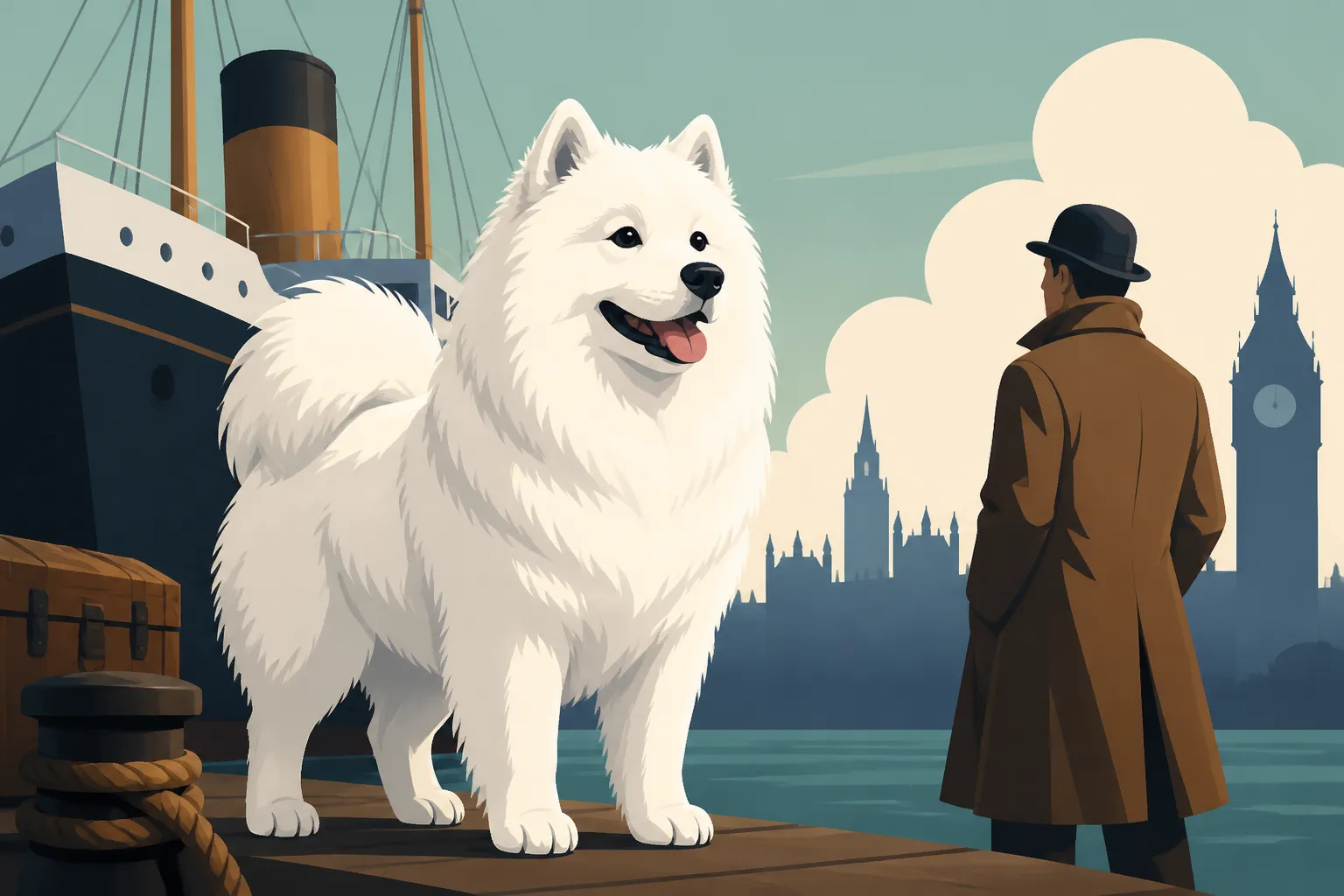
The Year the First Samoyed Reached England
The first Samoyed to reach England is generally dated to 1889, when explorer and dog enthusiast Ernest Kilburn Scott brought a dog from Russia. That arrival was more than a curious import: it helped introduce a little-known Arctic working dog to British households and set the stage for the breed’s later popularity and formal development.
The first Samoyed arrived in England in 1889
Ernest Kilburn Scott brought the dog from Russia
The date most often associated with the first Samoyed in England is 1889. Ernest Kilburn Scott, a British zoologist and explorer, brought a Samoyed from Russia to England. The dog is commonly identified as Sabarka, a brown male said to have come from the Arkhangelsk region.
It is easy to picture the arrival as the start of a planned campaign to establish a new breed. In reality, it was more like an early encounter: Scott brought home a dog from a part of the world most Britons knew very little about, and the Samoyed was not yet a familiar companion animal in England. The dog’s distinctive appearance and Arctic background made him noteworthy, but a single arrival could not establish a breed on its own.
The 1889 date is useful because it provides a clear historical marker, but it belongs to a larger story of exploration, trade, and changing attitudes toward dogs. The Samoyed had developed over generations among Indigenous people in northern Siberia, where dogs performed practical work and lived close to human families. To understand why one dog’s arrival mattered, it helps to know more about the people and working traditions behind the breed, as explored in Who the Nenets Who Bred the Samoyed Are and What the Nenets Bred the Samoyed to Do.
Sabarka was an early arrival, not the whole breed
Sabarka matters because he is often remembered as the first Samoyed brought to England, but one dog does not tell the whole story of the breed’s arrival. Later imports helped create a broader population in Britain, giving enthusiasts more opportunities to keep and breed Samoyeds. Those dogs differed in coat color and appearance, reflecting the natural variation in the working dogs brought from their homeland.
This distinction can get blurred in short accounts. “The first Samoyed in England” may refer to the first dog brought over, while “the beginning of the English Samoyed population” suggests a longer process involving additional dogs and breeding. And neither phrase means that a fully standardized show breed already existed in 1889. The early dogs were part of a working type that British owners and breeders would gradually come to define more consistently.
The history also sits within the broader story of how Samoyeds reached Europe and Britain. If you want to trace that wider movement, Who Brought Samoyeds Out of Siberia adds context, while The Century the Samoyed Appeared explores the breed’s longer history before its English chapter began.
Why Samoyeds attracted attention in Britain
Their Arctic background made them unusual
To British observers in the late nineteenth century, a Samoyed was not simply a white, fluffy pet. The dog’s coat, stamina, and working background were tied to life in a demanding northern environment. Samoyeds had been used for jobs such as herding reindeer and pulling sleds, and they lived in close contact with the people who relied on them. That combination of practical ability and sociable temperament was part of what made them compelling to people encountering the breed abroad.
The contrast with a typical household dog of the period would have been striking. A Samoyed’s thick double coat looked adapted to cold weather, and its alert expression gave it a distinctive presence. But the qualities that made the dog useful in Siberia also raised questions for British owners: How would a northern working dog fit into a very different climate and routine? How much exercise would it need? What kind of care would its coat require? Those are still reasonable questions for anyone learning about the breed today.
The Samoyed’s historical work is closely connected to how it behaves and what it needs now. For more background, see How a Samoyed Pulled a Sled and How a Samoyed Herded Reindeer. These were not decorative roles; they help explain why the breed was shaped for activity, endurance, and close interaction with people.
Exploration helped carry the breed beyond its homeland
The Samoyed’s arrival in England took place during a period when European explorers were increasingly interested in the Arctic and Antarctic. Dogs with northern working experience were valued for their ability to travel and work in harsh conditions, and expeditions helped introduce Arctic breeds to audiences far from their original homes. The English story is therefore connected not only to private dog ownership, but also to a wider fascination with polar travel.
It is important, though, not to collapse every historical Samoyed into one expedition narrative. Ernest Kilburn Scott’s role in bringing a dog to England is separate from the later use of Samoyeds on polar journeys. Those stories overlap in public interest, but they refer to different people, dogs, and events. Which Polar Expeditions Used Samoyeds offers a broader view of that expedition history, while The Samoyeds on Scott's Expedition focuses on a specific part of it.
That distinction also helps avoid a common name mix-up. Ernest Kilburn Scott, who is associated with introducing Samoyeds to Britain, was not the same person as polar explorer Robert Falcon Scott. The shared surname can make historical summaries confusing, especially when they discuss imported dogs and Antarctic expeditions close together. Keeping the people and events separate makes the timeline easier to follow.
What changed after the first arrival
British interest grew beyond one imported dog
After the first arrival, Samoyeds became better known in Britain through additional imports and the interest of prominent owners and breeders. Queen Alexandra is often mentioned in accounts of the breed’s British history. Her interest helped draw attention to Samoyeds among people who might not otherwise have encountered an Arctic working dog. For a focused look at that part of the story, see Whether Queen Alexandra Kept Samoyeds.
Royal interest could make a breed more visible, but it did not by itself create the modern Samoyed. A recognizable breed population depends on more than public attention: dogs must be bred, described, and compared over time. As enthusiasts selected for traits they considered desirable, ideas about the breed’s appearance and temperament became more consistent. This gradual process is why the first import and the later development of the breed standard are best understood as connected but separate milestones.
The English influence became part of the Samoyed’s broader development, alongside its working heritage and later growth in other countries. How the English Standard Shaped the Modern Samoyed explains how British ideas about the breed contributed to the dog people recognize today. The English story continued as the breed spread further, including to North America, where it eventually received formal recognition. The Year the AKC Recognized the Samoyed covers that later milestone.
From working dog to companion and show breed
The change from a regional working dog to an internationally known companion and show breed was not an overnight transformation. Samoyeds remained associated with their original working abilities, but owners and breeders in Europe increasingly valued them as companions and as dogs with a distinctive appearance. Their friendly expression and striking coat helped them stand out, while their history gave the breed an identity beyond looks alone.
That shift also brought a risk familiar in the history of many breeds: people can become so focused on a dog’s appearance that they overlook the needs shaped by its original purpose. A Samoyed may live in a modern home, but it is still an active, social dog with a substantial coat and a strong interest in being involved with its people. Knowing the breed’s arrival history can encourage a more realistic view of what ownership entails.
| Milestone | What it means |
|---|---|
| 1889 arrival in England | Ernest Kilburn Scott is commonly credited with bringing the first Samoyed to England |
| Sabarka | The brown male is often named as the first Samoyed imported |
| Later imports | Additional dogs helped create a broader British population |
| Growing public interest | Owners and breeders helped make the Samoyed better known |
| Breed development | British and international breeding helped shape the modern breed |
How to read the history without mixing up the milestones
First arrival, breed establishment, and recognition are different
When you read that the Samoyed “arrived” in England in 1889, treat that as a specific event: the arrival of an early dog, commonly identified as Sabarka. It does not mean that the breed was already widespread, that its modern standard was complete, or that it had been officially recognized by every kennel organization. Those developments happened through separate processes.
A simple timeline makes the distinction clearer. First came the arrival of individual dogs. Then came wider interest and breeding in Britain. Over time, written descriptions and standards helped create a more consistent idea of the Samoyed as a breed. Recognition in other countries followed its own path. Keeping these stages separate helps explain why different accounts may emphasize different dates without necessarily contradicting one another.
It is also worth remembering that historical records from the period can be incomplete or described differently by later writers. The 1889 date and Sabarka’s name are commonly repeated, but details about early imports may vary across accounts. When a source says “the first Samoyed,” check whether it means the first individual dog, the beginning of organized breeding, or formal recognition.
The 1889 story still matters to today’s owners
For a prospective owner, the history is more than trivia. It explains why the Samoyed’s identity combines companionship with working-dog traits. A dog bred for activity and close contact with people may not thrive if left with little to do, just as a dense coat requires practical grooming rather than occasional attention. Understanding the breed’s background can help set expectations before a puppy comes home.
It can also make the breed’s development feel less like a story about a single famous dog and more like a shared history involving the people who bred, worked, transported, and cared for Samoyeds. Sabarka is a memorable marker, but he represents only the start of the English chapter. The breed’s story includes its Siberian roots, the dogs brought to Europe, the rise of British interest, and the later work of breeders who shaped the modern Samoyed.
So, if you see the question “What year did the first Samoyed reach England?”, the straightforward answer is 1889. The fuller answer is that this was the beginning of a gradual introduction, not the instant creation of the modern breed. Knowing that difference makes the date meaningful—and gives the dog behind it a more accurate place in Samoyed history.
Disclaimer
This article is for general informational purposes only and does not constitute professional advice. Laws, prices and regulations vary by location and change over time. Consult a qualified professional for guidance on your specific situation.