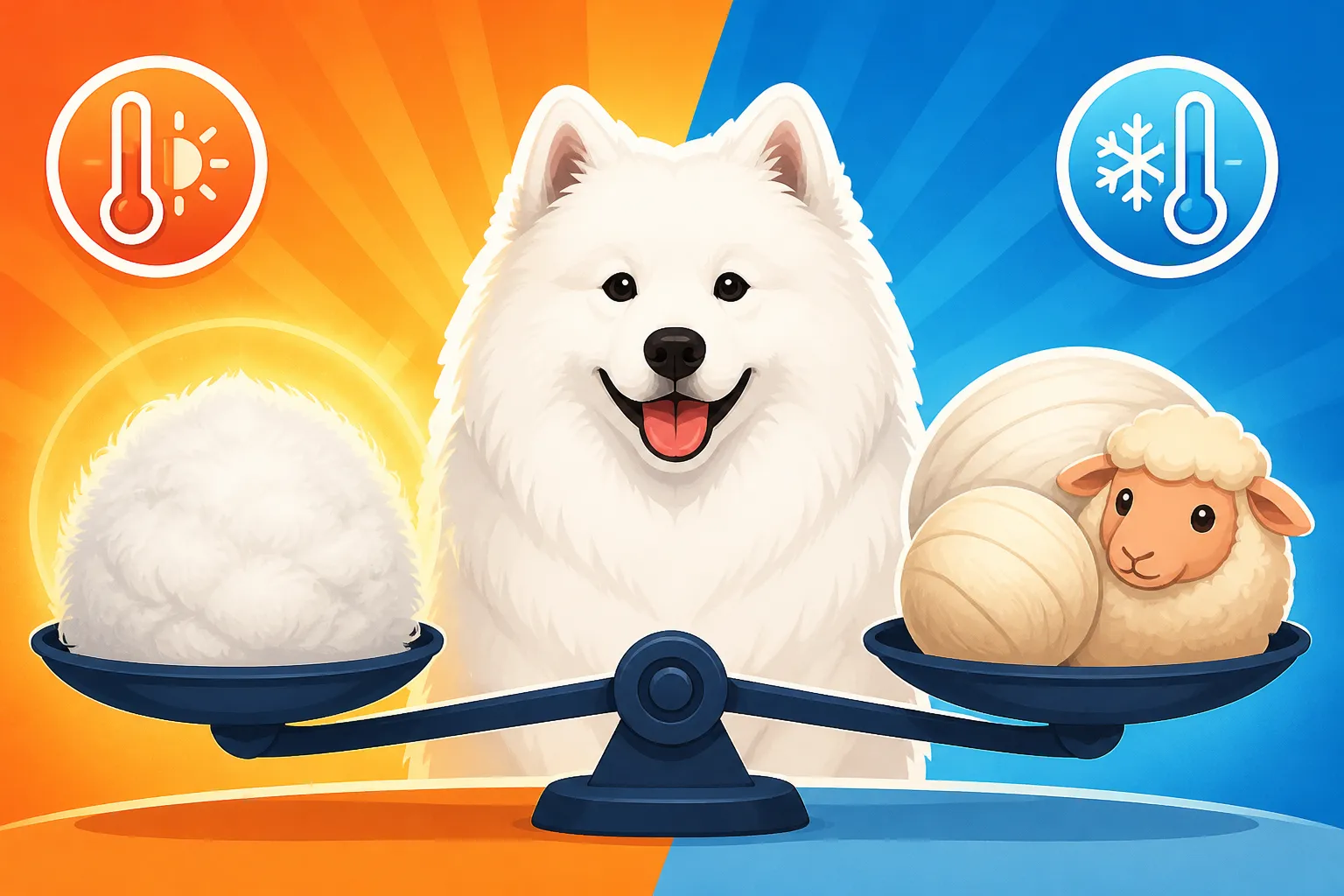
Whether Samoyed Yarn Is Warmer Than Sheep’s Wool
One of the most common questions I get from fellow Samoyed owners, especially those of us who regularly brush out what feels like another small dog's worth of fur, is about what to do with it all. The idea of spinning that glorious fluff into yarn is fascinating, but a crucial question always pops up: will it actually be warm, perhaps even warmer than traditional sheep's wool? This guide is going to dive deep into the unique properties of Samoyed fur, compare it to various types of sheep's wool, and help you understand exactly how warm your cherished furball's contributions can truly be when spun.
Understanding the Samoyed's Incredible Coat
The Samoyed's coat isn't just for looks; it's a marvel of natural engineering, meticulously designed over centuries to protect them in some of the most unforgiving climates on Earth. When we talk about spinning Samoyed fur, we're really focusing on that magnificent undercoat, the soft, downy fluff that sheds out in vast clouds, particularly during their seasonal "coat blows."
The Samoyed's Double Coat: Guard Hairs vs. Undercoat
Imagine wearing a heavy-duty winter parka over a thick, fluffy sweater. That's essentially what your Samoyed is doing, all the time. Their coat consists of two distinct layers:
- Outer Coat (Guard Hairs): These are the longer, coarser, straight hairs that you see on the surface. They are designed to be weather-resistant, repelling water, snow, and dirt. Think of them as the protective shell. They are not typically used for spinning into yarn because of their coarser texture, which would make for an uncomfortable, scratchy garment.
- Undercoat (Wooly Down): This is the star of the show for spinners! Nestled beneath the guard hairs, the undercoat is incredibly dense, soft, and fine, almost like cotton or angora. It's this luxurious fluff that provides the bulk of the insulation, trapping a layer of warm air close to the dog's body. During a coat blow, this is the material that comes out in astounding quantities, begging to be repurposed.
This dual-layer system is why a Samoyed's coat really keeps it cool in summer and incredibly warm in winter. The guard hairs create a barrier, while the undercoat acts as a thermal regulator. Understanding this distinction is vital because the warmth and feel of your spun Samoyed yarn will depend almost entirely on the quality and quantity of the undercoat you manage to collect and process.
Why the Undercoat is Key for Yarn
The undercoat is a treasure trove for fiber artists. Its fine, crimped fibers are what give Samoyed yarn its exceptional softness and insulating properties. Unlike the stiff outer coat, the undercoat has a natural loft and springiness that allows it to trap a remarkable amount of air, which, as we'll discuss, is the secret to warmth. When brushed out regularly, especially with a good undercoat rake and a powerful force dryer, you can collect copious amounts of this soft, usable fiber. Many dedicated Samoyed owners invest in high-quality grooming tools, easily found on sites like Chewy or Amazon, to ensure they can efficiently collect this precious commodity. This commitment to proper grooming not only keeps your Samoyed comfortable but also provides a sustainable source for your spinning projects. For those interested in home grooming, there are resources like What a Force Dryer Costs a Samoyed Owner that might be helpful in acquiring the right equipment for effective undercoat removal.
The Science Behind Fiber Warmth
Before we jump into comparing Samoyed yarn with sheep's wool, it's helpful to understand what actually makes any fiber "warm." It's not magic; it's physics! The ability of a material to keep you warm largely comes down to two key factors: its ability to trap air and how it manages moisture.
Trapping Air: The Primary Mechanism of Insulation
Think about a thermos. It doesn't generate heat, but it keeps your coffee hot (or iced tea cold) by creating a vacuum, which is essentially a layer of air that prevents heat from escaping or entering. Textile fibers work similarly, though not with a vacuum. Instead, they trap countless tiny pockets of air within their structure and between individual fibers. This trapped air acts as an insulating barrier, slowing down the transfer of heat away from your body.
The more air a fiber can trap, and the more effectively it can hold onto that air, the better an insulator it will be. This is why fluffy, voluminous materials are often warmer than thin, dense ones. Whether a Samoyed's undercoat traps air is precisely why their coat is so effective in extreme cold; it's designed for maximum loft and air retention. The finer the fibers and the more crimp they have, the more microscopic air pockets they can create and hold, leading to superior warmth without necessarily adding significant weight.
Moisture Management: Affecting Warmth and Comfort
Beyond just trapping air, how a fiber interacts with moisture—sweat, humidity, or even rain—significantly impacts its perceived warmth and your comfort.
- Hydrophobic vs. Hydrophilic: Some fibers are hydrophobic (water-repelling), while others are hydrophilic (water-absorbing). When a fiber absorbs water, it loses much of its ability to trap air because water fills those insulating air pockets. Wet fibers also conduct heat away from the body much faster than dry ones, making you feel cold, especially in chilly conditions.
- Wicking Properties: Good moisture-wicking fibers, like many natural animal fibers, can draw moisture away from the skin and release it into the atmosphere. This keeps the skin dry and allows the trapped air pockets to remain intact, preserving insulation.
- Retaining Warmth When Wet: Some fibers have a unique ability to retain a degree of warmth even when damp. Wool is famous for this, thanks to its complex chemical structure. This property is particularly valuable for outdoor activities or in damp environments, where staying dry isn't always possible. The ability to manage moisture effectively contributes not just to feeling warm but to overall comfort and preventing hypothermia in extreme conditions.
Samoyed Yarn vs. Sheep's Wool: A Head-to-Head Comparison
Now for the main event! Let's put these two incredible natural fibers against each other to see how they stack up in terms of warmth and other crucial characteristics. Both Samoyed yarn and sheep's wool are celebrated for their insulating properties, but they achieve their warmth in slightly different ways and offer distinct experiences.
Thermal Properties Comparison
When it comes to sheer warmth, Samoyed yarn often surprises people by being exceptionally insulating.
- Samoyed Yarn: The undercoat, which is spun into yarn, consists of hollow fibers. These hollow cores, combined with the natural crimp and incredibly fine texture, create an unparalleled ability to trap air. This means a garment made from Samoyed yarn can feel significantly warmer than one of comparable weight made from many types of sheep's wool. It's often likened to angora or cashmere in its warmth-to-weight ratio. People who've worn Samoyed garments often describe them as feeling like a warm hug, perfect for those chilly evenings when you just want to feel cozy. The traditional role of the Samoyed sleeping in tents with the Nenets people highlights just how essential their fur was for human survival in brutal cold, directly translating to the insulating quality of their spun fiber.
- Sheep's Wool: The warmth of sheep's wool varies dramatically depending on the breed. Merino wool, for example, is renowned for its fine fibers and excellent warmth, often used in performance base layers. Other wools, like Shetland or Icelandic, are coarser but also incredibly warm dueowing to their dense, crimped structure. Sheep's wool fibers are not typically hollow, but their natural crimp and scales help trap air effectively. Wool also has the remarkable ability to generate a small amount of heat when it absorbs moisture, which contributes to its reputation for keeping you warm even when wet. This is a property Samoyed fur doesn't share to the same degree.
| Feature | Samoyed Yarn (Undercoat) | Sheep's Wool (e.g., Merino, Shetland) |
|---|---|---|
| Warmth (Insulation) | Excellent (often superior due to hollow fibers and loft) | Excellent (varies by breed, known for warmth even when wet) |
| Softness/Feel | Extremely soft, fluffy, lightweight ("halo" effect) | Ranges from extremely soft (Merino) to coarse (Shetland, Icelandic) |
| Weight | Very lightweight for its warmth | Varies; can be lightweight (Merino) to moderately heavy |
| Moisture Management | Wicks moisture away, but less insulation when fully wet | Wicks moisture, known to retain warmth even when damp; absorbs water |
| Durability | Good, but can pill with friction; delicate wash required | Generally durable, especially coarser wools; can felt |
| Elasticity | Moderate; tends to have less bounce than wool | High (especially Merino), good drape and shape retention |
| Allergy Potential | Generally considered hypoallergenic by many sufferers | Can be irritating to sensitive skin due to lanolin or fiber diameter |
| Availability | Limited to personal dog's shedding, specialist suppliers | Widely available in various forms and qualities |
Weight and Feel: A Tangible Difference
One of the most immediate differences you'll notice between Samoyed yarn and sheep's wool is in its weight and texture.
- Samoyed Yarn: It is incredibly lightweight, especially for the amount of warmth it provides. This is due to those hollow fibers and its natural loft. The resulting fabric feels exceptionally soft against the skin, often described as cloud-like or like spun air. It has a beautiful "halo" effect, where fine fibers seem to float around the knitted fabric, adding to its ethereal softness. However, this extreme softness can mean less stitch definition in complex patterns compared to some sheep's wool. Which part of a Samoyed's coat spins best is specifically the soft, downy undercoat for this very reason.
- Sheep's Wool: Weight and feel vary widely. Fine Merino wool is exquisitely soft and lightweight, excellent for next-to-skin wear. However, many traditional sheep's wools, while warm, can be coarser, heavier, and even itchy for some individuals. Think of a rustic fisherman's sweater compared to a delicate cashmere scarf. The texture of wool can provide excellent stitch definition, making it versatile for a wide range of knitting and crochet projects. The choice often comes down to personal preference for softness versus structural integrity.
Durability and Care: Long-Term Considerations
Caring for garments made from these unique fibers also presents different challenges and rewards.
- Samoyed Yarn: While durable in its own right, Samoyed yarn does require gentle care. It has a tendency to felt if agitated too much with heat and moisture, similar to many wools, so hand washing in cool water with a mild soap is usually recommended. Because of its finer, shorter staple length, Samoyed yarn can also be prone to pilling with heavy friction. Regular brushing of the finished garment (gently, with a soft brush) can help maintain its fluffy appearance. A common concern spinners have is whether spun Samoyed fur smells when wet, but with proper washing and processing, the finished yarn should be odor-free, just like any other clean fiber.
- Sheep's Wool: Again, durability and care depend on the type of wool. Superwash Merino wool is treated to prevent felting and can often be machine washed on a gentle cycle, making it a convenient choice. Untreated wools, however, also require careful hand washing to prevent shrinkage and felting. Wool is generally a very resilient fiber, known for its longevity, and can often withstand more wear and tear than some of the finer Samoyed yarn preparations. It also naturally resists wrinkles and dirt, another benefit of how a Samoyed's coat sheds dirt on its own.
Practical Applications and Considerations for Samoyed Yarn
So, you've lovingly collected mounds of your Samoyed's undercoat, perhaps after a thorough grooming session using tools you picked up from Amazon or Chewy. You're ready to spin and create. What can you actually make with this precious fiber, and what should you keep in mind?
Ideal Uses for Samoyed Yarn
Because of its exceptional softness, warmth, and lightweight nature, Samoyed yarn is perfectly suited for items worn close to the skin or for luxurious accessories.
- Scarves and Cowls: These are perhaps the most popular items to make from Samoyed yarn. The softness against the neck is unparalleled, and the warmth is incredible for its weight. A Samoyed cowl can feel like wearing a cloud around your throat on a frosty morning. Plus, you don't need a huge quantity of yarn for a single scarf.
- Hats and Headbands: Similarly, Samoyed yarn makes for wonderfully warm and soft headwear. It's gentle on the skin, won't cause itching, and provides excellent insulation for your head and ears.
- Mittens and Gloves: For truly cold weather, Samoyed mittens offer surprising warmth. The dense, air-trapping fibers keep your hands toasty without feeling bulky.
- Small Garments: Think baby blankets, delicate shawls, or even accents on larger garments. While making an entire sweater might require an impressive amount of fur – how much Samoyed fur makes a sweater is often more than people realize – smaller items are very achievable and make cherished gifts.
- Blending with other fibers: Sometimes, Samoyed fur is blended with sheep's wool or alpaca to add strength, elasticity, or to extend the yield. This can create a hybrid yarn that combines the best qualities of both fibers, resulting in a unique texture and warmth profile. This is especially useful if you find you don't have quite enough pure Samoyed undercoat for a specific project.
Caring for Samoyed Garments
Once you've poured your heart into creating a beautiful item from Samoyed yarn, you'll want to ensure it lasts. Proper care is key to maintaining its softness, shape, and warmth.
- Hand Washing is Best: Always, always hand wash Samoyed garments. Use cool or lukewarm water and a gentle wool-specific soap. Avoid harsh detergents or hot water, as these can strip the natural oils from the fibers and cause felting or damage. Gently squeeze the water through the fabric; do not agitate, rub, or twist vigorously.
- Rinsing: Rinse thoroughly in cool water until all soap residue is gone. Again, be gentle.
- Drying: Support the garment's weight when lifting it from the water to prevent stretching. Roll it gently in a clean towel to absorb excess water. Then, lay it flat on a clean, dry surface, reshaping it to its original dimensions. Air dry away from direct sunlight or heat, which can damage the fibers. Never put Samoyed yarn in a machine dryer.
- Storage: When not in use, store Samoyed garments folded flat in a breathable bag or drawer. Avoid hanging them, as the weight can cause stretching over time. Like any natural fiber, Samoyed fur can be attractive to moths, so consider using natural repellents like cedar or lavender sachets.
Working with your Samoyed's fur, from collecting it (perhaps while your dog enjoys a tasty treat from Ollie as a reward for patience) to spinning and knitting, is a truly unique and rewarding experience. It connects you directly to your beloved companion in a tangible, cozy way, creating heirlooms that are not only warm but also rich with personal history and love.
Disclaimer
This article is for general informational purposes only and does not constitute professional advice. Laws, prices and regulations vary by location and change over time. Consult a qualified professional for guidance on your specific situation.