Whether a Samoyed Needs Whitening Products at All
It's a common aspiration for Samoyed owners to want that pristine, snow-white coat that truly makes these beautiful dogs shine. However, many of us fret over minor discolorations or yellowing spots, immediately wondering if we need to rush out and buy specialized whitening shampoos or treatments. This guide will dive deep into whether your Samoyed truly needs these products, how their unique coat actually works to keep itself clean, and what real-world strategies are far more effective for maintaining that iconic white fluff.
The Allure of a Pristine White Samoyed and Why We Seek Whitening
There's something undeniably captivating about a Samoyed with a coat as white as freshly fallen snow. It’s the image we often see in magazines, on social media, and in our dreams when we first decide to bring one of these magnificent dogs into our lives. We want our Sammy to embody that picture of arctic purity, and naturally, when we see a bit of yellowing or a stubborn stain, our immediate thought is, "How can I make it whiter?"
The Image We Have in Our Minds
When we envision a Samoyed, we typically picture a brilliant, sparkling white dog, often against a backdrop of snow or a lush green field. This idealized image sets a high bar, making any deviation feel like a failure on our part or a sign that our dog isn't as perfect as we imagined. We compare our own beloved companion to those flawless images, not realizing that what we see online or in shows is often the result of meticulous, sometimes daily, grooming routines that go far beyond a simple bath. The desire to maintain this ideal white can lead us down a rabbit hole of specialized products, all promising to restore that pristine hue.
This desire is completely understandable, of course. Who doesn't want their Samoyed to look its absolute best? But it's important to understand that perfection is often an illusion, and our dogs are living, breathing creatures who love to roll in grass, dig in dirt, and explore the world with their noses. A little bit of real-life grime is inevitable, and our reactions to it are often influenced more by aesthetic ideals than by actual necessity for the dog's health or coat integrity. The reality of The Samoyed Slept in the Tent to Keep People Alive means they were always a working dog, not a pristine showpiece.
Common Causes of Discoloration (and Our Panic)
Before we even think about whitening products, let's talk about why Samoyed coats might not always be blindingly white. It's often not a sign of poor hygiene, but simply part of living life as a dog! One of the most common culprits is tear staining around the eyes and muzzle, especially if your Samoyed has environmental allergies or a little extra moisture around their eyes. This can lead to a reddish-brown discoloration that really stands out against white fur. Similarly, around the mouth, food particles, water, and even saliva can cause a yellowish or brownish tint, sometimes referred to as "beard stain."
Beyond facial staining, urine can cause yellowing on the legs or belly, particularly in males who might be a bit messy, or if they've been lying in wet grass. Then there's the simple joy of a Samoyed being a Samoyed – rolling in dirt, mud, or even just wet grass can leave temporary stains. Some Samoyeds naturally have what are called "biscuit" markings, which are patches of cream or light tan fur, usually on the ears or back. These are perfectly acceptable according to the breed standard and are not "stains" to be removed, but rather a natural part of their coloring. Understanding these common, often benign, causes of discoloration can go a long way in managing our expectations and reducing the urge to reach for harsh chemical solutions.
The Samoyed's Natural Coat: A Marvel of Self-Cleaning Design
Before commercial products existed, Samoyeds were thriving in the harsh arctic. Their coats didn't just keep them warm; they were engineered by nature to stay clean. It's a testament to thousands of years of adaptation that these dogs possess such a remarkable self-cleaning mechanism.
Understanding the Double Coat's Structure
The Samoyed's coat is a true marvel, designed for extreme conditions. It's a double coat, meaning it consists of two distinct layers. The outer layer is made up of long, coarse guard hairs. These hairs are straight, somewhat stiff, and shed dirt and moisture with incredible efficiency. They act like a protective shield, preventing snow, ice, and even mud from penetrating to the skin. Underneath this outer layer lies a dense, soft, woolly undercoat. This undercoat is what provides the incredible insulation, trapping air to keep the dog warm in freezing temperatures and, surprisingly, to help regulate their body temperature in warmer weather. You can learn more about What a Samoyed's Double Coat Is Made Of.
This unique structure is key to its self-cleaning ability. The guard hairs are naturally somewhat water-repellent and resistant to holding onto dirt. When mud dries on a Samoyed, it often simply flakes off or can be easily brushed away, leaving the pristine white fur underneath. It's not magic, it's just brilliant natural engineering.
How Their Fur Stays White Naturally
Many new Samoyed owners are surprised to find that their dog's coat, despite its brilliant white color, often manages to stay remarkably clean with minimal effort. This isn't just wishful thinking; it's a genuine characteristic of the breed. The texture of the outer guard hairs plays a huge role. These hairs are smooth and slick, making it difficult for dirt and grime to adhere to them. Think of it like a non-stick pan for dirt! Instead of soaking into the hair shaft, particles tend to sit on the surface, ready to be shaken off or brushed away.
Furthermore, Samoyeds are relatively low-odor dogs, which is another sign of their self-cleaning nature. Why a Samoyed Barely Smells at All is directly related to this coat structure. They don't produce the same oily secretions that can trap dirt and create odor in many other breeds. When dirt does accumulate, especially after a muddy romp, simply letting it dry will often result in it crumbling right off. A good shake from your Sammy, or a quick brush with a slicker brush, is usually all it takes to restore that brilliant white. It's truly amazing How a Samoyed's Coat Sheds Dirt on Its Own.
The Myth of the "White-Only" Samoyed
While we often picture Samoyeds as pure white, it's a common misconception that this is the only acceptable color. The Samoyed breed standard actually allows for white, cream, and biscuit, or white with biscuit markings. Biscuit refers to patches of light tan or cream, usually found on the ears, back, or tail. These are not stains or signs of an impure coat; they are natural and beautiful variations within the breed. A Samoyed with biscuit markings is just as much a Samoyed as one that is pure white.
Sometimes, owners mistake these natural biscuit markings for dirt or staining, leading them to frantically search for ways to "whiten" these areas. Attempting to bleach or aggressively clean these naturally pigmented sections of the coat is not only futile but potentially harmful. It's crucial for owners to understand and appreciate the full spectrum of acceptable Samoyed colors and to recognize that a dog doesn't need to be pure white to be a perfect specimen of the breed. Embracing these natural variations is part of celebrating the Samoyed for what it is, rather than trying to force it into an artificial ideal.
Are Whitening Products Truly Necessary or Even Beneficial?
With the natural cleaning abilities of the Samoyed's coat, the question then becomes: do whitening products actually offer any real advantage, or are they more of a perceived need driven by marketing and our own desire for perfection? Let's consider what these products do and what risks they might carry.
What Whitening Shampoos Actually Do
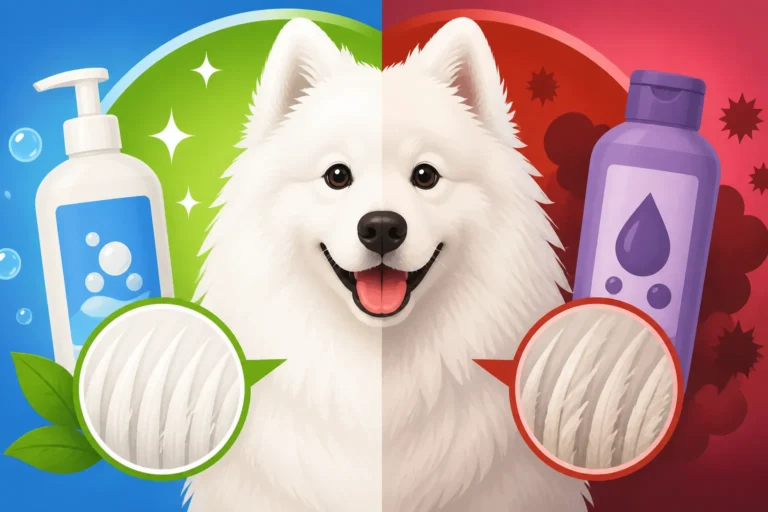
Most whitening shampoos for dogs fall into a couple of categories. Some contain optical brighteners, which are chemicals that absorb ultraviolet light and re-emit it as blue light, making the coat appear whiter by masking yellow tones. Think of it like laundry detergent that makes your whites look brighter. These don't actually clean or remove stains; they simply alter how light reflects off the coat. Other whitening shampoos might use mild bleaching agents, like hydrogen peroxide, or bluing agents (a diluted blue dye) to counteract yellowing.
While they can certainly create a temporary "wow" factor, it's important to understand that they aren't fundamentally changing the cleanliness or health of the coat. They are mostly cosmetic. For many Samoyed owners, the desire for an instant fix outweighs the understanding of the coat's natural properties. While a professional handler might use these products judiciously for a show dog on a specific schedule, for the average pet Samoyed, they are rarely a necessity and often come with their own set of considerations.
Potential Downsides and Risks
Using whitening products on your Samoyed isn't without potential drawbacks. Many of these products contain stronger chemicals than regular dog shampoos, which can strip the natural oils from your Samoyed's magnificent double coat. These oils are vital for the health, shine, and protective qualities of the fur, helping it to shed water and dirt. Stripping these oils can lead to dry, brittle hair, skin irritation, flakiness, and even make the coat more susceptible to staining in the long run. Imagine constantly using harsh detergents on your own hair – it wouldn't be healthy!
Furthermore, some bluing agents, if not rinsed thoroughly or if left on too long, can actually leave a purplish or bluish tint on very white fur, which is definitely not the desired effect! The optical brighteners can also cause skin irritation or allergic reactions in sensitive dogs. Given that a Samoyed's coat is designed to self-clean and repel dirt, introducing harsh chemicals that interfere with this natural balance can be counterproductive to overall coat health. Instead of focusing on products, understanding how often a Samoyed should be bathed and the importance of Drying a Samoyed to the Skin with appropriate tools is far more important for long-term health.
When (and If) a Whitening Boost Might Be Considered
Okay, so we've established that whitening products aren't usually necessary for a healthy Samoyed coat, and can even be counterproductive. But are there any scenarios where they might be considered? Perhaps if you have a show dog and need that absolute peak brilliance for a single event, under the guidance of an experienced professional handler. Even then, the focus should be on gentle, brief application and meticulous rinsing.
For the vast majority of pet Samoyeds, a whitening shampoo offers little benefit that can't be achieved through proper basic grooming and diet. If you're struggling with persistent localized stains, such as tear or beard staining, a targeted, natural approach is almost always superior and safer. Rather than a full-body whitening wash, consider gentle, dog-safe stain removers or home remedies that are specifically designed for small, problem areas, which we'll discuss next. The health of your Samoyed's skin and coat always comes first, and compromising that for a fleeting cosmetic effect is rarely a good trade-off.
The Best Ways to Maintain a Radiant Samoyed Coat Without Harsh Chemicals
So, if aggressive whitening products aren't the answer, what is? The good news is that maintaining your Samoyed's stunning white coat comes down to consistent, simple, and natural methods that support their coat's inherent design.
Everyday Grooming Habits Are Key
The foundation of a beautiful, white Samoyed coat isn't a special shampoo; it's regular, thorough grooming. Brushing is your absolute best friend. Aim for at least 2-3 times a week, and more frequently during a When a Samoyed Blows Its Coat. This isn't just about removing loose fur; it’s about preventing mats, distributing natural oils, and removing dirt and debris before it can set in. A good slicker brush and an undercoat rake are indispensable tools. You can find excellent options for these on sites like Amazon or Chewy.
When you brush, you're not just removing shed hair; you're also lifting dirt particles that are sitting on the guard hairs. For instance, if your Samoyed has had a muddy adventure, letting the mud dry completely, then brushing it out, is far more effective than trying to wash it while wet. Regular brushing keeps the coat aerated, preventing the buildup of grime and keeping that naturally white appearance. It also helps you spot any minor discolorations early, allowing for targeted cleaning rather than a full chemical treatment. Remember, How Often a Samoyed Needs Brushing is a crucial part of their coat health.
| Aspect | Natural Coat Care | Chemical Whitening Products |
|---|---|---|
| Primary Goal | Health, cleanliness, natural appearance | Cosmetic brightening, masking discoloration |
| Method | Regular brushing, spot cleaning, proper diet | Chemical bluing agents, optical brighteners, mild bleach |
| Effect on Coat | Maintains natural oils, strengthens hair | Can strip oils, dry out coat, lead to irritation |
| Long-Term Outcome | Healthy skin & coat, natural white, fewer stains | Potential for damage, increased susceptibility to stains |
| Safety | Very safe, promotes bonding | Risk of skin irritation, allergic reactions, blue tint |
| Cost | Initial tool investment, ongoing gentle shampoo | Can be expensive, ongoing purchase of specialized products |
| Time Commitment | Regular, consistent grooming sessions | Less frequent, but potentially more intensive baths |
Addressing Specific Stains Naturally
For those specific, persistent stains like tear stains or beard stains, a targeted, gentle approach is far better than a harsh whitening shampoo for the whole dog. For tear stains, keeping the area around the eyes dry and clean is paramount. A soft, damp cloth used daily to gently wipe away eye discharge can make a huge difference. Some owners find success with specialized tear stain wipes or solutions that are specifically formulated for dog eyes, often containing natural ingredients like boric acid or witch hazel. Always check the ingredients and ensure they are safe for use around eyes.
For beard stains, the same principle applies: consistent cleaning. After meals, gently wipe your Samoyed's muzzle with a damp cloth. Switching to a stainless steel or ceramic bowl instead of plastic can also help, as plastic can harbor bacteria that contribute to staining. For more stubborn stains, a paste made of baking soda and a little water, applied briefly and rinsed thoroughly, can sometimes help lift the discoloration. Again, the key is consistency and gentleness. Whether a Samoyed's Face Stains From Tears and Whether a Samoyed's Beard Stains From Food are common issues that respond well to these natural, daily interventions.
The Role of Diet in Coat Health
You might be surprised to learn that what you feed your Samoyed can have a significant impact on the health and appearance of their coat, including its whiteness. A high-quality, balanced diet rich in essential fatty acids (like Omega-3s and Omega-6s) is crucial for skin and coat health. These fats contribute to a shiny, healthy coat and can even help reduce excessive shedding and improve the coat's natural resilience to dirt and staining.
Cheap, filler-heavy dog foods can lead to dull, dry coats and may even contribute to skin issues or allergies, which can manifest as excessive licking or scratching that further discolors the fur. If your Samoyed is experiencing persistent coat dullness or staining, it might be worth evaluating their diet. Look for foods with high-quality protein sources and healthy fats. You might consider brands like Ollie, which focus on fresh, high-quality ingredients, or other premium kibbles available on Chewy. A healthy coat from the inside out is far more naturally white and resilient than one relying on external chemical treatments. Remember, for long-term health, Feeding a Samoyed That May Become Diabetic also emphasizes the importance of a well-balanced, high-quality diet.
Ultimately, the goal is a healthy, happy Samoyed with a naturally beautiful coat, not a chemically whitened one. Embrace their natural splendor!
Disclaimer
This article is for general informational purposes only and does not constitute professional advice. Laws, prices and regulations vary by location and change over time. Consult a qualified professional for guidance on your specific situation.