Why a Samoyed Talks Back When Told Off
There’s nothing quite like the experience of living with a Samoyed, and part of that unique joy comes from their incredibly vocal nature. Many Samoyed owners find themselves in a playful — or sometimes exasperating — debate with their furry friend, feeling like their Samoyed is actually "talking back" when given a command or told off. If you’ve ever wondered why your Samoyed seems to argue with you rather than simply obey, this guide is for you. We'll explore the fascinating reasons behind this charming, yet often misunderstood, behavior.
Understanding the Samoyed's Communication Style
Let's be honest, living with a Samoyed often feels like having a perpetually chatty roommate. They don't just bark; they have a whole repertoire of sounds that can leave you both amused and bewildered. This isn't just a quirk; it's deeply ingrained in who they are.
More Than Just a Bark
Unlike some breeds that might offer a sharp, decisive bark for specific reasons, your Samoyed has a vocal range that would make a seasoned opera singer envious. They grunt, grumble, whine, woo-woo, howl, and even let out that infamous "Samoyed scream" that can be truly startling if you're not expecting it. It's a symphony of sound, really, and each note often carries a distinct meaning. They might offer a soft "woof" to greet you, a protesting growl when you ask them to leave a particularly comfy spot, or an excited howl when the leash comes out. It’s a rich tapestry of communication, and understanding it is key to deciphering their "talking back." It's rarely aggression, but rather an attempt to engage, express, or sometimes even negotiate. When you hear that guttural "oof" or that rising "aroooo," it’s often their way of telling you exactly how they feel. For a deeper dive into their verbal repertoire, check out What a Samoyed Sounds Like When It Talks.
A History of Vocal Interaction
To truly grasp why your Samoyed "talks back," we need to take a little trip back in time, all the way to their origins with the Nenets people in Siberia. These dogs weren't just working animals; they were integral members of the family, living and sleeping inside the tents with their human companions. This wasn't a master-and-servant dynamic; it was a partnership. Imagine a nomadic people living in harsh conditions, relying on their dogs for herding reindeer, pulling sleds, and even providing warmth. In such close quarters, constant vocal communication between humans and dogs naturally evolved. Commands weren't just barked; they were often accompanied by human conversation, and the dogs responded in kind. They were encouraged to express themselves, to communicate their needs and understanding. They were expected to be partners, not silent subordinates. This historical context explains why today's Samoyed feels perfectly entitled to voice their opinion. It’s not rudeness; it’s a continuation of thousands of years of close, verbal collaboration. If you're curious about their ancient heritage, you'll find The Nenets of the Yamal Peninsula Bred the Samoyed a fascinating read.
"Talking Back" as an Expression of Opinion or Frustration
It can be baffling when your otherwise sweet-natured Samoyed suddenly seems to develop an argumentative streak. You give a simple command, and instead of immediate compliance, you get a grumble, a groan, or even a full-on vocal protest. But it's rarely about outright defiance; it's often about their strong sense of self and their way of telling you something isn't quite right from their perspective.
The Samoyed's Strong Independent Streak
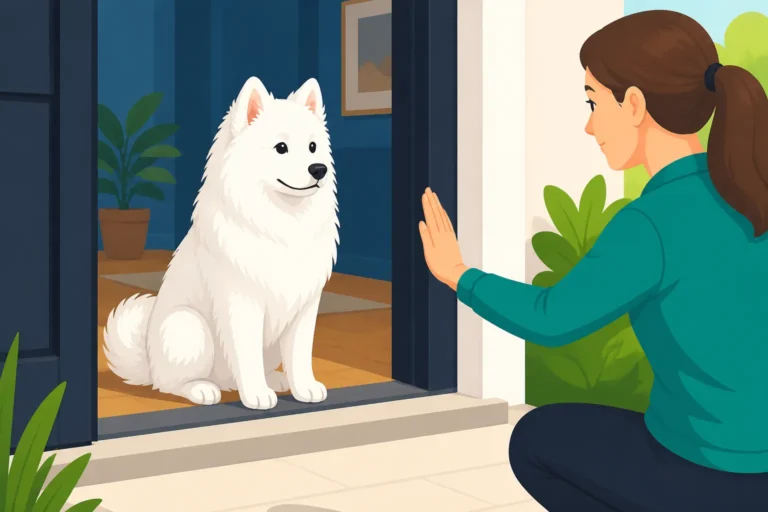
Let's be clear: Samoyeds are smart. Wicked smart. But that intelligence often comes bundled with a healthy dose of independence. They aren't the kind of dog that lives to obey your every whim without question. They're thinkers, problem-solvers, and sometimes, they just have a different idea about how things should go. When you tell your Samoyed it's time to come in from the glorious, snowy backyard, and you're met with a drawn-out, mournful "aroooo," they aren't trying to upset you. They're simply expressing their very strong opinion that staying outside, reveling in the winter wonderland, is a far superior plan. It’s their way of saying, "Are you sure about that? Because I had other plans, and they involved more snow." This independent spirit can be frustrating when you're trying to train, but it's also part of their charm. They engage with you, even if that engagement sounds like an argument. Sometimes, their "talking back" is simply them trying to negotiate the terms of their cooperation. If you've ever felt like your Samoyed selectively hears commands, you might relate to Why a Samoyed Ignores a Cue It Knows.
Expressing Discomfort or Boredom
Sometimes, the vocalizations that sound like "talking back" are actually your Samoyed trying to communicate a more fundamental need or discomfort. Imagine you're in a training session, working on "stay," and your Samoyed lets out a low grumble or shifts and gives a quick "woof." It's easy to interpret that as them being stubborn or argumentative. However, it might be their way of saying, "I'm bored," "My patience is wearing thin," "I need a break," or even "This spot isn't comfortable." Samoyeds are incredibly energetic and intelligent dogs who thrive on engagement and purpose. A lack of mental stimulation or sufficient physical exercise can quickly lead to boredom, which they'll readily communicate through vocal protest. If your Samoyed is consistently "talking back" during quiet times or when you're busy, consider if they might be under-stimulated. They might be trying to tell you, "Hey, I need something to do! Can we play? Can we go for a walk?" Learning to differentiate these signals from outright defiance is a game-changer in understanding your Samoyed. A truly bored Samoyed can also get into mischief, which you can learn more about in What a Bored Samoyed Does to a House.
When "Talking Back" Is Actually a Training Opportunity
It's tempting to view all vocal responses as defiance, but with Samoyeds, that's often a misinterpretation. Instead of getting frustrated, you can actually turn these moments into valuable training opportunities, strengthening your bond and teaching your Samoyed more appropriate ways to communicate.
Differentiating Argument from Communication
The key to turning these "back talk" moments into training opportunities lies in understanding the context and your Samoyed's body language. Is it a whine and a low grumble when you're getting ready to leave, clearly indicating separation anxiety or a plea for attention? Or is it a sharp "woof" and a head toss when you ask them to lie down during an exciting moment, showing they're over-stimulated and struggling with impulse control?
Consider this: if you tell your Samoyed "no" when they're chewing on something inappropriate, and they immediately drop it but then give a soft "woof" while looking at you, that's not necessarily an argument. They've complied with the command, and the vocalization might be a release of frustration or a bid for an alternative toy. However, if you've called them repeatedly to come inside, and they finally mosey over, stopping just out of reach to give a drawn-out "aroooo" while looking expectantly at something interesting in the yard, that's more likely a negotiation tactic. They've communicated their preference, and it's up to you to gently but firmly reinforce the original command. Paying attention to these nuances is crucial.
Strategies for Positive Reinforcement
Since Samoyeds are partners and communicators, a harsh or angry response to their vocalizations is often counterproductive. Yelling at your Samoyed for "talking back" will likely just make them more confused or shut down, rather than teaching them what you want. Why Raising Your Voice Fails on a Samoyed explains this in detail. Instead, focus on positive reinforcement.
If your Samoyed vocalizes for attention, try this: ignore the vocalization completely. Turn your back, walk away, or busy yourself until they offer a moment of quiet. The instant they are quiet, even for a second, turn back, praise them calmly, and offer a low-value treat or a brief, calm pet. Gradually extend the period of quiet required before the reward. This teaches them that quiet behavior gets attention, while vocal outbursts do not.
For situations where they're "talking back" during training because they're bored or confused, try breaking the task into smaller, easier steps. Keep sessions short, fun, and end on a positive note. Use high-value treats and enthusiastic praise. If they grumble when asked to perform a known cue, it might be a signal that they need more motivation or a change of pace. You can also actively teach a "quiet" cue. Start by having them vocalize (e.g., ring a bell for a treat), then, as they quiet down, say "quiet" and reward them. Repeat this until they associate the word with ceasing vocalization. Products found on Amazon like interactive puzzle toys can also redirect their mental energy and reduce boredom-induced vocalizations. For more structured training, programs like BAXTER & Bella offer comprehensive online guidance for positive reinforcement techniques that can help channel their exuberance.
Managing and Responding to the Vocal Samoyed
Living with a Samoyed means accepting a certain level of vocal expression. They are, after all, a breed known for their "Samoyed smile" and their expressive voices. However, there's a difference between charming communication and excessive or inappropriate vocalization. Learning to manage their talkativeness respectfully and effectively is a key part of Samoyed ownership.
Consistency and Clear Boundaries
One of the biggest factors in a Samoyed's "talking back" behavior is often inconsistent boundaries from their human companions. If sometimes their vocal protests get them what they want (like staying out in the snow a little longer), and other times they don't, they learn that vocalization is a viable strategy for negotiation. This can lead to more frequent and persistent "talking back." To mitigate this, consistency is paramount.
When you give a command, follow through every single time. If your Samoyed grumbles when you ask them to sit, gently guide them into a sit and then praise and reward them after they've settled, even if it took some physical prompting. Don't reward the grumble itself. Establish clear rules: when you come in, you come in. When you're told to "leave it," you leave it. While it might feel like you're being strict, Samoyeds actually thrive on clear expectations. It reduces their anxiety and gives them a predictable framework within which to operate. They’re intelligent enough to test boundaries, and if those boundaries are fuzzy, they'll exploit the wiggle room with their vocal protests.
Redirecting Excessive Vocalization
When your Samoyed's vocalizations become excessive or are clearly an attempt to get their way in an unwanted manner, redirection is a powerful tool. Instead of punishing the "talk," offer an alternative, acceptable behavior.
Let's say your Samoyed is "talking back" loudly, trying to demand playtime when you're busy. You've already tried ignoring them (as discussed above). Now, try redirecting:
- Ignore the vocalization. Wait for a brief moment of quiet.
- Redirect to a silent activity. Offer a favorite chew toy, a stuffed KONG, or a puzzle feeder. The goal is to shift their focus from vocal demanding to quiet, independent engagement.
- Reward quiet play. Once they are quietly engaged with the redirected activity, you can offer calm praise.
Another excellent strategy, especially if they are vocalizing due to pent-up energy, is ensuring they get enough appropriate exercise. A tired Samoyed is generally a quieter Samoyed. Think about their needs: vigorous walks, games of fetch, or even structured training sessions. For insights into their energy needs, read How Much Exercise a Samoyed Needs. If your Samoyed is vocalizing from boredom, consider providing enrichment toys they can interact with silently. Sometimes, a long-lasting chew or a snuffle mat can keep them happily occupied without needing to "talk" to you about their boredom.
Embracing the "Samoyed Personality"
Ultimately, one of the most important things to remember about your Samoyed's tendency to "talk back" is that it's deeply ingrained in their breed. You're never going to have a truly silent Samoyed, and honestly, would you even want one? Their expressive nature is a huge part of their charm and what makes living with them such a rich experience.
Instead of fighting against their vocal tendencies entirely, learn to embrace them and integrate them into your relationship. Many Samoyed owners develop a conversational rhythm with their dogs, understanding the different "woos" and grumbles as part of their unique personality. It's a testament to their history as close companions and partners that they feel comfortable enough to express their opinions so freely. Learning to appreciate this trait, while still gently guiding them towards acceptable forms of communication, will deepen your bond. It's not always an argument; often, it's just your Samoyed contributing their side of the conversation. And honestly, who doesn't love a dog with a strong personality? How Vocal Every Samoyed Is offers more context on just how talkative they can be.
| Vocalization Type | Common Sound | Potential Interpretation | Suggested Response |
|---|---|---|---|
| Grumbles/Groans | Low, rumbling "mmph" or "oof" | Displeasure, mild protest, discomfort, tired | Check comfort, redirect to preferred activity, calmly repeat command |
| "Woo-Woo" | Rising and falling "aroooo" | Greeting, excitement, desire for attention/play, mild protest | Acknowledge calmly, redirect to quiet behavior if attention-seeking |
| Sharp Bark | Quick, single "woof!" | Startle, alert, demand for attention, sudden excitement | Assess situation, teach "quiet" cue, redirect attention |
| Howling | Prolonged "aroooooooo" | Loneliness, excitement, responding to sirens, "singing" | Provide company, enrichment, or join the "song" if appropriate |
| Whining | High-pitched, continuous | Need (potty, hunger), anxiety, pain, attention-seeking | Address potential needs, consult vet if pain suspected, ignore if attention-seeking |
| Samoyed Scream | High-pitched, piercing | Extreme excitement, frustration, distress, attention-seeking | Manage over-excitement, redirect, seek professional help if distress |
Remember, every Samoyed is an individual, and while these are general interpretations, you are the best judge of your dog's specific communication style.
Disclaimer
This article is for general informational purposes only and does not constitute professional advice. Laws, prices and regulations vary by location and change over time. Consult a qualified professional for guidance on your specific situation.