Whether Neutering Calms a Samoyed
It’s a common scenario: you’ve got a rambunctious Samoyed, full of beans, perhaps a bit too interested in things outside the fence, or maybe just generally boisterous, and someone inevitably suggests, "Just get him neutered, that'll calm him down." The idea that neutering is a magic button to a perfectly placid dog is a widespread myth, and it often leads to frustration and disappointment for Samoyed owners. This guide aims to clear up what you can realistically expect from neutering your Samoyed, separating fact from wishful thinking, and focusing on the true influences on their behavior.
Understanding the Samoyed Temperament Before Any Surgical Decisions
Before we even dive into the surgical aspect, it's crucial to understand the inherent nature of our fluffy, smiling companions. Samoyeds were bred for a specific job: herding reindeer, pulling sleds, and sleeping with their nomadic Nenet families for warmth. These roles required intelligence, independence, stamina, and a generally good-natured, biddable (but not blindly obedient) temperament. They weren't bred to be couch potatoes or silent sentinels.
What Makes a Samoyed Tick (and Sometimes Tumble)
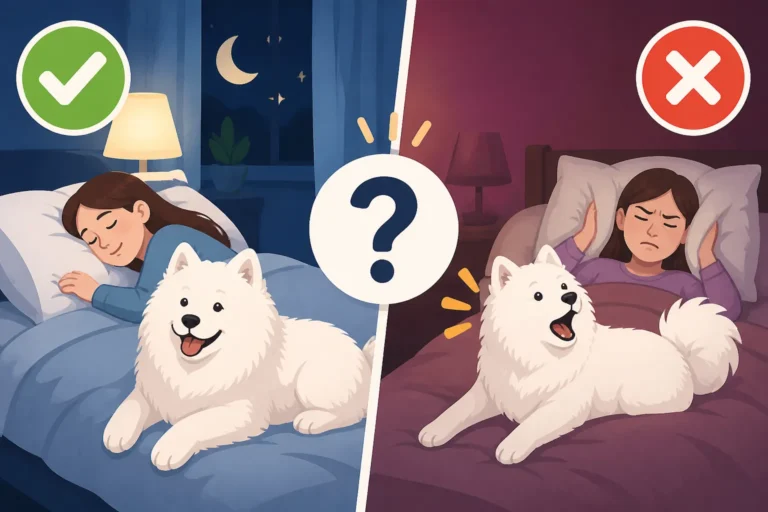
Samoyeds are intelligent, and that intelligence often manifests as a strong will and a knack for problem-solving – especially when the "problem" is getting to something they want. They are also highly social creatures, deeply bonded to their families. This combination means they thrive on interaction, mental stimulation, and a consistent routine. Without these, their intelligence can turn towards mischief, and their energy can feel overwhelming. Many behaviors often attributed to "being intact" are actually just classic Samoyed traits. For instance, digging, vocalizing, and a keen prey drive are all deeply ingrained in the breed, regardless of hormones. Don't fall into the trap of thinking a neuter will suddenly make your Samoyed silent; they are vocal by nature, masters of The Samoyed Scream and Why It Is Not Barking.
Energy Levels and Exercise Needs
A cornerstone of Samoyed behavior is their boundless energy. These are working dogs, built for endurance in harsh climates. A young Samoyed, especially, requires significant physical exercise and mental engagement daily. If your Samoyed is bouncing off the walls, chewing everything in sight, or constantly seeking attention (sometimes in annoying ways), the first question to ask isn't about their hormones, but about their daily routine. Are they getting at least an hour or two of vigorous activity? Are they being challenged with training, puzzle toys, or outings to new places? A bored Samoyed is rarely a calm one, and no amount of surgery will compensate for insufficient exercise. This breed needs a job, even if that "job" is just being your walking companion or excelling in dog sports. How Much Exercise a Samoyed Needs is more impactful on calmness than their reproductive status.
The Hormonal Impact of Neutering on Samoyed Behavior
When you neuter a male Samoyed, you are removing his testes, which are the primary source of testosterone. Testosterone is a powerful hormone that influences a range of physiological and behavioral traits. While it's true that some behaviors are directly driven or intensified by testosterone, it’s not a panacea for all behavior challenges.
What Testosterone Influences
Testosterone plays a role in a male dog's drive to seek out females in heat, mark territory, and can contribute to certain forms of male-on-male aggression. It also plays a part in muscle development and bone density. The removal of this hormone means that the biological urges associated with reproduction are significantly diminished. This is why you often see a reduction in behaviors like roaming or intense marking. However, behavior is complex, a mix of genetics, hormones, early experiences, learning, and environment. It's rarely just about hormones.
The Myth of the "Calming" Effect
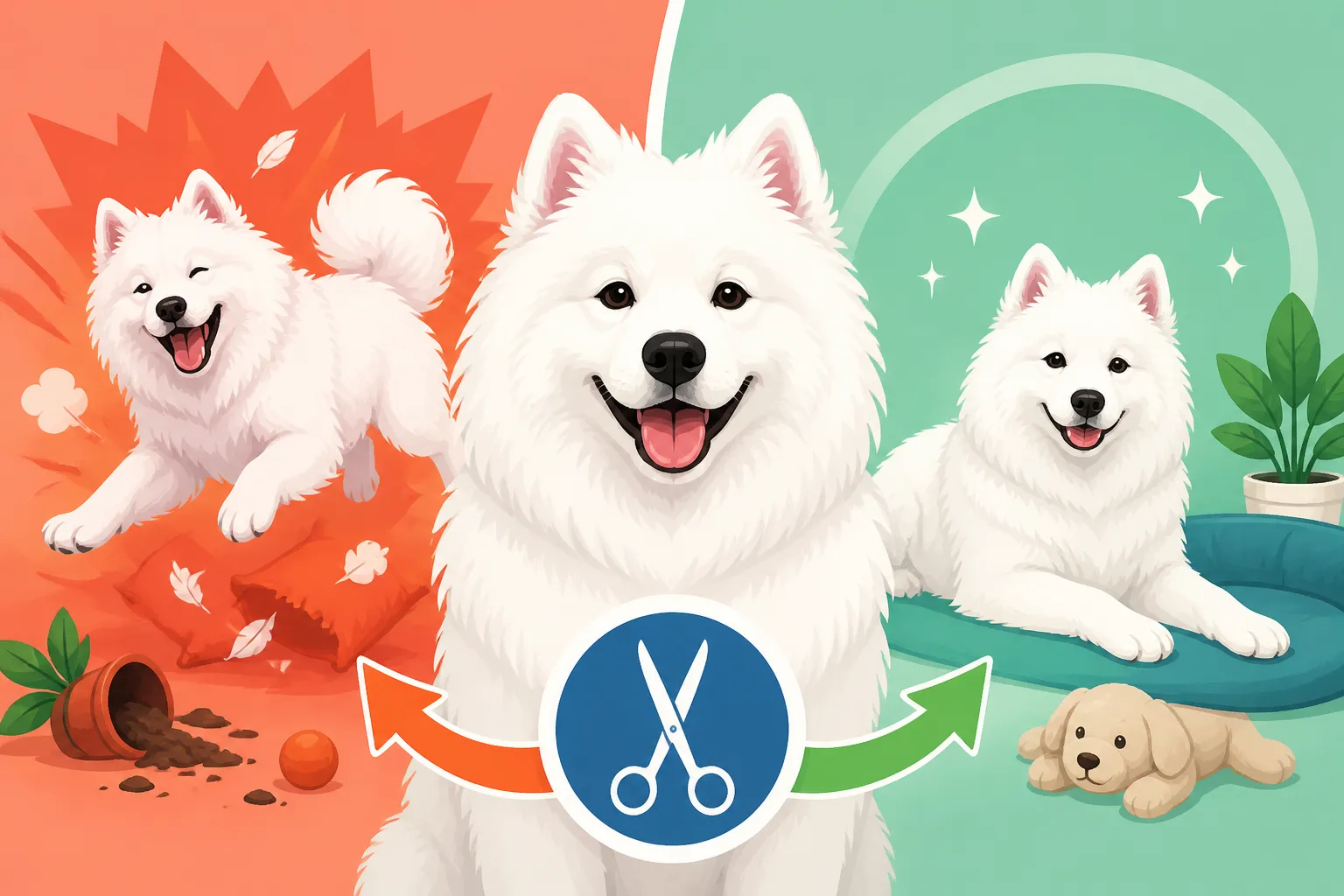
Many owners hope that neutering will magically calm a high-energy dog, reduce general excitability, or even fix issues like jumping up or being overly boisterous with guests. This is where the biggest misunderstanding lies. Neutering is not a sedative. While it removes the drive to reproduce, it doesn't remove learned behaviors, a dog's inherent personality, or their energy level. An active, playful Samoyed will almost certainly remain an active, playful Samoyed after neutering, just potentially one less inclined to wander off after a scent trail of an intact female. It's a common story: an owner neuters their young Samoyed, hoping to curb his exuberance, only to find he's still a fluffy whirlwind, requiring the same dedication to training and exercise.
Behaviors Neutering Might Influence (and Those It Likely Won't)
Let's break down which behaviors are most likely to be affected by neutering and which ones typically require different approaches.
Behaviors Most Likely to Be Positively Affected
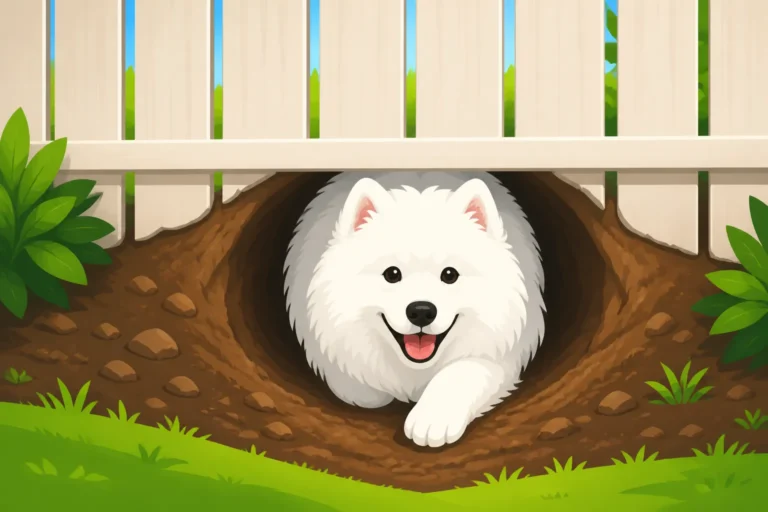
- Roaming/Wandering: This is perhaps the most significant behavioral change many owners report. Intact males have a strong drive to seek out females in heat. If your Samoyed is constantly trying to escape your yard or bolt out the door, neutering can significantly reduce this urge. They'll still need a secure yard (Samoyeds are escape artists, as we know from How a Samoyed Gets Out of Anything You Build), but the hormonal motivation to roam will be lessened. This is particularly relevant if you live in an area with many intact female dogs.
- Urine Marking: While both male and female dogs mark, intact males often engage in more frequent and prominent urine marking, both indoors and outdoors. Neutering can reduce the frequency and intensity of this behavior, especially if it's primarily hormonally driven. However, established marking habits, especially in older dogs, may still require diligent training and cleaning protocols.
- Male-on-Male Aggression: Testosterone can contribute to some forms of aggression between intact male dogs. While neutering can reduce this, it's not guaranteed. If aggression stems from fear, resource guarding, or poor socialization, neutering alone won't solve it. It's more likely to help if the aggression is specifically related to competition over females or dominance displays between intact males. Always consult a professional trainer or veterinary behaviorist for aggression issues, as they are complex.
- Sexual Behaviors: Mounting, humping, and masturbation are often reduced or eliminated after neutering, as these are directly tied to reproductive hormones.
Behaviors Least Likely to Be Affected
- General Excitability/Hyperactivity: Your Samoyed’s baseline energy level is largely genetic and developmental, not hormonal. A high-energy Samoyed will still be a high-energy Samoyed. As mentioned earlier, consistent exercise, mental stimulation, and training are the real keys here.
- Barking/Vocalizing: Samoyeds are notorious talkers. From the deep "woos" to the excited "screams," their vocal nature is part of their charm (or challenge!). Neutering will not silence a vocal Samoyed. Addressing excessive vocalization requires specific training techniques, often with the help of a professional. What a Samoyed Sounds Like When It Talks is usually an ingrained trait.
- Jumping Up: This is a learned behavior, often inadvertently reinforced by owners who give attention (even negative attention) when the dog jumps. Neutering has no impact on jumping. Consistent training, teaching an alternative behavior like "sit" for greetings, and managing the environment are necessary.
- Fear/Anxiety: Neutering can sometimes exacerbate fear or anxiety, especially if the dog is already prone to it, due to changes in body chemistry or muscle mass that might make them feel less confident. It certainly doesn't cure it. These issues require careful behavioral modification and sometimes medication.
- Resource Guarding: Whether it's food, toys, or even their human, resource guarding is a complex behavioral issue that needs structured training, not surgical intervention.
- Stubbornness/Trainability: Samoyeds are smart but can be selective listeners. This "negotiable obedience" is a breed trait. Neutering won't make your Samoyed suddenly eager to comply with every command. Effective training, positive reinforcement, and finding What Actually Motivates a Samoyed are paramount.
Here's a quick comparison of potential effects:
| Behavior | Likelihood of Reduction After Neutering | Primary Solution (if not reduced by neutering) |
|---|---|---|
| Roaming/Wandering | High | Secure fencing, recall training, long-line walks |
| Urine Marking | Moderate to High | Consistent potty training, management, cleaning products |
| Male-on-Male Aggression (hormonal) | Moderate | Professional trainer, controlled introductions, management |
| Sexual Behaviors (mounting/humping) | High | Training, redirecting, management |
| General Excitability/Hyperactivity | Low | Abundant exercise, mental stimulation, positive training |
| Barking/Vocalizing | Very Low | "Quiet" cue training, addressing triggers, enrichment |
| Jumping Up | Very Low | "Four on the floor" training, redirecting, management |
| Fear/Anxiety | Very Low (can sometimes worsen) | Desensitization, counter-conditioning, veterinary behaviorist |
| Resource Guarding | Very Low | Structured training, management |
| Stubbornness/Trainability | Very Low | Positive reinforcement, engaging training, consistency |
Training and Environment: The Real Keys to a Calm Samoyed
Ultimately, creating a calm, well-adjusted Samoyed has far less to do with their reproductive status and far more to do with your consistent efforts in training, socialization, and providing an enriching environment.
The Power of Consistent Training
Training isn't just about teaching commands; it's about building a language and a relationship with your dog. For a Samoyed, consistency is key. They are smart and will test boundaries. If you only enforce a rule sometimes, they'll quickly learn which times they can get away with things. Start early with a The First Year With a Samoyed Puppy focused on positive reinforcement. Utilize high-value treats and praise, and keep sessions short and fun. Online training platforms, like BAXTER & Bella, can provide structured programs and support, which can be invaluable for navigating the unique Samoyed personality. Consistency with basic obedience, loose-leash walking, and impulse control exercises will have a far greater impact on a Samoyed's "calmness" than neutering.
Enrichment and Mental Stimulation
A physically tired Samoyed is a well-behaved Samoyed, but a mentally tired Samoyed is often even calmer. These dogs need their brains engaged. Think beyond just walks:
- Puzzle Toys: Toys that dispense kibble or treats as your dog manipulates them can provide valuable mental exercise. You can find a huge variety of these on Amazon.
- Scent Work: Hiding treats around the house or yard and letting your Samoyed sniff them out taps into their natural instincts.
- Training Games: Instead of drilling commands, turn them into fun games. Play "find it" with a favorite toy, or practice "stay" with increasing distractions.
- Chewing: Providing appropriate, long-lasting chews can help satisfy their urge to chew and reduce destructive behaviors caused by boredom.
- Socialization: Regular, positive exposure to various people, places, and other dogs helps build confidence and appropriate social skills. This prevents fear-based reactivity that can sometimes be mistaken for aggression.
Managing Expectations and Environment
It’s important to acknowledge that a Samoyed is never going to be a completely sedentary dog. They will have bursts of energy, they will talk to you, and they will likely retain a playful, sometimes goofy, nature well into old age. Managing your expectations is crucial.
Consider your home environment:
- Secure Spaces: A securely fenced yard is non-negotiable for a Samoyed. They can jump and dig, so think carefully about How High a Samoyed Can Jump a Fence and The Tunnel a Samoyed Digs Under a Fence.
- Cooling Options: In warmer climates, providing ample shade and cooling mats can help them manage their energy levels, as overheating can lead to discomfort and agitation.
- Routine: Dogs thrive on routine. Predictable feeding times, walks, and training sessions help them feel secure and reduce anxiety.
If you’re struggling with specific behaviors, always reach out to a certified professional dog trainer or veterinary behaviorist. They can help identify the root cause of the behavior and create a tailored plan. While neutering can simplify some aspects of dog ownership, it's rarely the answer to general excitability or a lack of training. Your Samoyed's calm demeanor will be earned through your dedication, not a surgical procedure.
Disclaimer
This article is for general informational purposes only and does not constitute professional advice. Laws, prices and regulations vary by location and change over time. Consult a qualified professional for guidance on your specific situation.