Teaching a Samoyed to Wait at a Threshold
Few things are more terrifying for a Samoyed owner than the split second your beloved fluffy cloud decides an open door or gate is an invitation to explore the great wide world, often with a complete disregard for cars, squirrels, or your frantic pleas. This guide is all about tackling that heart-stopping moment head-on, giving you the tools and strategies to teach your Samoyed the crucial skill of waiting politely at any threshold, keeping them safe and giving you peace of mind.
Understanding the Samoyed's Instinct to Bolt
Before we dive into training techniques, it’s really helpful to understand why your Samoyed sees an open door as a challenge to their independent spirit. It’s not about being disobedient; it's often rooted deep in their breed history and inherent traits.
Why the Open Door is an Irresistible Call
Imagine a breed developed over centuries to roam vast, open tundras, herding reindeer and often working independently from their human companions. That's your Samoyed! They were bred for endurance, intelligence, and a certain self-reliance that makes them excellent problem-solvers (especially when the "problem" is a closed gate). An open door isn't just a passage; it's a doorway to adventure, new scents, potential "prey" like that annoying neighborhood squirrel, and the sheer joy of running free.
This isn't just a Samoyed thing, of course, but it's often amplified in our breed. Their strong prey drive means that even the faintest whiff of a rabbit or the flash of a bird can override any previous training, especially if they haven't learned to value staying with you above all else. They might be the sweetest, most cuddly dog indoors, but outside, those ancient instincts kick in. It's why we often say What a Samoyed Does the Moment a Gate Opens is predictable, yet still frightening. They're not being malicious; they're simply being a Samoyed.
The Samoyed's Independent Nature and What it Means for Thresholds
While Samoyeds are incredibly devoted to their families, they also possess a charmingly independent streak. They're not typically "yes-men" dogs who live to please your every command without question. Their intelligence often comes with a side of "what's in it for me?" or "is this really worth my time?" This means that while they might know what "wait" means, the temptation of the outside world often outweighs the perceived value of your command. This is why Why a Samoyed's Recall Cannot Be Trusted is such a common topic among Samoyed owners – that independent spirit makes them prone to making their own decisions when off-leash, especially when something exciting captures their attention.
When it comes to thresholds, this independence manifests as a quick dash. They don't linger to check if you're coming or if it's safe. They seize the opportunity. They're quick, they're smart, and they can be surprisingly agile for their fluffy appearance. For us, the challenge is to make staying at the threshold equally, if not more, rewarding than the dash to freedom. It’s a constant negotiation, and patience is your most valuable currency.
Essential Tools and Preparation for Threshold Training
Successful training, especially with a Samoyed, always starts with having the right gear and the right mindset. Skimping on these steps can lead to frustration for both you and your furry friend.
Leashes, Long Lines, and Gate Security
First things first: safety. Until your Samoyed is rock-solid on their "wait" command, they should never be near an open threshold without being secured.
- Sturdy Leash and Collar/Harness: A regular 6-foot leash and a well-fitting collar or harness (front-clip harnesses can offer more control) are your primary tools. You want something reliable that won't slip or break if your Samoyed makes a sudden lunge.
- Long Line: For practicing in a fenced yard or a very safe, open area, a 15-30 foot long line is invaluable. It allows your Samoyed a sense of freedom while still giving you control. This is essential for proofing that recall in a slightly more open environment before even thinking about Whether a Samoyed Can Ever Be Off Leash. You can find various lengths and materials on sites like Amazon, making it easy to pick one that suits your needs.
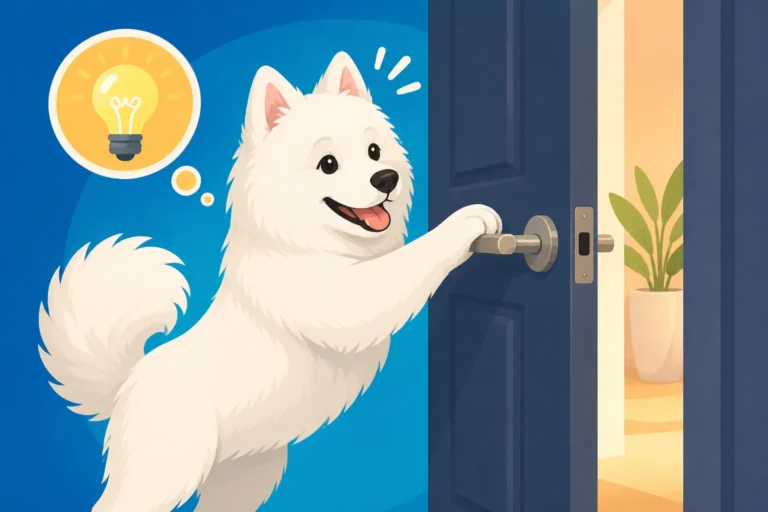
- Gate and Door Security: Beyond just training, consider physical barriers. Is your fence secure? Do you have double gates or an airlock system for critical exits? Can your Samoyed open the door handle themselves? (Don't laugh, some clever Sammies learn this trick!) Addressing security is part of responsible ownership, especially with a breed renowned for How a Samoyed Gets Out of Anything You Build. A physical barrier, even a baby gate, can be a lifesaver while you're training.
Remember, the goal isn't to restrain them forever, but to manage their environment effectively so you can set them up for success during training.
High-Value Rewards and Your Training Mindset
Samoyeds are intelligent, but they are also highly motivated by what they find rewarding. Dry kibble rarely cuts it when faced with the allure of a squirrel.
- High-Value Treats: Think irresistible. Small pieces of cooked chicken, cheese, hot dogs, or store-bought soft training treats work wonders. The more delicious, the more attention-grabbing it will be. These are your currency for motivation.
- Verbal Praise and Affection: While treats are paramount, don't forget the power of genuine, enthusiastic praise ("YES! Good wait!") and a quick pet or ear scratch for reinforcement. Samoyeds love to be loved, and combining this with food makes the reward even more impactful.
- A Calm, Consistent Mindset: Your Samoyed feeds off your energy. If you're anxious or frustrated, they'll pick up on it. Approach training sessions with patience, positivity, and consistency. Short, frequent sessions (5-10 minutes) are far more effective than long, drawn-out ones. Remember that What Actually Motivates a Samoyed is often more complex than just simple commands, requiring you to tap into their desire for connection and tasty rewards. Programs like BAXTER & Bella often emphasize this positive, consistent approach to dog training, which is particularly effective for smart, independent breeds like Samoyeds.
This is a marathon, not a sprint. Celebrate small victories, and don't get discouraged by setbacks. Every time your Samoyed almost waits but then bolts, it's just another opportunity to refine your technique.
Step-by-Step Guide to Teaching "Wait" at the Door
Now for the fun part! This step-by-step process builds on positive reinforcement and gradually increases the challenge, helping your Samoyed truly understand and respect the "wait" command.
Starting with Low-Distraction Environments
We always begin in the easiest possible scenario to ensure success. Pick an interior doorway where there's no immediate temptation of the outdoors.
- Leash Up: Even indoors, put your Samoyed on a leash. This gives you a gentle way to prevent them from bursting through.
- Approach the Door: Walk towards an interior door (like to a bedroom or a less-used room). As you reach the door, ask your Samoyed to sit. If they don't know "sit," teach that first.
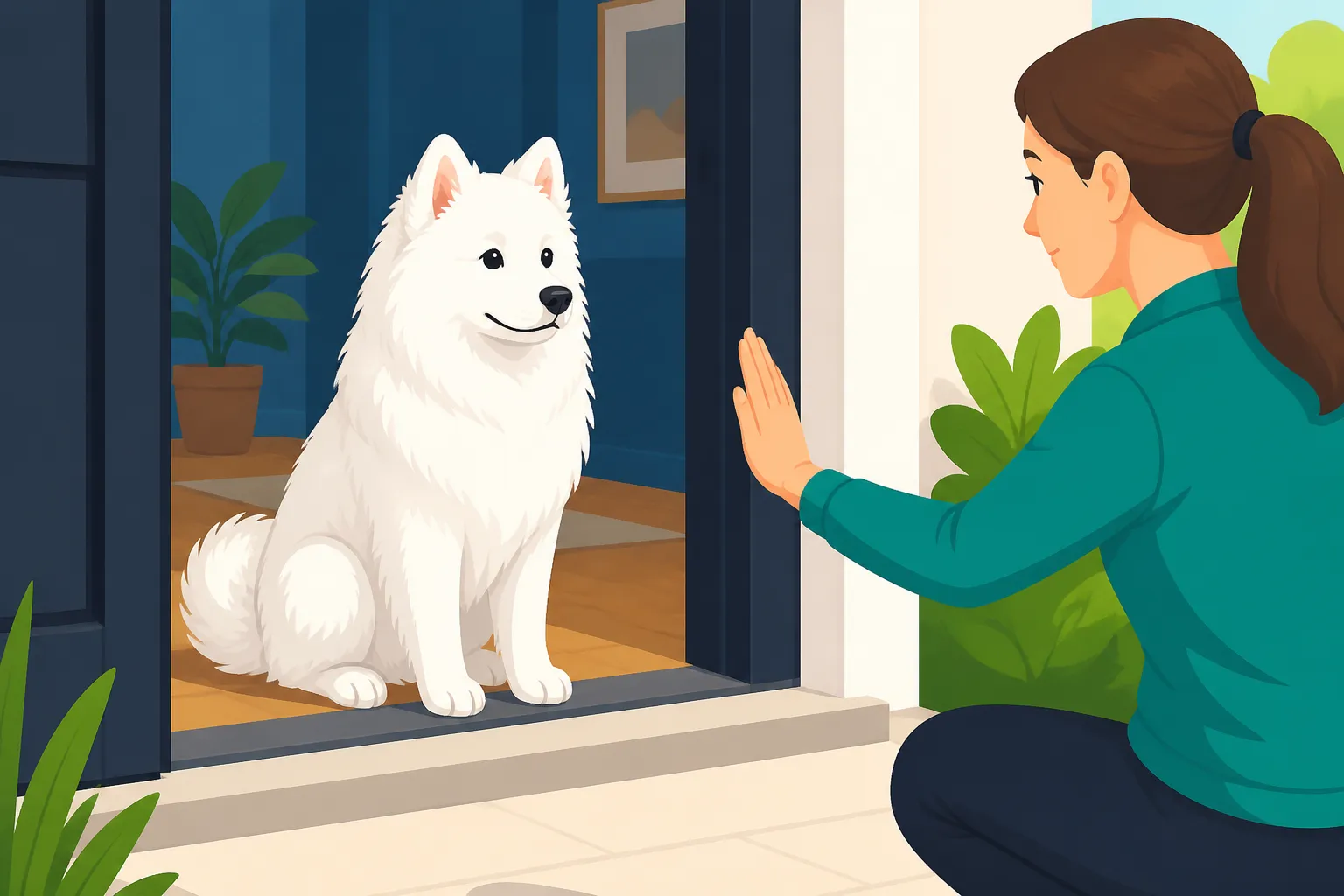
- Introduce "Wait": With them sitting, say "Wait" in a calm, clear voice. Then, reach for the doorknob. If they stay seated for even a second, immediately say "Yes!" or click a clicker, and give them a high-value treat.
- Open the Door Slightly: Repeat the "Wait" command. This time, just crack the door open a tiny bit. The moment they stay (even for a split second), "Yes!" and treat.
- Increase Duration and Openness: Gradually, increase how long they have to wait and how wide you open the door. If they get up, gently close the door (no scolding, just a neutral reset), ask them to sit again, and repeat "Wait." You want them to learn that moving forward closes the door to rewards, and staying opens it.
- Release Command: Once they've waited successfully, give them a release command like "Okay!" or "Free!" and let them walk through the doorway. Sometimes, another treat on the other side can reinforce the positive experience.
Remember, the key here is to keep sessions short and positive. End on a high note. How Many Repetitions a Samoyed Needs often feels like a lot, but consistency is crucial for these independent thinkers.
Gradually Increasing Distractions and Distance
Once your Samoyed is consistently waiting at an interior door, it’s time to up the ante.
- Move to an Exterior Door (Closed): Take the training to your main exit door, but keep it closed. Follow the same steps as above, gradually working up to opening the door wider while they remain sitting. The scent of the outdoors might be a distraction even with the door closed.
- Add Mild Distractions (Indoors): Have a family member walk by in the hallway. Drop a toy (not a squeaky one!). Practice with you holding a favorite ball, but not throwing it yet. Reward heavily for maintaining the "wait."
- Open to a Fenced Yard: This is a big step! With your Samoyed on leash, practice at your back door opening into a secure, fenced yard.
- Say "Wait" as you open the door.
- If they stay, reward them generously. Take a step out into the yard yourself, keeping them on the leash and still waiting inside.
- If they try to bolt, gently but firmly close the door and reset.
- Once they can reliably wait with the door open and you outside, try dropping the leash (still in the fenced yard, of course) and walking a short distance away. If they stay, rush back with praise and treats.
- Eventually, you want to be able to open the door, walk out, and have them wait patiently until you give the release command. This is critical for preventing situations like The Samoyed That Bolts Through an Open Door.
Table: Progression of "Wait" Training Challenges
| Stage | Environment | Distraction Level | Key Focus | Reward Strategy |
|---|---|---|---|---|
| 1: Foundation | Interior door | Very Low | Understanding the command "Wait" | High-value treats, enthusiastic verbal praise |
| 2: Location Change | Exterior door (closed) | Low | Generalizing "Wait" to all doors | High-value treats, enthusiastic verbal praise |
| 3: Open Door Access | Exterior door (fenced) | Moderate | Resisting immediate egress | High-value treats for staying put, release as reward |
| 4: Real-World Proofing | Front door, car door | High | Ignoring external stimuli, impulse control | Variable rewards, environmental rewards (walk) |
Generalizing the "Wait" Command to All Exits
Your Samoyed might be a pro at waiting at the back door, but what about the front door? Or the car door? Or that gate at the dog park? Each new location needs practice.
- Practice at All Doors: Systematically go through every door in your home. The front door is usually the highest distraction, so save it for when your Samoyed is very confident.
- Car Door Training: This is hugely important for safety. Practice "wait" before your Samoyed jumps out of the car. It can prevent them from darting into traffic or getting tangled in their leash.
- Guest Arrivals: This is often a huge challenge for Samoyeds because they are so social and eager to greet. Have a friend or family member help. Keep your Samoyed on a leash, ask for "wait" before opening the door, and reward them for holding position. If they break, the guest doesn't come in, or the door closes. They need to learn that polite waiting gets them the greeting.
- Public Places: Once confident at home, bring your training to low-distraction public areas, always on leash. Practice "wait" at store entrances (if dogs are allowed), before exiting your car at the park, etc.
- Consistency from Everyone: Ensure everyone in the household uses the same command and follows the same rules. Inconsistency is the enemy of good training, especially with a Samoyed who will quickly figure out who lets them get away with what. This is often where a structured program, like those offered by BAXTER & Bella, can be incredibly helpful because they provide a framework that everyone can follow.
Common Challenges and Troubleshooting Your Samoyed's "Wait"
Even with the best intentions, Samoyed training isn't always a smooth, straight line. You're going to hit bumps, and that's okay! Let's talk about how to navigate them.
When Your Samoyed Breaks the Wait
It happens. Your Samoyed was doing so well, and then suddenly, whoosh, they're through the door. Don't despair, but do analyze what went wrong.
- Too Much, Too Soon: Did you increase the duration, distance, or distraction too quickly? Go back a step or two. Break the exercise down into even smaller components. For example, instead of opening the door fully, just open it an inch and immediately reward for staying.
- Weak Reinforcement: Was your treat high-value enough? Was your praise enthusiastic? Remember, for a Samoyed, the reward has to compete with the sheer joy of bolting. If a piece of kibble is all you're offering, the world outside is going to win every time.
- Inconsistent Application: Have you or other family members sometimes let them slide? Even once is enough for a smart Samoyed to learn that the rule isn't absolute. Everyone must be on the same page, 100% of the time.
- Lack of Management: Are you putting your Samoyed in situations where they're set up to fail? If you know they struggle, use a baby gate, a double leash, or another barrier during active training or until they are completely reliable. A long line can also be a valuable tool here.
- Re-Evaluate Motivation: If your Samoyed consistently ignores you, consider if you truly understand What Actually Motivates a Samoyed. Is it food? A favorite toy? A specific type of praise? Tailor your rewards to what they find most enticing.
When they break the wait, avoid yelling or punishment. Simply, calmly, and neutrally reset the situation. Close the door, ask for a sit, say "wait," and try again with less demand. Your goal is for them to associate "wait" with good things happening (treats, praise, eventual freedom) and breaking the wait with the opportunity disappearing.
Dealing with Excitement and Overarousal
Samoyeds are bundles of joy and enthusiasm, which can sometimes work against you in training, especially around exciting thresholds. A dog that is too excited simply can't think straight.
- Pre-Emptive Exercise: A tired Samoyed is a well-behaved Samoyed. Before a training session, especially one involving an exciting threshold, make sure your Samoyed has had a good walk, playtime, or mental stimulation. A drained dog is more receptive to learning.
- Calming Techniques: If your Samoyed is bouncing off the walls, don't even start training. Wait for them to calm down. You can use calming words, a gentle massage, or simply wait them out. Some owners find that a short "calming walk" on leash before reaching the actual door helps to bring their Samoyed's energy down.
- Teach a "Zen" Settle: Practice teaching your Samoyed to lie down and relax on a mat or bed, even with distractions. This "place" command can be incredibly useful to redirect their energy and give them an appropriate outlet when they're over-excited near a doorway or when guests arrive.
- Practice Impulse Control in Other Areas: "Wait" isn't just for doors. Practice it before they eat their meal, before they get their toy, or before they jump into the car. The more they learn general impulse control, the better they'll be at the door. Training a Samoyed That Finds Obedience Negotiable truly is a journey of teaching them that good things come to those who wait, not those who demand.
Remember, every time you work on this, you're not just teaching a trick; you're building a stronger relationship with your Samoyed based on trust and clear communication. It might feel like a lot of work, but the safety and peace of mind it brings are absolutely priceless.
Disclaimer
This article is for general informational purposes only and does not constitute professional advice. Laws, prices and regulations vary by location and change over time. Consult a qualified professional for guidance on your specific situation.