How a Samoyed Learns to Open Doors
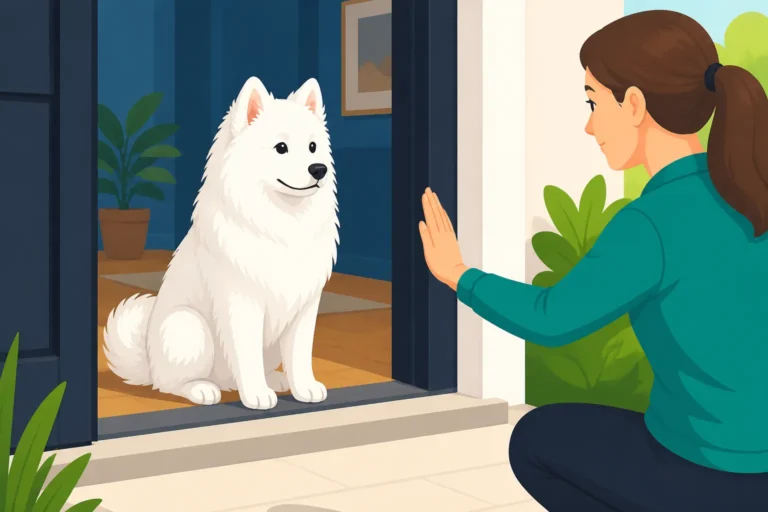
There are few things quite as startling as walking into a room only to find your Samoyed, tail wagging, standing proudly beside an open door that you swear you latched. It’s a common, often frustrating, revelation for Samoyed owners: these intelligent, curious dogs possess an uncanny knack for figuring out how to bypass even seemingly secure barriers. This guide will delve deep into the clever canine mind, explaining exactly how your fluffy friend masters the art of door-opening and, more importantly, what you can do to keep them safely where they belong.
The Inquisitive Samoyed Mind: Why They're Natural Problem-Solvers
Samoyeds are incredibly intelligent dogs, and while that intelligence brings joy and connection, it also means they're constantly observing, learning, and strategizing. This isn't about being "naughty" or deliberately disobedient; it's simply a testament to their inherent problem-solving abilities and deep desire to be involved in whatever is happening. They are pack animals through and through, originally bred to live and work closely with humans, and that strong bond means they want to be right there with you, no matter what.
Their ancestral instincts play a huge role here. Samoyeds were bred for survival in harsh conditions, which required adaptability and quick thinking. While today's Samoyed might not be herding reindeer or pulling sleds in the Arctic, that sharp mind is still very much active, constantly assessing their environment. They learn by watching us, often picking up subtle cues and sequences of actions that we might not even realize we're giving off. For a Samoyed, a closed door isn't necessarily a barrier; it's a puzzle, a challenge to overcome to get to what they want – usually you or whatever exciting thing lies on the other side. This keen observation is a double-edged sword: it makes them wonderfully trainable for positive tasks, but it also makes them brilliant at tasks you'd rather they didn't master, like escaping. You might be surprised at How a Samoyed Gets Out of Anything You Build, including seemingly impenetrable gates or crates.
Furthermore, Samoyeds are incredibly persistent. If they have a goal – whether it's getting to your side, joining the kids playing outside, or just exploring the forbidden pantry – they will often try multiple approaches until something works. This trial-and-error method, coupled with their manual dexterity (yes, those paws are surprisingly agile!), allows them to refine their door-opening technique over time. One accidental nudge of a lever handle that causes a door to open is a huge win for them, a learning experience they'll quickly integrate into their behavioral repertoire. They associate the action with the reward, and that positive reinforcement fuels their next attempt.
Decoding the Door: How Samoyeds Learn the Mechanics
Samoyeds are masters of observation, and they quickly figure out that humans use their hands to manipulate latches and knobs. They'll watch you every single time you open a door, internalizing the motion and the effect it has. But it's not just observation; it's experimentation, too. They'll sniff, paw, jump, and chew, testing the limits of what a door can do.
Lever Handles: The Easiest Target
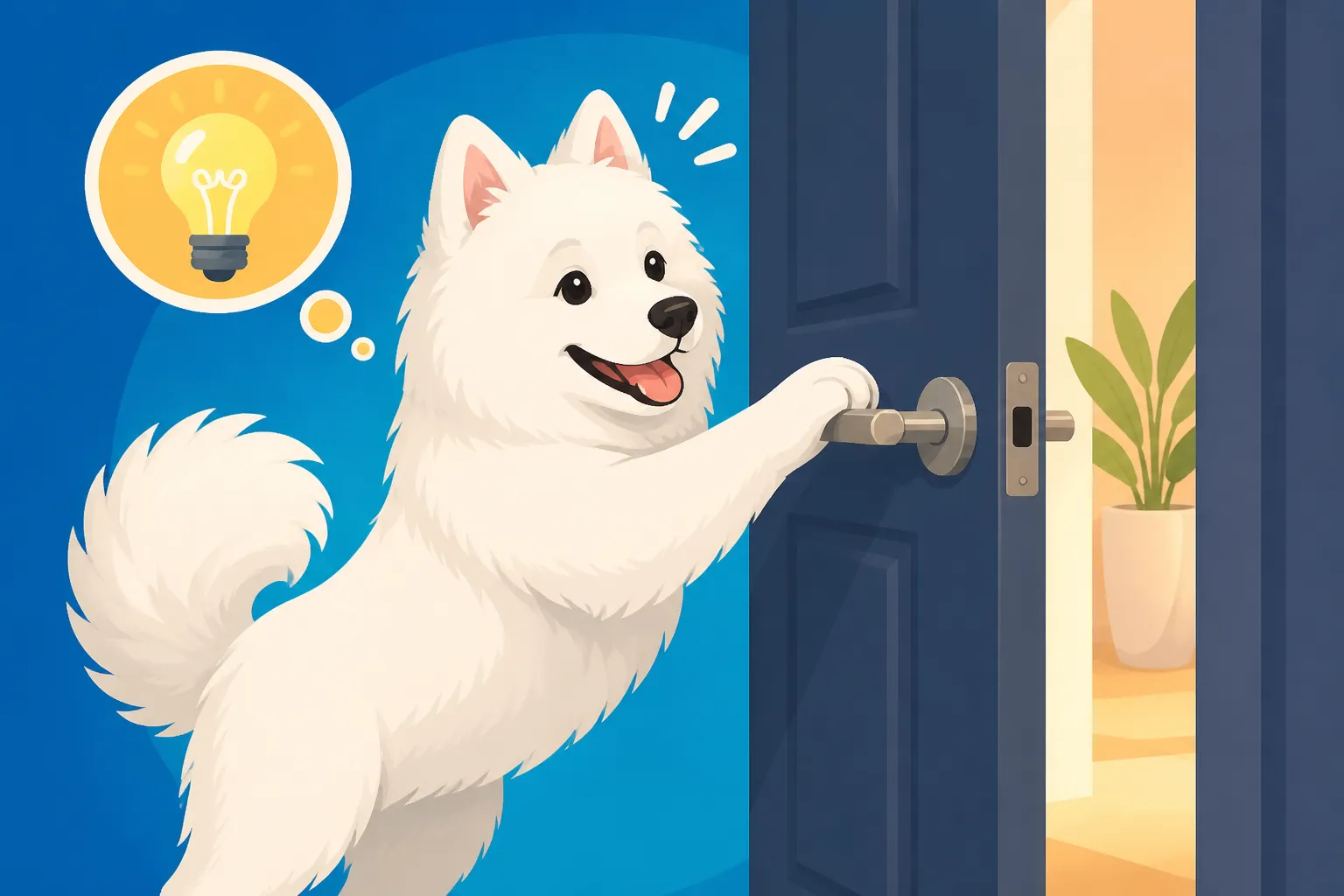
Lever handles are often the first type of door a clever Samoyed will conquer. Why? Because they operate with a simple downward pressure. A Samoyed, standing on its hind legs, can easily bat at a lever handle with a paw, nose, or even just lean on it. The weight of their body, combined with the downward motion, is often enough to disengage the latch. Once they figure out that this specific action leads to the door opening, it becomes a repeatable skill. I've seen many a Samoyed owner recount tales of their dog simply jumping up, placing a paw on the lever, and pushing down with surprising precision. It’s almost as if they understand the mechanics on an intuitive level.
Knob Handles: A Greater Challenge, But Not Impossible
Door knobs are a bit more difficult for them due to the twisting motion required, but don't underestimate a determined Samoyed. Some dogs learn to use their mouth or even two paws to grip and turn the knob, particularly if it's a bit loose or they have good leverage. Others might jump and hang on the knob, hoping their weight will somehow jar it open. If the door isn't perfectly latched, or if the knob mechanism is worn, a persistent Samoyed can absolutely force it open. They might even combine jumping with a sharp pull on the door itself once they've managed a slight turn of the knob. It's a testament to their persistence and manipulative skills that they even attempt these more complex actions.
Sliding Doors: A Matter of Nudging and Force
Sliding doors, whether to a patio or an interior room, present a different kind of challenge that many Samoyeds are still keen to master. These doors often have simple latch mechanisms, or sometimes none at all. A Samoyed might learn to nose the edge of the door, pushing it along its track. If the latch is a simple thumb-lock, some smart Samoyeds have even been known to use their noses or paws to flip the lever. For patio doors, if they're not fully secured, a strong enough nudge can often dislodge them from their tracks, especially if the door isn't perfectly aligned. It’s less about intricate manipulation and more about applying consistent, targeted force.
Beyond the Latch: Why Your Samoyed Seeks Freedom
Understanding the "how" is only half the battle; knowing the "why" is crucial for effective prevention. Samoyeds don't usually open doors out of malice. Instead, their actions stem from deeply ingrained breed characteristics and emotional needs. These are dogs who thrive on companionship and activity, and being isolated or bored can be genuinely distressing for them.
The Need for Companionship
Samoyeds were bred to be constant companions. They lived, worked, and even slept with their human families. This means they have an incredibly strong desire to be near their people. If a door separates them from you, especially if they can hear or smell you on the other side, that door becomes an obstacle to their primary emotional need: connection. This isn't just a preference; it's a fundamental part of their genetic makeup. They truly want to be in the room with you, watching, listening, and being a part of your world. This desire for proximity is often the strongest motivator for door-opening. You'll find that your Samoyed likely Why a Samoyed Follows You From Room to Room even when doors aren't involved, simply because they crave that closeness.
Boredom and Lack of Mental Stimulation
A bored Samoyed is a destructive Samoyed, or in this case, a problem-solving Samoyed. These dogs are intelligent and require significant mental and physical exercise. If they are left alone for long periods without adequate stimulation, they will find ways to entertain themselves, and attempting to open doors is one such "game." It's a challenging puzzle that offers a tangible reward (freedom, access to interesting things) and a way to burn off mental energy. Providing ample exercise, puzzle toys, and interactive play can greatly reduce their motivation to become a canine Houdini. Consider their deep intelligence; What a Bored Samoyed Does to a House can often be directly linked to a lack of engaging activities.
Separation Anxiety and Fear of Missing Out (FOMO)
For some Samoyeds, door-opening is linked to more profound anxieties. Separation anxiety, where a dog becomes distressed when left alone, can manifest as frantic attempts to escape or rejoin their owner. This isn't just boredom; it's genuine panic. They might scratch, chew, or push at doors with an intensity born of fear. Similarly, a strong "fear of missing out" (FOMO) can drive them. If they hear guests arriving, or the kids playing in the backyard, they must be part of the action. This powerful social drive compels them to breach any barrier. If you suspect your Samoyed suffers from Separation Anxiety in a Samoyed, it's crucial to address the underlying anxiety with professional guidance and positive reinforcement.
Door-Proofing Strategies: Keeping Your Smart Samoyed Inside
Now that we understand their motivations and methods, it's time to put strategies in place to keep your Samoyed safely contained. This isn't about punishing their cleverness, but redirecting it and managing their environment.
Securing Your Doors
The first line of defense is to make your doors physically impossible or much harder for your Samoyed to open.
- Change to Round Doorknobs: If you currently have lever handles, switching to traditional round doorknobs can be a significant deterrent. While not foolproof, they require a twisting motion that is harder for most Samoyeds to master. You can find a wide variety of these on platforms like Amazon.
- Install Child-Proof Locks/Safety Latches: These aren't just for toddlers! Many child-proofing devices designed to prevent kids from opening refrigerators or cabinets can be adapted for doors. Sliding door locks, lever handle covers, or even simple top-of-door latches (like a hook and eye latch installed high up) can work wonders. Look for options at your local hardware store or on Amazon.
- Double-Sided Deadbolts: For external doors that your Samoyed tries to open (like a back door leading to the yard), a double-sided deadbolt requires a key to unlock from both sides. This is a very secure option but requires careful consideration for emergency exit routes. Never use this on a door that is the sole exit in a room where humans might be trapped.
- Reinforce Sliding Doors: For sliding glass doors, use a security bar that fits into the track. This prevents the door from sliding open, regardless of whether your Samoyed can manipulate a small latch.
| Door Type | Vulnerability to Samoyed Escape | Recommended Solutions |
|---|---|---|
| Lever Handle | High | Child-proof covers, switch to round knob, top latch |
| Round Doorknob | Medium | Child-proof covers, top latch, tighter mechanism |
| Sliding Door | Medium-High | Security bar in track, strong top-of-door latch |
| Push/Pull Door | Low (if heavy & latched) | Ensure solid latch, add hook/eye for extra security |
Management and Environmental Enrichment
Physical barriers are great, but addressing the underlying drive is even better.
- Provide Ample Exercise: A tired Samoyed is a happy Samoyed who is less likely to devise escape plans. Ensure they get plenty of vigorous exercise every day – long walks, running in a secure area, or even dog sports. Regular activity burns off physical energy and helps them feel content.
- Mental Stimulation is Key: Samoyeds need to use their brains. Incorporate puzzle toys, training sessions, and interactive games into their daily routine. Snuffle mats, treat-dispensing toys, or even hiding kibble around the house can keep them mentally engaged. This is where programs like BAXTER & Bella can be invaluable, offering structured training plans that challenge your Samoyed's intelligence in productive ways.
- Crate Training: A properly crate-trained Samoyed views their crate as a safe den, not a prison. When you need to leave them unsupervised, a secure crate can prevent door-opening escapades. Ensure the crate is appropriately sized and that they have positive associations with it.
- Never Reward Door-Opening: If your Samoyed opens a door and gets what it wants (attention, access to you), it reinforces the behavior. Try to ignore the act if possible and only give attention after they have calmed down and the door is re-secured. It’s a tough habit to break, but consistency is vital. Training a Samoyed That Finds Obedience Negotiable can be a challenge, but clear boundaries are always beneficial.
Training and Behavior Modification
While Samoyeds are intelligent, they also have a reputation for being a bit independent. Consistent training is paramount.
- "Stay" and "Wait" Cues: Work on "stay" and "wait" commands, especially around doors. Teach your Samoyed that opening a door doesn't mean immediate access; they must wait for your permission. This helps instill impulse control.
- Address Separation Anxiety: If door-opening is a symptom of separation anxiety, seek professional help from a certified dog trainer or veterinary behaviorist. They can help you implement a desensitization and counter-conditioning program to alleviate your Samoyed's distress when alone. Resources from BAXTER & Bella often include modules on handling separation-related behaviors, offering practical steps and support.
- Increase Social Interaction: Ensure your Samoyed gets enough quality time with you. This can reduce their desperate need to be by your side when you step into another room. Daily play, cuddles, and focused attention will strengthen your bond and fulfill their social needs.
Dealing with a door-opening Samoyed requires patience, consistency, and a multi-pronged approach. By understanding their clever minds and addressing their underlying motivations, you can keep your fluffy friend safe and your home secure, allowing both of you to live in harmony.
Disclaimer
This article is for general informational purposes only and does not constitute professional advice. Laws, prices and regulations vary by location and change over time. Consult a qualified professional for guidance on your specific situation.