Whether a No Pull Harness Works on a Samoyed
Oh, the sheer joy of walking your gorgeous Samoyed! And then, woosh, you're being dragged down the street, feeling like you've hooked yourself to a miniature snowplow. It's a familiar struggle for so many Samoyed parents – that powerful, relentless pulling that turns a leisurely stroll into an Olympic tug-of-war. If you've ever wondered if those "no-pull" harnesses actually work on a strong-willed, fluffy powerhouse like a Samoyed, you're in the right place. We're going to dive deep into what makes these tools tick and if they can truly bring some peace back to your daily walks.
The Root of the Samoyed Pulling Problem
Before we even talk about solutions, it’s crucial to understand why your Samoyed pulls with such gusto. It's not usually defiance or a lack of love for you; it's a deep-seated instinct that's been carefully honed over centuries.
It's Not Stubbornness, It's Instinct
Let's get one thing straight: your Samoyed isn't trying to be difficult. Their ancestors, the brave dogs of the Nenets people in Siberia, were bred for pulling. They pulled sleds, helped herd reindeer, and worked tirelessly in some of the most unforgiving environments on earth. This isn't just a casual trait; it's fundamental to their very being. When you put a leash on a Samoyed, their natural inclination is to lean into it and pull. It's what they were designed to do, and frankly, they're incredibly good at it.
Imagine asking a champion marathon runner to only walk, or a bird to never fly. It goes against their very nature. So, when your Samoyed plants their paws and lunges forward, seeing that exciting new sniff spot or another dog, they're simply engaging in a behavior that is literally coded into their DNA. It's why trying to curb it with harsh corrections often feels like an uphill battle that leaves both you and your dog frustrated. They have incredible strength for their size, and that "desire to go" is a powerful force. This inherent drive is a big part of Pulling: What a Samoyed Was Actually Bred to Do.
Why Traditional Collars Fall Short
Given this powerful pulling instinct, it's easy to see why a standard flat collar or even a martingale collar can feel utterly ineffective, if not downright dangerous.
A flat buckle collar, while essential for carrying identification tags, offers very little control over a determined Samoyed. When they pull, the force is concentrated entirely on their delicate neck and trachea. This can lead to choking, coughing, and even damage over time. It's not comfortable for your dog, and it certainly doesn't teach them anything positive about leash manners. In fact, it can make walks unpleasant, creating a negative association with the leash itself. You often see owners bracing themselves, almost water-skiing behind their dogs, and that's just not healthy for either party.
Some people turn to choke chains or prong collars, believing these will provide the necessary correction. However, these tools operate on pain and aversion. While they might temporarily stop a dog from pulling because of the discomfort, they don't teach the dog what you want them to do. Instead, they can suppress natural behaviors, leading to a dog that walks with a stiff gait or becomes fearful of the leash, other dogs, or even you. For a breed as sensitive and intelligent as the Samoyed, building trust and positive associations is key. Using punitive tools can easily backfire, potentially fostering anxiety or even reactivity, which no Samoyed owner wants. We want our cheerful, smiling fluffballs to enjoy their time out in the world, not dread it.
How No-Pull Harnesses Aim to Help
This is where the concept of a no-pull harness comes into play. These aren't magic wands, but they are tools designed to redistribute pressure and redirect your dog's momentum, making pulling less effective and less rewarding for them.
The Mechanics of a Front-Clip Harness
The most common and often recommended type of no-pull harness is the front-clip harness. Instead of the leash attaching at the top of the dog's back (which can actually encourage pulling by mimicking a sled dog harness), the D-ring for the leash is located on the dog's chest, right over their sternum.
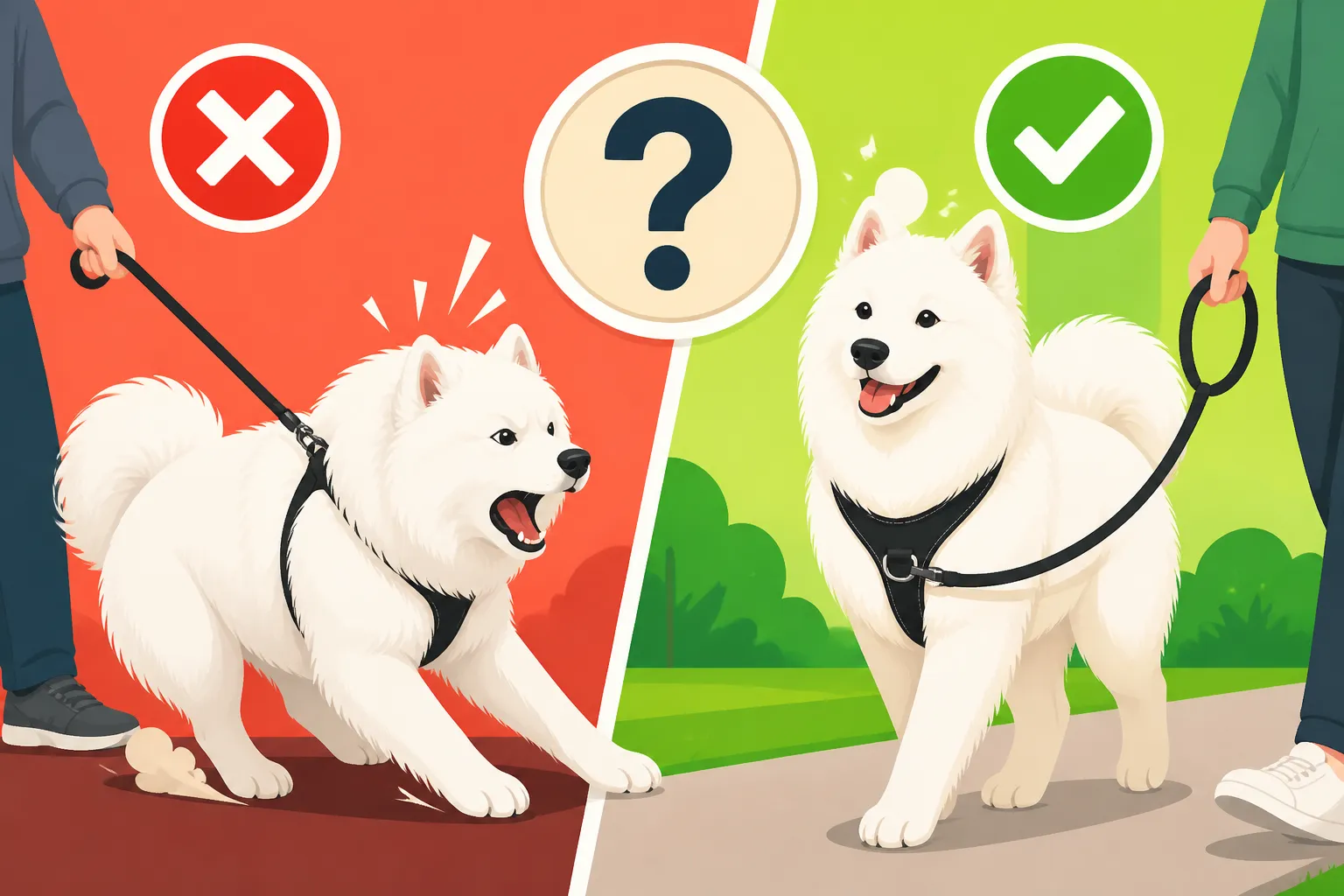
Here's how it works: when your Samoyed tries to lunge forward or pull, the leash attachment point on their chest means that instead of moving straight ahead, they get gently redirected to the side, usually towards you. This essentially turns them around, breaking their forward momentum. It makes pulling uncomfortable and inefficient for them. They quickly learn that leaning into the harness doesn't get them where they want to go faster; it just turns them sideways. This redirection is not painful; it's simply a physical consequence that makes pulling less rewarding.
Many popular brands, like the Easy Walk Harness or the Freedom No-Pull Harness, utilize this front-clip design. They often feature a strap that goes across the chest and another behind the front legs. It's crucial to ensure a proper fit to prevent chafing, especially with a Samoyed's thick coat. When correctly fitted, a front-clip harness can give you significantly more control without putting pressure on your Samoyed's throat. It allows for much more pleasant walks and can be a game-changer for owners struggling with a strong puller.
The Mechanics of a Head Halter (Halti/Gentle Leader)
Another type of no-pull device is the head halter, often recognized by brand names like Halti or Gentle Leader. These tools work on a different principle altogether. They resemble a horse's halter, with straps that fit around your dog's muzzle and behind their ears, with the leash attaching underneath their chin.
The idea behind a head halter is simple: where the head goes, the body follows. By controlling your Samoyed's head, you have immediate control over their direction. If they try to pull, the pressure is applied to their muzzle, turning their head to the side or downwards, again disrupting their forward momentum. This allows you to steer your dog much like you would a horse. It also gives you leverage to gently close their mouth or turn their head away from distractions, which can be very useful for dogs who are overly reactive or highly food-motivated towards sidewalk snacks.
However, head halters often require more careful introduction for Samoyeds. Many dogs initially resist them quite strongly, trying to paw them off their faces or rub their muzzles on the ground. It can feel very unnatural to them. Because a Samoyed's "smile" involves their entire muzzle, and they communicate so much with their facial expressions, some Samoyeds find head halters particularly restrictive. Positive reinforcement, patience, and gradual acclimation are absolutely essential if you choose to go this route. It’s also important to remember that these are tools for managing pulling, not a substitute for teaching your dog proper loose leash walking skills.
Benefits and Challenges for Samoyeds
So, what's the real-world impact of using a no-pull harness on a Samoyed? There are definite upsides, but also some unique challenges to consider for our fluffy friends.
The Immediate Relief for Owners
For many Samoyed owners, the most immediate and profound benefit of a no-pull harness is the sheer relief it brings to walks. That feeling of being constantly yanked and pulled is exhausting and disheartening. A properly fitted front-clip harness can significantly reduce the pulling force on your end of the leash, making walks much more enjoyable. Instead of white-knuckling it, you can actually relax a bit, take in the scenery, and engage with your dog.
This increased control translates into safer outings, too. You'll have better ability to maneuver your Samoyed away from sudden distractions like squirrels, other dogs, or busy traffic. It can prevent you from being pulled off balance, especially on icy patches or uneven terrain. More enjoyable walks often mean more frequent walks, which is fantastic for your Samoyed's physical and mental well-being, as they truly thrive on exercise and outdoor adventures. Even if your Samoyed has a good The Age a Samoyed Finally Matures, those instincts can still kick in.
Furthermore, a no-pull harness can prevent physical harm to your Samoyed's neck and trachea that can occur with a flat collar and constant pulling. This is especially important for growing puppies, whose necks are still developing. It means less coughing, gagging, and a generally more comfortable experience for them, too.
Potential Drawbacks and Considerations
While no-pull harnesses offer many advantages, they aren't without their considerations, especially when dealing with a heavily coated breed like the Samoyed.
One common issue is chafing or rubbing, particularly under the armpits. A Samoyed's double coat is thick and luxurious, but constant friction from harness straps can rub away the delicate undercoat, irritate the skin, or even create bald spots. This is more likely if the harness isn't perfectly fitted or if your dog pulls excessively even with the harness on. Regular checks for redness or irritation are vital.
Related to this, the harness straps can cause matting in the sensitive areas where they sit. The thick fur can tangle and felt under the pressure, especially if the harness is left on for long periods or if the dog isn't brushed regularly. If you use a harness daily, you'll need to be extra diligent with your grooming routine, making sure to brush out the areas under the straps frequently to prevent painful mats. Consider how often you need to be Whether a Samoyed Owner Can Groom at Home if you use a harness daily.
Another point is that some intelligent Samoyeds can learn to pull through a no-pull harness over time. They might adapt to the redirection or simply lean into the discomfort. While it will still be less effective than pulling in a flat collar, it’s not a guaranteed permanent fix. This is where the harness truly shines as a management tool, not a training solution in itself.
Head halters, as mentioned, often face initial resistance. A Samoyed might spend a good portion of the walk trying to remove it with their paws or rub their face on the ground. While this usually subsides with consistent positive training, it requires significant patience and commitment from the owner. And for a breed whose smile is so iconic, a head halter can obscure that beautiful expression, which some owners find less appealing.
Ultimately, a no-pull harness manages the symptom (pulling) but doesn't necessarily cure the underlying behavior. For lasting loose-leash walking, you still need to integrate the harness with consistent training, rewarding a slack leash, and teaching your Samoyed what to do instead of just preventing them from doing what you don't want. This is an important distinction, particularly with a breed known for finding Training a Samoyed That Finds Obedience Negotiable.
Choosing and Using the Right No-Pull Harness for Your Samoyed
When it comes to selecting a no-pull harness for your Samoyed, a little research and careful consideration will go a long way. Not all harnesses are created equal, especially for a dog with a unique physique and coat like the Samoyed.
Key Features to Look For
Given the Samoyed's specific needs, here are some features to prioritize when shopping for a no-pull harness:
- Padded Straps: This is perhaps the most crucial feature. Look for harnesses with soft, well-padded straps, especially in the areas that go under the armpits and across the chest. This will help prevent chafing and irritation of their sensitive skin and dense coat. Materials like neoprene or fleece lining can make a huge difference in comfort.
- Wide Webbing: Wider straps distribute pressure more effectively than thin ones, reducing the chance of digging into your Samoyed's skin or creating friction points.
- Excellent Adjustability: Samoyeds come in a range of sizes, and proper fit is paramount. Choose a harness with multiple adjustment points (typically around the neck, chest, and girth) to ensure a snug but comfortable fit that doesn't restrict movement or allow for escape. A poorly fitting harness can be uncomfortable, ineffective, and even dangerous.
- Front-Clip Design: For most Samoyeds, a front-clip harness is often the most comfortable and effective choice. It works with their natural mechanics without causing discomfort to their face or overly restricting their movement. You can find many options on platforms like Amazon by searching for "front-clip dog harness for large breeds."
- Durable Materials: Samoyeds are strong dogs, and their gear needs to be robust. Look for strong buckles, sturdy D-rings (preferably metal), and high-quality nylon or polyester webbing that can withstand their pulling power.
- Reflective Stitching: For early morning or evening walks, reflective elements can greatly enhance your Samoyed's visibility, adding an extra layer of safety.
When you're trying harnesses on your Samoyed, always check the "two-finger rule": you should be able to comfortably slide two fingers under any strap. If it's too loose, they might slip out; too tight, and it will chafe.
Fitting and Acclimation Tips
Getting your Samoyed used to a new harness, especially if they've only worn a collar before, requires patience and a positive approach.
- Introduce it Slowly: Don't just clip it on and head out the door. Let your Samoyed sniff the harness, praise them, and offer treats. You can lay it on the floor or hold it up for them to investigate.
- Wear it Around the House: Once they seem comfortable, gently put the harness on for short periods inside the house. Supervise them to ensure they're not trying to chew it or frantically rub it off. Distract them with toys or a small training session. Give them a special treat the moment the harness goes on.
- Positive Reinforcement is Key: Every time you put the harness on, associate it with something positive. Treats, praise, or a favorite toy. This builds a positive association rather than seeing it as a punishment.
- Check for Rubbing: After a few short sessions, remove the harness and carefully check your Samoyed's skin, especially under the armpits, chest, and belly. Look for any redness, irritation, or matted fur.
- Gradually Increase Duration: Once they're comfortable inside, try short walks in a quiet area. Gradually increase the duration and distance as they get more accustomed to the feel and the redirection. Resources like BAXTER & Bella offer excellent online training programs that can guide you through positive acclimation steps and effective training techniques to complement your harness use.
Remember, a Samoyed's coat is designed for extreme conditions. Any rubbing can quickly lead to problems, so vigilance is important.
Integrating with Loose Leash Training
It cannot be stressed enough: a no-pull harness is a tool for managing pulling, not a magic bullet that teaches loose leash walking. Think of it like training wheels on a bicycle; they help you stay upright while you learn, but eventually, you need to ride without them.
To achieve true loose leash walking with your Samoyed, you must combine the harness with consistent, positive reinforcement training. Here's how:
- Reward Slack: The moment your Samoyed creates slack in the leash – even for a second – mark that behavior with a verbal cue ("yes!" or a clicker) and reward them with a high-value treat. Repeat, repeat, repeat.
- Change Direction: If your Samoyed starts to pull, stop walking immediately. Don't yank or scold. Just stop. Once the leash goes slack (they turn to look at you or relax), praise and continue. Or, even better, change direction entirely. This teaches them that pulling gets them nowhere, but paying attention to you keeps the walk moving.
- Short, Frequent Sessions: Samoyeds, for all their intelligence, can have short attention spans for repetitive drilling. Keep your training sessions short (5-10 minutes) but frequent throughout the day.
- High-Value Rewards: Figure out what truly motivates your Samoyed. Is it a squeaky toy? A piece of cheese? Something they only get during training sessions will be highly effective. This ties into understanding What Actually Motivates a Samoyed.
- Consistency is Key: Everyone in the household who walks the dog needs to be consistent with the training methods. If one person allows pulling, it undermines the efforts of everyone else.
- Practice in Different Environments: Start training in a quiet area with minimal distractions. Gradually move to more stimulating environments as your Samoyed improves.
While a no-pull harness can make walks immediately more manageable and enjoyable, the ultimate goal is for your Samoyed to understand and choose to walk politely beside you, even without the harness. It's a journey, and your Samoyed's pulling instinct is strong, so patience is your best friend. For more on their exercise needs to help manage their energy on walks, check out How Much Exercise a Samoyed Needs. You might also find tips in Why a Samoyed Pulls on a Walk and how to handle a determined puppy in The First Year With a Samoyed Puppy.
Comparing Harness Types for Samoyeds
Here's a quick overview of how different options stack up for our Samoyed companions:
| Feature/Consideration | Flat Collar (Traditional) | Back-Clip Harness (Traditional) | Front-Clip Harness (No-Pull) | Head Halter (No-Pull) |
|---|---|---|---|---|
| Control Over Pulling | Very Low – encourages pulling, choking risk | Low – can encourage pulling (like sled harness) | High – redirects momentum, discourages pulling | Very High – controls head, thus body |
| Comfort for Samoyed | Can cause discomfort/choking when pulling | Generally comfortable, but can still pull | Good if well-padded, can rub armpits if ill-fitting | Often initially resisted, can be uncomfortable on muzzle |
| Coat/Skin Impact | Minimal if not pulling, but serious risk if they do | Minimal, but may cause matting if left on for too long | Potential for chafing/matting under armpits with thick coat | Minimal coat impact, but may cause friction on muzzle skin |
| Training Effectiveness | Poor – teaches nothing about polite walking | Poor – doesn't teach loose leash walking | Good management tool, aids in training by reducing pulling | Excellent management tool, aids training by directing dog |
| Ease of Use | Very easy | Easy | Moderate – requires careful fitting | Moderate to difficult – requires slow acclimation |
| Safety | Low – risk of neck injury when pulling | Moderate – less neck risk, but still prone to pulling | High – reduces pulling impact, better control | High – excellent control, prevents jumping/lunging |
| Samoyed Acceptance | High (unless pulling causes pain) | High | Moderate to High (if introduced positively, good fit) | Low to Moderate (often strong initial resistance) |
Understanding How Much a Samoyed Can Pull really puts into perspective why a regular flat collar just won't cut it. For a dog that can practically tow a small car, redirecting that power is key. Sometimes, no matter how much you train, that instinct is still there, and having a reliable tool helps a lot. It also prevents dangerous situations where How a Samoyed Gets Out of Anything You Build like a standard fence, if a strong pull allows them to slip a regular collar.
Disclaimer
This article is for general informational purposes only and does not constitute professional advice. Laws, prices and regulations vary by location and change over time. Consult a qualified professional for guidance on your specific situation.