Why a Loose Samoyed Runs Toward Traffic
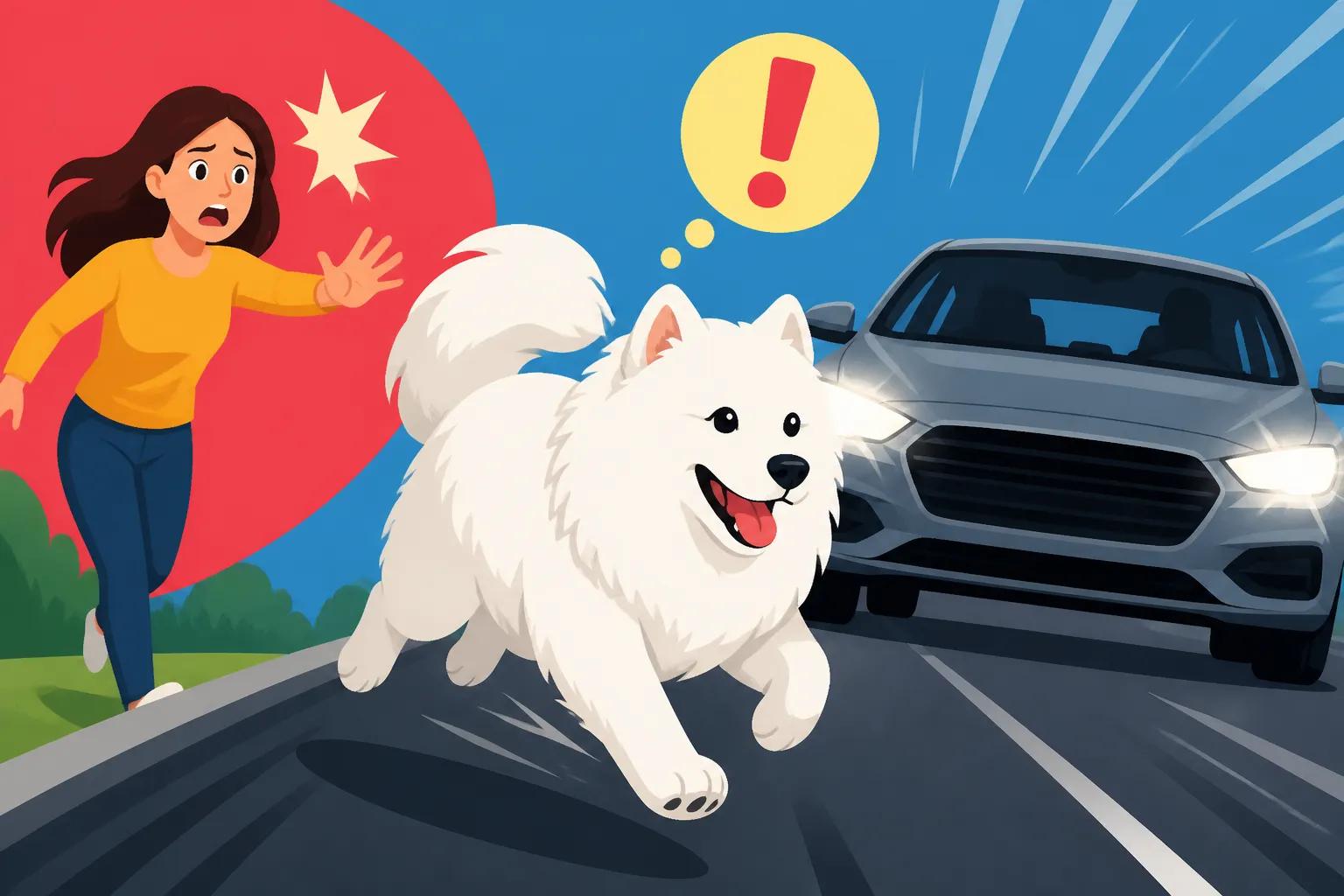
There are few things more terrifying for a Samoyed owner than the split second your fluffy companion slips past an open door or a loose gate and bolts. That heart-stopping moment often turns into pure panic when you see them heading straight for a busy road, seemingly oblivious to the roaring engines and flashing lights. This guide will delve into the deep-seated instincts and unique Samoyed behaviors that drive them directly toward the very danger we strive so hard to protect them from, and explore what we, as their devoted guardians, can do to mitigate this incredibly high-risk scenario.
The Instinctual Drive to Roam and Explore
Samoyeds, with their stunning arctic coats and perpetually smiling faces, often fool people into thinking they are just fluffy, happy-go-lucky house pets. While they certainly are loving companions, it’s crucial to remember their ancient heritage. These dogs were bred for thousands of years to live and work in vast, open, and often unforgiving landscapes. Their instincts are deeply ingrained, and when they get a taste of freedom, those instincts kick in with full force, often leading them directly into perilous situations, like running toward traffic.
A History of Vast Open Spaces
Imagine the ancestral Samoyed working alongside the Nenets people on the Yamal Peninsula. Their job involved herding reindeer across miles of tundra, pulling sleds over endless snow, and guarding camps in an environment where boundaries were literally limitless. These dogs were expected to range widely, navigate by scent and sound, and make decisions independently. They didn't have fences or leashes in the traditional sense, and certainly no busy streets with fast-moving vehicles.
This deeply ingrained need for wide-open territory means that for a Samoyed, an open door or a gap in the fence isn't just an opportunity for a quick jaunt; it's a call to adventure, a chance to fulfill an ancient wanderlust. The concept of a property line or the danger of a road is utterly foreign to their genetic programming. When they see that expanse, whether it's a neighborhood street or a vast park, their first instinct is often to explore it, to run and see what new smells and sights await, completely unaware of the modern hazards we place in their path.
The Thrill of the Chase
Beyond the desire for wide-open spaces, Samoyeds also possess a natural prey drive, a characteristic shared with many working breeds. While they were primarily herding dogs, the ability to chase and even catch small game was certainly an asset in their harsh environment. In our modern world, this prey drive can manifest in unexpected and dangerous ways.
Moving objects, such as squirrels, rabbits, or even blowing leaves, can trigger this chase instinct. Unfortunately, cars, trucks, and motorcycles also present as large, fast-moving objects that can ignite that same primal urge. To a Samoyed, a car speeding down the road isn't a deadly threat; it's a fascinating, fast-moving "thing" that might be fun to pursue, or at least investigate. This isn't a conscious decision to endanger themselves, but rather an unthinking reaction to a powerful, instinctual urge that overrides any training or desire to please you in that critical moment. The sheer speed and novelty of traffic can make it an irresistible target for a dog whose senses are suddenly on high alert.
Sensory Overload and Novelty
When a Samoyed escapes, their world immediately becomes a symphony of new sensory input. The familiar smells of home are replaced by an intoxicating blend of exhaust fumes, dropped food, other animals, and countless new scents carried on the breeze. The sounds change from the usual household noises to the cacophony of traffic, distant sirens, and the rustle of unseen critters. For a dog that thrives on stimulation, this is an overwhelming, almost addictive experience.
This sensory overload acts as a powerful motivator to keep moving forward, drawing them deeper into the unknown, and unfortunately, often closer to danger. The novelty of everything outside the fence or door is simply too compelling. They aren't running from you; they are running to all the new and exciting things their world has suddenly offered up. This intense focus on new stimuli can make it incredibly difficult for them to respond to your desperate calls, as their attention is completely hijacked by the intoxicating novelty of their newfound freedom.
The Samoyed's "Selective Hearing" and Lack of Danger Perception
It’s often frustrating to call your Samoyed when they’re loose, only to be met with a wagging tail and a happy glance before they continue on their merry way. This isn't malice or a lack of love; it’s a combination of their intelligent, independent nature and a fundamental inability to understand human concepts of danger. They live in the moment, driven by instinct and curiosity, which can be a deadly combination near roadways.
The Independent Mindset
Samoyeds are incredibly intelligent, but their intelligence isn't always directed at pleasing their human. These dogs were bred to think for themselves, to work alongside humans rather than strictly for them. This independence, while valuable in their ancestral roles, can translate into "selective hearing" when faced with high-value distractions. Your desperate shouts of "COME!" simply don't register against the thrill of the chase or the lure of a new smell.
When a Samoyed is off-leash and off-property, they are often operating in what I like to call "adventure mode." In this mode, their self-preservation instincts against environmental threats like extreme cold are strong, but their comprehension of man-made dangers like speeding cars is non-existent. They are confident, curious, and believe they can handle whatever they encounter. This confidence, combined with their inherent independence, means they're much more likely to follow their nose or their instinct to explore than to heed your increasingly frantic commands. Sometimes, it feels like they simply ignore a cue they know because the reward of the wild unknown is so much greater in that moment.
What Motivates a Samoyed Out on the Loose
A Samoyed on the loose isn't generally motivated by fear, unlike some other breeds that might bolt due to anxiety. Instead, they are typically driven by pure exhilaration and curiosity. The world is suddenly a giant playground, an open invitation to explore. They aren’t trying to escape you; they’re escaping the perceived boredom or confines of their usual environment. This difference in motivation is key to understanding why they might run toward rather than away from potential dangers.
Think about it from their perspective: they’ve just broken free! Every new scent, every rustle in the bushes, every moving object is a potential game or discovery. The rush of wind, the feel of new ground under their paws – it's an intoxicating freedom. This intense focus on positive, exciting stimuli means they simply don’t process the negative potential of a busy street. For them, it’s just another part of the grand adventure. This is often why their "smile" stays on their face even as they head towards traffic – they are genuinely having the time of their lives, completely oblivious.
Lack of "Street Smarts"
Perhaps the most critical factor in why a loose Samoyed runs toward traffic is their fundamental lack of understanding of what traffic is. Dogs do not comprehend the speed, mass, or danger associated with vehicles. To them, a car is just another object in their environment, albeit a fast-moving and noisy one. They don't grasp the concept of a "road" as a place of danger, nor do they associate the sound of an engine with potential harm.
They might react to a car by trying to chase it, thinking it’s a giant rabbit, or they might simply try to cross the street to investigate something interesting on the other side. They have no innate understanding of traffic laws, crosswalks, or the physics of a moving vehicle. This means that even the most well-behaved, well-trained Samoyed can make a fatal error in judgment if they find themselves unsupervised near a roadway. Their instincts, so valuable in their ancient roles, are entirely unsuited to navigating our modern, urbanized world.
Practical Measures to Prevent a Samoyed From Running into Traffic
Given their deeply ingrained instincts and their charming yet dangerous lack of "street smarts" when it comes to traffic, prevention is absolutely paramount for Samoyed owners. Relying on their recall when they're truly in "adventure mode" is a gamble you simply cannot afford to take.
Reinforcing Recall in High-Distraction Environments
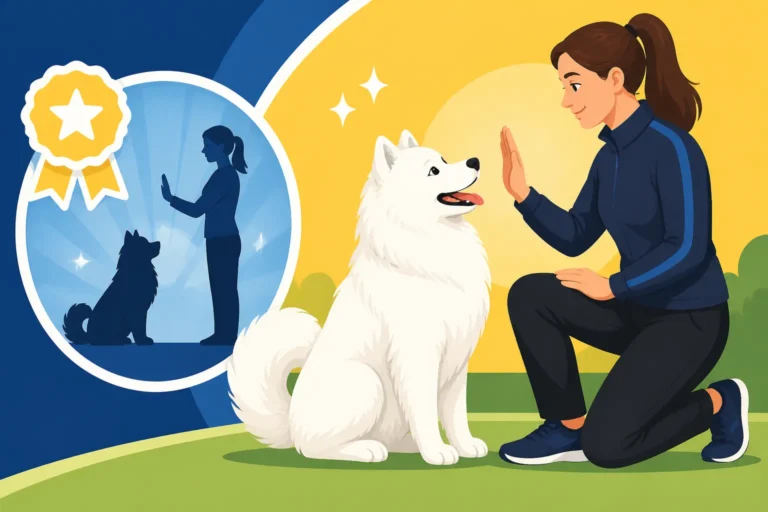
While a Samoyed’s recall might seem infallible in your backyard, it's a completely different story when they're truly on the loose, sniffing out new adventures. This is why "proofing" their recall in increasingly distracting environments is critical. Start in a quiet park, then move to areas with more people, other dogs, and eventually, if possible, where distant traffic sounds are present – always on a long line, of course. We're talking about a 30-foot or even 50-foot training leash that allows them some freedom but keeps them safe. You can find durable long lines on platforms like Amazon.
Focus on making coming back to you the most rewarding thing ever. Use high-value treats (think cooked chicken or cheese, not just kibble) and exaggerated praise every single time they respond. Brands like BAXTER & Bella offer excellent online training programs that focus on positive reinforcement and building a strong foundation, which is exactly what a Samoyed needs for reliable recall. Remember, for a Samoyed, the reward of returning to you needs to outweigh the thrill of the chase or the excitement of a new smell. Consistent, fun, and high-reward training can make a difference, but always assume their recall might fail when truly distracted near a road. This detailed work on Proofing a Samoyed's Recall is essential.
Secure Containment is Non-Negotiable
A secure perimeter around your home is your first, best line of defense. Samoyeds are notorious escape artists. They can jump surprisingly high fences, and perhaps even more commonly, they are expert diggers. A standard four-foot fence often isn't enough; a six-foot fence is a much safer bet, and even then, they might test it. Consider burying wire mesh along the bottom of your fence line to prevent digging out. We've all heard stories about the inventive ways a Samoyed gets out of anything you build.
Beyond the fence itself, pay close attention to gates. Are they self-latching? Can they be secured with a padlock? Are there any gaps underneath? Even a small space can be an invitation. Never assume your fence or gate is foolproof, because a Samoyed will spend their free time proving you wrong. Understanding How High a Samoyed Can Jump a Fence and The Tunnel a Samoyed Digs Under a Fence is vital for securing your property.
The Importance of Microchipping and ID
Despite all your best efforts, accidents happen. A gate might be left open by a delivery person, a leash could snap, or a collar could slip off during an unexpected dive. This is why microchipping your Samoyed is absolutely non-negotiable. A microchip, registered with your current contact information, is often the quickest way to reunite you with your dog if they're found by a good samaritan or picked up by animal control.
In addition to a microchip, ensure your Samoyed always wears a collar with up-to-date ID tags. These tags should include your name, phone number, and perhaps your address. Some owners even add a "Reward" tag to encourage quick returns. While a microchip is permanent, visible ID tags offer an immediate solution to anyone who finds your dog. Being prepared for the worst-case scenario, even as you prevent it, is part of responsible Samoyed ownership. It's truly a no-brainer to ensure Whether a Samoyed Should Be Microchipped.
Training for Door Dashing
Many Samoyed escapes happen when a door opens. Whether it's the front door for a visitor, the back door to let the kids out, or the garage door, Samoyeds are masters of the opportunistic dash. Training a "wait" command at all thresholds can be a lifesaver. This involves teaching your dog to stay put, even when the door is open, until you give them a release cue.
Practice this command frequently, starting with low distractions and gradually increasing them. Use consistent cues and generous rewards for success. You can also use baby gates or a leash attached to a nearby hook as an extra layer of security, especially during busy times or when you have guests. This training is about creating a habit that overcomes their instinct to bolt the moment they see an opening. Preventing The Samoyed That Bolts Through an Open Door is paramount, and Teaching a Samoyed to Wait at a Threshold can literally save their life.
Understanding the Risks: Samoyed Escape Behaviors
Knowing why your Samoyed runs towards traffic is half the battle; the other half is understanding the typical escape behaviors and what they mean for their safety. Their independent nature and desire for adventure mean they don't usually act like other breeds when they get loose.
| Characteristic | Samoyed Escape Behavior | Danger Implications |
|---|---|---|
| Instinct to Roam | Will run far, often without looking back. | High likelihood of reaching busy roads quickly. |
| Prey Drive | May chase moving objects (cars, bikes, wildlife). | Direct collision risk with vehicles. |
| Curiosity/Novelty | Will investigate new smells/sights, including across roads. | Distraction from danger, leading to unexpected crossings. |
| Independence | May ignore recall commands when highly stimulated. | Cannot be reliably called back from danger. |
| Lack of Danger Prep. | Does not understand speed or threat of vehicles. | High risk of misjudging traffic and fatal accidents. |
| Vocalization | May "scream" or "talk" excitedly, attracting attention. | Might draw people or other dogs, increasing chaos. |
| Digging/Jumping | Capable of bypassing common containment methods. | Constant vigilance needed for home security. |
Conclusion
The heart-stopping fear of seeing your Samoyed heading directly towards traffic is a unique and agonizing experience many owners face. It stems from their deep-rooted ancestral instincts to explore vast territories, chase moving objects, and succumb to the overwhelming novelty of a world beyond their boundaries, coupled with a complete lack of understanding of the dangers posed by modern vehicles. These magnificent dogs were not bred for suburban streets, and their "Samoyed smile" certainly doesn't imply street smarts when it comes to cars. As their guardians, it's our solemn responsibility to understand these powerful drives and implement rigorous preventive measures. From meticulously secured fences and diligently proofed recall training, reinforced by consistent positive methods like those taught by BAXTER & Bella, to ensuring they are always microchipped and visibly tagged, every layer of protection matters. Never underestimate their drive to explore, and always prioritize their safety over assumptions about their obedience in a moment of pure, unleashed exhilaration.
Disclaimer
This article is for general informational purposes only and does not constitute professional advice. Laws, prices and regulations vary by location and change over time. Consult a qualified professional for guidance on your specific situation.